
GLP-1 Peptides: A Clinical Guide to Metabolic Optimisation and Weight Management
The era of treating weight management as a simple matter of willpower has been replaced by a sophisticated understanding of cellular metabolic optimization. The emergence of glp 1 peptides represents a paradigm shift in how clinicians approach obesity and chronic metabolic dysfunction through the targeted modulation of the incretin system. You likely recognize the clinical efficacy of these agents but feel concerned by the proliferation of unregulated research chemicals and the potential for lean muscle wasting during rapid weight reduction. It's a common frustration to encounter a landscape filled with conflicting data regarding brand names versus clinical-grade generic alternatives.
This guide provides a rigorous medical overview of GLP-1 receptor agonists, clarifying the biological mechanisms that govern glucose homeostasis and appetite suppression. We'll examine the specific safety protocols required for long-term success, including the necessity of sourcing from US-licensed 503A pharmacies following the 2026 FDA regulatory shifts. You'll gain a clear understanding of how physician-led titration and advanced peptide therapy can optimize your metabolic health while adhering to the highest pharmaceutical standards and professional oversight.
Key Takeaways
- Learn the biological mechanisms of endogenous incretin hormones and the evolution of synthetic glp 1 peptides in precision metabolic signaling.
- Examine the clinical benefits of receptor agonists beyond weight loss, including systemic inflammation reduction and improved lipid profiles.
- Understand the critical safety requirements for pharmaceutical sourcing, emphasizing the importance of US-licensed 503A pharmacies over unregulated alternatives.
- Master precision titration protocols to minimize gastrointestinal side effects and implement strategies for protecting lean muscle mass throughout the treatment duration.
- Explore the necessity of physician-led oversight within a telehealth framework to ensure accurate dosage adjustments and sustainable metabolic optimization.
Understanding GLP-1 Peptides: The Science of Metabolic Signalling
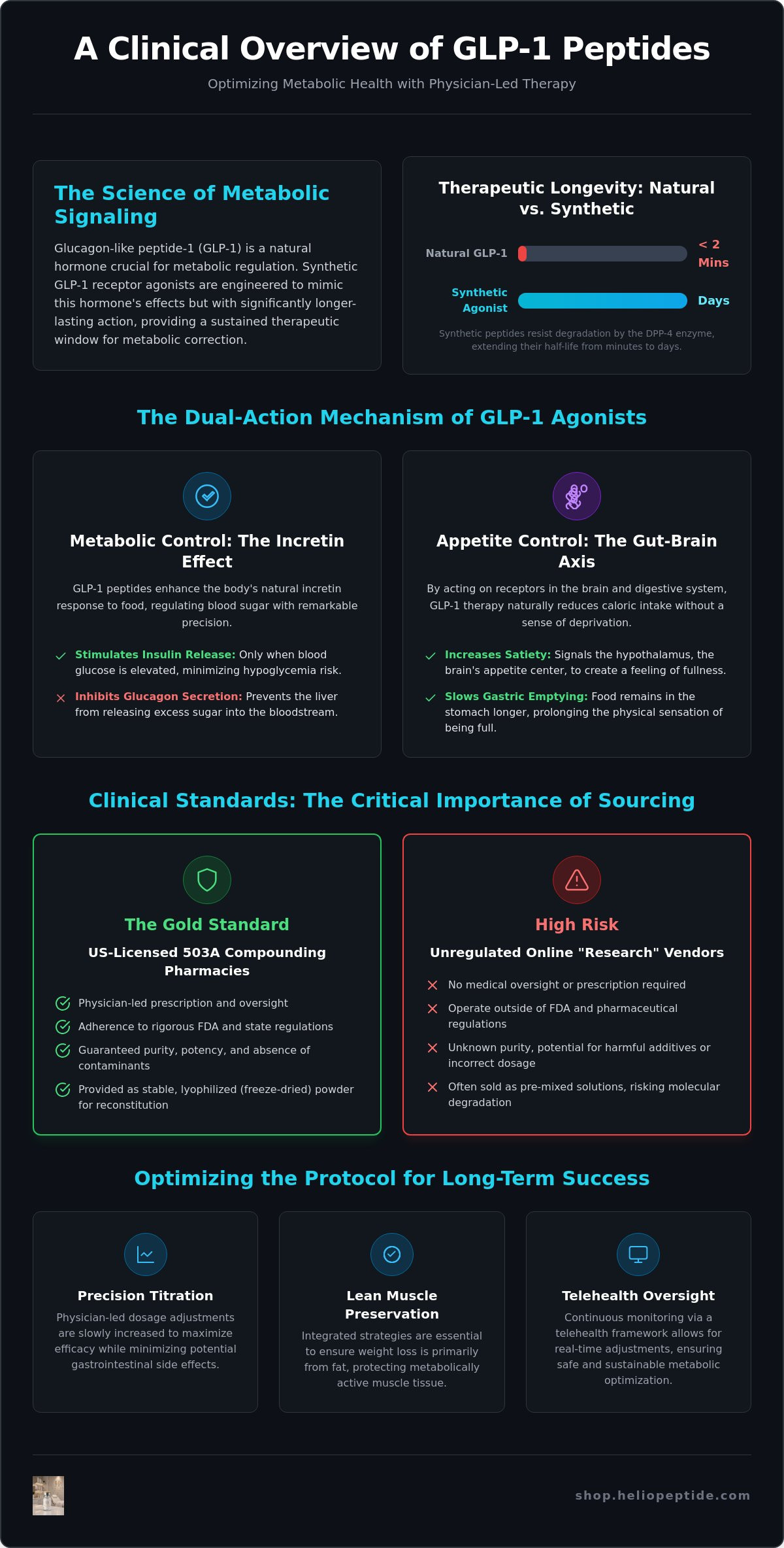
The biological foundation of metabolic regulation rests significantly on the activity of Glucagon-like peptide-1 (GLP-1), a 30-amino acid peptide hormone secreted primarily by the L-cells of the distal ileum and colon. While endogenous GLP-1 possesses a half-life of less than two minutes due to rapid degradation by the enzyme dipeptidyl peptidase-4 (DPP-4), modern pharmacology has enabled the development of synthetic glp 1 peptides with extended stability and enhanced receptor affinity. These synthetic analogs are designed to persist in the bloodstream for days rather than minutes, providing a sustained therapeutic window for metabolic correction.
The transition from endogenous signaling to therapeutic intervention involves the use of receptor agonists that mimic the natural hormone's action while resisting enzymatic breakdown. Clinically, a vital distinction exists between retail brand-name formulations and the high-purity glp 1 peptides utilized in professional medical protocols. While the active pharmaceutical ingredient remains consistent, the delivery systems and sourcing requirements vary significantly. Clinical-grade peptides are typically provided in a lyophilized (freeze-dried) state; this method ensures maximum chemical stability and prevents the molecular degradation often associated with pre-mixed aqueous solutions. By removing moisture through sublimation, the integrity of the peptide sequence is preserved, allowing for precise reconstitution and consistent biological activity. Sourcing these compounds requires adherence to rigorous pharmaceutical standards. Clinical optimization programs utilize peptides sourced from US-licensed 503A pharmacies to ensure the absence of harmful additives and the highest possible concentration of the active ingredient.
The Incretin Effect and Glucose Homeostasis
The therapeutic utility of GLP-1 RAs is rooted in their ability to augment the incretin response. These peptides stimulate the pancreatic beta cells to release insulin only when blood glucose levels are elevated, which minimizes the risk of hypoglycemia. Simultaneously, they inhibit the alpha cells from secreting glucagon, a hormone that otherwise triggers the liver to release stored glucose into the bloodstream. The incretin effect refers to the physiological phenomenon where oral nutrient intake elicits a significantly higher insulin response than intravenous glucose due to the immediate release of gut-derived hormones that prime the metabolic system for efficient nutrient disposal.
Neural Pathways: Satiety and the Gut-Brain Axis
GLP-1 receptors are densely populated within the hypothalamus, a critical regulatory center for energy balance and appetite. Agonism of these receptors suppresses hedonic hunger and increases feelings of satiety, effectively recalibrating the patient's relationship with caloric intake. This central nervous system activity is complemented by peripheral effects, specifically the slowing of gastric motility. Delayed gastric emptying ensures that nutrients remain in the stomach for a longer duration, providing a physical signal of fullness that persists well after a meal. Integrating these mechanisms into a comprehensive peptide therapy for weight loss allows for a dual-action approach that addresses both cellular metabolic efficiency and behavioral eating patterns.
The Biological Benefits of GLP-1 Receptor Agonists
The clinical utility of glp 1 peptides extends far beyond simple appetite suppression; these agents function as powerful modulators of systemic metabolic health. By addressing the underlying pathophysiology of insulin resistance, they facilitate a comprehensive restoration of biological function that impacts multiple organ systems. Research indicates that the benefits of receptor agonism include enhanced lipid metabolism, reduced cardiovascular risk, and potential neuroprotective qualities that support long-term cognitive health.
Metabolic Restoration and Weight Management
Addressing insulin resistance is the primary objective in resolving metabolic dysfunction. When insulin sensitivity is impaired, the body struggles to utilize glucose efficiently, leading to chronic fat storage and cellular energy deficits. Clinical administration of glp 1 peptides reverses this trend by optimizing the body's response to nutrient intake. This process is particularly effective at targeting visceral adipose tissue, the metabolically active fat that surrounds vital organs and drives systemic disease. While these peptides drive systemic lipolysis, patients often compare their systemic efficacy to fat-dissolving peptides when considering localized versus total metabolic intervention. The result is a significant improvement in body composition that prioritizes the reduction of high-risk inflammatory fat over simple weight loss.
Systemic Anti-Inflammatory Effects
Chronic inflammation is a silent driver of cardiovascular and metabolic decline. GLP-1 RAs exert a profound anti-inflammatory effect by lowering circulating levels of C-reactive protein (CRP) and proinflammatory cytokines. This reduction in systemic stress protects the vascular endothelium, the delicate lining of the blood vessels, which reduces the risk of atherosclerotic plaque formation. Recent suggests that these anti-inflammatory properties also extend to the liver. By reducing hepatic lipid accumulation, these peptides offer a promising therapeutic pathway for managing non-alcoholic fatty liver disease (NAFLD), a condition closely linked to insulin resistance and obesity.
Emerging research also highlights the neuroprotective potential of these peptides. Receptors for GLP-1 are present in brain regions associated with memory and executive function, suggesting that metabolic optimization may guard against neurodegenerative decline. There's also significant interest in how these pathways regulate dopamine signaling, potentially offering a tool for managing addictive behaviors. From a healthspan perspective, these systemic improvements don't just treat disease; they foster an internal environment conducive to longevity. Achieving these outcomes requires a commitment to rigorous protocols and professional oversight. Optimizing these biological pathways is a core component of a sophisticated Advanced Peptide Therapy program designed for peak physical performance.
Clinical Standards: Sourcing and 503A Pharmacy Integrity
The therapeutic efficacy of glp 1 peptides is fundamentally dependent on the integrity of the supply chain and the manufacturing standards of the providing facility. As clinical interest in these compounds accelerates, the market has seen a surge in "research chemical" vendors that bypass regulatory oversight. These entities often operate without the licenses required to ensure pharmaceutical-grade purity; this creates significant risks regarding heavy metal contamination, bacterial endotoxins, and inaccurate dosing. Establishing a secure sourcing protocol is a prerequisite for any metabolic optimization strategy. Verification of purity through a Certificate of Analysis (CoA) is the only method to ensure that the chemical composition matches the clinical requirement.
The 503A Pharmacy Advantage
Professional health optimization requires medications produced in US-licensed 503A pharmacies. These facilities are strictly regulated by state boards of pharmacy and are authorized to provide patient-specific medications under direct physician supervision. Unlike mass-produced retail alternatives or unverified grey-market sources, 503A compounding adheres to rigorous USP standards for sterile preparations. This oversight ensures that the peptide sequence remains unadulterated and free from harmful fillers. Utilizing an advanced peptide therapy model provides the necessary framework for verifying clinical-grade quality. Research published in The Expanding Benefits of GLP-1 Medicines underscores that therapeutic success relies on the precise biochemical interaction between the agonist and the receptor, a process easily disrupted by impurities or degraded sequences.
Lyophilized vs. Liquid Formulations
Peptides are inherently fragile molecules. Exposure to heat, light, or prolonged aqueous environments can cause the delicate amino acid chains to denature, rendering the medication ineffective or potentially immunogenic. Lyophilization, or freeze-drying, is the gold standard for preserving molecular stability. By removing water through a vacuum-driven sublimation process, the peptide is locked into a stable solid state that resists degradation during transit and storage. Identifying high-quality semaglutide 15 mg in its lyophilized form allows for a longer shelf life and ensures that the patient receives the exact milligram dosage prescribed. Reconstitution should only occur immediately prior to the start of a treatment cycle to maintain peak biological activity. This format is preferred by clinicians because it eliminates the risk of potency loss often found in pre-mixed liquid formulations that have been sitting in warehouse environments for extended periods. Professional glp 1 peptides protocols prioritize this stable format to guarantee that the metabolic signaling remains consistent from the first dose to the last.
Optimising the Protocol: Dosage, Side Effects, and Muscle Preservation
Successful administration of glp 1 peptides requires more than a standard prescription; it demands a calibrated titration schedule tailored to individual metabolic sensitivity. Clinical efficacy is often compromised when patients are advanced through dosage tiers too rapidly, leading to unnecessary gastrointestinal distress and potential non-compliance. A structured protocol focuses on the minimum effective dose to achieve glycemic control and satiety while allowing the body to adapt to altered gastric motility. This methodical approach is essential for long-term adherence and the establishment of a new metabolic set point.
Managing Clinical Side Effects
Most clinical challenges arise during the initial loading phase as the body adjusts to increased incretin signaling. Common symptoms include nausea, transient fatigue, and shifts in digestive regularity. These are typically managed through precision dosing and adequate hydration. Electrolyte balance is particularly important, as changes in insulin levels can affect renal sodium handling. Patients who experience heightened sensitivity may benefit from a more granular approach. You can read more about microdose glp 1 strategies to understand how incremental adjustments can bypass common loading-phase hurdles. Supportive micronutrient therapy, specifically Vitamin B6 and magnesium, is often utilized to mitigate nausea and support cellular energy production during the transition.
Preserving Lean Body Mass
The risk of sarcopenic obesity, characterized by the loss of muscle tissue during rapid weight reduction, is the most significant challenge in GLP-1 therapy. Because these peptides significantly reduce caloric drive, patients may inadvertently enter a severe protein deficit. Without intervention, a substantial percentage of weight lost can come from lean body mass rather than adipose tissue. This loss of muscle lowers the basal metabolic rate, which contributes to the "rebound effect" where patients regain weight after stopping the medication. To prevent this, protocols must prioritize high-quality protein intake and consistent resistance training. Clinical outcomes are significantly improved when glp 1 peptides are integrated into a broader healthspan strategy. Many clinicians now utilize synergistic stacks, combining GLP-1s with Growth Hormone Releasing Hormones (GHRHs) to provide anabolic support. For more information on these combinations, consult our guide on the best peptides for muscle growth and fat loss.
Establishing a sustainable metabolic maintenance phase is the final step in a successful clinical protocol. This involves a slow taper or a "maintenance dose" that prevents the rapid return of hedonic hunger while the patient's natural metabolic pathways stabilize. Review our selection of physician-supervised peptide programs to find a protocol that prioritizes both safety and long-term results.
The Helio Peptide Clinical Standard for GLP-1 Therapy
Helio Peptide operates as a specialized medical facilitator, bridging the gap between advanced pharmacological research and clinical application. The administration of glp 1 peptides within this framework is defined by a commitment to regulatory compliance and physician-led guidance. Unlike standard retail models that prioritize transaction volume, the Helio Peptide standard focuses on the intersection of safety and physical optimization. Every medication provided is sourced from US-licensed 503A pharmacies; this ensures that patients receive clinical-grade products that meet stringent purity and potency requirements. This dedication to sourcing excellence eliminates the risks associated with unverified research chemicals and ensures that every vial maintains its molecular integrity from the lab to the patient. We position ourselves as a serious gatekeeper to health optimization, operating in a space defined by certifications, licenses, and rigorous protocol.
Physician-Led Telehealth and Titration
The telehealth model utilized by Helio Peptide connects patients with certified physicians who specialize in metabolic restoration. This oversight is critical during the titration process, where dosages are adjusted based on real-time feedback and physiological response. Continuous monitoring allows for the early identification of side effects and ensures that the protocol remains aligned with the patient's healthspan objectives. This level of supervision is a core component of our broader clinical offerings, which include physician-supervised HRT. By integrating hormonal and metabolic data, physicians can create a cohesive wellness program that addresses the root causes of biological decline. Personalized wellness programs extend beyond simple prescription fulfillment; they incorporate nutritional guidance and metabolic maintenance strategies to prevent the weight regain often seen in unsupervised settings.
Next-Generation Peptides: Retatrutide 10mg
For patients who exhibit resistance to standard agonists, the evolution of triple-agonist therapy provides a new therapeutic pathway. Retatrutide 10mg represents the next frontier in metabolic optimization, functioning as a GIP, GLP-1, and Glucagon receptor agonist. This multi-pathway approach enhances energy expenditure and improves glucose homeostasis more effectively than single-agonist medications. Access to these advanced glp 1 peptides ensures that patients have the most effective tools available for complex metabolic cases. The transition from weight loss to long-term health maintenance is facilitated by this disciplined, science-based approach to peptide therapy. By prioritizing pharmaceutical-grade quality and expert oversight, Helio Peptide establishes a benchmark for safety and efficacy in the field of health optimization. Results are viewed as a direct and inevitable consequence of scientific methodology rather than anecdotal hype.
Advancing Toward Sustainable Metabolic Excellence
The clinical application of glp 1 peptides represents a significant advancement in the pursuit of metabolic restoration and long-term healthspan. Achieving these outcomes requires a disciplined adherence to pharmaceutical standards and a commitment to professional oversight. By prioritizing the preservation of lean muscle mass and utilizing medications sourced exclusively from US-licensed 503A pharmacies, you ensure that your physiological optimization is both safe and effective. The era of unverified research chemicals has been replaced by a rigorous, physician-led framework that prioritizes clinical purity and precise titration. This methodical approach transforms weight management from a temporary intervention into a permanent state of biological balance. You're invited to take the next step in your health journey through our specialized telehealth model, where medical expertise meets advanced peptide science.
Explore Clinical-Grade GLP-1 Peptide Programmes at Helio Peptide
Your path to physical optimization is supported by our commitment to regulatory excellence and manufacturing integrity.
Frequently Asked Questions
What are GLP-1 peptides and how do they differ from insulin?
GLP-1 (Glucagon-like peptide-1) is an incretin hormone that stimulates insulin secretion only in response to elevated blood glucose levels. Unlike exogenous insulin, which directly lowers blood sugar and carries a risk of hypoglycemia, GLP-1 receptor agonists work through glucose-dependent mechanisms. These peptides also inhibit glucagon release and slow gastric emptying, providing appetite regulation that traditional insulin therapy doesn't offer.
How long does it take to see results from GLP-1 peptide therapy?
Initial metabolic changes, such as suppressed appetite and improved glycemic control, are often observed within the first week of administration. Significant reduction in adipose tissue typically becomes measurable between weeks four and eight as the dosage is titrated to a therapeutic level. Long-term body composition optimization requires consistent adherence to the protocol for several months to achieve a stable metabolic set point.
Can I use GLP-1 peptides if I am not diabetic?
Yes, GLP-1 receptor agonists are frequently prescribed for chronic weight management and metabolic optimization in individuals without type 2 diabetes. Clinical trials have demonstrated their efficacy in reducing visceral fat and improving cardiovascular markers in non-diabetic populations. Eligibility is determined by a physician based on body mass index or the presence of metabolic comorbidities such as hypertension or dyslipidemia.
What is the difference between Semaglutide and Retatrutide peptides?
Semaglutide is a selective GLP-1 receptor agonist that primarily targets appetite suppression and glucose regulation. Retatrutide is a triple agonist that targets the GLP-1, GIP, and glucagon receptors. This multi-pathway activation increases energy expenditure and hepatic fat metabolism, potentially offering superior weight loss outcomes for patients who are non-responsive to single-agonist therapies.
Are there any long-term side effects of using GLP-1 receptor agonists?
Long-term clinical data indicates that these agents are generally well-tolerated when administered under medical supervision. The most common chronic consideration involves maintaining lean muscle mass to prevent sarcopenia. Rare but serious risks, such as pancreatitis or biliary disease, require ongoing monitoring by a healthcare professional. Adherence to a structured titration schedule significantly reduces the incidence of persistent gastrointestinal distress.
How do I ensure the glp 1 peptides I buy online are clinical grade?
Verification of clinical-grade quality requires sourcing exclusively from US-licensed 503A compounding pharmacies. You should always request a Certificate of Analysis to confirm the peptide's purity and potency. Avoid research chemical vendors that lack regulatory oversight; these products often contain impurities or inaccurate concentrations that compromise safety and therapeutic efficacy.
Will I regain the weight if I stop taking GLP-1 peptides?
Weight regain is possible if the underlying metabolic dysfunction and behavioral patterns aren't addressed during the treatment phase. Research suggests that a structured maintenance protocol, including a gradual taper and lifestyle integration, is essential to prevent a rebound effect. Preserving muscle mass through resistance training and high protein intake is the most effective strategy for maintaining a high basal metabolic rate after cessation.
How should lyophilized glp 1 peptides be stored and reconstituted?
Lyophilized peptides should be stored in a cool, dark environment, preferably a refrigerator, to maintain molecular stability before use. Reconstitution involves the precise addition of bacteriostatic water into the vial, allowing the freeze-dried powder to dissolve without vigorous shaking, which can denature the delicate amino acid chains. Once reconstituted, the solution must be kept refrigerated and used within the timeframe specified by the 503A pharmacy to ensure peak potency.
