
Retatrutide 10mg: The Triple-Agonist Evolution in Clinical Peptide Therapy
Clinical data from the TRIUMPH-1 trial reveals that participants achieved an average weight reduction of 28.3 percent at 80 weeks, a figure that significantly exceeds the benchmarks established by earlier metabolic therapies. You've likely found that first generation GLP-1 medications, while effective initially, can eventually lead to a frustrating metabolic plateau where progress remains stagnant despite strict adherence. This experience is common among those seeking high level physical optimization; the body often requires a more sophisticated stimulus to continue its transition toward peak metabolic health. Integrating retatrutide 10mg into a supervised program represents the next phase of this evolution, moving beyond single or dual receptor targeting to a comprehensive triple agonist approach.
This article provides a rigorous examination of the clinical mechanisms that define this new class of peptide therapy. You'll discover the research-backed efficacy of the triple agonist framework, which simultaneously engages GLP-1, GIP, and glucagon receptors to optimize energy expenditure and glucose regulation. We'll also establish a clear framework for physician supervised titration and reconstitution protocols for 10mg vials. By confirming the standards of sourcing from regulated 503A pharmacies, this guide ensures that your transition to advanced therapy is governed by safety, precision, and clinical authority.
Key Takeaways
- Examine the first-in-class triple-agonist mechanism that simultaneously engages GLP-1, GIP, and glucagon receptors for superior metabolic optimization.
- Evaluate the clinical implications of the TRIUMPH trial series, which demonstrates unprecedented weight loss trajectories compared to earlier peptide generations.
- Understand the specific protocols for the reconstitution and titration of retatrutide 10mg within a physician-supervised environment.
- Distinguish between the receptor affinities of single, dual, and triple-agonist therapies to determine the most effective path for overcoming metabolic plateaus.
- Recognize the critical importance of sourcing through regulated 503A pharmacies to ensure product purity and adherence to clinical safety standards.
Understanding Retatrutide 10mg: The Triple-Agonist Evolution
Retatrutide 10mg represents a significant shift in clinical peptide therapy, transitioning from the dual-agonist models of previous years to a more comprehensive tri-agonist framework. This synthetic peptide, also known as Retatrutide (LY-3437943), is engineered to interact with three distinct metabolic pathways simultaneously. While earlier treatments focused primarily on appetite suppression and glycemic control, this triple-agonist approach addresses the multifaceted nature of metabolic resistance. By providing a broader stimulus to the endocrine system, it offers a solution for individuals who have encountered biological plateaus on traditional GLP-1 or GIP/GLP-1 therapies.
The Mechanism of Triple Agonism
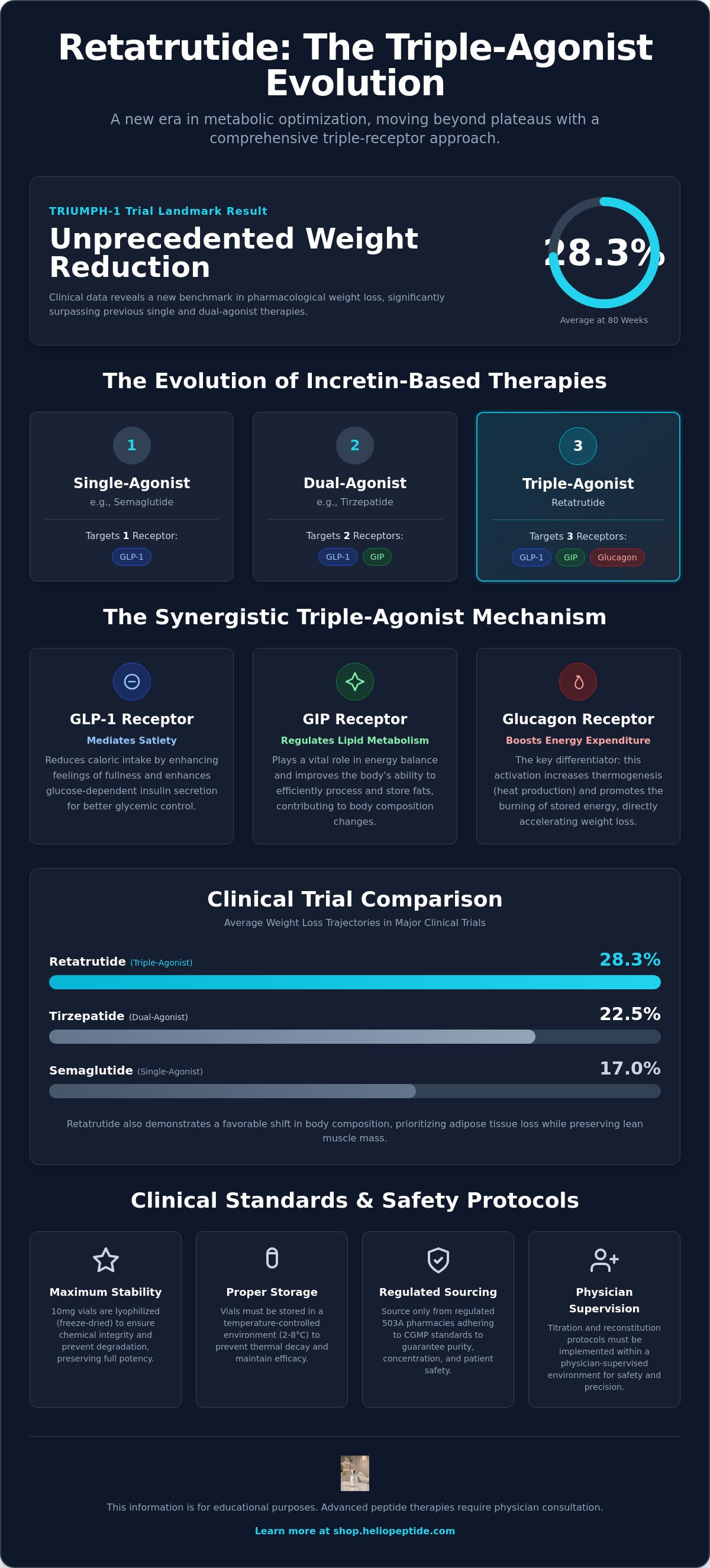
The efficacy of this molecule is derived from its high affinity for three key receptors. Each pathway contributes a specific physiological response to restore metabolic balance. GLP-1 (Glucagon-like Peptide-1) mediates satiety and enhances glucose-dependent insulin secretion, effectively reducing caloric intake. GIP (Glucose-dependent Insulinotropic Polypeptide) plays a vital role in lipid metabolism and energy balance, improving the body's ability to process fats. The core distinction lies in the activation of the Glucagon (GCGR) receptor; its engagement increases energy expenditure and promotes thermogenesis. This multi-pathway signaling creates a synergistic effect that optimizes weight loss and improves overall cardiometabolic markers, providing a robust solution for overcoming metabolic resistance.
Lyophilized Retatrutide 10mg: Stability and Purity
The 10mg lyophilized format is utilized to ensure maximum stability and chemical integrity. Lyophilization, or freeze-drying, removes moisture from the peptide while it is frozen, preventing the enzymatic degradation that often occurs in liquid solutions. This process is essential for maintaining the precise molecular structure required for effective receptor binding. Without this stabilization, the peptide's efficacy would diminish rapidly upon exposure to environmental variables.
Proper storage is a non-negotiable requirement for preserving the potency of a 10mg vial. The lyophilized powder must remain in a temperature-controlled environment, typically between 2 and 8 degrees Celsius, to prevent thermal degradation. Distinguishing between clinical-grade materials and unverified research peptides is critical for patient safety. Clinical-grade retatrutide 10mg is manufactured under rigorous CGMP (Current Good Manufacturing Practice) standards, ensuring that every vial meets the required benchmarks for purity and concentration. These standards ensure that the peptide is free from contaminants and that the dosage is precisely calibrated for clinical application.
Clinical Efficacy: Analyzing Phase 3 TRIUMPH Data
The TRIUMPH clinical trial series has fundamentally redefined the parameters of pharmacological metabolic intervention. Building upon the foundational Phase 2 trial data in NEJM, which first demonstrated the dose-dependent potency of this triple-agonist, the Phase 3 results released in early 2026 confirm a trajectory of weight loss previously unseen in clinical settings. These trials move beyond the scope of simple appetite suppression, examining how the simultaneous activation of three hormone receptors influences long term metabolic health. For clinicians and patients alike, the data suggests that retatrutide 10mg serves as a critical therapeutic threshold for achieving significant physiological transformation.
Weight Loss and Body Composition Results
Data from the TRIUMPH-1 trial indicates that participants achieved an average weight reduction of 28.3 percent at the 80 week mark. In specific cohorts with a baseline BMI of 35 or greater, this figure extended to 30.3 percent over 104 weeks. These outcomes represent a marked advancement over first-generation GLP-1 medications like semaglutide, which typically yield around 17 percent weight loss, and even dual-agonists such as tirzepatide, which average 22.5 percent. It's not just the scale weight that matters. Clinical observations highlight a favorable shift in body composition, where the rapid loss of adipose tissue is achieved while prioritizing the preservation of lean muscle mass. This high level of potency identifies retatrutide as the most effective incretin-based therapy documented to date.
Metabolic Health Markers and Cardiovascular Impact
The clinical impact of this therapy extends far beyond subcutaneous fat reduction. The TRIUMPH-4 results, focused on participants with obesity and comorbid conditions, showed substantial improvements in HbA1c levels and overall insulin sensitivity. Trial participants also experienced a consistent optimization of lipid profiles and a reduction in systolic blood pressure. One of the most distinctive features of the triple-agonist mechanism is the "glucagon effect" on hepatic health. In Phase 2 sub-studies, the 12mg dose reduced liver fat by an average of 86 percent, with 93 percent of participants achieving normal liver fat levels within 48 weeks. This makes the protocol a primary consideration for those addressing non-alcoholic fatty liver disease (NAFLD) alongside weight management. Utilizing retatrutide 10mg within a supervised program ensures these metabolic markers are monitored with the precision required for safe, long term optimization.
Retatrutide 10mg vs. Tirzepatide and Semaglutide
The progression of incretin mimetics has followed a clear trajectory toward increasing receptor complexity and physiological impact. Semaglutide established the clinical baseline as a selective GLP-1 agonist, focusing primarily on gastric emptying and central satiety. Tirzepatide subsequently expanded this model by incorporating GIP receptor activation, which improved lipid buffering and glycemic control. Retatrutide 10mg represents the current pinnacle of this evolution by adding glucagon receptor agonism to the dual GLP-1/GIP framework. This triple-agonist approach addresses metabolic resistance through three distinct yet convergent pathways, providing a more robust stimulus for individuals who have encountered biological plateaus on simpler protocols.
Comparative Receptor Mapping
Semaglutide remains a reliable foundation for many, yet its single-receptor focus can lead to compensatory biological responses that eventually stall metabolic progress. Tirzepatide mitigated some of these limitations by enhancing insulin sensitivity and fat utilization through GIP. The TRIUMPH Clinical Trial Design highlights how the addition of the third glucagon component in retatrutide specifically targets hepatic fat and increases resting energy expenditure. This triple action provides a more comprehensive stimulus than its predecessors. By engaging the glucagon receptor, the body experiences enhanced thermogenesis, which serves as a critical differentiator when comparing the potency of these three molecules.
Tolerability and Patient Experience
Patient experience across these therapies shares a common foundation of gastrointestinal considerations. Nausea, diarrhea, and dyspepsia are frequently reported during the initial titration phases of all three peptides. However, retatrutide introduces specific physiological variables due to its glucagon agonism that are not present in semaglutide or tirzepatide protocols. Clinical observations indicate a transient increase in resting heart rate, which necessitates consistent cardiovascular monitoring during the escalation to a 10mg dose. This requirement distinguishes it from the more passive monitoring schedules associated with earlier generations.
Determining the appropriate peptide requires an analysis of specific metabolic goals and prior response history. For a more detailed framework on these distinctions, clinicians often refer to the Advanced Peptide Therapy reference. Transitioning from semaglutide to retatrutide 10mg is typically indicated when weight loss stalls or when hepatic health markers require more aggressive intervention. This shift must be managed with a precise titration schedule to ensure that the increased potency does not compromise patient tolerability. The goal is to achieve a state of metabolic restoration where results are maintained through scientific methodology rather than sheer dosage volume.
Clinical Implementation: Reconstitution and Dosage
The transition to retatrutide 10mg requires a shift from fixed-dose pens to precise clinical reconstitution. This process ensures that the peptide's molecular integrity is maintained while allowing for the granular titration necessary to manage the triple-agonist's potent physiological effects. A one-size-fits-all approach is insufficient for advanced metabolic therapy; instead, dosage must be calibrated based on individual glycemic response and gastrointestinal tolerability. Professional oversight is essential to navigate these complexities, as the addition of glucagon receptor agonism introduces variables that aren't present in standard GLP-1 protocols.
Professional Reconstitution Protocol
Reconstituting lyophilized retatrutide 10mg must be performed using Bacteriostatic water (0.9% benzyl alcohol) to inhibit bacterial growth and ensure multi-use stability. Maintaining a sterile field is the first priority to prevent contamination. The diluent should be introduced slowly, allowing it to trickle down the side of the glass vial rather than being sprayed directly onto the lyophilized powder. This prevents foaming and protects the delicate peptide bonds from mechanical stress. Once the liquid is added, the vial should be gently swirled until the solution is clear; you shouldn't shake it, as vigorous agitation can denature the protein structure. Reconstituted vials must be stored in a refrigerated environment between 2 and 8 degrees Celsius and used within 28 days to ensure maximum potency.
- Sanitize the vial stopper with a 70 percent isopropyl alcohol swab before every access.
- Use a 1ml volume of diluent for a 10mg vial to simplify dosage calculations (1mg per 10 units).
- Verify the solution is completely transparent and free of particulates before administration.
Sample Titration Schedule for 2026
The standard escalation protocol follows a methodical 4-week phase model designed to minimize acute side effects like nausea or increased heart rate. Most clinical programs begin with a 2mg weekly dose for the first month. If the patient tolerates this well, the dose increases to 4mg for the subsequent four weeks. This gradual climb continues to 8mg and eventually a maintenance ceiling of 12mg, though many find significant results at the 8mg or 10mg threshold. If you experience persistent gastrointestinal distress, it's advisable to remain at your current dose for an additional 4-week cycle before attempting further escalation.
Transitioning from a maximum dose of Tirzepatide (15mg) to a retatrutide 10mg protocol requires specific physician guidance. While some may start at the 4mg mark due to existing incretin sensitivity, others require a full reset to avoid metabolic shock. For a detailed visual breakdown of these phases and volume calculations, consult the Retatrutide Dosage Chart. You can acquire clinical-grade retatrutide 10mg to begin your supervised metabolic program through our regulated pharmacy partners.
The Helio Peptide Standard: Physician Supervision
Sourcing retatrutide 10mg through unverified "gray market" vendors presents significant clinical risks that extend far beyond mere product efficacy. These vendors frequently bypass the rigorous testing protocols required to ensure the absence of heavy metal contamination, such as lead, arsenic, or mercury, which can accumulate in the body and disrupt endocrine function. A legitimate therapeutic program is defined by its adherence to 503A pharmacy regulations, which mandate that all medications are compounded under strict sterile conditions and verified for exact potency. Without a third-party Certificate of Analysis (COA) and professional oversight, you're essentially participating in an unmonitored experiment that lacks the safety nets of clinical medicine. The 503A designation is a non-negotiable benchmark that ensures every vial meets the pharmaceutical standards necessary for human metabolic optimization.
Sourcing Clinical-Grade Retatrutide
Clinical-grade materials are distinguished by their molecular purity and the transparency of their manufacturing origin. When you utilize a physician-supervised sourcing model, every vial of retatrutide 10mg is subjected to high-performance liquid chromatography (HPLC) testing to confirm that the peptide sequence and concentration match the established clinical standard. This level of verification is essential for those who prioritize long-term health restoration over short-term cost savings. Physician-led procurement also ensures that the peptide's molecular stability is preserved through specialized cold-chain logistics, preventing the rapid degradation that occurs during standard retail shipping or improper storage. This methodical approach guarantees that the triple-agonist mechanism performs as intended without the interference of unknown contaminants.
The Helio Peptide Wellness Journey
The path to metabolic restoration begins with a comprehensive metabolic screening and a detailed physician consultation. This initial assessment includes a review of specific biomarkers, such as fasting insulin, HbA1c, and liver enzymes, to establish a baseline for your personalized wellness program. We don't view medication as a standalone solution; it's a specialized tool integrated into a broader framework of physical optimization. Ongoing monitoring allows for the real-time adjustment of your protocol, ensuring that the 10mg dose is delivering peak performance while minimizing gastrointestinal side effects. Participants have direct access to medical support to navigate the nuances of triple-agonist therapy, including heart rate monitoring and energy balance adjustments. To begin your supervised transition toward peak metabolic health, explore the best online semaglutide and peptide program available today.
Advancing Your Clinical Protocol
The integration of retatrutide 10mg into a wellness program marks a decisive move toward a more sophisticated model of metabolic management. By leveraging the synergistic power of GLP-1, GIP, and glucagon receptors, you can move beyond the limitations of single or dual-agonist therapies to achieve deeper physiological restoration. It's a process that requires more than just access to the molecule. Precision is non-negotiable. This progression demands a commitment to clinical standards, from the sterile reconstitution of lyophilized peptides to the methodical escalation of dosage under professional guidance. Relying on 503A-regulated pharmacies ensures that your journey is defined by product purity rather than the variables of an unmonitored market.
To ensure your transition to this advanced therapy is both safe and effective, you're invited to Consult with a Physician for a Supervised Retatrutide Protocol. Our program provides direct access to clinical-grade lyophilized peptides and physician-supervised telehealth consultations to monitor your metabolic response. Your path to peak physical optimization is most effectively navigated through the intersection of rigorous science and expert oversight.
Frequently Asked Questions
What is the primary difference between Retatrutide 10mg and Tirzepatide?
Retatrutide is a first-in-class triple-agonist, while Tirzepatide functions as a dual-agonist. The core distinction lies in the addition of the glucagon receptor (GCGR) activation to the existing GLP-1 and GIP pathways. This third pathway specifically targets hepatic fat reduction and increases resting energy expenditure through thermogenesis. While Tirzepatide focuses on insulin sensitivity and satiety, the triple-action framework of retatrutide 10mg provides a more comprehensive stimulus for overcoming metabolic plateaus.
How long does a 10mg vial of Retatrutide last during the titration phase?
The duration depends entirely on your current stage in the physician-prescribed titration schedule. During the initial four-week phase at a 2mg weekly dose, a single 10mg vial provides five full weeks of therapy. Once the protocol escalates to the 4mg or 5mg threshold, a 10mg vial will last approximately two to two and a half weeks. Precise volume calculations are essential during these transitions to maintain the integrity of the escalation schedule.
Is Retatrutide 10mg safe for long-term metabolic optimization?
Clinical data from the TRIUMPH-1 trial supports the safety and tolerability of this peptide for durations of 80 to 104 weeks. Ongoing physician supervision is required to monitor cardiovascular markers and metabolic response throughout the program. Because the medication engages the glucagon receptor, clinicians must specifically track resting heart rate and blood pressure to ensure long-term cardiovascular stability. Safety is prioritized through regular lab work and protocol adjustments based on individual patient data.
Can I switch directly from Semaglutide to Retatrutide 10mg?
Switching requires a structured transition protocol managed by a licensed physician rather than a direct 1:1 substitution. Even if you've reached the maximum dose of Semaglutide, you'll typically begin Retatrutide at a lower introductory dose to evaluate your sensitivity to the GIP and glucagon components. Jumping directly to retatrutide 10mg without a titration phase can lead to severe gastrointestinal distress and metabolic shock. Your clinician will determine the appropriate entry point based on your prior treatment history.
What are the most common side effects associated with Retatrutide?
Gastrointestinal issues such as nausea, diarrhea, and vomiting remain the most frequently reported side effects, particularly during the dose escalation phases. These symptoms are generally transient and diminish as the body adapts to the peptide. A unique consideration for this triple-agonist is a potential increase in resting heart rate due to glucagon receptor activation. Patients should report any persistent palpitations or severe abdominal pain to their medical facilitator immediately to adjust the titration pace.
How should I store my Retatrutide 10mg vial before and after reconstitution?
Lyophilized vials should be stored in a cool, dark environment away from direct sunlight to preserve the peptide's molecular structure. Once the vial is reconstituted with Bacteriostatic water, it must be kept in a refrigerated environment between 2 and 8 degrees Celsius. Reconstituted peptides are sensitive to thermal degradation and mechanical stress; they should be used within 28 days to ensure maximum potency. Never freeze the solution, as this can denature the protein sequence.
Does Retatrutide 10mg require a prescription from a licensed physician?
Yes, legitimate access to this advanced peptide therapy requires a prescription following a clinical consultation. This requirement serves as a safety gatekeeper, ensuring that the medication is sourced from regulated 503A compounding pharmacies rather than unverified "gray market" vendors. Physician oversight is also necessary to manage the complex titration schedules and monitor for potential contraindications. Sourcing through professional channels guarantees product purity and adherence to pharmaceutical manufacturing standards.
How much Bacteriostatic water do I need for a 10mg Retatrutide vial?
Clinical protocols generally recommend using 1ml of Bacteriostatic water for a 10mg vial to create a straightforward 10mg/ml concentration. This ratio simplifies dosage math, where 10 units on a standard U-100 syringe equals 1mg of the peptide. Using a consistent volume of diluent reduces the risk of calculation errors during the titration process. Always follow the specific reconstitution instructions provided by your medical facilitator to ensure the final solution reaches the intended therapeutic concentration.
