
Best Peptides for Muscle Growth and Fat Loss: A Clinical Roundup (2026)
Achieving a superior muscle-to-fat ratio often feels like a biological contradiction, especially when aggressive caloric deficits threaten hard-earned lean tissue. You've likely experienced the frustration of stalled progress where traditional training and nutrition no longer yield visible changes in body composition. This clinical roundup examines the best peptides for muscle growth and fat loss, focusing on the sophisticated dual-signaling protocols now available through regulated medical channels. It's no longer necessary to choose between size and leanness when professional-grade metabolic tools are applied with precision.
Following the April 23, 2026, regulatory updates that transitioned several key compounds back to Category 1 status, the landscape of optimization has shifted toward high-purity, physician-supervised applications. You'll learn how specific growth hormone secretagogues and GLP-1 agonists function synergistically to protect metabolic rate while accelerating adipose tissue reduction. This guide previews the most effective 503A-compliant protocols designed to move you beyond plateaus and into a state of enhanced metabolic flexibility through rigorous, evidence-based methodology.
Key Takeaways
- Analyze the mechanism of metabolic synergy where specific peptide sequences facilitate simultaneous anabolic signaling and adipose tissue oxidation.
- Evaluate the best peptides for muscle growth and fat loss within the clinical framework of Growth Hormone Secretagogues to preserve lean tissue during fat loss phases.
- Examine how advanced GLP-1 and GIP receptor agonists improve metabolic flexibility and appetite regulation through precise hormonal modulation.
- Prioritize safety and efficacy by sourcing only through 503A compounding pharmacies to mitigate the risks associated with unregulated research-grade substances.
- Establish a structured clinical protocol that includes professional oversight and data-driven dosage adjustments tailored to individual physiological requirements.
The Science of Metabolic Synergy: Muscle Growth and Fat Loss
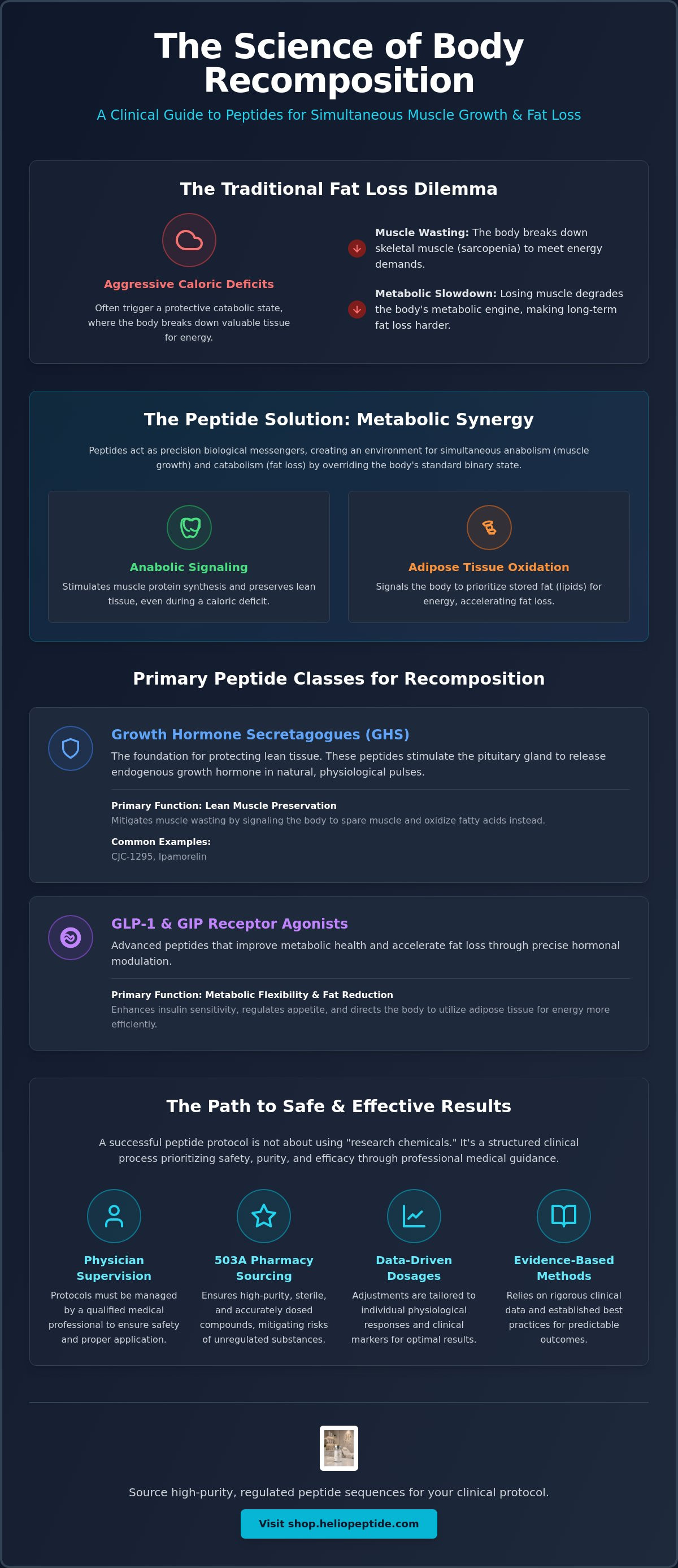
Metabolic synergy represents a departure from traditional physiological models that treat anabolism and catabolism as mutually exclusive states. In a standard physiological environment, the body typically prioritizes either tissue accretion or energy mobilization, often at the expense of the opposing process. Clinical applications of the best peptides for muscle growth and fat loss seek to override this binary through the simultaneous signaling of anabolic pathways in skeletal muscle and catabolic pathways in adipose tissue. This dual-signaling approach allows for body recomposition by directing the body to utilize stored lipids for energy while providing the hormonal environment necessary to repair and maintain lean mass.
Peptides serve as precision biological messengers that facilitate high-fidelity cellular communication. Unlike broader pharmacological interventions, the field of Peptide therapeutics focuses on using short chains of amino acids to bind with specific cell receptors, triggering predictable physiological responses. These compounds optimize nutrient partitioning by improving systemic insulin sensitivity. When insulin sensitivity is heightened, the body more effectively directs glucose and amino acids toward muscle cells for repair rather than sequestering them in adipocytes for storage. This mechanism differs fundamentally from anabolic steroids, which often rely on supraphysiological hormone levels and carry significant risks of systemic side effects. Peptides instead work within the body's existing regulatory frameworks to restore or enhance natural hormonal pulses.
Hormonal Signaling and Body Recomposition
The GH-IGF-1 axis is the primary driver of lean tissue preservation and growth. Peptides that stimulate the pituitary gland to release endogenous growth hormone subsequently increase levels of Insulin-like Growth Factor 1, a potent mediator of muscle protein synthesis. These secretagogues also modulate the basal metabolic rate, ensuring that the body's baseline energy expenditure remains elevated. Clinicians monitor successful body recomposition through markers such as improved lean mass percentages, reduced visceral fat volume, and optimized lipid profiles.
Why Traditional Fat Loss Often Leads to Muscle Wasting
Prolonged caloric deficits often trigger a protective catabolic state where the body breaks down skeletal muscle to meet energy demands. This process, often referred to as sarcopenia during weight loss, degrades the metabolic engine and makes long-term maintenance difficult. Growth hormone secretagogues mitigate these risks by providing a "protected fat loss" environment. By maintaining elevated growth hormone levels, these protocols signal the body to spare muscle tissue and prioritize the oxidation of fatty acids. This ensures that weight reduction is derived from adipose stores rather than functional lean mass, preserving the patient's strength and metabolic health throughout the treatment cycle.
Primary Peptides for Lean Muscle Tissue Preservation
Growth hormone secretagogues (GHS) serve as the clinical foundation for maintaining skeletal muscle integrity during aggressive fat loss phases. These compounds, primarily GHRH analogs, function by stimulating the anterior pituitary gland to release endogenous growth hormone in a manner that respects natural physiological patterns. Unlike exogenous growth hormone administration, which carries risks of receptor downregulation, GHS maintain the body's natural feedback loops. Utilizing the best peptides for muscle growth and fat loss requires a focus on the lyophilized purity of the compound. This freeze-dried state ensures chemical stability and dosing precision, which are essential for achieving predictable clinical outcomes and ensuring patient safety.
The distinction between steady-state elevation and pulsatile release is a critical factor in protocol design. While some interventions aim for constant hormonal presence, the human body naturally releases growth hormone in discrete pulses, primarily during deep sleep. Peptides that mimic these pulses are often preferred for long-term therapy because they minimize the risk of pituitary fatigue. To ensure these protocols yield the intended physiological outcomes, it's vital to source compounds from regulated pharmaceutical suppliers specializing in high-purity lyophilized sequences.
CJC-1295 and Ipamorelin: The Clinical Standard
The administration of CJC-1295 alongside Ipamorelin is the recognized clinical standard for optimizing the GH-IGF-1 axis. CJC-1295 acts as a GHRH analog that extends the signaling window for growth hormone release, while Ipamorelin, a selective GHRP, triggers a specific pulse without impacting prolactin or cortisol. This combination creates a synergistic effect; the GHRH provides the signal and the GHRP provides the amplitude. Clinicians often distinguish between CJC-1295 with DAC, which provides a steady-state "bleeding" release over several days, and the non-DAC version, which facilitates a sharper "pulsing" release. For patients seeking the best peptides for muscle growth and fat loss, the pulsing profile often aligns more closely with natural circadian rhythms, promoting lean mass retention without desensitizing the pituitary gland.
Muscle Recovery and Tissue Repair with BPC-157
Body Protective Compound 157 (BPC-157) contributes to body recomposition through its potent angiogenic properties. By promoting the formation of new blood vessels and accelerating the repair of tendons, ligaments, and muscle fibers, BPC-157 reduces the downtime required between intensive training sessions. This increased recovery capacity allows for a higher training volume and frequency, which are essential drivers of metabolic demand. Systemic tissue repair ensures that the metabolic cost of recovery remains high, further aiding in the reduction of adipose tissue. When recovery is optimized, the body is less likely to enter a state of chronic inflammation, which can otherwise stall fat loss and lead to muscle wasting.
Advanced GLP-1 and GIP Peptides for Clinical Fat Loss
Incretin mimetics have redefined the clinical approach to adipose tissue reduction by targeting the underlying hormonal drivers of obesity and metabolic dysfunction. These peptides mimic natural hormones that govern postprandial glucose homeostasis and satiety signaling. While GHRH analogs provide the anabolic foundation discussed in previous sections, incretin agonists facilitate the catabolic efficiency required for significant body recomposition. Utilizing these tools as part of the best peptides for muscle growth and fat loss strategy ensures that fat loss is driven by metabolic optimization rather than simple caloric restriction.
The evolution of this therapy has moved from single-receptor agonists to multi-agonist sequences that address multiple metabolic pathways simultaneously. This progression allows for greater efficacy at lower relative dosages, potentially reducing the incidence of side effects. Physician-supervised titration remains the standard of care for these protocols. A structured escalation of dosage allows the patient's gastrointestinal system to adapt while the clinician monitors markers of metabolic health; this ensures that the rate of fat loss remains sustainable and does not trigger the muscle-wasting mechanisms mentioned earlier.
Semaglutide 15mg: Beyond Weight Loss
The application of Semaglutide 15 mg (3ml) - Lyophilized provides a robust framework for long-term weight management. By acting as a long-acting GLP-1 receptor agonist, it effectively lowers blood glucose levels and improves insulin sensitivity. This metabolic stabilization is particularly effective at reducing visceral fat, which is the high-risk adipose tissue associated with systemic inflammation. Its clinical longevity is well-established, making it a reliable primary intervention for patients seeking to correct chronic metabolic imbalances before or during a muscle-building phase.
Retatrutide 10mg: The Triple Agonist Frontier
Retatrutide represents a significant technological leap as a triple agonist targeting the GIP, GLP-1, and glucagon receptors. This tri-agonist mechanism provides a multi-faceted attack on stored fat. While the GLP-1 and GIP components manage appetite and insulin, the activation of the glucagon receptor introduces a potent thermogenic effect. By increasing energy expenditure at the cellular level, Retatrutide accelerates the oxidation of fatty acids more aggressively than previous generations of peptides. In 2026, it is recognized as a premier option for patients who have plateaued on traditional therapies, offering a sophisticated method for achieving deep adipose reduction while maintaining the metabolic flexibility necessary for lean tissue growth. This makes it a critical component of the best peptides for muscle growth and fat loss protocols for advanced body recomposition.
Sourcing and Safety: The Regulatory Importance of 503A Pharmacies
The efficacy of any body recomposition protocol is fundamentally dependent on the regulatory status and manufacturing standards of the compounds used. 503A compounding pharmacies operate under strict state board oversight and adhere to United States Pharmacopeia (USP) standards to produce patient-specific medications. This clinical environment is necessary for obtaining the best peptides for muscle growth and fat loss, as it ensures the absence of contaminants and the accuracy of the stated concentration. In contrast, products labeled for "research use only" or "not for human consumption" bypass these regulatory safeguards. These substances often lack third-party verification for purity or sterility, posing significant risks of systemic inflammation or unpredictable biological responses that can undermine metabolic health.
Legitimate peptide therapy requires a valid prescription from a licensed healthcare provider, typically facilitated through specialized telehealth platforms. This professional gatekeeping ensures that the sequences are sourced from pharmacies that comply with the April 23, 2026, regulatory updates regarding Category 1 substances. Clinical-grade purity isn't merely a safety concern; it's a physiological requirement. Contaminants or degraded sequences can trigger an immune response that stalls the progress discussed in previous sections. Without a verifiable chain of custody from a 503A pharmacy, the risk of sub-therapeutic dosing or heavy metal contamination increases significantly.
Lyophilized vs. Liquid: Ensuring Stability and Potency
Peptide integrity is best preserved through the lyophilization process, which involves flash-freezing and removing moisture under a vacuum. This freeze-dried state prevents the hydrolysis and oxidation that occur when peptides are suspended in liquid for extended periods. Pre-mixed liquid peptides often suffer from rapid degradation, losing potency before they ever reach the patient. High-quality manufacturing is identified by a consistent, white, crystalline cake within the vial, indicating a successful lyophilization cycle and the maintenance of structural stability during transit and storage.
The Role of Physician Oversight in Peptide Therapy
A professional protocol begins with comprehensive baseline blood work to assess existing hormonal levels and metabolic function. Clinicians use this data to monitor IGF-1 levels and glucose markers throughout the treatment, ensuring that the stimulation of the GH-IGF-1 axis remains within a safe physiological range. This oversight is particularly critical when buying semaglutide online, as legal requirements dictate that a physician must review the patient's medical history to prevent contraindications. To begin your journey with a regulated and medically sound protocol, you can access our advanced peptide therapy programs to ensure your treatment meets the highest clinical standards.
Implementing a Physician-Supervised Peptide Protocol
The transition from understanding biological mechanisms to clinical application requires a structured, data-driven framework. A patient's journey begins with a comprehensive medical consultation and diagnostic screening to establish baseline biomarkers and define specific body composition objectives. By analyzing current lean mass and adipose distribution through advanced metrics, a clinician can determine the best peptides for muscle growth and fat loss suited for the individual's physiological profile. This approach ensures that the chosen sequences align with the patient's metabolic capacity and health history, moving beyond the generic models common in the retail supplement industry. Continuous monitoring allows for real-time adjustments to the protocol, ensuring that the body remains in an optimal state for recomposition without overtaxing systemic resources.
Protocol selection is primarily dictated by the patient's immediate metabolic objective. A focus on muscle preservation during an aggressive caloric deficit may prioritize GHRH analogs, while significant adipose reduction might require the integration of advanced incretin mimetics. Clinicians often employ "pulsing" or "cycling" strategies for secretagogues to maintain pituitary sensitivity and prevent receptor desensitization. For many patients, these protocols are integrated with Physician-Supervised HRT or TRT Programs. Testosterone Replacement Therapy provides a critical androgenic foundation that supports protein synthesis, ensuring that the anabolic signaling from peptides is maximized within a balanced hormonal environment. This hormonal synergy is vital for men and women seeking to restore physiological balance and achieve peak physical performance through evidence-based medicine.
Personalizing Your Wellness Program
Individualized dosing is the cornerstone of successful peptide therapy. Factors such as age, activity level, and baseline IGF-1 levels influence how a patient responds to specific secretagogues. When the goal is primarily muscle focus, the timing of administration is often synchronized with the body's natural circadian rhythms to enhance recovery. Conversely, a fat-focus protocol may emphasize the metabolic-boosting properties of triple agonists. Integrating these tools with TRT Programs ensures that the body has the necessary hormonal support to build new tissue while simultaneously oxidizing stored lipids. This multi-faceted strategy addresses the root causes of body composition plateaus rather than merely treating the symptoms of a slow metabolism.
Next Steps: Sourcing Clinical-Grade Peptides
Accessing high-purity, regulated compounds is the final step in the optimization process. The Helio Peptide platform facilitates this transition by connecting patients with licensed physicians who specialize in Advanced Peptide Therapy. By utilizing 503A regulated sourcing, patients receive lyophilized medications that meet the highest standards for stability and potency. This professional oversight eliminates the risks associated with unregulated retail channels and ensures that every vial is prepared according to precise medical specifications. To begin a tailored protocol, patients should consult with a certified physician to review their diagnostic data and establish a roadmap for long-term body recomposition. You can initiate your clinical consultation through our secure medical portal to ensure your journey is grounded in scientific rigor and safety. This methodical progression ensures that results are a direct consequence of professional guidance and pharmaceutical excellence.
Advancing Toward Metabolic Excellence
The transition toward a superior muscle-to-fat ratio is achieved through the deliberate application of dual-signaling protocols that prioritize metabolic health. By utilizing growth hormone secretagogues alongside advanced incretin mimetics, patients can maintain an anabolic environment while facilitating targeted lipid oxidation. It's essential to prioritize clinical-grade lyophilized peptides sourced exclusively from FDA-regulated 503A pharmacies to ensure both sequence integrity and systemic safety. This clinical roundup has identified the best peptides for muscle growth and fat loss within a framework of rigorous medical oversight and pharmaceutical excellence.
Achieving sustainable body recomposition requires more than just high-purity compounds; it necessitates a structured, data-driven strategy tailored to your unique physiological requirements. You can consult a certified physician for a personalized peptide protocol through our secure telehealth platform to begin your optimization journey. Every treatment plan is backed by professional guidance to ensure that your results are a direct consequence of scientific precision. Your commitment to physical optimization is best supported by the highest standards of clinical care.
Frequently Asked Questions
Which peptide is most effective for simultaneous muscle gain and fat loss?
A combination protocol utilizing CJC-1295 and Ipamorelin alongside an incretin mimetic like Retatrutide is generally considered the most effective for simultaneous recomposition. These are frequently cited as the best peptides for muscle growth and fat loss because they stimulate endogenous growth hormone while aggressively oxidizing adipose tissue. This dual-signaling strategy ensures that lean mass is preserved through increased IGF-1 levels even as the body enters a deep caloric deficit.
Are peptides for muscle growth considered steroids?
Peptides are not classified as anabolic steroids; they are short chains of amino acids that act as biological signaling messengers. While steroids introduce exogenous synthetic hormones that can suppress natural production, peptides stimulate the pituitary gland to release the body's own hormones. This mechanism preserves the natural feedback loops of the endocrine system, offering a refined approach to physical optimization with a reduced risk of the systemic side effects associated with androgenic compounds.
How long does it take to see results from a fat loss peptide protocol?
Visible physiological changes typically manifest between 8 and 12 weeks of consistent administration, although metabolic shifts occur much sooner. Initial improvements in sleep quality and recovery are often reported within the first 14 days of a protocol. The timeline for significant adipose reduction and lean tissue accretion depends on the specific peptide sequence, the patient's baseline body composition, and the precision of the physician-supervised titration schedule.
Can I use Semaglutide and CJC-1295 together?
Semaglutide and CJC-1295 are frequently prescribed together to achieve what clinicians call protected fat loss during body recomposition phases. This combination leverages the appetite suppression and glucose-lowering effects of the GLP-1 agonist while the GHRH analog protects skeletal muscle from catabolism. Utilizing the best peptides for muscle growth and fat loss in tandem allows patients to maintain a high basal metabolic rate while aggressively reducing visceral fat stores.
What are the risks of buying peptides from non-pharmacy sources?
Sourcing peptides from non-pharmacy or research use only channels carries significant risks of chemical contamination and sequence degradation. These unregulated substances often contain heavy metals or endotoxins that can trigger systemic inflammatory responses. Without the lyophilization standards maintained by 503A pharmacies, the potency of the peptide is not guaranteed, leading to unpredictable clinical outcomes and potential long-term health complications that can stall metabolic progress.
Do I need a prescription for peptides like Retatrutide?
Retatrutide and other advanced sequences require a valid prescription from a licensed healthcare provider and must be dispensed by a regulated pharmacy. These are therapeutic compounds that necessitate medical screening and baseline blood work to ensure patient safety. Attempting to acquire these substances without professional oversight bypasses the critical monitoring of metabolic markers and hormonal balance required for a successful and safe clinical outcome.
How do peptides affect natural hormone production compared to HRT?
Peptides function as secretagogues that encourage the body to increase its natural production of hormones like growth hormone or insulin. In contrast, Hormone Replacement Therapy (HRT) involves the introduction of exogenous hormones to replace what the body is no longer producing at sufficient levels. While peptides support and enhance existing endocrine pathways, HRT is typically utilized when those pathways are fundamentally compromised, making them complementary rather than identical tools.
What is the difference between 503A and 503B pharmacies for peptides?
503A compounding pharmacies are state-licensed facilities that prepare patient-specific medications according to a unique prescription for an individual. 503B outsourcing facilities are federally regulated entities that manufacture larger batches of medications for office use or hospital supply. For personalized peptide therapy, 503A pharmacies are the clinical standard because they allow for the precise, individualized dosing required to meet a patient's specific metabolic and body composition goals.
