
Fat-Dissolving Peptides: A Clinical Comparison of Metabolic vs. Localized Lipolysis
The promise of immediate spot reduction through localized injections often overlooks the physiological reality that sustainable adipose reduction is fundamentally a systemic process. It's common to feel a sense of stagnation when targeted exercise and strict nutritional adherence don't yield results in specific areas, causing many to seek out fat-dissolving peptides as a potential solution. This frustration is frequently compounded by a marketplace saturated with unverified substances and confusing clinical terminology that obscures the path to legitimate health optimization.
You'll gain a precise understanding of the distinction between localized lipolysis and the systemic metabolic signaling provided by regulated, physician-supervised therapies. We will evaluate the safety profiles and biochemical mechanisms of clinical-grade options, such as lyophilized Semaglutide and the investigational triple agonist Retatrutide, which demonstrated weight loss of up to 24% in clinical trials concluded in 2026. This comparison provides the necessary framework to choose a protocol that prioritizes both long-term metabolic health and measurable physical refinement through established medical standards.
Key Takeaways
- Distinguish between localized lipolytic agents and systemic metabolic signaling to determine which clinical protocol aligns with your specific body composition objectives.
- Examine the biological mechanisms of fat-dissolving peptides and growth hormone secretagogues that facilitate systemic adipose reduction as opposed to localized treatments.
- Understand the safety standards of 503A regulated pharmacies and why physician oversight is required for navigating the complexities of clinical-grade peptide therapy.
- Identify the efficacy profiles of GLP-1 agonists such as Semaglutide and Retatrutide in optimizing metabolic signaling for sustainable weight management.
- Learn the diagnostic requirements for implementing a protocol, including the necessity of comprehensive metabolic blood panels and professional consultations.
Defining Fat-Dissolving Peptides: Nomenclature and Clinical Categories
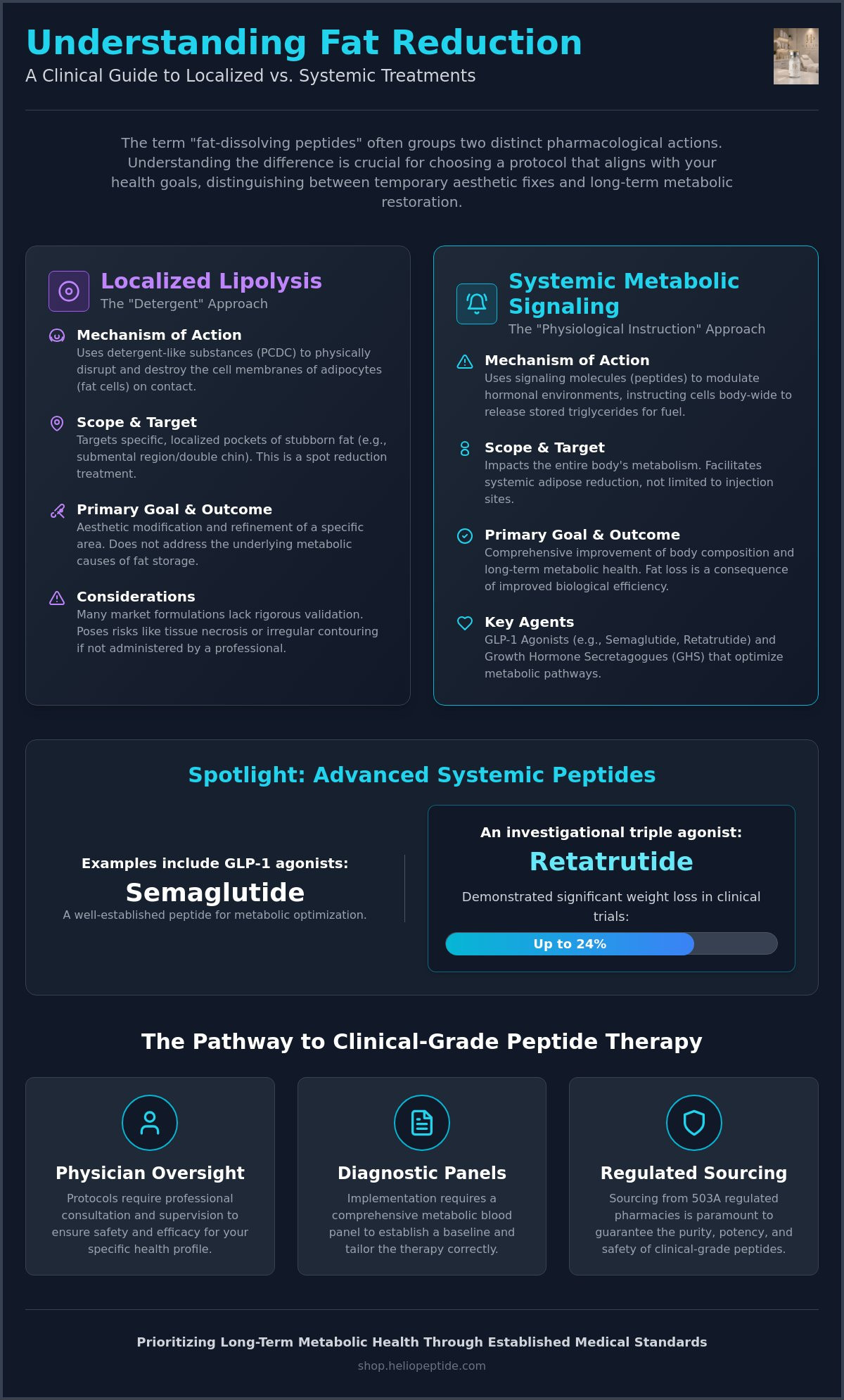
Precision in medical nomenclature is the foundation of effective clinical outcomes. The term fat-dissolving peptides is frequently utilized as a catch-all phrase in fitness and wellness circles. It erroneously groups two distinct pharmacological actions: the localized destruction of adipocytes and the systemic optimization of lipid metabolism. Understanding these categories is essential for patients seeking to distinguish between temporary aesthetic modifications and long-term metabolic restoration.
Biological differences between these modalities are significant. While localized treatments focus on the physical degradation of fat tissue, systemic peptides utilize short-chain amino acids to regulate endogenous lipid oxidation. This process involves sophisticated signaling that influences how the body prioritizes fuel sources and manages energy expenditure. Choosing the correct protocol requires a clear understanding of whether the goal is the removal of a specific fat deposit or a comprehensive shift in body composition.
Localized Lipolysis: The PCDC Mechanism
Localized lipolysis typically involves the administration of Phosphatidylcholine and Sodium Deoxycholate, commonly referred to as PCDC. These substances act as biological detergents. They disrupt the cell membranes of adipocytes upon contact, leading to cell death and subsequent absorption by the body's lymphatic system. Clinicians often reserve this method for specific areas of stubborn fat, such as the submental region or small pockets that resist traditional weight loss efforts.
The regulatory status of localized injections differs from systemic therapies. While certain deoxycholic acid formulations are FDA-approved for submental fat reduction, many "fat-dissolving" mixtures found on the market lack rigorous clinical validation. This makes professional oversight and sterile sourcing from regulated pharmacies paramount to avoid complications such as tissue necrosis or irregular contouring.
Systemic Metabolic Signaling: The Peptide Approach
In contrast, systemic peptide therapy focuses on enhancing the body's natural capacity to mobilize and utilize stored energy. Peptides such as GLP-1 agonists and Growth Hormone Secretagogues (GHS) don't "dissolve" fat through direct contact. Instead, they modulate hormonal environments to accelerate the metabolic pathway of lipolysis across the entire body. This isn't a detergent action; it's a physiological instruction to the cells to release stored triglycerides for fuel.
This transition from "dissolving" fat to "burning" fat represents a shift toward cellular signaling. By influencing insulin sensitivity and pituitary output, these molecules encourage the body to utilize adipose tissue as a primary energy substrate rather than glucose. This methodology forms the core of advanced peptide therapy, where the objective isn't merely the reduction of a single pocket of fat, but the comprehensive optimization of the patient's metabolic profile. These protocols prioritize metabolic health, ensuring that fat loss is a consequence of improved biological efficiency.
Systemic vs. Localized Treatments: A Comparative Analysis
The clinical efficacy of adipose reduction depends heavily on the chosen delivery method and the intended pharmacological outcome. Localized treatments, often categorized as mesotherapy, involve the intradermal or subcutaneous administration of detergents directly into specific fat deposits. In contrast, systemic peptide therapy utilizes subcutaneous injections to introduce signaling molecules that circulate throughout the body to modulate metabolic pathways. While consumers often use the term fat-dissolving peptides interchangeably between these two, the physiological results are fundamentally different. Localized methods focus on immediate spot reduction through the physical destruction of cells; systemic protocols aim for comprehensive body composition improvement by optimizing energy utilization.
Sustainability in fat loss is achieved when the underlying metabolic environment is addressed rather than just the visible symptoms of adipose accumulation. Localized destruction of fat cells can provide aesthetic refinement in areas like the submental region, but it doesn't prevent the expansion of remaining adipocytes if the patient's caloric balance and hormonal signaling remain dysregulated. Systemic treatments offer a more durable solution because they influence the body's baseline metabolic rate. Before initiating any protocol, a comprehensive blood panel and metabolic assessment are clinically necessary. These diagnostics provide the baseline data required to identify hormonal deficiencies or insulin resistance that might impede progress, ensuring the chosen therapy is both safe and targeted.
Metabolic Impact and Body Composition
Systemic peptides are particularly effective at addressing the root causes of metabolic dysfunction, such as impaired growth hormone secretion or poor glucose management. One significant advantage of this approach is the preservation of lean muscle mass. During a caloric deficit, the body often catabolizes muscle tissue for energy; however, specific signaling molecules encourage the body to prioritize the mobilization of triglycerides from adipose tissue instead. For patients focused on physical optimization, identifying the best peptides for muscle growth and fat loss is essential to achieving a refined silhouette without sacrificing metabolic health or strength. This holistic approach ensures that weight loss translates into a healthier, more functional body composition.
Safety and Adverse Reaction Profiles
Safety considerations vary significantly between these two modalities. Localized injections carry a risk of localized skin deformities, including permanent scarring, contour irregularities, or tissue necrosis if the mechanism of injection lipolysis is not precisely controlled. Systemic fat-dissolving peptides typically present a different side effect profile, often involving transient gastrointestinal symptoms that can be managed through physician-led titration. It's vital to avoid unapproved dissolving cocktails sold through unregulated online channels, as these substances often lack the purity standards found in clinical-grade products. Engaging with a provider for physician-supervised peptide therapy ensures that your protocol is monitored for both safety and efficacy, minimizing risks while maximizing metabolic restoration.
The Biological Mechanism of Metabolic Fat Loss
Metabolic fat loss is a complex physiological process governed by endocrine signaling and cellular energy regulation. While the term fat-dissolving peptides is often used to describe various interventions, the biological reality of systemic peptides involves the modulation of specific pathways to enhance lipid oxidation. Unlike localized detergents that physically rupture cell membranes, metabolic peptides function as biochemical messengers that instruct the body to prioritize the mobilization of stored triglycerides. This signaling approach ensures that adipose reduction is a systemic response rather than a localized event, leading to more profound changes in body composition and metabolic health.
The efficacy of these treatments is rooted in their ability to address different facets of human metabolism. Glucagon-like peptide-1 (GLP-1) agonists, such as semaglutide 15 mg, function by enhancing insulin sensitivity and regulating satiety centers in the hypothalamus. These mechanisms are complemented by the emergence of multi-agonist molecules like retatrutide 10mg, which targets GLP-1, glucose-dependent insulinotropic polypeptide (GIP), and glucagon receptors simultaneously. This triple-agonist approach facilitates significant weight reduction, with clinical data from 2026 indicating participants achieved up to 24% loss of starting body weight after 48 weeks. A comprehensive Clinical Review of Peptides in Obesity Treatment confirms that these signaling pathways are essential for addressing the multifaceted nature of metabolic dysfunction.
Hormonal Balance and Metabolic Performance
Fat loss protocols frequently stall when the underlying hormonal environment is neglected. Adipose tissue is metabolically active and influenced heavily by the balance of testosterone and estrogen. When these levels are suboptimal, the body's metabolic set point remains elevated, resisting efforts to reduce fat mass despite caloric restriction. The integration of physician-supervised HRT serves to restore this balance, providing the necessary hormonal foundation for fat-dissolving peptides to function effectively. By optimizing the endocrine environment, patients can overcome biological resistance and achieve a more efficient state of lipid metabolism.
Growth Hormone and Adipose Tissue
Growth Hormone Secretagogues (GHS) play a specialized role in targeting visceral adipose tissue, which is the deep fat surrounding internal organs. Peptides like Tesamorelin or Ipamorelin stimulate the pituitary gland to release endogenous growth hormone, which has a high affinity for receptors found in visceral fat. This is a critical distinction in clinical weight management; while subcutaneous fat reduction is often the aesthetic goal, the reduction of visceral fat is the primary driver of improved metabolic health. Growth Hormone Secretagogues are synthetic peptides that bind to specific receptors in the pituitary gland to trigger the pulsatile release of endogenous growth hormone, thereby facilitating the mobilization of fatty acids from adipose tissue.
- Endogenous Stimulation: GHS encourage the body's natural production rather than introducing exogenous hormones.
- Visceral Targeting: Effective reduction of metabolically harmful abdominal fat.
- Cellular Signaling: Optimization of the lipolytic pathway through hormonal regulation.
Sourcing and Safety: The 503A Pharmacy Standard
The integrity of any pharmacological intervention is contingent upon the quality of its source. In the unregulated market for fat-dissolving peptides, consumers often encounter substances labeled for "research use only," which lack the necessary certifications for human administration. Clinical-grade peptides are synthesized in environments that adhere to stringent purity and potency requirements, ensuring that each vial contains the exact concentration required for therapeutic efficacy. This distinction is critical; research-grade materials may contain contaminants or varying concentrations that lead to unpredictable biological responses or localized tissue damage.
503A pharmacies are traditional compounding facilities that represent the gold standard for patient safety. These pharmacies operate under the jurisdiction of state boards of pharmacy and are required to adhere to United States Pharmacopeia (USP) standards for sterile preparations. Stability is maintained through lyophilization, a specialized freeze-drying process that removes moisture from the peptide. This technique preserves the structural integrity of the amino acid sequence, preventing degradation during transport and ensuring the product remains stable until reconstitution. Without this pharmaceutical-grade processing, the delicate molecular structure of fat-dissolving peptides can break down, rendering the therapy ineffective or potentially immunogenic.
The Importance of Physician Oversight
Physician oversight is a non-negotiable component of a safe metabolic protocol. Accessing the best online semaglutide program provides a structured environment where medical consultations and baseline blood work are standard requirements. Self-administration without metabolic monitoring exposes the patient to unnecessary risks, including unmanaged gastrointestinal side effects or the failure to identify underlying contraindications. Clinical protocols allow for precise titration, where a physician adjusts dosages based on the patient's specific metabolic response and tolerability, ensuring that the transition to optimized lipid metabolism is both smooth and sustainable.
Regulatory Compliance in the United States
United States regulatory standards for peptide synthesis are among the most rigorous in the world. Verification of a manufacturer's license and a physician's credentials is the only way to ensure compliance with these established safety frameworks. The danger of "fat-dissolving" kits sold without a prescription lies in their lack of oversight, often resulting in contaminated products or incorrect dosages that can cause permanent scarring or systemic toxicity. For those seeking a regulated and physician-led approach to health optimization, you can access clinical-grade peptide therapy through our professional telehealth platform, ensuring every step of your protocol is handled with medical precision.
Implementing a Clinical Fat Loss Protocol
The transition from understanding metabolic theory to achieving measurable physical results requires a methodical, physician-led approach that prioritizes biological data over anecdotal trends. While many individuals explore the potential of fat-dissolving peptides for their aesthetic benefits, clinical success is rooted in the systematic management of endocrine signaling and metabolic rate. A structured protocol ensures that adipose reduction is a consequence of improved physiological function rather than a temporary caloric deficit. This clinical framework is designed to optimize body composition while maintaining the highest standards of patient safety and pharmaceutical integrity.
A rigorous implementation strategy typically follows a five-step progression to ensure efficacy and safety. The process begins with a comprehensive metabolic and hormonal blood panel assessment to identify baseline insulin sensitivity, thyroid function, and sex hormone levels. Following these diagnostics, a physician consultation is conducted to determine the most appropriate peptide agonist, such as a GLP-1 for weight management or a Growth Hormone Secretagogue for visceral fat targeting. Implementation utilizes precision titration, often incorporating microdose glp 1 strategies to mitigate gastrointestinal side effects while maintaining therapeutic metabolic response. Ongoing monitoring of body composition and biomarkers ensures the patient is losing adipose tissue rather than lean mass, leading to long-term maintenance and healthspan optimization.
Personalized Wellness Programming
Peptide protocols are most effective when they are precisely tailored to an individual’s unique metabolic baseline. This customization ensures that the chosen molecular signaling aligns with the patient’s specific physiological needs and health objectives. Within this broader health optimization framework, the role of nutrition and progressive resistance training is vital for preserving lean muscle mass during the fat loss phase. By prioritizing muscle preservation, the protocol helps maintain a robust basal metabolic rate, which is essential for preventing weight regain. Integrating fat-dissolving peptides into a holistic strategy that includes lifestyle interventions allows for a more comprehensive restoration of the body's metabolic set point.
The Helio Peptide Clinical Advantage
Helio Peptide provides a sophisticated gateway to health optimization by connecting patients with US-licensed physicians who specialize in advanced metabolic therapies. This professional oversight is essential for navigating the complexities of peptide administration and ensuring that all treatments are clinically indicated. Every protocol utilizes high-purity, lyophilized peptides sourced exclusively from regulated 503A compounding pharmacies to guarantee stability, potency, and safety. This transparent sourcing model protects patients from the risks associated with unverified research-grade materials. Initiating a physician-supervised metabolic optimization program involves a streamlined process that begins with diagnostic coordination and moves toward a personalized clinical strategy designed for sustainable physical refinement.
Advancing Toward Sustained Metabolic Restoration
Achieving a refined body composition is a consequence of precise biological signaling rather than isolated aesthetic interventions. While the market for fat-dissolving peptides offers various modalities, the evidence prioritizes systemic metabolic optimization for those seeking durable health outcomes. You've learned that the distinction between localized destruction and systemic signaling is fundamental to both safety and efficacy. By prioritizing diagnostic data and hormonal balance, you transition from temporary spot reduction to a comprehensive restoration of your metabolic set point.
The foundation of any successful protocol is the integrity of the pharmaceutical source and the rigor of the clinical oversight. Helio Peptide ensures that your journey is supported by physician-led clinical protocols and high-purity lyophilized peptide formulations. Every product is sourced from FDA-regulated 503A pharmacies to maintain the highest standards of stability and patient safety. This disciplined approach removes the uncertainty of unverified markets, positioning you in a space defined by scientific methodology and professional guidance.
Your path to physical optimization should be as rigorous as the science that enables it. Begin your physician-supervised metabolic optimization program with Helio Peptide. We're committed to facilitating your progression toward peak performance through clinical excellence.
Frequently Asked Questions
Are fat-dissolving peptides the same as Kybella?
Fat-dissolving peptides are fundamentally different from Kybella, as the latter is a brand name for deoxycholic acid. While Kybella acts as a localized detergent to physically rupture fat cell membranes, metabolic peptides function as biochemical messengers that modulate systemic energy utilization. Patients should distinguish between these localized lipolytic agents and the endocrine-based signaling utilized in advanced peptide therapy to ensure their chosen protocol aligns with their specific metabolic goals.
Do fat-dissolving peptides require a prescription in the US?
Clinical-grade fat-dissolving peptides require a valid prescription from a licensed healthcare provider in the United States. While research-grade substances are often available through unregulated online channels, these are not intended for human consumption and lack the oversight of 503A compounding pharmacies. Legal and safe administration is only possible through physician-supervised programs that ensure pharmaceutical purity and dosage accuracy while maintaining adherence to federal regulatory standards.
What is the most effective peptide for visceral fat loss?
Tesamorelin is widely recognized in clinical literature as a highly effective peptide for the reduction of visceral adipose tissue. Unlike subcutaneous fat, visceral fat is metabolically active and surrounds internal organs, making its reduction a priority for cardiovascular health. Growth hormone secretagogues like Ipamorelin also support this process by stimulating the endogenous release of growth hormone, which has a specific affinity for visceral fat receptors and promotes improved lipid oxidation.
How long does it take to see results from fat-loss peptides?
Measurable changes in body composition typically become evident within 8 to 12 weeks of consistent adherence to a clinical protocol. While initial metabolic shifts occur immediately at the cellular level, the visible reduction of adipose tissue is a cumulative process that depends on the patient's baseline metabolic rate and hormonal balance. Results are most sustainable when the therapy is integrated with a structured nutritional and resistance training framework to preserve lean muscle mass.
Can I use fat-dissolving peptides without physician supervision?
Self-administration of fat-dissolving peptides without medical oversight is clinically inadvisable and carries significant health risks. Physician supervision is essential for the precise titration of dosages and the management of potential side effects, such as gastrointestinal distress or hormonal fluctuations. Professional monitoring through regular blood panels ensures that the therapy remains effective and that the patient's metabolic biomarkers stay within optimal ranges throughout the duration of the treatment protocol.
What is the difference between research-grade and clinical-grade peptides?
The primary distinction between these grades lies in the manufacturing standards and regulatory oversight. Clinical-grade peptides are synthesized in FDA-regulated 503A compounding pharmacies, ensuring high purity, correct concentration, and molecular stability through lyophilization. Research-grade products are sold without these guarantees and may contain contaminants or inconsistent dosages, making them unsuitable and potentially hazardous for therapeutic human use. Patients should always verify the pharmacy's credentials before beginning any peptide-based treatment.
Are there any permanent side effects from fat-dissolving injections?
Localized fat-dissolving injections, such as PCDC, can result in permanent side effects like skin irregularities, scarring, or tissue necrosis if administered incorrectly. In contrast, systemic peptide therapies typically present transient side effects that resolve upon dose adjustment or cessation of treatment. Ensuring that any injection protocol is handled by a qualified clinician is the most effective way to mitigate the risk of long-term tissue damage and achieve a refined aesthetic result.
How do GLP-1 peptides compare to growth hormone secretagogues for fat loss?
GLP-1 agonists and growth hormone secretagogues (GHS) target different metabolic pathways to facilitate fat loss. GLP-1 peptides primarily regulate blood glucose, insulin sensitivity, and satiety centers in the brain to reduce caloric intake. GHS molecules focus on stimulating the pituitary gland to increase endogenous growth hormone, which prioritizes the mobilization of fatty acids and the preservation of lean muscle mass. Combining these pathways can often yield synergistic effects on body composition.
