
Peptide Therapy for Weight Loss: A Clinical Overview of Metabolic Optimization
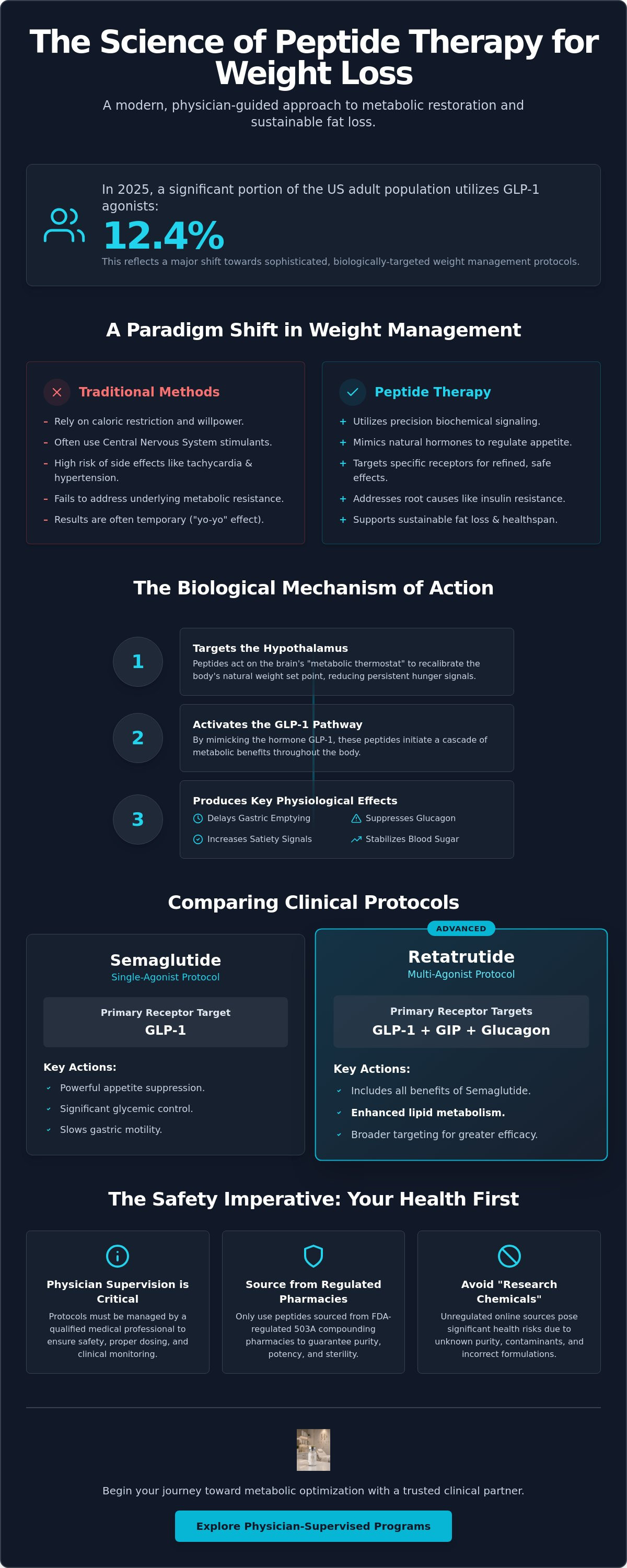
As of 2025, 12.4% of the United States adult population has integrated GLP-1 receptor agonists into their metabolic health protocols. This significant adoption reflects a shift away from traditional caloric restriction toward sophisticated pharmacological interventions that address the underlying biological drivers of obesity. For many, the primary obstacle to sustainable fat loss isn't a lack of discipline but a complex state of metabolic resistance that persists despite rigorous lifestyle modifications. Utilizing peptide therapy for weight loss offers a targeted approach to bypass these physiological plateaus by modulating specific hormonal pathways involved in appetite regulation and glucose homeostasis.
The proliferation of unregulated "research chemicals" has introduced a concerning level of risk and confusion into the therapeutic space. It's essential to have clarity regarding the safety, purity, and clinical efficacy of advanced peptide protocols. This article provides a comprehensive analysis of the scientific mechanisms behind agents like Semaglutide and Retatrutide, emphasizing the necessity of physician-supervised administration and pharmaceutical-grade sourcing. We'll examine how these medications facilitate metabolic restoration and contribute to extended healthspan, ensuring your journey toward physical optimization is both safe and scientifically grounded.
Key Takeaways
- Understand the biological signaling mechanisms of GLP-1 and GIP that differentiate clinical peptide protocols from traditional weight loss supplements.
- Evaluate the clinical distinctions between Semaglutide 15mg and Retatrutide 10mg, focusing on how multi-agonist receptors target lipid metabolism and satiety.
- Recognize the safety imperatives of physician-led peptide therapy for weight loss, specifically the requirement for sourcing from FDA-regulated 503A compounding pharmacies.
- Identify how advanced peptide protocols interface with testosterone replacement therapy and broader hormone management to support comprehensive physiological restoration.
What is Peptide Therapy for Weight Loss?
Peptide therapy represents a sophisticated paradigm shift in clinical weight management, moving away from the broad systemic stimulation characteristic of traditional anorectics toward targeted biochemical signaling. At its core, this therapeutic approach involves the administration of specific amino acid sequences that act as exogenous messengers to modulate metabolic pathways. Unlike over-the-counter supplements that often rely on unverified thermogenic claims, peptide therapy for weight loss utilizes precision pharmacology to interface with the body’s endogenous endocrine system. These protocols are delivered through a physician-supervised model, often utilizing telehealth platforms to ensure continuous clinical monitoring and adherence to rigorous safety standards. This methodology ensures that patients access high-purity medications while remaining under the guidance of medical professionals who specialize in metabolic optimization.
How Peptides Differ from Traditional Weight Loss Medications
The primary distinction between peptide-based interventions and legacy weight loss drugs lies in the mechanism of action. Traditional medications frequently function as central nervous system stimulants, which can lead to adverse effects such as tachycardia, hypertension, and cognitive agitation. In contrast, peptides function as cellular messengers that mimic the behavior of natural hormones. For instance, many protocols utilize GLP-1 receptor agonists to regulate appetite and gastric motility. To understand the pharmacological foundation of these treatments, one might ask, What is Semaglutide? and how does it facilitate glycemic control without the jittery side effects of stimulants? By targeting specific receptors like GLP-1 and GIP, these therapies provide a more refined approach to satiety and lipid metabolism, significantly reducing the systemic burden associated with older pharmacological options.
The Role of Peptides in Metabolic Healthspan
Modern clinical focus has transitioned from mere adipose tissue reduction to the optimization of long-term metabolic healthspan. Insulin resistance and chronic metabolic dysfunction are often the primary drivers of weight gain plateaus that persist despite caloric deficits. Peptides address these underlying issues by enhancing insulin sensitivity and promoting glucose homeostasis. A significant clinical advantage of these protocols is the potential for lean muscle preservation during weight loss, a critical factor in maintaining a high basal metabolic rate. By restoring hormonal balance rather than temporarily suppressing appetite, peptide therapy for weight loss supports a sustainable trajectory toward physical optimization and vitality. This approach views weight management as a component of a broader restorative strategy, where results are a direct consequence of improved physiological function and metabolic efficiency.
The Biological Mechanisms of Fat Loss Peptides
The efficacy of peptide therapy for weight loss is rooted in its ability to reorganize the body's internal signaling environment. While traditional methods focus on external variables, peptides target the biological "set point" within the hypothalamus. This region of the brain acts as a metabolic thermostat; it governs hunger, energy expenditure, and the body's preferred weight. By utilizing specific amino acid sequences, clinicians can recalibrate this set point. This shift makes sustainable weight management a physiological reality rather than a constant struggle against endogenous hunger signals. Results aren't achieved through force, but through the restoration of natural metabolic logic.
Satiety and Gastric Emptying: The GLP-1 Pathway
Glucagon-like Peptide-1 (GLP-1) receptor agonists are central to modern metabolic optimization. These molecules primarily function by delaying gastric emptying, a process that physically prolongs the duration of post-meal fullness. When the rate of digestion slows, the brain receives sustained satiety signals. This naturally reduces caloric intake without the psychological distress of deprivation. Beyond the stomach, GLP-1 suppresses the inappropriate secretion of glucagon. This action ensures that blood sugar levels remain stable after eating, preventing the insulin spikes that typically drive fat storage. For those seeking to implement these protocols, accessing advanced peptide therapy options through professional channels ensures the highest standards of pharmaceutical purity.
Metabolic Rate and Lipolysis: Breaking Down Adipose Tissue
While GLP-1 manages the intake side of the metabolic equation, other pathways target the mobilization of stored energy. Glucose-dependent Insulinotropic Polypeptide (GIP) receptor activity plays a critical role in lipid metabolism. Newer clinical protocols often combine GLP-1 and GIP signaling to stimulate lipolysis, which is the biochemical breakdown of adipose tissue. This dual-action approach encourages the "browning" of white adipose tissue. Unlike white fat, which stores energy, brown fat is thermogenic and metabolically active. This conversion increases the basal metabolic rate. It allows the body to utilize stored lipids more efficiently for heat production and cellular energy.
Peptides also contribute to mitochondrial optimization. Mitochondria are the powerhouses of the cell; their health dictates how effectively the body converts nutrients into ATP. By improving mitochondrial efficiency and reducing oxidative stress, specific peptide sequences support cellular repair and overall metabolic resilience. This systemic restoration prevents the common rebound effect seen in traditional dieting. The body's underlying machinery is actually repaired rather than just temporarily bypassed. It's a fundamental shift in how we approach the biology of fat loss.
Comparing Clinical Protocols: Semaglutide vs. Retatrutide
The clinical landscape of peptide therapy for weight loss has evolved beyond single-receptor targeting to embrace multi-pathway modulation. Pharmaceutical precision in these protocols begins with the formulation itself; lyophilized, or freeze-dried, peptides are the established standard for maintaining biochemical stability and potency. Unlike liquid-stable versions which may degrade over time, lyophilized compounds like Semaglutide 15 mg (3ml) and Retatrutide 10 mg (3ml) require reconstitution, ensuring that the patient receives the exact molecular concentration intended for therapeutic signaling. This commitment to stability is matched by physician-led titration schedules. These protocols gradually increase dosage over several weeks to desensitize the gastrointestinal tract, effectively minimizing common side effects like nausea or dyspepsia while maximizing metabolic response.
Semaglutide 15mg: Proven Efficacy in Weight Management
Semaglutide 15 mg (3ml) - Lyophilized remains the current clinical gold standard for GLP-1 receptor agonism. Its efficacy is well-documented; clinical trials have demonstrated an average body weight reduction of 15% over a 68-week period. This protocol is particularly effective for patients presenting with significant insulin resistance or those who require a predictable, long-term solution for appetite suppression. By mimicking the endogenous GLP-1 hormone, it facilitates a sustained caloric deficit without the metabolic "crash" often associated with stimulant-based interventions. It's a reliable entry point for individuals who have previously struggled to overcome weight loss plateaus through lifestyle modifications alone.
Retatrutide 10mg: The Evolution of Triple-Agonist Therapy
The emergence of Retatrutide represents a significant technological leap in metabolic optimization. While Semaglutide targets a single receptor, Retatrutide functions as a triple-agonist, engaging the GLP-1, GIP, and Glucagon receptors simultaneously. This multi-pronged approach has yielded unprecedented results in Phase 3 clinical trials, where participants achieved an average weight loss of 28.7% over 48 weeks. The inclusion of glucagon receptor agonism is particularly impactful, as it directly increases energy expenditure and thermogenesis, essentially raising the body's metabolic floor. For a deeper dive into these technical distinctions, clinicians and patients should review the Semaglutide vs. Retatrutide for Weight Loss clinical comparison. This triple-action mechanism addresses not only satiety and insulin sensitivity but also the active mobilization of adipose tissue, positioning it as a powerful tool for those with complex metabolic profiles.
The choice between these protocols is determined by individual physiological needs and the specific health objectives established during physician consultation. Whether utilizing the proven stability of Semaglutide or the advanced signaling of Retatrutide, the objective remains the same: the restoration of metabolic logic through pharmaceutical-grade peptide signaling. These treatments aren't merely about weight reduction; they're about recalibrating the body's fundamental relationship with energy and nutrition.
Sourcing and Safety: The Importance of Physician Supervision
The surge in consumer interest regarding peptide therapy for weight loss has facilitated a parallel market for unverified "research chemicals." These substances are frequently sourced from international industrial manufacturers and are explicitly labeled "not for human consumption" to circumvent regulatory oversight. Engaging with these unregulated vendors introduces significant risks, including chemical contamination, incorrect molecular concentrations, and the absence of sterile manufacturing environments. In a clinical setting, safety is verified through a Certificate of Analysis (COA). This document provides a transparent record of a compound's purity and potency, ensuring that the medication aligns exactly with the physician’s prescription. Without a COA from a reputable laboratory, the biological impact of the substance remains entirely speculative and potentially dangerous.
503A Pharmacies vs. Research Chemicals
The clinical standard for advanced peptide delivery is the 503A compounding pharmacy. These facilities are strictly regulated by state boards of pharmacy and must adhere to USP standards for sterile preparation. Unlike the bulk industrial powders found on the gray market, 503A pharmacies produce patient-specific medications under the direct oversight of licensed pharmacists. These formulations are typically lyophilized. This freeze-drying process removes moisture to preserve the peptide's structural integrity without the need for excessive chemical preservatives. This results in a higher quality, more stable product that maintains its signaling efficacy from the laboratory to the patient.
The Telehealth Consultation Process
Professional oversight is a prerequisite for any legitimate weight management protocol. Through a structured telehealth model, certified physicians evaluate a patient's metabolic markers, such as fasting insulin and glycemic profiles, before initiating therapy. This initial assessment ensures that the selected peptide, whether Semaglutide or Retatrutide, is appropriate for the individual’s physiological needs. Ongoing clinical monitoring allows for precise dosage adjustments, which is essential for managing the titration schedule and mitigating gastrointestinal response. To ensure your protocol meets these rigorous medical standards, you can access physician-supervised peptide therapy through our regulated platform. This transparent medical pathway effectively eliminates the risks associated with black-market sourcing while providing the professional guidance necessary for sustainable metabolic restoration.
Physician-led supervision also serves as a critical safeguard against the "black market" risks that have emerged alongside the popularity of GLP-1 agonists. A licensed medical professional provides more than just a prescription; they provide a comprehensive framework for safety that includes monitoring for contraindications and managing the transition between different peptide concentrations. This level of care is simply unavailable through unregulated online storefronts. Safety in peptide therapy is not merely about the molecule itself, but about the clinical environment in which it is prescribed and administered.
Implementing Your Personalized Peptide Wellness Program
Successful implementation of peptide therapy for weight loss requires a transition from viewing the medication as a standalone solution to integrating it within a structured physiological framework. The first 90 days of treatment are characterized by metabolic adaptation. During this phase, the primary goal is the establishment of a stable signaling environment while mitigating gastrointestinal responses through a controlled titration schedule. Patients should expect a gradual recalibration of satiety signals and an incremental improvement in glycemic control as the body adjusts to the exogenous amino acid sequences. This isn't a rapid, transient fix; it's a methodical process of biological reorganization that prioritizes long-term metabolic stability over temporary results.
Combining Peptides with Hormonal Optimization
Clinical outcomes are often optimized when metabolic signaling is paired with hormonal stabilization. For many patients, insulin resistance is compounded by declining androgen levels or broader endocrine imbalances that hinder adipose mobilization. Integrating Advanced Peptide Therapy with physician-supervised HRT or TRT programs provides a synergistic effect that addresses both fat reduction and lean tissue preservation. While GLP-1 agonists facilitate weight loss, testosterone replacement ensures that the body maintains the protein synthesis necessary to protect skeletal muscle mass. This dual-action approach prevents the loss of muscle tissue often associated with rapid weight reduction and instead promotes a robust, metabolically active body composition. Achieving this balance is essential for those utilizing peptide therapy for weight loss to ensure the results are sustainable and contribute to overall vitality.
Next Steps: Your Clinical Pathway to Success
The journey toward metabolic restoration begins with a comprehensive medical consultation. This process involves a rigorous review of health history and current metabolic markers to ensure the protocol is tailored to the patient's specific biological requirements. Once the initial weight reduction objectives are achieved, the focus shifts toward a long-term maintenance plan. This phase is critical for preventing the metabolic rebound that occurs when signaling is abruptly discontinued without establishing a new physiological set point. A structured exit or maintenance strategy ensures that the metabolic gains achieved during the active phase of treatment are preserved for the long term. If you're prepared to transition toward a scientifically grounded approach to wellness, you can start your physician-supervised peptide program today.
Adhering to a physician-led program with Helio Peptide ensures that every aspect of your treatment, from the purity of the lyophilized compounds to the precision of the dosage adjustments, is managed with clinical expertise. This professional oversight is what differentiates a medical protocol from a standard weight loss attempt. By focusing on the intersection of pharmaceutical precision and personalized care, you can achieve a state of metabolic optimization that supports both your physical goals and your long-term healthspan.
Advancing Your Metabolic Restoration Strategy
Sustainable physical optimization is achieved through the intersection of advanced pharmacology and rigorous clinical oversight. By moving beyond temporary appetite suppression toward a framework of biological signaling, it's possible to address the underlying drivers of metabolic resistance. This transition requires a sophisticated understanding of how specific amino acid sequences interface with your endogenous hormonal environment. Utilizing peptide therapy for weight loss within a regulated medical environment ensures that your physiological restoration is grounded in safety and precision.
The success of these advanced protocols depends entirely on the quality of the medication and the expertise of the presiding clinician. You can Explore Physician-Supervised Peptide Programs at Helio Peptide to access medications sourced exclusively from FDA-regulated 503A pharmacies and US-licensed manufacturers. Our programs remain under the direct supervision of certified physicians to ensure every titration and adjustment aligns with your specific health markers. Achieving your physical peak is a methodical process of cellular recalibration. We're committed to facilitating that journey with clinical clarity and scientific rigor.
Frequently Asked Questions
Is peptide therapy for weight loss safe for long-term use?
Peptide therapy is considered safe for long-term administration when conducted under the rigorous oversight of a licensed medical professional. Because obesity is a chronic metabolic condition, sustained signaling is often necessary to maintain a recalibrated physiological set point. Long-term clinical data suggests that these protocols support extended healthspan by maintaining glycemic control and reducing systemic inflammation over time.
How quickly can I expect to see results with Semaglutide or Retatrutide?
Patients typically experience a measurable reduction in appetite and increased satiety within the first seven to fourteen days of treatment. While initial physiological changes occur rapidly, significant adipose tissue reduction is a longitudinal process. Clinical trials for Semaglutide demonstrate peak efficacy over a 68-week period, while Retatrutide has shown an average weight reduction of 28.7% at the 48-week mark.
What are the most common side effects of weight loss peptides?
The most frequently reported adverse effects are gastrointestinal, including nausea, dyspepsia, and altered bowel frequency. These symptoms are generally transient and are most prevalent during the initial titration phase. Following a physician-led dosage schedule is essential to allow the body to adapt to the medication, which effectively minimizes these side effects while maximizing the therapeutic metabolic response.
Do I need a prescription to buy peptides for weight loss?
A valid medical prescription is required to access pharmaceutical-grade peptides. These are potent signaling molecules that require professional evaluation of your metabolic markers and health history. Purchasing substances without a prescription often leads to the acquisition of "research grade" chemicals, which lack the sterility and potency verifications provided by regulated 503A compounding pharmacies.
What is the difference between lyophilized peptides and liquid injections?
Lyophilized peptides are freeze-dried into a stable powder to preserve their molecular integrity and potency without the need for excessive preservatives. This format ensures the medication doesn't degrade during transit or storage. Liquid formulations are often less stable and may contain higher concentrations of bacteriostatic agents, making lyophilized versions the preferred clinical standard for purity and efficacy.
Can I combine peptide therapy with other medications or HRT?
Utilizing peptide therapy for weight loss in conjunction with Hormone Replacement Therapy or TRT is a common and often synergistic clinical practice. This combination helps protect lean muscle mass while the body mobilizes fat stores for energy. It's essential to disclose all current medications during your consultation so a physician can ensure your protocol is optimized for your specific endocrine profile.
How do I know if the peptides I buy online are high quality?
High-quality peptides are verified through a Certificate of Analysis (COA) which confirms the compound's purity and molecular concentration. You should ensure the medication is sourced from a US-licensed 503A compounding pharmacy. Avoid any products labeled "for research purposes only," as these are not manufactured under the sterile, regulated conditions required for human clinical administration.
Will I regain the weight once I stop peptide therapy?
The potential for weight regain exists if peptide therapy for weight loss is discontinued without a long-term maintenance strategy. Because peptides recalibrate your biological set point, an abrupt cessation can cause the body to revert to previous metabolic patterns. Success requires integrating the therapy with sustainable lifestyle modifications and working with a physician to develop a structured maintenance plan after reaching your goal weight.
