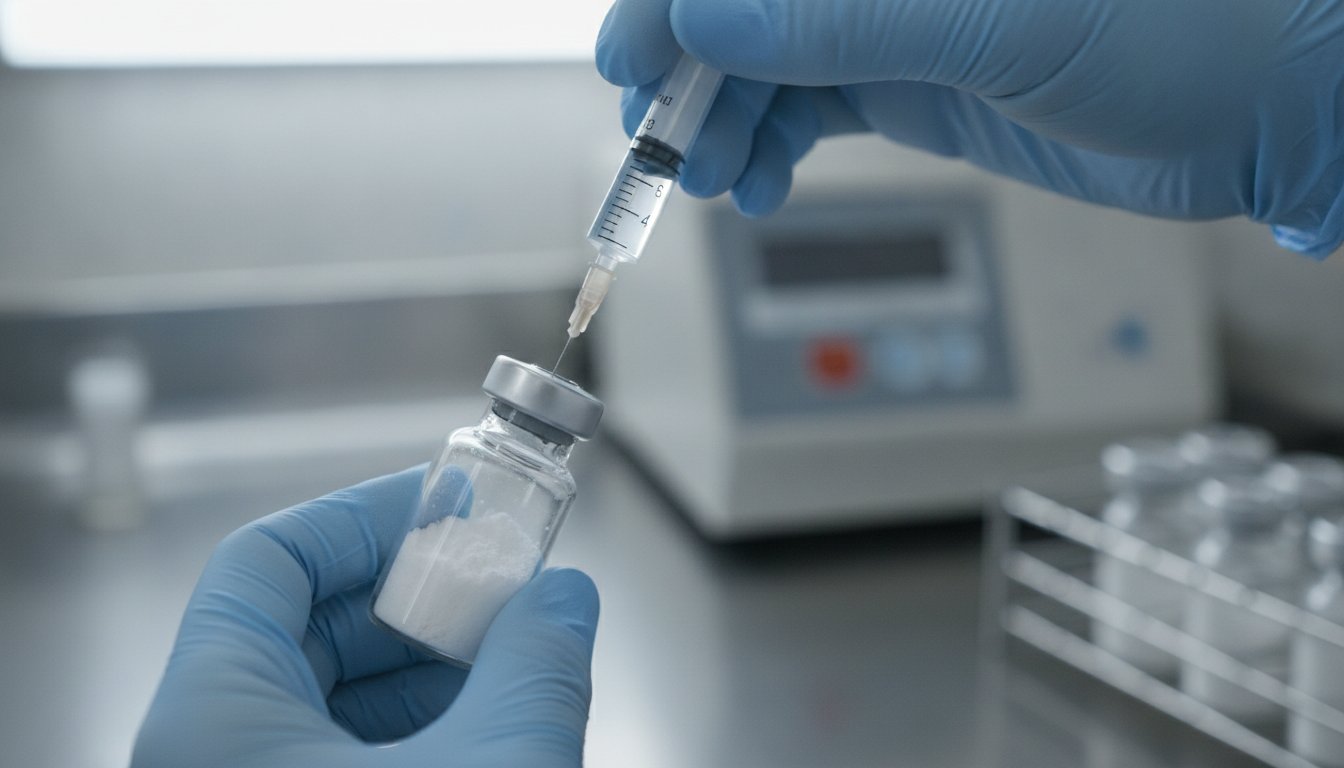
Semaglutide 15 mg Lyophilized: Clinical Benefits, Dosing, and Safety Protocol
Achieving a definitive metabolic breakthrough often requires moving beyond the rigid constraints of standardized, pre-filled delivery systems. For many individuals committed to peak physical optimization, standard dosing ceilings eventually result in a physiological plateau where progress stalls despite rigorous adherence to protocol. It's a common frustration that underscores the limitations of one-size-fits-all pharmaceutical applications. This guide provides a professional analysis of semaglutide 15 mg in its lyophilized format, a high-concentration option designed for those who require a more robust and customizable metabolic intervention under clinical supervision.
You'll gain a technical understanding of how this concentration functions to restore metabolic balance and overcome persistent weight loss resistance. We'll examine the precise requirements for reconstitution and the necessity of maintaining strict pharmaceutical standards to ensure peptide purity. The following sections outline essential safety protocols and the critical importance of physician-led guidance when transitioning to advanced dosing strategies. By focusing on scientific precision and disciplined protocol, you can establish a sustainable framework for long-term health restoration and metabolic efficiency.
Key Takeaways
- Analyze the clinical application of the 15 mg concentration for sustained metabolic optimization and long-term therapeutic success.
- Evaluate recent clinical findings from 2025 and 2026 concerning dose escalation and its secondary benefits for cardiovascular and glycemic health.
- Compare the stability advantages of semaglutide 15 mg in its lyophilized form, which maintains chemical integrity for up to two years.
- Master the technical requirements for safe reconstitution and precise volume calculation to ensure accurate administration.
- Establish a safety framework grounded in physician oversight and the rigorous standards of 503A regulated pharmaceutical sourcing.
What is Semaglutide 15 mg Lyophilized?
Semaglutide represents a significant advancement in the class of medications known as glucagon-like peptide-1 (GLP-1) receptor agonists. This Semaglutide overview details how the molecule mimics endogenous hormones to regulate appetite and glucose metabolism through targeted neurological and endocrine pathways. While many patients are familiar with standard, lower-dose pre-filled pens, the semaglutide 15 mg lyophilized vial offers a high-concentration format designed for clinical precision and long-term therapeutic stability. This specific presentation contains 15 mg of the active peptide intended for reconstitution, providing a robust reservoir for ongoing metabolic optimization under professional guidance. It's a specialized tool for those who require a more efficient and customizable delivery system than standard retail options provide.
The Science of Lyophilization and Stability
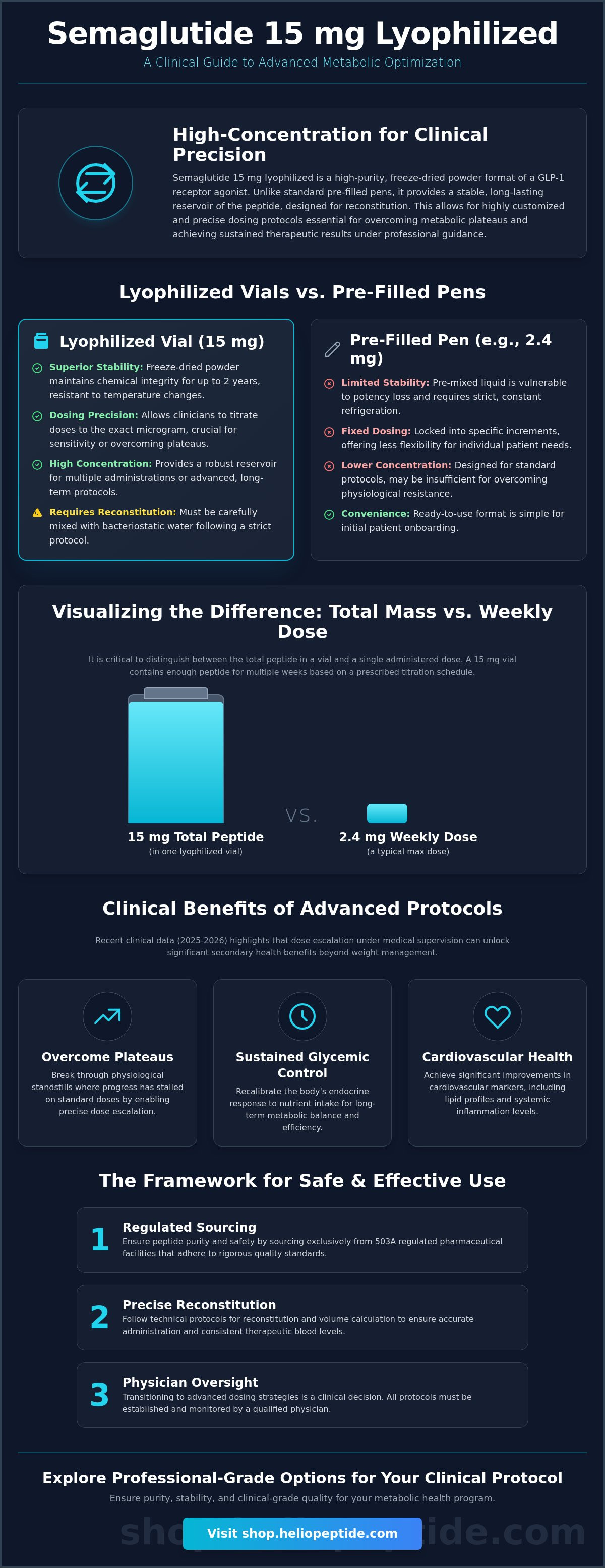
Lyophilization is a sophisticated pharmaceutical process where the peptide is freeze-dried to remove moisture while maintaining its complex molecular structure. The process involves freezing the solution and then reducing the surrounding pressure to allow the frozen water to sublimate directly from the solid phase to the gas phase. This prevents the formation of ice crystals that could damage the delicate peptide bonds. Consequently, the resulting powder is far more durable than pre-mixed liquid solutions, which often lose potency if they aren't kept strictly refrigerated. These lyophilized vials remain stable at room temperature for extended periods and are highly resistant to temperature fluctuations during transit. This chemical integrity ensures that the concentration remains consistent from the first administration to the last, providing a level of reliability that liquid pens cannot match.
Semaglutide 15 mg vs. Standard 2.4 mg Doses
Distinguishing between total peptide mass and individual weekly dosage is essential for safe administration. A standard weight management dose typically peaks at 2.4 mg per week, whereas a 15 mg vial contains the total peptide mass intended for multiple administrations or advanced titration schedules. This higher concentration allows for greater flexibility in adjusting volume to meet specific physiological needs. Precision is the primary advantage here; while standard pens are often locked into specific increments, a lyophilized vial allows a clinician to calibrate the dose to the exact microgram. This is particularly beneficial for patients who experience sensitivity to standard titration steps or those who have reached a physiological plateau. By utilizing semaglutide 15 mg reservoirs, the patient maintains a more consistent therapeutic blood level while benefiting from a format that supports long-term metabolic restoration.
Clinical Benefits of Higher-Dose Semaglutide Protocols
Clinical data from 2025 and 2026 has refined our understanding of GLP-1 therapy, demonstrating that dose escalation is often necessary for patients who have reached a physiological standstill. The March 2026 approval of higher-dose branded formulations confirms a medical shift toward more aggressive metabolic interventions. Utilizing semaglutide 15 mg lyophilized vials allows clinicians to implement these advanced protocols with greater precision than standard pre-filled pens allow. These higher concentrations aren't just about weight reduction; they're about recalibrating the body's entire endocrine response to nutrient intake. When administered under strict medical supervision, these protocols support sustained glycemic control and significant improvements in cardiovascular markers, including lipid profiles and systemic inflammation levels.
Safety remains the primary concern when transitioning to concentrated formats. The regulatory landscape is evolving, and staying informed on the FDA on compounded semaglutide is essential for understanding the importance of high-purity sourcing. By using lyophilized vials that meet rigorous pharmaceutical standards, patients avoid the risks associated with unstable, pre-mixed bulk solutions. This methodical approach ensures that the therapeutic benefits are achieved without compromising the patient's long-term health profile. You can explore professional-grade options for your clinical protocol by visiting the Helio Peptide shop.
Overcoming Weight Loss Plateaus
The body is an adaptive system that eventually develops a level of resistance to consistent pharmaceutical stimuli. This "plateau effect" occurs when metabolic counter-regulations attempt to preserve energy stores despite the presence of GLP-1 agonists. Transitioning to a semaglutide 15 mg reservoir provides the necessary volume to incrementally increase the dose without the logistical hurdles of multiple standard pens. Recent phase 3 trials have shown that patients who escalated their dosage after a six-month plateau experienced a mean weight loss of an additional 5% to 8% over the subsequent 24 weeks. This sustained fat loss is critical for patients targeting specific body composition goals that standard doses fail to reach.
Metabolic Optimization and Healthspan
Advanced peptide therapy extends its utility far beyond simple appetite suppression. Higher concentrations of semaglutide significantly enhance insulin sensitivity by improving the signaling efficiency of insulin receptors in peripheral tissues. This restoration of endocrine balance is a cornerstone of longevity and disease prevention. Emerging research suggests that sustained GLP-1 receptor activation may offer neuroprotective benefits, potentially reducing the risk of cognitive decline associated with metabolic dysfunction. Metabolic flexibility refers to the body's capacity to efficiently switch between fuel sources, such as glucose and fatty acids, in response to varying physiological demands. By fostering this flexibility, high-dose protocols help transition the body from a state of chronic storage to one of active energy utilization and repair.
Lyophilized vs. Liquid: Why Sourcing and Stability Matter
Stability is the foundation of therapeutic efficacy. While pre-filled liquid pens offer convenience, they possess inherent vulnerabilities regarding peptide degradation. A semaglutide 15 mg lyophilized vial provides a significantly extended shelf-life, often remaining stable for up to two years when stored correctly in its powdered state. In contrast, liquid solutions begin to lose potency within weeks of manufacture, especially if temperature control isn't perfectly maintained throughout the supply chain. This durability is particularly relevant when considering the results of a high-dose semaglutide clinical trial, where consistent potency is vital for achieving the observed metabolic outcomes. Choosing a lyophilized format ensures that the biological activity of the peptide remains intact from the point of manufacture to the moment of administration.
Shipping liquid peptides introduces the risk of "shearing," a process where physical agitation during transit breaks down the delicate amino acid chains. This mechanical stress, combined with inevitable temperature fluctuations, can render a pre-mixed solution sub-therapeutic before it even reaches the patient. Lyophilized powders are structurally locked, making them immune to these transit-related risks. To maintain sterile conditions after reconstitution, the use of bacteriostatic water is mandatory. This specialized solvent contains 0.9% benzyl alcohol, which inhibits bacterial growth and allows the multi-dose vial to remain viable for up to 28 days once the seal is punctured. This protocol is essential for maintaining the safety and sterility of high-concentration peptide reservoirs.
Pharmaceutical Integrity and Purity
High-purity standards are the hallmark of 503A regulated pharmacies. These facilities operate under strict state board of pharmacy oversight to ensure that every semaglutide 15 mg vial reaches a purity level of 99% or higher. Patients can verify this integrity by requesting a Certificate of Analysis (COA), which documents the peptide's mass and purity through High-Performance Liquid Chromatography (HPLC). This rigorous testing identifies any potential impurities or residual solvents, providing a level of transparency that liquid pens, which are often standardized for mass retail distribution, don't always offer. It's this commitment to pharmaceutical precision that distinguishes professional-grade therapy from standard commercial offerings.
The Cost-Efficiency of 15 mg Vials
The transition to high-concentration vials offers a superior price-per-milligram value compared to branded delivery systems. Brand-name pens often carry significant markups due to the proprietary injection hardware and extensive marketing overhead. By utilizing a 15 mg reservoir, patients reduce medical waste by consolidating multiple doses into a single, high-capacity vial, which is a more sustainable approach for long-term health optimization. This strategy is particularly effective within physician-supervised programs that prioritize metabolic restoration over the high-energy marketing of disposable retail products. It's a disciplined choice for those who value scientific rigor and pharmaceutical transparency in their physical optimization journey.
Reconstitution and Administration Protocol
Adhering to a standardized clinical protocol for the preparation of semaglutide 15 mg is essential for preventing peptide degradation and ensuring dosing accuracy. Because the lyophilized powder is highly concentrated, even minor errors in volume measurement or handling can result in significant variations in the therapeutic dose. Precision is not merely a recommendation; it's a requirement for maintaining the safety profile established during clinical supervision. Once the process is initiated, the transition from a stable powder to an active liquid solution must be managed with a focus on sterile technique and chemical preservation. You can secure the necessary components for this protocol by visiting the Helio Peptide shop to ensure your sourcing meets professional standards.
Precision Reconstitution Steps
The reconstitution process begins with the thorough sanitization of both the semaglutide 15 mg vial stopper and the bacteriostatic water source using 70% isopropyl alcohol. Using a sterile syringe, draw the exact volume of bacteriostatic water, typically 3ml for this concentration, and introduce it into the vial using the slow-drip method. This involves directing the solvent against the inner glass wall of the vial rather than directly onto the lyophilized powder to avoid mechanical stress on the peptide bonds. You shouldn't shake the vial; instead, gently swirl the container until the solution is completely clear and free of particulates. This methodical approach preserves the structural integrity of the molecules. For a 15 mg/3ml concentration, the resulting math is straightforward: every 1ml of solution contains 5mg of peptide. If your prescribed dose is 2.5mg, you'll draw exactly 0.5ml, or 50 units on a standard U-100 syringe.
Injection Technique and Safety
Successful administration relies on proper subcutaneous technique to ensure optimal absorption into the fatty tissue layer. The most effective sites include the abdomen, at least two inches away from the navel, the upper thigh, or the back of the upper arm. It's vital to rotate injection sites weekly to prevent the development of lipodystrophy or localized tissue irritation. After the injection is complete, needles must be discarded immediately into a puncture-resistant biohazard sharps container to maintain a sterile environment. While mild redness or itching at the site is common, these reactions should dissipate quickly if the injection was performed correctly. Post-reconstitution, the vial must be stored in a controlled refrigerated environment between 2°C and 8°C (36°F to 46°F). Exposure to direct sunlight or temperatures outside this range will lead to rapid potency loss, rendered the solution sub-therapeutic.
The Helio Peptide Standard: Physician-Supervised Care
Professional oversight is the definitive boundary between experimental use and clinical success. For protocols involving semaglutide 15 mg, the complexity of dose titration and metabolic monitoring necessitates a specialized medical facilitator who understands the nuances of GLP-1 receptor activation. Helio Peptide operates as a serious gatekeeper to health optimization; we ensure that every patient receives guidance from US-licensed physicians who prioritize regulatory compliance. This clinical framework provides a transparent and rigorous environment where results are the direct consequence of scientific methodology. By integrating advanced telehealth services, patients maintain constant access to professional monitoring, allowing for real-time adjustments to their metabolic optimization plan based on blood markers and physiological feedback.
Our commitment to excellence is reflected in our reliance on US-licensed manufacturing and clinical-grade purity. Every vial is a product of a disciplined pharmaceutical process that prioritizes stability and safety above all else. This isn't a retail transaction but a specialized medical partnership designed to restore biological balance. By maintaining strict adherence to clinical standards, we provide a level of reliability that is often absent in the broader wellness industry. It's a sober approach to physical optimization that values established facts over anecdotal hype.
Why 503A Pharmacy Sourcing Matters
The distinction between research-grade materials and clinical-grade pharmaceuticals is a matter of regulatory compliance and patient safety. 503A compounding pharmacies are highly regulated entities that must adhere to strict state board standards for sterility, potency, and pharmaceutical composition. Unlike non-regulated sources that lack third-party verification, these pharmacies provide documented purity through rigorous testing protocols. Utilizing semaglutide 15 mg from a 503A source ensures that the peptide mass is accurate and free from harmful contaminants. This level of transparency is essential for maintaining the biological integrity of the therapy and avoiding the unpredictable risks associated with "black market" or non-regulated manufacturing environments.
Your Personalized Wellness Journey
A successful metabolic strategy is rarely static. It requires a disciplined clinician to interpret physiological feedback and adjust parameters to ensure long-term efficacy. Within a physician-led program, high-concentration semaglutide is frequently synchronized with other interventions such as HRT or TRT Programs to achieve peak physical performance. This holistic approach ensures that hormonal balance and metabolic efficiency are restored in tandem, creating a foundation for sustained healthspan. Consult with a Helio Peptide physician to optimize your protocol today. Through this professional partnership, you transition from standard retail solutions to a specialized medical space defined by scientific rigor and clinical excellence.
Advancing Your Metabolic Optimization Protocol
Establishing a sustainable framework for long-term health restoration depends on the intersection of scientific rigor and disciplined administration. The use of semaglutide 15 mg in a lyophilized format provides the chemical stability and dosing flexibility necessary to overcome persistent physiological plateaus. By adhering to the precise reconstitution and safety protocols outlined in this guide, patients can maintain the therapeutic potency required for significant metabolic recalibration under professional guidance. It's a methodical approach that prioritizes long-term biological integrity over temporary results.
Success in advanced peptide therapy is achieved through professional partnership and high-purity sourcing. Helio Peptide remains committed to this standard by offering over 70 clinical-grade products and direct access to US-licensed physicians and manufacturers. Every intervention is supported by FDA-regulated 503A pharmacies to ensure your protocol meets the highest pharmaceutical benchmarks for potency and sterility. This methodical approach removes the uncertainty often associated with non-regulated sources; it replaces it with clinical clarity. Begin Your Physician-Supervised Semaglutide Program to secure a future defined by peak physical performance and metabolic balance. You're now equipped to move beyond standardized limits and embrace a personalized path toward enduring wellness.
Clinical Guidance: Frequently Asked Questions
Is 15 mg of semaglutide a safe dose for beginners?
No, a 15 mg concentration isn't a starting dose for those new to GLP-1 therapy. Clinical protocols require a gradual titration beginning at 0.25 mg per week to assess tolerance and minimize gastrointestinal distress. The semaglutide 15 mg vial acts as a high-capacity reservoir intended for patients who have successfully titrated through lower concentrations under medical supervision. Attempting an advanced dose without prior exposure can lead to severe metabolic complications.
How much bacteriostatic water should I add to a 15 mg semaglutide vial?
Standard clinical protocol typically involves adding 3ml of bacteriostatic water to a 15 mg vial. This specific volume creates a concentration of 5mg per 1ml of solution, which simplifies the math for various dosing increments. You must use the slow-drip method during reconstitution to preserve the structural integrity of the peptide bonds and ensure the solution remains clear and effective. Precision during this step is vital for maintaining dosing accuracy.
How long does a 15 mg vial of semaglutide last once reconstituted?
A reconstituted vial remains chemically stable for up to 28 days when stored in a controlled refrigerated environment. The benzyl alcohol in bacteriostatic water inhibits bacterial growth during this period, but potency will decline rapidly if the solution is exposed to light or heat. You should discard any remaining solution after the 28-day window to maintain strict safety and sterility standards. Always verify the clarity of the solution before each administration.
What are the side effects of higher semaglutide doses?
Higher therapeutic doses are often associated with increased gastrointestinal responses, including nausea, vomiting, or delayed gastric emptying. While these effects are typically transient, they require careful monitoring by a physician to ensure they don't escalate into more significant complications. Maintaining adequate hydration and following a structured titration schedule are essential strategies for managing these physiological responses during advanced semaglutide 15 mg therapy. Consistent medical feedback helps mitigate these risks.
Do I need a prescription for 15 mg lyophilized semaglutide?
Yes, a valid medical prescription from a licensed physician is mandatory for obtaining clinical-grade semaglutide. Because this medication influences complex endocrine pathways and requires precise dosing, professional oversight is essential for patient safety. Helio Peptide facilitates this process through comprehensive telehealth consultations to ensure your protocol is medically appropriate and monitored for optimal results. Non-prescription sources lack the necessary regulatory oversight to guarantee purity or safety.
How do I store lyophilized semaglutide before and after mixing?
Before reconstitution, lyophilized peptides should be stored in a cool, dark place or a refrigerator to maintain their extended shelf life. Once mixed with bacteriostatic water, the solution must be kept refrigerated at temperatures between 2°C and 8°C. You must avoid freezing the reconstituted liquid, as extreme cold can damage the peptide structure and render the medication sub-therapeutic. Protect the vial from direct sunlight at all times to prevent chemical degradation.
What is the difference between semaglutide and tirzepatide at high doses?
Semaglutide is a selective GLP-1 receptor agonist, while tirzepatide targets both GLP-1 and GIP receptors. At higher doses, tirzepatide may offer slightly more aggressive weight reduction, but semaglutide is often preferred for its established cardiovascular safety profile and specific glycemic control benefits. The choice between these two advanced peptides depends on your individual metabolic markers and the specific clinical objectives defined by your physician during your initial consultation.
Can I travel with reconstituted semaglutide?
You can travel with reconstituted medication provided you use a specialized insulated travel case with medical-grade cold packs. It's vital to keep the vial within the required temperature range and protect it from excessive vibration or light exposure during transit. Always carry a copy of your prescription and keep the medication in your carry-on luggage to avoid the extreme temperature fluctuations found in aircraft cargo holds. Proper storage during travel ensures the peptide remains active.
