
Physician-Supervised HRT: A Clinical Guide to Hormonal Optimization in 2026
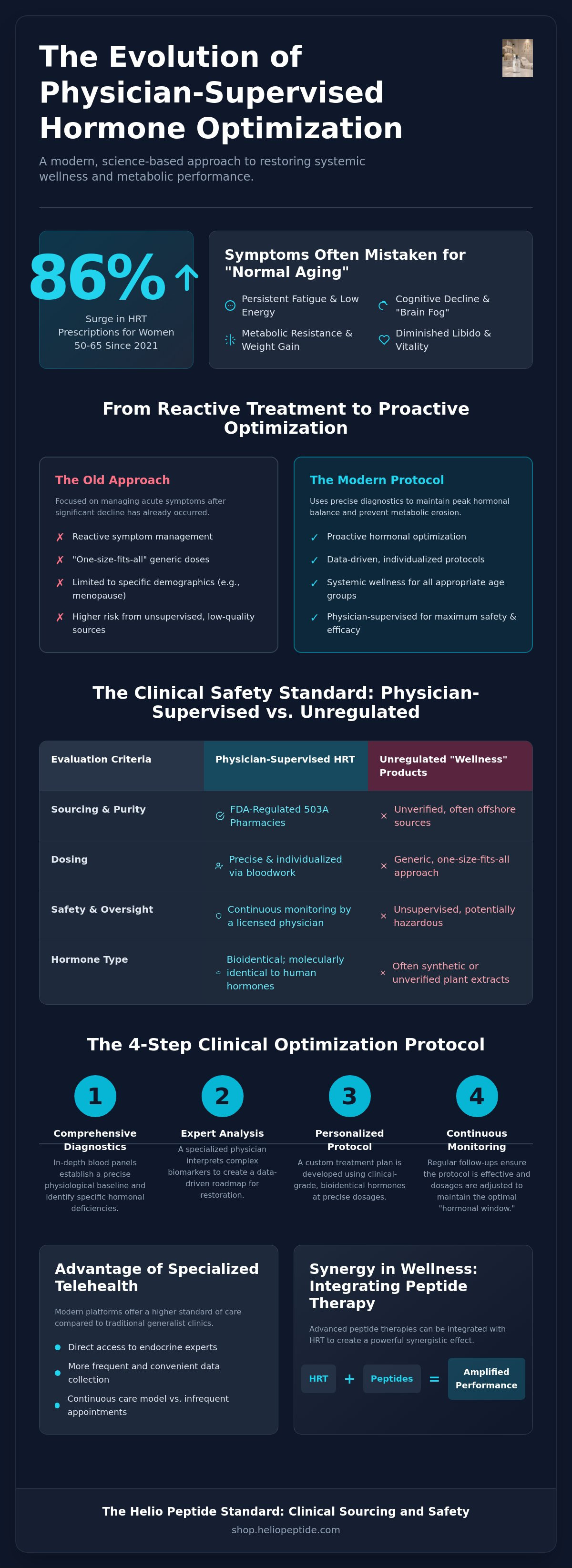
Prescriptions for hormone replacement therapy among women aged 50 to 65 have surged by 86 percent since 2021, reflecting a broader societal shift toward clinical longevity and endocrine optimization. You're likely aware that persistent fatigue, cognitive decline, and metabolic resistance are often symptoms of systemic hormonal depletion rather than simple aging. While the desire for restoration is high, the fear of side effects from low-quality or unsupervised hormones often prevents individuals from seeking effective care. A physician-supervised HRT protocol mitigates these risks by utilizing professional medical oversight and clinical-grade sourcing to ensure a safe, precise wellness intervention. This guide details how hormonal optimization in 2026 has evolved into a rigorous medical discipline. You'll discover the specific processes used to ensure pharmaceutical purity and the diagnostic frameworks required to achieve peak metabolic performance safely. We'll examine the intersection of modern regulatory standards and individualized treatment plans to clarify how professional guidance transforms hormonal health into a predictable, science-based outcome.
Key Takeaways
- Understand how modern hormonal restoration moves beyond reactive symptom management to proactively optimize the body's primary endocrine communication network at a cellular level.
- Recognize the rigorous safety standards inherent in physician-supervised HRT that utilize clinical-grade sourcing to mitigate the risks associated with unregulated hormone products.
- Evaluate the advantages of specialized telehealth models that offer more frequent data collection and direct access to endocrine experts than traditional generalist clinics.
- Discover how integrating advanced peptide therapies can create a synergistic effect, further improving metabolic performance and energy restoration alongside standard hormone protocols.
- Learn to verify medication purity by understanding the role of FDA-regulated 503A compounding pharmacies in the manufacturing of high-register clinical treatments.
The Evolution of Physician-Supervised HRT in 2026
Hormone replacement therapy has transitioned from a niche treatment for acute menopausal symptoms into a sophisticated clinical protocol for systemic health. Modern physician-supervised HRT focuses on the restoration of endocrine balance through the precise administration of bioidentical hormones. This shift represents a move away from reactive symptom management toward proactive hormonal optimization. Rather than waiting for debilitating decline, patients now utilize these therapies to maintain physiological homeostasis and prevent the metabolic erosion associated with aging. This evolution requires a disciplined medical framework; only licensed physicians possess the authority to prescribe these potent pharmacological agents and monitor their long-term effects on the human body.
A comprehensive overview of Hormone Replacement Therapy reveals that the efficacy of treatment is entirely dependent on the delivery method and the quality of the compounds used. Retail "wellness" products often promise hormonal support through unregulated supplements, yet these lack the clinical purity and potency of physician-prescribed medications. True optimization relies on individualized dosing. Every patient possesses a unique endocrine profile, meaning a "one-size-fits-all" approach is not only ineffective but potentially hazardous. Professional oversight ensures that dosages are calibrated to the specific needs of the individual, preventing the adverse outcomes often linked to unsupervised or generic hormone use.
Beyond Menopause: HRT for Systemic Wellness
Endocrine optimization is no longer limited to a single demographic. While historically associated with female reproductive health, the clinical application of physician-supervised HRT now encompasses comprehensive TRT programs for men and metabolic support for various age groups. Hormonal decline manifests in diverse ways, including unexplained weight gain, cognitive fog, and diminished libido. These symptoms are often the result of systemic fluctuations that require expert intervention. A specialized clinician acts as a gatekeeper, ensuring that exogenous hormones are introduced in a way that stabilizes the body's internal environment rather than disrupting it further.
The Role of Diagnostic Precision
Effective treatment begins with data, not intuition. Before initiating any protocol, a physician requires comprehensive blood panels to establish a precise physiological baseline. These diagnostics measure specific biomarkers that dictate the necessary intervention. Subjective "at-home" wellness questionnaires cannot replace the accuracy of laboratory testing. Clinical diagnostics allow for the identification of sub-clinical deficiencies that might otherwise go unnoticed. By interpreting these complex biological markers, a physician can develop a roadmap for restoration that is grounded in established fact rather than anecdotal symptoms.
The Clinical Mechanism: How Hormonal Restoration Works
The endocrine system operates as the body's primary biochemical communication network, utilizing chemical messengers to regulate physiological homeostasis. Within a physician-supervised HRT protocol, the objective is to restore these signaling pathways by introducing exogenous hormones that mimic the body's endogenous production. These molecules act as ligands, binding specifically to cellular receptors to initiate gene transcription and protein synthesis. Unlike synthetic variants which may possess modified molecular structures, bioidentical options are chemically identical to the hormones produced by the human body. This molecular congruence reduces the risk of adverse immunological responses and ensures more predictable metabolic outcomes.
Maintaining the optimal "hormonal window" is critical for clinical safety. This range represents the threshold where therapeutic benefits are maximized while the risk of over-saturation is minimized. Practitioners must carefully calibrate dosages to prevent the downregulation of natural receptor sensitivity. Reference to FDA information on menopausal hormone therapy underscores the importance of utilizing approved clinical pathways to manage systemic symptoms safely. Precision in dosing ensures that the body receives exactly what it requires to function at a peak physiological state without inducing unnecessary stress on the liver or cardiovascular system.
Testosterone and Estrogen: Key Drivers of Vitality
Testosterone serves as a foundational regulator of lean muscle mass and bone mineral density. In a clinical context, its restoration supports protein synthesis and erythropoiesis, which are essential for physical performance and structural integrity. Estrogen plays a vital role in maintaining cardiovascular health and neuroprotection. It influences lipid profiles and cerebral blood flow, directly impacting cognitive longevity. Physicians must monitor complex feedback loops, such as the hypothalamic-pituitary-gonadal axis, to ensure that exogenous administration does not lead to total suppression of internal production or excessive aromatization.
Metabolic Signaling and Body Composition
Hormonal balance exerts a profound influence on insulin sensitivity and adipose tissue distribution. When androgen or estrogen levels are sub-optimal, the body often experiences increased visceral fat storage and diminished metabolic flexibility. Thyroid function also interacts with sex hormones to determine the overall basal metabolic rate. Optimization protocols often incorporate specific peptides to lose weight and enhance metabolic signaling in tandem with HRT. This multi-modal approach addresses the cellular mechanisms of energy expenditure more comprehensively. For those seeking to address these imbalances through a disciplined medical framework, exploring advanced clinical options can provide the necessary foundation for restoration.
Telehealth vs. Traditional Clinics: A Safety Comparison
Accessibility to specialized medical expertise remains a primary barrier in traditional healthcare models. Local generalists frequently lack the granular training required for complex endocrine optimization, often relying on outdated reference ranges that fail to address sub-clinical symptoms. A physician-supervised HRT program delivered via a dedicated telehealth platform eliminates these geographic constraints. It connects patients with clinicians who specialize exclusively in hormonal restoration and metabolic performance. This specialized focus ensures that treatment is guided by the latest clinical research rather than generalized medical guidelines. Digital platforms also provide a centralized environment for data collection, allowing for a more comprehensive longitudinal view of a patient's progress.
Security and privacy are prioritized within these specialized digital ecosystems. Dedicated telehealth platforms utilize end-to-end encryption and HIPAA-compliant data storage, often exceeding the security standards found in traditional paper-based or fragmented local clinic systems. Continuous access to a physician is a fundamental component of safe hormonal management. In a traditional setting, securing an appointment for a dose adjustment can take weeks; telehealth models streamline this communication, allowing for rapid intervention if side effects occur or if biomarkers indicate a need for protocol modification. This responsive framework is essential for maintaining the delicate balance required for long-term physiological optimization.
The Remote Consultation Process
The transition to a telehealth-based physician-supervised HRT protocol begins with a rigorous digital evaluation. This process involves a comprehensive review of the patient's medical history, current symptoms, and lifestyle factors. Clinical licensure requirements dictate that a formal physician-patient relationship must be established, which includes the verification of identity and residency within a licensed jurisdiction. Once the initial intake is complete, lab results are integrated into the digital record for a detailed clinical review. This Hormone Replacement Therapy clinical guide provides the necessary framework for physicians to evaluate these diagnostics and determine appropriate candidacy for treatment.
Continuous Monitoring and Titration
Safety in hormonal optimization is achieved through the iterative process of dose titration. Physicians aim to identify the minimum effective dose required to resolve symptoms while avoiding the risks associated with supra-physiological levels. This necessitates follow-up laboratory testing every 3 to 6 months to monitor systemic response and organ function. Telehealth platforms simplify this requirement by automating lab orders and providing intuitive dashboards for result comparison. This methodical approach ensures that the protocol remains aligned with the patient's evolving biological needs, fostering a transparent and highly regulated environment for sustained health improvement.
Synergy in Wellness: Integrating HRT with Peptide Therapy
Endocrine optimization achieves its highest level of efficacy when multiple biological pathways are addressed simultaneously. While hormone replacement therapy establishes a foundational physiological baseline, peptide therapy acts as a targeted catalyst to enhance specific metabolic and restorative functions. This multi-modal approach creates a clinical synergy where the benefits of each treatment are amplified. Both modalities require the same rigorous medical oversight. This ensures that synergistic effects do not lead to unintended physiological stress. The physician acts as a central coordinator. In 2026, the standard for physician-supervised HRT includes a comprehensive evaluation of how these adjunct therapies influence the primary endocrine baseline. By combining these disciplines, patients experience a more rapid restoration of energy and metabolic function than with mono-therapy alone.
HRT and GLP-1 Programs
The integration of GLP-1 agonists into hormonal programs has redefined body composition management. Utilizing peptide therapy for weight loss allows patients to address adiposity while their HRT protocol maintains essential lean tissue. This is particularly relevant in TRT programs. The anabolic environment provided by testosterone prevents the muscle wasting often associated with rapid weight reduction. A specialized clinician manages these overlapping treatments by monitoring glycemic markers and adjusting dosages to maintain a state of metabolic flexibility. This level of precision is only possible through a unified clinical strategy that treats the body as an integrated system rather than a collection of isolated symptoms.
Advanced Peptide Protocols
Beyond metabolic management, advanced peptide therapy offers specialized tools for tissue repair and immune modulation. Peptides such as BPC-157 or CJC-1295 interact with cellular signaling pathways to accelerate recovery, enhancing the vitality gains initiated by physician-supervised HRT. Stability and potency are paramount. The use of clinical-grade, lyophilized peptides is a non-negotiable standard in 2026. Lyophilization ensures the chemical integrity of the peptide chain. It's a process that prevents degradation before administration. These advanced protocols allow for a more granular approach to health optimization. Hormones alone don't resolve every cellular deficiency. For those seeking to implement these sophisticated protocols, you can access professional-grade peptide solutions through our regulated clinical channels.
The Helio Peptide Standard: Clinical Sourcing and Safety
The integrity of a physician-supervised HRT protocol is fundamentally tied to the pharmaceutical origin of the hormones administered. While physiological optimization begins with diagnostic precision, it's sustained through the use of clinical-grade medications sourced from strictly regulated environments. The Helio Peptide Standard represents a commitment to these manufacturing origins. Many patients are lured by grey-market alternatives, yet these unregulated products often lack basic sterility and potency verification. In contrast, clinical-grade sourcing ensures that every molecule is accounted for and every vial meets the rigorous standards of modern pharmacology. This commitment to quality is what separates a professional medical intervention from standard retail wellness.
Lyophilized, or freeze-dried, preparations are the preferred vehicle for sensitive biological compounds in 2026. This process involves removing water from the medication while it remains in a frozen state, which preserves the delicate molecular structure of the hormone or peptide chain. It results in a product with significantly enhanced stability and a longer shelf-life compared to pre-mixed liquid formulations. This method ensures that the medication remains potent from the moment it leaves the pharmacy until the final dose is administered. By utilizing lyophilized preparations, physicians can be certain that the patient is receiving the exact dosage required for their specific endocrine needs without the risk of degradation.
Understanding 503A Pharmacy Regulations
503A compounding pharmacies operate under strict state board of pharmacy regulations and must adhere to USP standards for sterile compounding. These facilities are designed for patient-specific prescriptions, ensuring that each medication is tailored to the individual's clinical requirements. Helio Peptide prioritizes US-licensed manufacturers to guarantee that every compound is produced within a transparent and highly regulated supply chain. These quality controls protect patients from the risks of microbial contamination and sub-potent dosing, which are common issues in the unregulated "research chemical" market. Physician oversight is maintained at every stage, from the initial prescription to the final delivery of the medication.
Initiating Your Program: The Path to Optimization
The journey toward endocrine restoration is designed to be methodical and secure. Understanding how to get a GLP-1 prescription online or starting a comprehensive physician-supervised HRT program follows a standardized medical protocol. It begins with a clinical consultation and comprehensive laboratory screening to confirm candidacy. Once a diagnosis is established, the transition from consultation to medication delivery is seamless. Medications are shipped directly from the compounding facility to the patient's residence, maintaining the cold chain where necessary. This end-to-end oversight ensures that the patient's safety remains the primary priority throughout the optimization process. Consult with a Helio Peptide physician today to restore your hormonal vitality through a disciplined, science-based framework.
Securing Your Path to Physiological Excellence
Achieving systemic restoration requires a move beyond generic wellness products toward a disciplined, medically-led framework. You've learned that the intersection of precision diagnostics and clinical-grade sourcing provides the only reliable path to long-term endocrine balance. By utilizing medications from FDA-regulated 503A pharmacies, you ensure that every intervention is supported by the highest standards of pharmaceutical purity. The integration of specialized peptides further enhances this protocol; it offers a multi-modal approach to metabolic performance that standard mono-therapies cannot match. This level of complexity necessitates the ongoing oversight of a physician-supervised HRT program to maintain safety and efficacy. Helio Peptide provides access to over 70 clinical-grade products and specialized guidance from US-licensed physicians to ensure your journey is both precise and sustainable. It's time to transition from addressing symptoms to mastering your internal environment. Consult with a Helio Peptide Physician to Begin Your HRT Program and take the definitive step toward optimized vitality and cognitive clarity.
Frequently Asked Questions
Is physician-supervised HRT safer than standard hormone therapy?
Yes, because it incorporates continuous diagnostic monitoring and pharmaceutical-grade sourcing to mitigate long-term risks. Standard therapy often lacks the granular dose titration and frequent biomarker analysis found in a physician-supervised HRT protocol. This rigorous oversight ensures that hormone levels remain within the optimal physiological window, preventing common complications like receptor downregulation or cardiovascular strain that can occur with less precise interventions.
How do I know if I am a candidate for an HRT program?
Candidacy is determined through comprehensive blood panels and a clinical evaluation of systemic symptoms. Individuals experiencing persistent fatigue, cognitive decline, or metabolic resistance despite lifestyle interventions often qualify for treatment. A physician reviews these biomarkers against established reference ranges to confirm if exogenous restoration is medically indicated for your specific endocrine profile and health history.
What is the difference between bioidentical and synthetic hormones?
Bioidentical hormones possess an identical molecular structure to the hormones produced by the human body, while synthetic variants often contain chemical modifications. These modifications can lead to unpredictable metabolic signaling or increased side effects. Bioidentical options ensure a precise fit with cellular receptors; this promotes a more natural physiological response and reduces the likelihood of adverse immunological reactions during treatment.
How long does it take to see results from a physician-supervised HRT protocol?
Initial physiological shifts, such as improved sleep quality and energy restoration, typically manifest within three to four weeks of initiating a physician-supervised HRT protocol. More significant changes in body composition, cognitive function, and bone density generally require three to six months of consistent adherence. This timeline allows the body to stabilize its endocrine feedback loops and achieve systemic homeostasis safely.
Can I combine HRT with weight loss peptides like Semaglutide?
Yes, integrating HRT with GLP-1 agonists like Semaglutide is a common strategy for comprehensive metabolic optimization. This combination allows for the preservation of lean muscle mass during periods of rapid fat loss. A physician manages these overlapping pathways by monitoring glycemic markers and adjusting dosages to ensure that the anabolic effects of HRT complement the weight loss objectives without compromising systemic health.
What biomarkers are monitored during an HRT program?
Clinicians monitor a broad array of biomarkers including total and free testosterone, estradiol, complete blood counts, and metabolic panels. Periodic testing of liver enzymes and lipid profiles is also essential to assess systemic health. These data points allow the physician to perform precise dose titrations, ensuring the protocol remains aligned with the patient's evolving biological requirements and safety profile.
Do I need to see a doctor in person to start HRT?
No, the establishment of a formal physician-patient relationship can often be achieved through specialized telehealth platforms in 2026. These digital consultations involve a rigorous review of medical history and laboratory results to determine candidacy. While some jurisdictions have specific requirements, many patients successfully initiate and manage their protocols through secure, HIPAA-compliant remote monitoring systems that prioritize both accessibility and clinical safety.
What are the risks of unsupervised hormone replacement?
Unsupervised hormone use carries significant risks including polycythemia, hepatic stress, and the permanent suppression of endogenous hormone production. Without clinical oversight, patients often utilize sub-potent or contaminated "grey-market" products that lack pharmaceutical purity. Professional supervision is necessary to prevent supra-physiological levels that can lead to cardiovascular complications and other long-term health detriments associated with unregulated hormone administration.
