
Peptide Injections for Weight Loss: A Clinical Comparison of GLP-1 and Metabolic Protocols
The efficacy of a weight loss intervention is determined less by the volume of weight lost and more by the precision of the metabolic pathways being stimulated. Many patients find that standard diet and exercise regimens eventually fail to overcome biological resistance, leading them to explore peptide injections for weight loss as a targeted clinical intervention. It's common to feel frustrated when metabolic plateaus occur despite strict adherence to traditional protocols, especially when the market is saturated with conflicting information regarding the safety of research-grade substances versus clinical-grade medications. The fear of unregulated online pharmacies is a rational response to a landscape where professional oversight is often sacrificed for accessibility.
This analysis provides a rigorous clinical comparison of modern weight loss peptides, focusing on the distinct mechanisms of GLP-1 agonists and metabolic protocols such as growth hormone secretagogue therapies. You'll gain a definitive understanding of how these molecules influence biological processes, the critical safety standards required for sourcing, and the established roadmap for beginning a physician-supervised program. By examining the efficacy and safety profiles of these advanced therapies, this guide equips you with the necessary data to make an informed decision for long-term metabolic optimization.
Key Takeaways
- Understand the biological distinction between metabolic stimulants and GLP-1 receptor agonists when evaluating peptide injections for weight loss for long-term health optimization.
- Identify how specific peptides like GLP-1 delay gastric emptying while growth hormone secretagogues accelerate lipolysis to target visceral fat stores.
- Analyze the clinical efficacy of single-agonist versus triple-agonist mechanisms, including the projected weight loss outcomes established in Phase II and III trials.
- Learn to distinguish between regulated 503A compounding pharmacies and unregulated "research" sites to ensure the purity and potency of lyophilized medications.
- Discover the clinical roadmap for integrating advanced peptide therapy with physician-supervised hormone optimization for a comprehensive approach to metabolic wellness.
What are Peptide Injections for Weight Loss?
Peptides are short-chain amino acid sequences that function as precise signaling molecules within the human endocrine system. They act as biological keys that unlock specific cellular responses, ranging from tissue repair to metabolic regulation. Peptide injections for weight loss have emerged as a sophisticated alternative to traditional pharmacological stimulants, offering a more nuanced approach to body composition. This transition from basic weight reduction to metabolic optimization focuses on correcting the underlying hormonal dysregulation that often causes weight loss plateaus. Clinical-grade peptide therapy is a highly regulated medical intervention that necessitates rigorous physician oversight to ensure safety and protocol adherence. It's a process that prioritizes biological balance over the temporary, often high-stress effects of central nervous system stimulants.
The Biological Role of Peptides in Metabolism
Metabolic optimization relies on the intricate signaling pathways between the gut, brain, and adipose tissue. Peptides facilitate this communication by modulating insulin sensitivity and optimizing glucose disposal, which are essential for maintaining a lean physique and healthy energy levels. These molecules interact with the central nervous system to manage satiety signals and energy expenditure. Exploring The Science of Metabolic Signaling provides insight into how receptor-specific agonists can transform the body's response to nutrient intake. There's a clear distinction when comparing peptide therapy vs diet; while diet provides the raw materials for health, peptides provide the instructions that dictate how those materials are utilized by the cells. This molecular guidance helps prevent the metabolic adaptation that often stalls progress during traditional dieting.
Injectable vs. Oral Peptides: An Efficacy Review
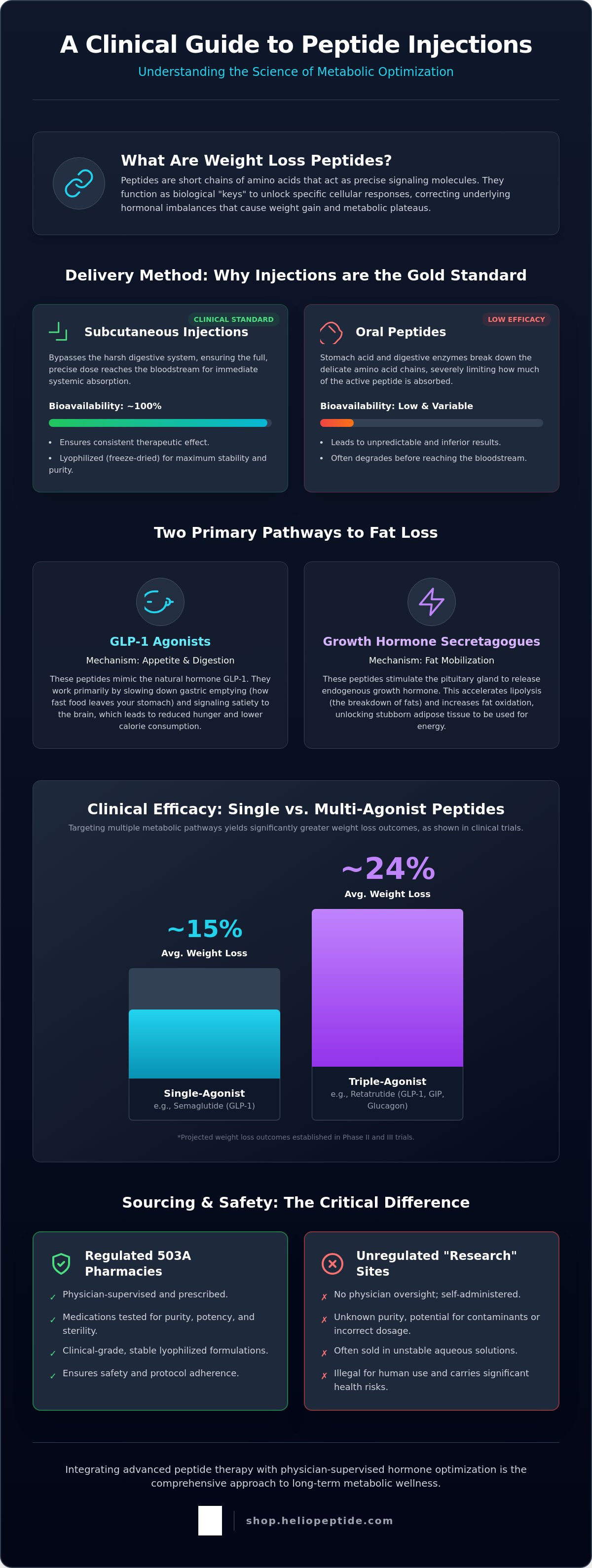
Subcutaneous administration is the clinical gold standard for peptide delivery because it bypasses the digestive system entirely. Oral peptides face significant bioavailability challenges, as the stomach's acidic environment and proteolytic enzymes frequently dismantle the amino acid chains before they reach the bloodstream. Peptide injections for weight loss allow for precise dosing and immediate systemic absorption, ensuring that the therapeutic threshold is met consistently. The pharmaceutical industry prioritizes lyophilized formulations for clinical use. Lyophilization, or freeze-drying, maintains the chemical stability of the peptide, preventing the degradation that commonly occurs in aqueous solutions. This ensures that the patient receives a potent, high-purity medication every time. Clinical results demonstrate that the predictable pharmacokinetics of injections provide superior outcomes compared to the variable absorption rates of oral alternatives.
The Science of Metabolic Signaling and Fat Loss
The regulation of adipose tissue and glucose metabolism is not a matter of willpower; it is a matter of signaling. Peptide injections for weight loss intervene in these biological dialogues to optimize how the body stores and utilizes energy. Glucagon-Like Peptide-1 (GLP-1) serves as a primary regulator by delaying gastric emptying, which physically slows the movement of food through the digestive tract. This mechanism ensures a steadier release of nutrients and a prolonged state of satiety. In contrast, growth hormone secretagogues (GHRHs) focus on the mobilization of stored energy. By stimulating the pituitary gland to release endogenous growth hormone, these peptides accelerate lipolysis and increase fat oxidation, effectively unlocking stubborn adipose tissue for use as fuel.
Glucose-dependent Insulinotropic Polypeptide (GIP) complements these actions by improving metabolic flexibility, allowing the body to transition efficiently between burning carbohydrates and fats. The incretin effect is the physiological process where gut hormones stimulate a more robust insulin response following oral nutrient ingestion than would occur from systemic glucose alone, effectively regulating postprandial glucose levels. Understanding these nuances is vital when reviewing a Comparative Analysis: Semaglutide vs. Retatrutide to determine which peptide injections for weight loss are clinically appropriate for a specific metabolic profile.
GLP-1 Receptor Agonists: The Foundation of Modern Weight Loss
Semaglutide has redefined the clinical approach to obesity by targeting the neurological drivers of overconsumption. It effectively silences "food noise," the intrusive and persistent thoughts about eating that often lead to dietary non-compliance. By mimicking natural satiety hormones, it allows patients to maintain a caloric deficit without the psychological distress of constant hunger. Utilizing the clinical benefits of Semaglutide 15 mg within a structured protocol provides a sustainable foundation for long-term weight management. Patients often report a profound shift in their relationship with food as their biological signaling aligns with their health objectives.
Preserving Lean Muscle During Rapid Fat Loss
A significant risk during rapid weight reduction is sarcopenia, or the involuntary loss of skeletal muscle mass. When the body is in a profound caloric deficit, it may catabolize muscle tissue to meet energy demands, which ultimately lowers the basal metabolic rate. Advanced protocols incorporate peptides to prevent muscle loss by promoting nitrogen retention and supporting protein synthesis. This ensures that the weight lost is primarily derived from adipose tissue rather than functional muscle. Maintaining body composition is essential for metabolic health and physical performance. For those seeking to optimize their results, exploring Advanced Peptide Therapy offers a pathway to precision fat loss without compromising structural integrity.
Comparative Analysis: Semaglutide vs. Retatrutide
The evolution of peptide injections for weight loss has progressed from single-pathway stimulation to complex multi-receptor agonism. Semaglutide operates as a selective GLP-1 receptor agonist, focusing primarily on glycemic control and appetite suppression through improved insulin secretion and delayed gastric emptying. In contrast, Retatrutide represents a significant technological leap as a triple-agonist, targeting the GLP-1, GIP, and Glucagon receptors simultaneously. This broader approach addresses metabolic dysfunction from three distinct angles, potentially offering superior outcomes for patients who have reached physiological plateaus with traditional therapies. Understanding the science of GLP-1 agonists for weight loss is essential for clinicians and patients when evaluating these divergent protocols.
Data from Phase II trials indicates that Retatrutide may facilitate weight loss of up to 24% of total body weight, compared to the 15% to 18% typically observed with Semaglutide. However, this increased efficacy necessitates a more rigorous titration schedule and closer monitoring of side effect profiles. While gastrointestinal events are common to both, Phase 3 participants for Retatrutide reported dysesthesia (tingling or numbness) in up to 21% of cases at the highest dosages. Identifying the ideal candidate for triple agonist peptides for weight loss requires a comprehensive assessment of the patient's metabolic baseline and prior response to dual-agonist medications.
Semaglutide: The Established Clinical Standard
Semaglutide remains the foundational medication for chronic weight management due to its extensive safety data and proven long-term efficacy. Clinical protocols emphasize a gradual titration process to mitigate transient side effects and ensure patient compliance over the course of the program. A typical starting dosage is carefully increased over several months, allowing the endocrine system to adapt to the metabolic shift. This structured approach is a core component of physician-supervised advanced peptide therapy, where dosing is adjusted based on individual tolerability and objective progress markers.
Retatrutide: The Triple-Agonist Frontier
Retatrutide introduces the Glucagon receptor as a third metabolic lever, which is responsible for increasing energy expenditure through thermogenesis. While GLP-1 and GIP focus on satiety and insulin sensitivity, the addition of Glucagon signaling directly targets the rate of caloric burn. This triple-agonist profile is designed for patients seeking the most aggressive metabolic intervention available in a clinical setting. For a detailed breakdown of chemical composition and trial outcomes, clinicians should refer to the Retatrutide 10mg clinical overview. This molecule represents the next generation of obesity treatment, though it remains under investigational status with potential FDA approval anticipated in mid-to-late 2027.
Sourcing and Safety: The 503A Pharmacy Standard
The safety of peptide injections for weight loss depends entirely on the regulatory environment of the manufacturer. 503A compounding pharmacies operate under strict state board of pharmacy oversight and FDA regulations, requiring them to dispense medication only upon receipt of a patient-specific prescription. In contrast, grey-market "research" sites bypass these safeguards by labeling products as "not for human consumption," which exempts them from the sterile manufacturing requirements and quality control audits mandatory for clinical-grade facilities. Sourcing through FDA-inspected 503A compounding facilities is the only method to ensure that substances meet United States Pharmacopeia (USP) standards for sterility and molecular integrity.
Third-party testing for purity and potency is a non-negotiable requirement for clinical safety. Without rigorous Certificate of Analysis (COA) verification, patients risk injecting substances contaminated with endotoxins, heavy metals, or structural isomers that fail to elicit the intended biological response. DIY peptide therapy, conducted without physician-supervised blood work, ignores the complex interplay of metabolic markers such as HbA1c, fasting insulin, and renal function. This lack of oversight can lead to unmanaged side effects or the exacerbation of underlying health conditions that would have been identified during a professional screening.
The Role of Physician Supervision in Peptide Therapy
A professional protocol begins with a comprehensive baseline metabolic panel and hormone screening to identify physiological imbalances. Integrating physician-supervised HRT can significantly enhance weight loss outcomes by addressing androgen deficiencies that often contribute to metabolic resistance. Ongoing monitoring allows for real-time adjustments to titration schedules, ensuring that the patient achieves peak performance while minimizing gastrointestinal or neurological distress. This level of clinical precision is what separates a medical intervention from a generic supplement cycle.
Understanding Lyophilized Purity and Stability
Lyophilization, or freeze-drying, is the pharmaceutical standard for preserving the molecular stability of peptides. This process removes moisture from the substance while it is frozen, resulting in a stable powder that maintains its chemical integrity for an extended shelf-life. Patients should be cautious of pre-mixed liquid peptides, as these formulations are highly susceptible to rapid degradation and bacterial growth if not stabilized with clinical-grade preservatives. Proper sterile reconstitution using bacteriostatic water is essential to maintain the efficacy of peptide injections for weight loss. To ensure your protocol meets these rigorous standards, you can order clinical-grade peptides through a verified medical facilitator.
Implementing a Supervised Peptide Protocol at Helio Peptide
Transitioning into a clinical protocol requires a structured methodology that prioritizes patient safety and data-driven results. Helio Peptide facilitates this through a comprehensive telehealth consultation where a licensed physician reviews your metabolic history, current health markers, and comprehensive blood work. This ensures that peptide injections for weight loss are prescribed based on biological necessity rather than generic templates. By sourcing medication exclusively from US-licensed 503A compounding pharmacies, the protocol guarantees that every vial meets national standards for potency and sterility. This commitment to clinical rigor is why the best online semaglutide program prioritizes physician oversight over rapid, unregulated distribution. The integration of GLP-1 agonists with broader hormone optimization strategies allows for a synergistic effect that addresses both weight management and cellular vitality.
Your First 30 Days: What to Expect
The initial phase of therapy involves a metabolic adjustment period as the body adapts to enhanced endocrine signaling. Patients may experience mild gastrointestinal shifts, such as delayed digestion or nausea, which are typically transient and manageable through precise titration schedules. Maintaining high protein intake and aggressive hydration is essential during this first month to support lean tissue preservation and optimize the drug's pharmacokinetic profile. Follow-up consultations occur at regular intervals during this window to monitor progress and adjust dosages based on individual tolerability and objective weight loss data. This methodical approach ensures that the body remains in a state of balance while transitioning to a new metabolic set point.
Long-term Health and Metabolic Restoration
The ultimate objective of peptide injections for weight loss is the restoration of metabolic flexibility and the extension of healthspan. Clinical focus shifts from a "quick fix" mentality toward sustained metabolic health and the prevention of chronic disease. The role of peptide therapy in restoring hormonal balance, particularly through TRT or HRT, is foundational for maintaining the results achieved during the weight loss phase. By addressing androgen deficiencies and metabolic resistance simultaneously, patients can achieve a state of physical optimization that persists long after the initial protocol. For those ready to establish a clinical baseline and begin a journey toward systemic health, a professional wellness assessment is the necessary first step toward sustainable optimization.
Advancing Toward Metabolic Excellence
Achieving sustainable fat loss requires a transition from generic dietary restrictions to precise hormonal modulation. By understanding the distinct mechanisms of GLP-1 agonists and the emerging triple-agonist profiles, you can navigate the complexities of metabolic signaling with clinical clarity. The integration of peptide injections for weight loss into a physician-led protocol ensures that every intervention is tailored to your specific biological markers. This methodical approach prioritizes the preservation of lean muscle mass while aggressively targeting adipose tissue, establishing a foundation for permanent body composition shifts.
Reliability in sourcing remains the primary safeguard for your health. Utilizing clinical-grade lyophilized Semaglutide and Retatrutide sourced from FDA-regulated 503A pharmacies guarantees the purity necessary for therapeutic success. It's essential to rely on physician-supervised clinical wellness programs that provide the oversight required to manage titration and optimize systemic balance. You can take the definitive step toward metabolic restoration through a professional assessment. Consult with a Physician for Your Personalized Peptide Protocol and begin your journey toward peak physical optimization today. Your commitment to a scientifically grounded strategy is the most reliable path to long-term wellness.
Frequently Asked Questions
How long do I need to take peptide injections for weight loss?
The duration of your protocol is determined by individual metabolic goals and physiological response. Clinical programs often span six to twelve months for the weight loss phase, followed by a maintenance period to stabilize the new metabolic set point. Long-term use may be necessary for some patients to ensure metabolic restoration and to prevent weight regain. Regular physician reviews ensure the protocol remains aligned with your evolving health markers.
Are peptide injections for weight loss covered by insurance?
Insurance coverage for compounded peptide medications is generally limited and depends on your specific policy and diagnosis. Most wellness clinics operate on a fee-for-service model for advanced peptide therapy because these are customized, patient-specific formulations. You should consult your insurance provider to determine if they offer reimbursement for physician consultations or laboratory testing. Clinical-grade solutions from 503A pharmacies are typically an out-of-pocket investment in long-term health optimization.
What is the difference between Semaglutide and Retatrutide?
Semaglutide is a single-agonist targeting the GLP-1 receptor to improve insulin secretion and satiety. Retatrutide is a triple-agonist that targets GLP-1, GIP, and Glucagon receptors simultaneously to provide more aggressive metabolic stimulation. This triple-action approach increases energy expenditure through glucagon signaling, which may lead to higher weight loss percentages in clinical trials. Retatrutide is currently investigational, while Semaglutide remains the established clinical standard for chronic weight management.
Can I take weight loss peptides if I am already on TRT or HRT?
Integrating peptide injections for weight loss with existing TRT or HRT programs is a common clinical practice. These therapies are often synergistic, as hormone optimization supports lean muscle preservation while peptides target adipose tissue. A physician-supervised program ensures that all medications are balanced and that your endocrine system remains optimized throughout the fat loss process. This combination approach addresses metabolic health from multiple biological angles.
What are the most common side effects of GLP-1 injections?
Gastrointestinal symptoms such as nausea, diarrhea, and constipation are the most frequently reported side effects of GLP-1 therapy. These are typically transient and occur most often during the initial titration phase as the body adapts to the medication. Some patients may also experience fatigue or localized injection site reactions. Gradual dosage increases and proper hydration are critical strategies used in supervised protocols to mitigate these effects and ensure patient comfort.
How do I know if my peptides are coming from a 503A pharmacy?
Clinical-grade peptides will always require a patient-specific prescription and will be dispensed with professional labeling that identifies the 503A pharmacy. You can verify a pharmacy's status through state board of pharmacy records or by requesting their credentials directly. Unlike research sites, these facilities are subject to rigorous sterile manufacturing standards and regular FDA inspections. This ensures that every vial meets national standards for potency, purity, and molecular integrity.
Is it safe to buy peptides online without a prescription?
Purchasing peptide injections for weight loss from unregulated online sources without a prescription carries significant medical risks. These research grade substances lack the third-party testing and sterile manufacturing oversight required for human administration. Without a physician's guidance, you also lack the necessary blood work and metabolic monitoring to ensure the medication is appropriate for your profile. Safety and efficacy are only guaranteed through regulated clinical channels.
How should lyophilized peptides be stored after reconstitution?
Reconstituted peptides must be stored in a refrigerator at temperatures between 36°F and 46°F. Exposure to light and extreme temperature fluctuations can cause rapid molecular degradation and loss of efficacy. It's essential to keep the vial upright and avoid vigorous shaking, as these amino acid chains are structurally fragile. Always follow the specific storage instructions provided by the 503A pharmacy to maintain the stability and potency of your medication.
