
Triple Agonist Peptides for Weight Loss: The Science of GLP-3 Therapy
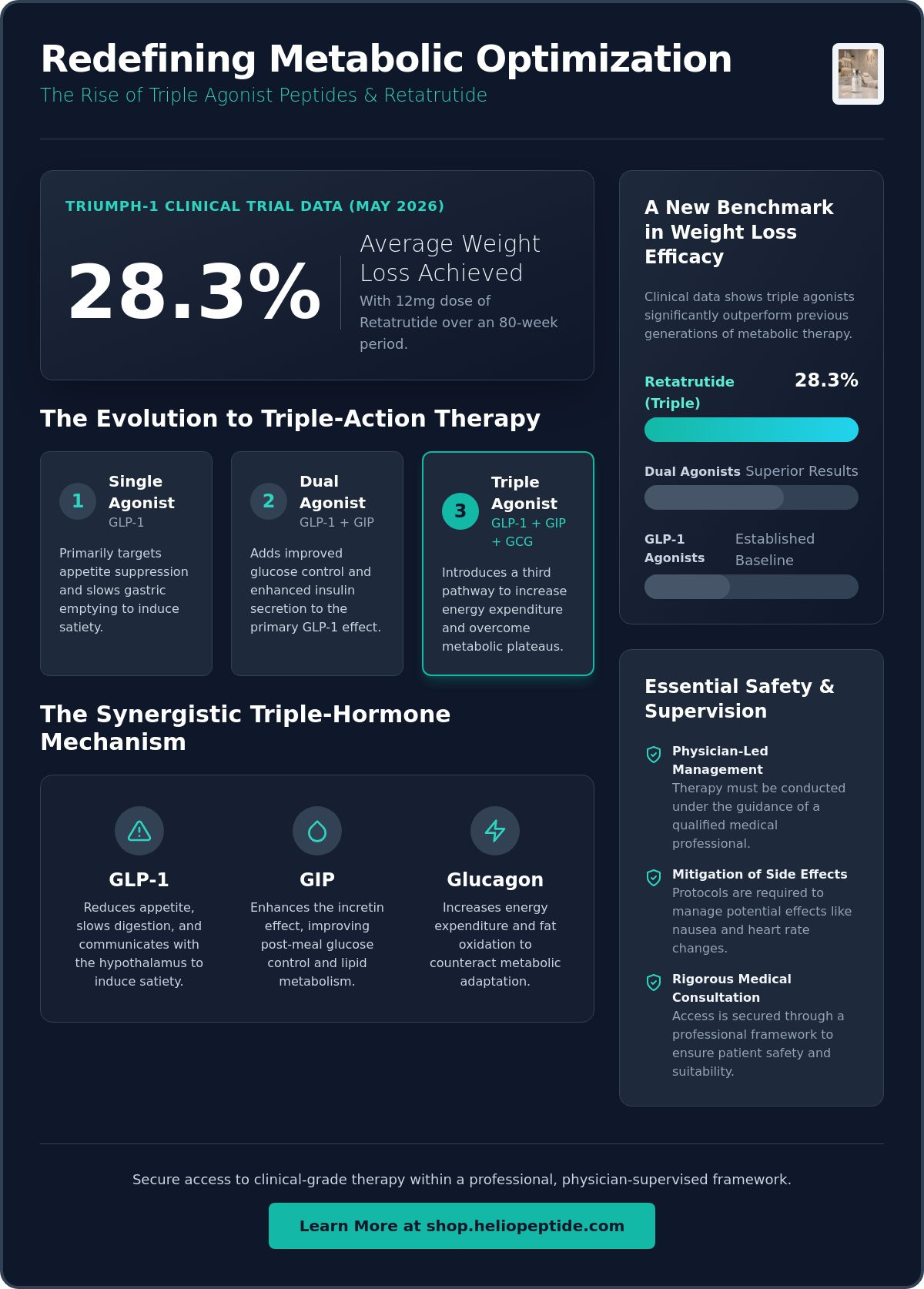
Data from the TRIUMPH-1 clinical trial released in May 2026 reveals that participants utilizing a 12mg dose of Retatrutide achieved an average weight loss of 28.3% over an 80 week period. For individuals who have relied on earlier generations of metabolic therapy, the experience of a physiological plateau remains a significant clinical hurdle. It's common to feel a sense of confusion regarding the rapid evolution of pharmaceutical terminology and the emergence of the triple agonist peptide for weight loss. You likely recognize that while previous iterations of therapy established a new baseline for weight management, the introduction of a third hormonal pathway represents a fundamental shift in the landscape of obesity medicine.
This article provides a rigorous clinical overview of how these triple-hormone-receptor agonists are redefining the parameters of metabolic optimization. You'll examine the specific "GLP-3" mechanism that leverages glucagon receptor activation alongside GLP-1 and GIP to enhance energy expenditure. The following analysis compares the efficacy of Retatrutide against its pharmacological predecessors and outlines the protocols for identifying a safe, physician-supervised route for advanced therapy. Understanding these scientific advancements ensures that your approach to physical optimization remains grounded in professional oversight and established regulatory standards.
Key Takeaways
- Analyze the transition from single-receptor agonists to the triple agonist peptide for weight loss, which targets GLP-1, GIP, and glucagon receptors for enhanced metabolic regulation.
- Examine how the synergistic activation of three hormonal pathways optimizes lipid metabolism and insulin secretion compared to previous pharmacological generations.
- Evaluate clinical data demonstrating weight loss outcomes that establish a new benchmark for non-surgical metabolic intervention in 2026.
- Identify the essential safety protocols and physician-led management strategies required to mitigate potential side effects such as nausea and heart rate fluctuations.
- Understand the rigorous medical consultation process at Helio Peptide for securing access to clinical-grade Retatrutide within a professional therapeutic framework.
The Evolution of Weight Loss Peptides: Understanding Triple Agonism (GLP-3)
The landscape of metabolic science is currently defined by the transition from simple appetite suppression to complex endocrine modulation. Triple agonist peptides represent the latest clinical advancement in this trajectory. These molecules are engineered to target three distinct hormone receptors simultaneously: glucagon-like peptide-1 (GLP-1), glucose-dependent insulinotropic polypeptide (GIP), and glucagon (GCG). While earlier therapies primarily focused on slowing gastric emptying and inducing satiety, the triple agonist peptide for weight loss introduces a third pathway that directly influences energy expenditure and fat oxidation. This evolution marks a shift from passive weight reduction to active metabolic optimization.
Clinicians often refer to these compounds as "GLP-3" peptides. This nomenclature is not a formal pharmaceutical classification but rather a shorthand used to describe the three-pronged approach to receptor agonism. The introduction of Retatrutide, an investigational agent currently in Phase 3 trials, has solidified this terminology within professional circles. It signifies a move away from the limitations of single-receptor protocols toward a more comprehensive biological intervention. By integrating glucagon receptor activation, these therapies aim to elevate thermogenesis, effectively turning the body's own signaling systems into tools for fat reduction.
From GLP-1 to Triple Agonist Therapy
The history of incretin-based therapy began with GLP-1 receptor agonists, which demonstrated efficacy in managing glucose levels and obesity. However, the subsequent development of dual agonists revealed that multi-pathway targeting could yield superior results. Despite these gains, some patients encountered metabolic ceilings. By 2026, the clinical focus has shifted toward the triple-hormone-receptor agonist to address these remaining physiological gaps. This era is characterized by protocols that manage insulin sensitivity while also elevating the basal metabolic rate. It's a more sophisticated method of ensuring the body doesn't just lose weight, but optimizes its entire metabolic profile.
The Clinical Necessity of Multi-Pathway Targeting
Metabolic adaptation remains a primary obstacle in long-term weight management. When the body experiences a caloric deficit, it often triggers a physiological response that lowers energy expenditure to preserve fat stores. A triple agonist peptide for weight loss is specifically designed to counteract this adaptation. By stimulating the glucagon receptor, these peptides encourage the liver to increase energy turnover, effectively bypassing the plateau effect seen in single-pathway treatments. This multi-target strategy is essential for achieving the significant weight reduction percentages reported in recent clinical trials. Advanced peptide therapy provides the signaling necessary to maintain these results without the metabolic rebound common in traditional methods.
The Triple Mechanism: How GLP-1, GIP, and Glucagon Synergize
The biological efficacy of a triple agonist peptide for weight loss is rooted in the precise coordination of three distinct hormonal pathways. While previous generations of therapy focused exclusively on appetite suppression, the inclusion of glucagon creates a metabolic environment that favors both fat oxidation and energy expenditure. This synergistic approach ensures that the body's physiological response to weight reduction is managed across multiple systems simultaneously. By activating the GLP-1, GIP, and glucagon receptors, these compounds provide a more comprehensive solution than single-receptor protocols. This multi-target strategy is designed to optimize metabolic signaling while maintaining the body's internal balance.
GLP-1 serves as the primary driver for appetite suppression and the slowing of gastric emptying. This hormone communicates directly with the hypothalamus to induce satiety and reduce the psychological drive to consume excess calories. GIP complements this by enhancing the incretin effect, which improves postprandial glucose control and influences lipid metabolism. When these two pathways are combined, they create a powerful foundation for weight management. However, the addition of the third "G"—glucagon—is what elevates the protocol to the status of a triple agonist. This combination allows for a more aggressive approach to fat loss without the metabolic slowdown typically associated with caloric restriction.
The Role of Glucagon in Metabolic Rate
Glucagon is traditionally recognized as the primary counter-regulatory hormone to insulin, functioning to elevate blood glucose when levels become insufficient. Within the context of a triple agonist, it serves a specialized clinical purpose by inducing thermogenesis. This process increases the body's heat production and elevates the resting metabolic rate, ensuring that energy turnover remains high even during periods of inactivity. The glucagon receptor regulates hepatic glucose production and facilitates the breakdown of stored lipids. By stimulating this receptor, the therapy encourages the liver to prioritize fat oxidation, which is essential for overcoming weight loss plateaus. This elevation in energy expenditure is a critical differentiator from earlier dual-agonist treatments.
GIP and GLP-1: The Foundation of Satiety
The interaction between GIP and GLP-1 provides the necessary control over insulin secretion and systemic inflammation. These peptides work in tandem to improve how the body processes nutrients after a meal, effectively reducing the glycemic load. This stable environment is vital for long-term health optimization. Recent clinical efficacy and weight loss data indicate that this dual-pathway foundation is significantly enhanced when glucagon is present to manage energy turnover. The result is a metabolic profile that favors fat loss while protecting lean muscle mass. For those seeking to implement these advanced protocols, reviewing the selection of Advanced Peptide Therapy options can provide a structured starting point for physician-supervised care.
Retatrutide vs. Predecessors: Clinical Efficacy and Weight Loss Data
Evaluating the efficacy of the triple agonist peptide for weight loss against its pharmacological predecessors reveals a significant escalation in therapeutic potential. Semaglutide, a single-receptor GLP-1 agonist, established a clinical baseline with mean weight reductions of approximately 14.9%. The subsequent introduction of Tirzepatide utilized dual agonism to achieve average losses of 20.9%. However, data from the pivotal TRIUMPH-1 trial released in May 2026 indicates that Retatrutide has established a new benchmark. Participants utilizing the 12mg dose achieved a mean weight reduction of 28.3% over 80 weeks. This progression illustrates the compounding biological advantages of multi-receptor signaling.
Clinical observations confirm a distinct dose-dependent response within Phase 2 and Phase 3 trials. Higher concentrations of the peptide correlate directly with accelerated fat oxidation and more pronounced reduction in adipose tissue. Unlike earlier treatments that often required extended titration periods to reach peak efficacy, triple agonist protocols demonstrate a rapid onset of action. This speed is attributed to the immediate stimulation of the glucagon receptor, which initiates thermogenesis while GLP-1 and GIP manage satiety. The data is conclusive. Triple agonism provides a more aggressive metabolic intervention than previous mono or dual-therapy options.
Head-to-Head: Weight Loss Percentages
The 28.3% weight loss threshold recorded in 2026 represents a pivotal shift in metabolic medicine. The Evolution of Weight Loss Peptides has effectively reduced the percentage of "non-responders" typically seen in obesity treatment. While some patients on single-agonist therapies encountered physiological plateaus, approximately 45.3% of participants in the Retatrutide TRIUMPH-1 trial achieved a weight reduction of 30% or more. This suggests that the triple-pathway approach successfully engages biological systems that were previously resistant to simpler hormonal interventions. The clinical focus has moved from moderate improvement to total metabolic restoration.
Beyond the Scale: Metabolic Health Markers
The clinical utility of Retatrutide extends well beyond adipose tissue reduction. Significant improvements in secondary health markers have been documented, including stabilized blood pressure and optimized lipid profiles. One of the most notable findings is the impact on liver health; participants showed a marked decrease in liver fat content, positioning the peptide as a critical tool for managing Non-Alcoholic Fatty Liver Disease (NAFLD). Integrating advanced peptide therapy into a comprehensive healthspan strategy allows for the simultaneous targeting of obesity and its associated cardiovascular risks. These systemic benefits suggest that triple agonism is a foundational element of modern metabolic optimization.
Navigating the Safety of Advanced Peptide Protocols
The clinical profile of a triple agonist peptide for weight loss necessitates a high degree of professional oversight. While the efficacy data from 2026 trials is compelling, the complex interaction of GLP-1, GIP, and glucagon receptors introduces specific physiological considerations that must be managed by a clinician. Common adverse effects include nausea, vomiting, and gastrointestinal distress, which are typically dose-dependent and manageable through precise administration protocols. However, the unique addition of glucagon agonism can influence heart rate and cardiovascular signaling, requiring baseline assessments and ongoing monitoring. These factors make the self-administration of unregulated compounds a significant health risk. Professional supervision ensures that each patient’s metabolic response is monitored and that adverse events are mitigated through evidence-based interventions.
Clinical Supervision and Dose Titration
Effective therapy relies on a personalized titration schedule tailored to individual tolerability. Starting at a sub-therapeutic dose allows the body to adapt to the intensified hormonal signaling before escalating to clinical levels. Regular blood work is essential for monitoring markers such as fasting insulin, liver enzymes, and renal function throughout the process. This data-driven approach prevents metabolic overstrain and ensures long-term safety. Understanding the importance of physician care is vital for anyone transitioning to these advanced protocols from earlier generations of metabolic therapy.
Sourcing: 503A Pharmacies vs. Black Market
The market for peptides is currently saturated with "research only" products that bypass regulatory standards and professional accountability. These unregulated sources often contain heavy metal contaminants, bacterial endotoxins, or incorrect peptide concentrations that can lead to systemic toxicity. In contrast, 503A compounding pharmacies adhere to strict federal standards for purity, potency, and sterility. Clinical-grade peptides undergo a rigorous process called lyophilization; this involves freeze-drying the molecule to ensure structural stability and long-term viability without the need for harmful preservatives. Every batch should be accompanied by a Certificate of Analysis (COA) from an independent third-party laboratory to verify chemical composition. This level of transparency is the only way to verify that the triple agonist peptide for weight loss you receive meets professional medical standards for safety and performance.
Review the available Advanced Peptide Therapy options to ensure your protocol is sourced through a verified clinical pathway.
Physician-Supervised Access to Triple Agonist Therapy
Transitioning from standard GLP-1 therapies to a triple agonist peptide for weight loss is a significant clinical pivot that requires more than a simple dosage adjustment. It's a strategic escalation of metabolic signaling designed to engage the body's fat oxidation pathways more aggressively than previous pharmacological generations. Helio Peptide facilitates this transition by providing a structured pathway to clinical-grade Retatrutide and other advanced peptides. For patients who've experienced the diminishing returns of mono-therapy or reached a physiological plateau, the introduction of a triple-receptor agonist offers a way to bypass hormonal adaptation. This process is governed by a medical framework that ensures every step of the transition is supported by data and professional expertise.
The Helio Peptide Consultation Process
The path to advanced therapy begins with a thorough online medical intake followed by a detailed physician review. A clinician analyzes your health history to determine eligibility for GLP-3 protocols, focusing on your previous experience with metabolic treatments and current health objectives. Once approved, the protocol utilizes lyophilized peptides sourced exclusively from US-licensed manufacturers, ensuring that the chemical composition remains stable and effective. This commitment to quality is matched by a system of ongoing support where protocol adjustments are made based on your specific metabolic response. It's a disciplined approach to health optimization that removes the uncertainty often associated with advanced pharmaceutical interventions.
A Holistic Approach to Metabolic Optimization
True metabolic restoration is rarely the result of a single intervention. Integrating a triple agonist peptide for weight loss with physician-supervised HRT allows for a more comprehensive restoration of the body's endocrine balance. While the triple agonist targets the mechanisms of fat loss and insulin sensitivity, hormone replacement therapy addresses the underlying vitality and muscle preservation necessary for long-term success. The synergy between these therapies is a cornerstone of modern health optimization. When evaluating peptide therapy vs diet, it's evident that while caloric management is a baseline requirement, active metabolic signaling is what facilitates significant and sustainable change. This holistic strategy ensures that you aren't just losing weight, but optimizing your entire physiological profile for peak performance.
The transition to advanced therapy is a decision that should be made in consultation with a specialized medical facilitator. By choosing a physician-supervised route, you ensure that your journey toward metabolic optimization is grounded in safety, transparency, and clinical excellence. Helio Peptide stands as a gatekeeper to these professional-grade solutions, offering a clear path away from unregulated sources and toward a future of disciplined health management. To begin your assessment and explore the potential of triple agonist therapy, schedule your professional consultation through the Helio Peptide portal today.
Advancing Your Metabolic Strategy with Triple Agonism
The shift from dual-receptor signaling to the triple agonist peptide for weight loss represents a definitive advancement in non-surgical obesity medicine. By integrating the glucagon pathway with established GLP-1 and GIP mechanisms, these protocols move beyond mere appetite suppression toward active energy expenditure. Clinical data confirms that this multi-pronged approach offers a more aggressive intervention for individuals who have plateaued on earlier therapies. Accessing these advanced compounds requires a commitment to safety through US-licensed 503A pharmacies and rigorous medical oversight. Helio Peptide provides a structured pathway to clinical-grade, lyophilized Retatrutide 10mg through physician-supervised telehealth programs. This professional framework ensures that your transition to high-performance metabolic therapy is both safe and scientifically sound. You can Consult with a Helio Peptide Physician to Explore Advanced Metabolic Protocols and determine the most appropriate strategy for your long-term health. Achieving peak metabolic function is a disciplined process; the right scientific tools are now within your reach.
Frequently Asked Questions
What is the difference between a GLP-1 and a GLP-3 peptide?
A GLP-1 peptide targets a single receptor to manage satiety and gastric emptying, whereas a triple agonist peptide for weight loss activates GLP-1, GIP, and glucagon receptors simultaneously. This three-pronged approach addresses appetite, insulin sensitivity, and resting energy expenditure. By including glucagon, these advanced compounds stimulate thermogenesis, providing a metabolic advantage that single-receptor agonists lack.
Is Retatrutide currently available for weight loss?
Retatrutide is currently in Phase 3 clinical trials and has not received formal FDA approval as of June 2026. While it isn't available through standard commercial pharmacies, specialized medical facilitators like Helio Peptide provide access to clinical-grade Retatrutide for use within professional, physician-supervised optimization protocols. Legal access is strictly regulated to ensure patient safety and product purity during this investigational phase.
What are the most common side effects of triple agonist peptides?
The most common adverse effects include gastrointestinal distress, such as nausea or vomiting, and potential increases in heart rate. These reactions are typically dose-dependent and often subside as the body adapts to the medication during the titration phase. Because glucagon receptors are present in cardiac tissue, monitoring cardiovascular markers is a standard component of professional supervision for a triple agonist peptide for weight loss.
How much weight can I expect to lose on a triple agonist protocol?
Data from the TRIUMPH-1 trial released in May 2026 demonstrated an average weight reduction of 28.3% over an 80 week period for participants on a 12mg dose. Nearly 45.3% of those participants achieved a loss of 30% or more. Individual results vary based on your metabolic baseline, adherence to titration schedules, and concurrent lifestyle optimizations managed under clinical guidance.
Can I switch from Semaglutide to a triple agonist peptide?
Patients can transition from Semaglutide to a triple agonist, but this process must be managed through a structured physician-led protocol. A direct switch isn't recommended; instead, a clinician will develop a titration schedule to allow your endocrine system to adjust to the additional GIP and glucagon signaling. This transition is often pursued when a patient reaches a physiological plateau on single-receptor therapies.
Why is physician supervision necessary for triple agonist therapy?
Supervision is mandatory to manage the complex hormonal signaling and to monitor for cardiovascular changes associated with glucagon receptor activation. A physician ensures that the dosage is adjusted according to your metabolic response and blood work. Furthermore, professional oversight is the only way to verify that the peptides are sourced from regulated 503A pharmacies rather than unregulated online vendors.
How do triple agonists affect muscle mass compared to other weight loss drugs?
Triple agonists are designed to maximize fat oxidation through glucagon stimulation while the GLP-1 and GIP components manage insulin and appetite. This multi-pathway signaling helps prioritize the breakdown of adipose tissue. While all significant weight loss carries a risk of muscle loss, the metabolic optimization provided by triple agonism aims for a higher quality of weight reduction when combined with professional monitoring.
What should I look for when sourcing Retatrutide online?
When evaluating online sources, it's critical to verify that the provider utilizes 503A compounding pharmacies and provides third-party Certificates of Analysis (COAs). Avoid vendors selling "research chemicals" without medical consultation, as these products often lack the lyophilization quality required for stability. Clinical-grade peptides must be sourced through a licensed medical facilitator to ensure they are free from heavy metals and bacterial endotoxins.
