
Peptide Therapy vs. Diet: Understanding Natural Peptides and Metabolic Signaling
The consumption of high-quality protein provides the foundational building blocks for cellular repair, yet these raw materials often remain stagnant without the precise biological instructions required for metabolic activation. This distinction is the core of the peptide therapy vs diet debate, where the former acts as a targeted signal to optimize physiological pathways that nutrition alone cannot trigger. Many individuals experience frustrating weight loss plateaus or muscle loss during caloric deficits because their internal signaling has become inefficient. While a disciplined diet is necessary for health, it's often insufficient for overcoming deep-seated metabolic resistance or hormonal imbalances.
You likely recognize that strict caloric restriction and rigorous exercise protocols frequently fail to deliver the expected body composition results. This article clarifies the critical distinction between dietary nutrients and therapeutic signaling molecules to help you optimize your metabolic health. As of June 2026, the expansion of the peptide therapeutics market reflects a growing clinical shift toward precision metabolic management. We'll examine the specific biological roles of exogenous peptides, determine the criteria for clinical intervention, and outline how to integrate physician-led therapy with a robust nutritional framework to achieve peak physical performance.
Key Takeaways
- Distinguish between dietary protein as a structural building block and therapeutic peptides as biological messengers that bypass metabolic plateaus.
- Evaluate the efficacy of peptide therapy vs diet in managing hormonal set-points and preventing muscle wasting during caloric deficits.
- Understand the structural hierarchy of amino acids, peptides, and proteins to grasp how endogenous signaling regulates metabolic rate.
- Implement a peptide-supportive nutritional framework that prioritizes high protein intake to maximize the results of clinical therapies.
- Recognize the necessity of physician oversight and regulated sourcing to mitigate the clinical risks associated with unverified peptide procurement.
The Limitations of Traditional Dieting in Metabolic Optimization
The traditional weight loss paradigm operates on the reductionist view that the human body functions as a closed thermodynamic system. This perspective suggests that caloric deficits alone should yield predictable results, yet it fails to account for the sophisticated homeostatic mechanisms that prioritize survival over aesthetic optimization. When comparing the outcomes of peptide therapy vs diet, it's evident that biological signaling often exerts more influence over body composition than caloric volume. Chronic restriction typically triggers metabolic adaptation, an evolutionary safeguard where the basal metabolic rate decelerates to preserve energy stores. This physiological defense mechanism explains why many individuals experience total fat loss stagnation despite maintaining a disciplined caloric deficit. The integration of Peptide therapeutics into a clinical regimen addresses these underlying regulatory failures that nutrition alone cannot correct.
The "Eat Less, Move More" Fallacy
Biological resistance to weight loss is governed by a complex interplay of orexigenic and anorexigenic hormones. During prolonged deficits, the stomach increases the secretion of ghrelin, the primary hunger hormone, while adipose tissue reduces the production of leptin, the signal for satiety. This hormonal shift creates a persistent state of physiological hunger that nutrient density alone cannot resolve. In the context of peptide therapy vs diet, clinical intervention is often required to recalibrate these signals. Without addressing these underlying hormonal set-points, the body often prioritizes fat preservation. This leads to the catabolism of lean muscle tissue to meet energy demands. Such unintended muscle wasting, or sarcopenia, further reduces the metabolic rate and creates a self-defeating cycle of weight regain.
Why Your Metabolism Ignores Nutritional Signals
Dietary success is frequently obstructed by cellular "noise" that prevents nutrients from reaching their intended targets. Insulin resistance is a significant barrier, as it desensitizes receptors and prevents the efficient uptake of glucose and amino acids. Even a perfectly structured diet can't always overcome the impact of age-related peptide decline. As endogenous signaling molecules diminish over time, the body's ability to repair tissue and mobilize lipids wanes. Systemic inflammation further compounds this issue by physically blocking the receptors on cell membranes. When these communication pathways are compromised, the body ignores the nutritional signals provided by food. This creates a scenario where the individual is overfed but cellularly malnourished. Achieving restoration requires a shift from mere caloric control to the precision of physician-led metabolic signaling.
Understanding Natural Peptides: Beyond Dietary Protein
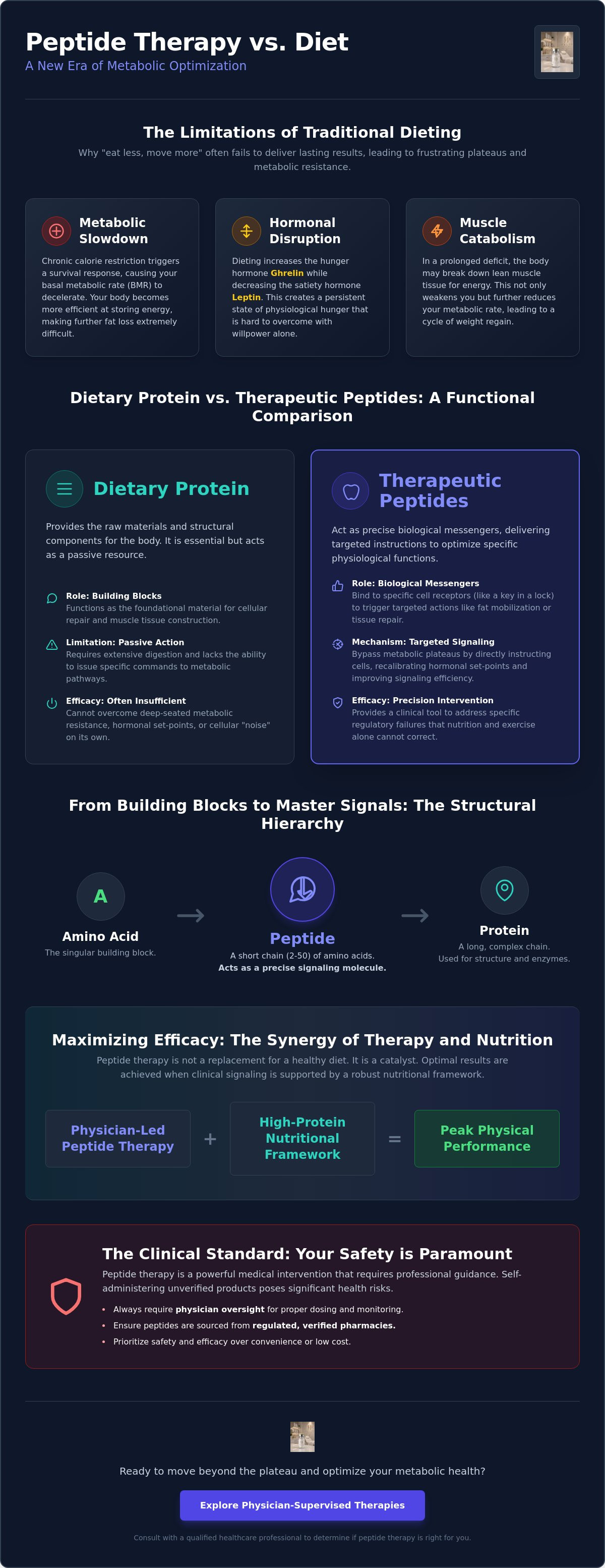
The structural hierarchy of protein-based compounds determines their physiological function. While amino acids represent the singular building blocks and proteins consist of complex, long-chain structures, peptides occupy the critical middle ground as precise signaling agents. Natural peptides are endogenous signaling molecules produced within the body to regulate specific biological processes. Unlike dietary protein, which requires extensive denaturation and enzymatic breakdown, these molecules function through a receptor-mediated mechanism described as the lock and key model. This specificity allows a single peptide to bind with high affinity to a target receptor, triggering a cascade of intracellular events that can alter metabolic state, immune response, or tissue repair. The distinction between peptide therapy vs diet rests on the delivery of biological information versus the delivery of raw mass.
The Biological Role of Endogenous Peptides
Natural peptides are defined as short chains of 2 to 50 amino acids that act as precise biological messengers. These molecules facilitate essential communication between distant organ systems, such as the gut-brain axis, to regulate appetite and energy expenditure. Their primary functions encompass cellular repair, metabolic regulation, and immune modulation. Research into Novel Peptide Therapy highlights how these signaling pathways are being harnessed to address obesity and diabetes with greater precision than traditional lifestyle interventions. By acting as ligands, these peptides ensure that systemic homeostasis is maintained through rapid and targeted cellular communication.
Dietary Peptides vs. Therapeutic Peptides
A frequent point of confusion in the peptide therapy vs diet debate is the assumption that high protein consumption mirrors the effects of clinical administration. Dietary peptides consumed via whole foods possess remarkably low systemic bioavailability. Gastric enzymes and hydrochloric acid typically degrade these chains into constituent amino acids before they reach the bloodstream. This process strips the molecule of its signaling capability, reducing it to a simple nutrient.
In contrast, therapeutic peptides are often provided in a lyophilized form and sourced from regulated 503A compounding pharmacies to ensure molecular integrity. This clinical precision ensures that the signaling molecule remains intact to reach its intended receptor without being neutralized by the digestive tract. For those seeking to address specific metabolic deficiencies or age-related decline, exploring Advanced Peptide Therapy offers a level of biological control that nutrition alone cannot replicate. While a diet provides the bricks for the structure, clinical peptides provide the architect's instructions for where and how those bricks are placed.
Peptide Therapy vs. Diet: A Functional Comparison
The functional divergence between peptide therapy vs diet is best understood through the lens of metabolic priority. While nutrition provides the fundamental substrate for life, it often lacks the regulatory authority to override established biological set-points. In a traditional dietary model, the primary focus is the provision of nutritional building blocks, such as amino acids, fatty acids, and glucose. These components are essential for survival, yet their presence does not guarantee optimal utilization. Clinical observation reveals that many individuals maintain high-quality diets yet fail to achieve significant changes in body composition due to inefficient metabolic signaling. This discrepancy highlights why the "signaling" approach of peptide therapy often produces measurable results where standard dieting plateaus.
Nutritional Building Blocks vs. Biological Instructions
To visualize this relationship, consider an architectural analogy. Dietary intake represents the lumber on a construction site; it is the raw material necessary for any physical structure. Peptides function as the architectural blueprints that dictate exactly how those materials are utilized. Having a surplus of lumber is useless if the blueprints are missing or the construction crew lacks direction. Without these specific biological instructions, the body often lacks the coordination to prioritize muscle synthesis over fat storage, especially during periods of caloric restriction. This synergy is essential for lean muscle preservation, as clinical signaling ensures that amino acids are diverted toward protein synthesis rather than being oxidized for energy.
Targeted Fat Loss: The GLP-1 and Growth Hormone Axis
Standard dieting often results in generalized weight loss, a process that frequently includes the undesirable catabolism of lean tissue. Conversely, peptide therapy for weight loss targets visceral adipose tissue with high specificity through the modulation of the GLP-1 and growth hormone axis. Growth Hormone Secretagogues (GHS) enhance the endogenous secretion of somatotropin, a hormone that directly promotes lipolysis and elevates the basal metabolic rate. By maintaining these signaling pathways, therapy prevents the metabolic adaptation that typically halts fat loss during a diet. This targeted mechanism ensures that the reduction in mass comes primarily from fat stores, preserving the metabolic engine of the body. When comparing peptide therapy vs diet, the ability to selectively influence fat metabolism while sparing muscle represents a significant clinical advantage for long-term healthspan and physical optimization.
Maximizing Efficacy: Integrating Clinical Peptides with Nutritional Protocols
The efficacy of clinical intervention is significantly amplified when supported by a precise nutritional framework. In the context of peptide therapy vs diet, these elements should be viewed as a unified system of metabolic optimization rather than competing strategies. While exogenous signaling molecules provide the instructions for cellular behavior, the body requires specific substrates to execute those commands effectively. A "Peptide-Supportive Diet" prioritizes nutrient density and specific macronutrient ratios to ensure that the physiological shifts induced by therapy result in favorable body composition changes rather than systemic stress. Failure to provide adequate nutritional support can lead to suboptimal results and an increased incidence of metabolic adaptation.
The Essential Role of Protein and Amino Acids
High protein intake is a non-negotiable requirement for patients utilizing GLP-1 agonists or Growth Hormone Secretagogues (GHS). While these therapies prioritize fat oxidation, the body may catabolize lean muscle tissue to meet its metabolic demands if amino acid availability is insufficient. Dietary leucine is particularly critical in this process because it triggers the mTOR (mammalian target of rapamycin) signaling pathway, which provides a synergistic anabolic signal alongside clinical therapy. This combined approach is essential for preventing muscle wasting and mitigating aesthetic concerns like facial volume loss, sometimes colloquially called "Ozempic Face." Clinical protocols generally suggest a target protein range of 1.2 to 2.0 grams per kilogram of body weight to maintain a positive nitrogen balance and support continuous tissue repair.
Micronutrients for Cellular Signaling
Micronutrients function as essential cofactors in the reconstitution of endogenous signaling and the optimization of cellular uptake. Key minerals such as zinc, magnesium, and selenium are fundamental for the production of hormones and the maintenance of receptor integrity on the cell membrane. There is also a documented relationship between Vitamin D status and peptide receptor sensitivity, meaning that a deficiency can physically hinder the effectiveness of therapeutic ligands. For patients on GLP-1 therapy, the inclusion of diverse fiber sources is necessary to support gut health and regulate the slowed gastric emptying associated with these peptides. Rigorous attention to hydration and electrolyte balance, specifically the monitoring of sodium and potassium levels, is required to manage the metabolic shifts and potential gastrointestinal discomfort that can occur during the initial stages of therapy. To secure the clinical-grade materials necessary for your metabolic health journey, you may access Advanced Peptide Therapy through our regulated sourcing platform.
The Clinical Standard: Transitioning to Physician-Supervised Therapy
Achieving metabolic restoration requires a shift from the trial and error of self-administration to the precision of a clinical standard. While the comparison of peptide therapy vs diet highlights the superiority of signaling molecules for metabolic control, the safety of these interventions depends entirely on professional oversight and pharmaceutical purity. Sourcing peptides from unverified research websites introduces significant clinical risks, including the potential for contamination, incorrect molecular concentration, or the presence of harmful impurities. A physician-led framework ensures that these biological tools are utilized within a regulated environment that prioritizes safety and long-term physiological health. By enrolling in the best online semaglutide program, patients gain access to a structured medical environment that bridges the gap between aspirational wellness and clinical rigor.
Why Physician Supervision is Non-Negotiable
The initiation of any metabolic protocol must be preceded by comprehensive baseline blood work and hormonal screening. These assessments allow a clinician to identify underlying deficiencies or contraindications that may hinder the effectiveness of the therapy. Physicians possess the expertise to adjust dosages based on individual metabolic responses, ensuring that the signaling molecules remain within a therapeutic window. This level of oversight is particularly critical for managing potential side effects and monitoring the body's adaptation to the protocol. In the peptide therapy vs diet paradigm, the physician acts as the essential gatekeeper, ensuring that the biological "blueprints" discussed previously are implemented with medical precision. This professional guidance transforms a generic weight loss attempt into a sophisticated, data-driven metabolic optimization strategy.
Sourcing Lyophilized Peptides for Purity
Pharmaceutical integrity is maintained through the process of lyophilization, a specialized freeze-drying technique that preserves the stability and bioactivity of the peptide chain. This method ensures that the molecule remains intact until it is reconstituted for administration, preventing the degradation that occurs with inferior storage methods. Clinical-grade medications sourced from 503A compounding pharmacies must adhere to rigorous USP (United States Pharmacopeia) standards for sterility and potency. In contrast, research-grade peptides often lack these certifications and exist in a regulatory gray area where safety cannot be guaranteed. The transition to a medical telehealth consultation allows for a transparent evaluation of your health goals and the development of a customized protocol. We invite you to explore physician-supervised programs at Helio Peptide to ensure your journey toward physical optimization is supported by the highest standards of pharmaceutical excellence and clinical care.
Advancing Toward Metabolic Restoration
The resolution of the peptide therapy vs diet debate lies in the strategic synthesis of nutritional building blocks and precise biological signaling. While high-quality nutrition remains the foundation of health, it often lacks the regulatory authority to override deep-seated metabolic plateaus or hormonal resistance. Clinical intervention provides the specific architectural instructions required to optimize body composition and preserve lean tissue during fat loss phases. This synergy ensures that the body's internal environment is primed for restoration rather than mere survival.
Establishing a professional protocol ensures your health journey is defined by safety and pharmaceutical precision. We utilize clinical-grade lyophilized peptides sourced from FDA-regulated 503A compounding pharmacies to ensure the highest standards of molecular integrity. Through physician-supervised telehealth consultations, your progress is monitored with the clinical rigor necessary for long-term success and metabolic efficiency. This methodical approach removes the ambiguity of self-administration and replaces it with established medical standards.
Begin Your Physician-Supervised Wellness Program at Helio Peptide to transcend the limitations of traditional dieting and secure a future of physical optimization. You possess the capacity to recalibrate your metabolism and achieve the sustainable results that science-led therapy provides.
Frequently Asked Questions
Can I get natural peptides from food sources like bone broth?
Bone broth contains collagen-derived peptides, yet these are primarily structural building blocks rather than systemic signaling molecules. While these dietary sources provide essential amino acids, the digestive process typically denatures the peptide chains before they can reach the bloodstream as intact ligands. Clinical therapy utilizes stabilized, lyophilized molecules that bypass this enzymatic degradation to achieve specific metabolic outcomes that nutrition alone cannot facilitate.
Is peptide therapy safer than traditional weight loss drugs?
Peptide therapy utilizes molecules that are bioidentical or closely mimic endogenous signaling agents, which often results in a more favorable safety profile compared to synthetic stimulants. Because these agents work through established physiological pathways, they tend to have fewer systemic side effects. However, safety is entirely dependent on physician oversight and the use of clinical-grade materials sourced from regulated 503A compounding pharmacies.
How long does it take to see results when combining diet with peptide therapy?
Measurable physiological changes, such as improved satiety and altered body composition, typically become evident within 4 to 8 weeks of consistent administration. The synergy of peptide therapy vs diet accelerates the timeline for fat oxidation while preserving lean muscle mass. While initial metabolic shifts occur rapidly at the cellular level, achieving significant physical transformation requires a sustained protocol integrated with a high-protein nutritional framework.
Do I need to stay on peptide therapy forever if my diet is perfect?
Peptide therapy is frequently utilized as a finite intervention to recalibrate metabolic set-points rather than a lifelong requirement. Once the desired physiological restoration is achieved and hormonal signaling is stabilized, a disciplined nutritional protocol can often maintain the results. The duration of therapy is determined by individual metabolic responsiveness and the specific clinical objectives established during the initial physician consultation.
Will peptides work if I don’t change my diet at all?
While peptides will initiate biological signaling regardless of caloric intake, the absence of nutritional support significantly compromises the quality of the results. Without a high-protein diet, the body may catabolize muscle tissue to meet metabolic demands, leading to poor body composition outcomes. Maximum efficacy is achieved only when the signaling instructions provided by the therapy are supported by the necessary dietary substrates.
What is the difference between a peptide supplement and a peptide injection?
The primary distinction lies in systemic bioavailability and the rigor of manufacturing standards. Oral peptide supplements are often degraded by gastric acid, rendering the signaling molecules inert before they reach cellular receptors. Clinical injections utilize lyophilized peptides that enter systemic circulation directly. Furthermore, physician-prescribed injections are produced in regulated 503A pharmacies, ensuring a level of purity and potency that over-the-counter supplements cannot match.
Are there any natural peptides that mimic the effects of Semaglutide?
The human body naturally produces Glucagon-Like Peptide-1 in response to food intake, but its half-life is measured in minutes due to rapid enzymatic breakdown. Semaglutide is a modified analog designed to resist this degradation, allowing for sustained metabolic signaling. While certain dietary fibers can slightly increase endogenous secretion, they cannot replicate the potent and prolonged receptor activation achieved through the clinical application of peptide therapy vs diet strategies.
How do I know if I am a candidate for physician-supervised peptide therapy?
Candidacy is established through a comprehensive medical evaluation that includes baseline blood work and a review of metabolic history. Individuals experiencing chronic weight loss plateaus, age-related muscle loss, or hormonal imbalances are often suitable candidates for intervention. A telehealth consultation with a licensed clinician is necessary to determine if advanced peptide therapy aligns with your specific physiological profile and health optimization goals.
