
Will Peptides Help Gain Weight? Myth-Busting Muscle Loss and Body Composition
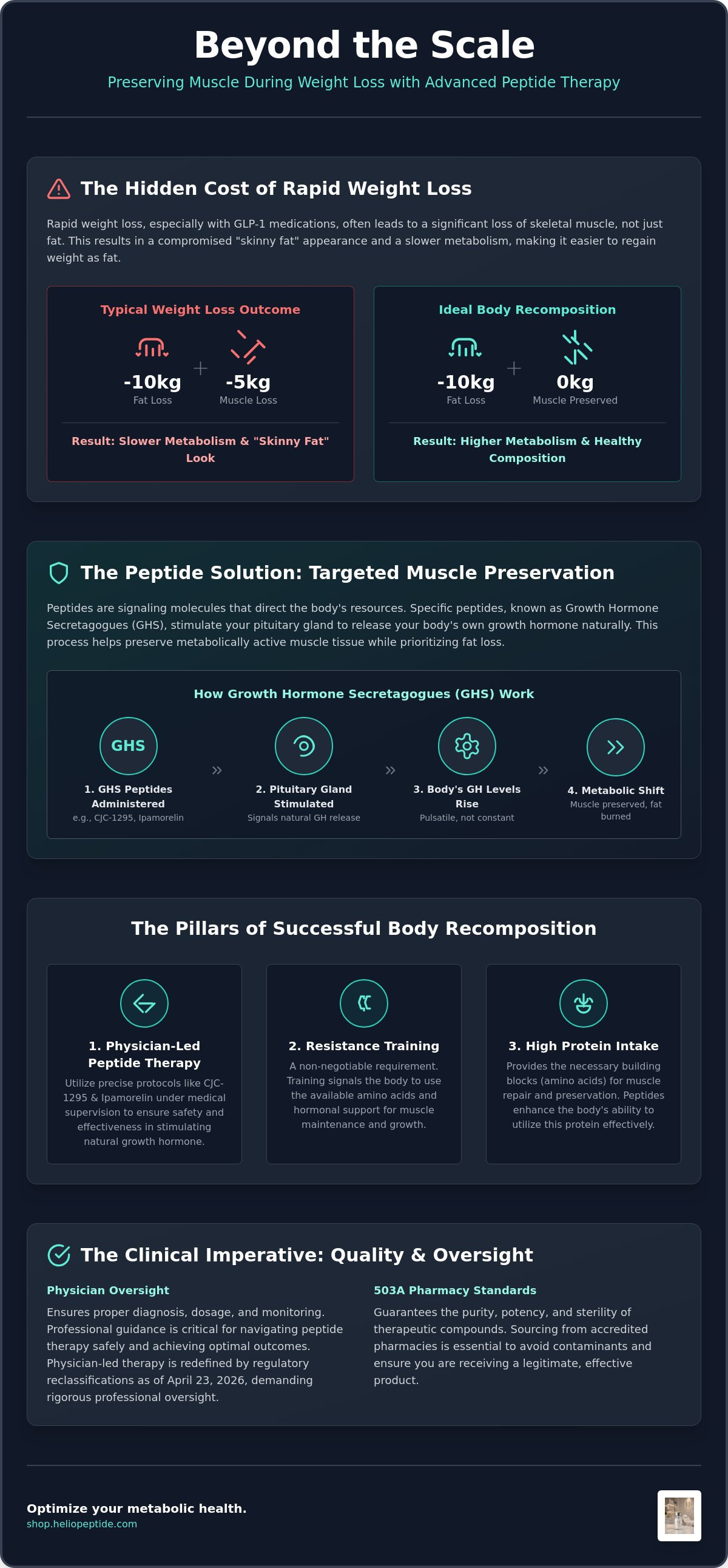
Rapid weight loss often comes at a metabolic cost that many patients are unprepared to pay; while total body mass decreases, the simultaneous depletion of skeletal muscle tissue frequently results in a compromised "skinny fat" appearance. You likely understand that weight reduction is a suboptimal outcome if it necessitates the sacrifice of the metabolic engine responsible for physical strength and long-term health. This concern is particularly prevalent among individuals utilizing GLP-1 medications or navigating age-related sarcopenia. Consequently, clinical focus has shifted toward the strategic application of peptides to prevent muscle loss, positioning these signaling molecules as precise instruments for maintaining structural integrity during metabolic optimization.
This article explores the clinical reality of how specific peptide protocols support lean mass accrual and preserve existing muscle fibers by optimizing the body's endogenous growth hormone production. You'll discover how the April 23, 2026, regulatory reclassifications have redefined the landscape for physician-led therapy, transitioning these treatments into a space of rigorous professional oversight. We provide a technical overview of established protocols, such as the combination of CJC-1295 and Ipamorelin, and clarify how they function to restore metabolic balance. We'll examine the data behind muscle-sparing interventions to ensure your body composition remains a reflection of health rather than just a lower number on a scale.
Key Takeaways
- Distinguish between adipose tissue gain and lean mass accrual to understand why scale weight remains a secondary metric for metabolic health.
- Identify how to utilize specific peptides to prevent muscle loss during rapid weight reduction phases, especially when incorporating medications like Semaglutide or Retatrutide.
- Understand the physiological mechanism of Growth Hormone Secretagogues in stimulating the pituitary gland to maintain structural tissue integrity.
- Recognize that resistance training and high protein intake are non-negotiable requirements for optimizing muscle-to-fat ratios during peptide therapy.
- Evaluate the critical importance of 503A pharmacy standards and physician oversight to ensure the purity and potency of therapeutic compounds.
Peptides and Weight Gain: Addressing the Misconception of Bulk vs. Mass
The common inquiry regarding whether peptides cause weight gain requires a nuanced understanding of biological tissue composition. Patients often conflate the accrual of lean skeletal muscle with the accumulation of adipose tissue; however, clinical outcomes suggest that these compounds facilitate the former while actively discouraging the latter. What are peptides in a physiological context? They are short chains of amino acids that function as precise signaling molecules, directing the body to prioritize protein synthesis and cellular repair. When utilizing peptides to prevent muscle loss, the objective isn't to create "bulk" in the traditional bodybuilding sense but to ensure that the body’s metabolic engine remains intact during periods of caloric restriction or hormonal decline.
Total scale weight is frequently a misleading metric for assessing metabolic health. A patient may maintain a stable weight while undergoing a profound shift in body composition, replacing low-density fat with high-density muscle tissue. This transition is not "weight gain" in the pathological sense; it's a restoration of physical vitality. Peptides don't automatically lead to excessive muscle growth. Instead, they act as metabolic regulators that optimize the body's internal environment, ensuring that nutrients are partitioned toward muscle maintenance rather than fat storage. This precision allows for a more refined physical silhouette without the unwanted volume associated with traditional mass-gaining protocols.
The Science of Nitrogen Balance and Muscle Retention
A positive nitrogen balance is the physiological state where nitrogen intake exceeds excretion, indicating that the body is in an anabolic state of repair rather than a catabolic state of breakdown. Peptides facilitate this environment by enhancing the signaling pathways that drive amino acid uptake into muscle cells. This preservation is critical because muscle tissue is metabolically expensive; it requires more energy to maintain than fat. By utilizing peptides to prevent muscle loss, patients can avoid the metabolic rebound often seen after rapid weight loss, where a lowered basal metabolic rate leads to immediate fat regain once normal caloric intake resumes.
Body Recomposition: The Clinical Goal
Body recomposition represents the most sophisticated goal in clinical physical optimization. This process involves the simultaneous reduction of fat mass and the preservation or moderate accrual of lean tissue. Physician-supervised programs utilize advanced peptide therapy to target specific muscle-to-fat ratios, ensuring that weight loss is purely a result of fat oxidation rather than the sacrifice of structural protein. Body recomposition is defined as a measurable shift in tissue density and metabolic activity rather than a simple fluctuation in total scale weight.
Growth Hormone Secretagogues: The Science of Stimulating Lean Tissue Accrual
Growth Hormone Secretagogues (GHS) represent a specialized class of signaling molecules designed to restore the body's somatotropic axis. Unlike exogenous growth hormone, which can suppress natural production and disrupt metabolic homeostasis, GHS peptides stimulate the pituitary gland to release endogenous growth hormone in a pulsatile manner. This methodology preserves the body's natural regulatory feedback loops while enhancing the circulating levels of hormones necessary for physical optimization. Clinical practitioners frequently utilize peptides to prevent muscle loss by leveraging these secretagogues to counteract the catabolic effects of aging or systemic metabolic stress. By maintaining a more youthful hormonal profile, patients can support the retention of skeletal muscle even during phases of significant fat oxidation.
The relationship between growth hormone (GH) and lean mass is mediated through complex biochemical pathways. Once the pituitary gland releases GH, it triggers the hepatic production of Insulin-like Growth Factor 1 (IGF-1), a primary driver of anabolic activity. While often discussed in the context of peptides for muscle growth, the primary clinical value of GHS therapy lies in tissue preservation and systemic recovery. These compounds facilitate a more efficient repair environment, ensuring that the structural proteins within muscle fibers are replaced faster than they are degraded. For those seeking professional guidance, Advanced Peptide Therapy offers a regulated pathway to integrate these signaling molecules into a comprehensive health protocol.
Key Peptides for Muscle Preservation and Growth
The combination of CJC-1295 and Ipamorelin is a frequently utilized protocol in clinical settings. CJC-1295 functions as a Growth Hormone Releasing Hormone (GHRH) analog, extending the half-life of growth hormone signaling, while Ipamorelin acts as a selective ghrelin receptor agonist to trigger a specific GH pulse. This synergistic approach provides a sustained elevation of IGF-1 without the significant cortisol or prolactin spikes associated with older secretagogues. Additionally, Tesamorelin is recognized for its unique ability to target visceral adipose tissue while simultaneously supporting the maintenance of lean mass. These peptides differ fundamentally from traditional anabolic steroids; they do not bind to androgen receptors but instead optimize the body's own endocrine production to achieve results safely.
The Role of IGF-1 in Cellular Repair
Insulin-like Growth Factor 1 is the essential downstream effector of growth hormone. It facilitates the activation and proliferation of satellite cells, which are the precursor cells responsible for repairing and thickening skeletal muscle fibers after resistance training. As individuals age, natural IGF-1 levels typically decline, contributing to the onset of sarcopenia, or age-related muscle wasting. Maintaining optimal IGF-1 levels through targeted peptide protocols ensures that the body retains its capacity for cellular repair. This is especially important for patients undergoing rapid weight loss, as it prevents the body from utilizing skeletal muscle as an energy source, thereby protecting the metabolic rate and physical strength.
Preventing Muscle Loss: Why Peptides Are Critical During GLP-1 Weight Loss
The phenomenon of "skinny fat" occurs when weight loss is achieved through caloric deficit alone, without adequate metabolic signaling to preserve skeletal muscle. While medications like Semaglutide 15 mg effectively reduce appetite and total body mass, they don't inherently protect the patient from sarcopenia. Research suggests that certain peptides may help maintain structural integrity during these phases of rapid weight reduction. Utilizing peptides to prevent muscle loss is a critical strategy for ensuring that the reduction in scale weight represents fat oxidation rather than the cannibalization of functional tissue. A significant loss of lean mass leads to a decreased basal metabolic rate (BMR), which often results in metabolic resistance and weight regain once the intervention concludes. This loss of the metabolic engine makes it increasingly difficult for the body to maintain its new weight, creating a cycle of metabolic instability.
Physiological consequences of muscle wasting extend beyond aesthetics; they impact insulin sensitivity and systemic inflammation. When the body enters a catabolic state due to extreme caloric restriction, it often prioritizes the breakdown of muscle protein for energy. Muscle-sparing peptides intervene in this process by signaling the body to spare nitrogen and prioritize lipid metabolism. This protective mechanism is essential for patients who are navigating significant lifestyle changes, as it ensures that their physical strength and metabolic health remain intact throughout the transformation. By shifting the focus from simple weight loss to high-quality body recomposition, clinicians can deliver results that are both sustainable and health-optimizing.
Counteracting Sarcopenic Obesity with Peptide Synergy
The clinical approach to "protected weight loss" involves the synergistic application of GLP-1 agonists and Growth Hormone Secretagogues (GHS). This combination ensures that while the GLP-1 component addresses glucose regulation and satiety, the GHS component maintains the anabolic signaling necessary for tissue preservation. Physician oversight is essential to calibrate these protocols, as it allows for the precise adjustment of dosages based on body composition metrics like Dual-Energy X-ray Absorptiometry (DEXA) scans. By focusing on these granular data points, clinicians can move beyond the limitations of the scale to ensure that the patient's metabolic health is improving alongside their aesthetic profile. Monitoring markers such as grip strength and functional movement during therapy provides qualitative data that supports the quantitative findings of muscle retention.
Retatrutide and Metabolic Optimization
Retatrutide 10mg introduces a more sophisticated mechanism of action as a triple agonist, targeting the GLP-1, GIP, and glucagon receptors. The inclusion of glucagon receptor agonism is particularly notable, as it increases energy expenditure and potentially influences the way the body preserves muscle during deep caloric deficits by enhancing mitochondrial efficiency. This triple-agonist approach allows for a more aggressive metabolic optimization while providing a more balanced endocrine response than single-pathway medications. Retatrutide represents the next frontier in maintaining metabolic vigor. By integrating these advanced pharmaceutical options into a structured medical program, patients can achieve a body composition that is both lean and metabolically resilient.
Optimizing Muscle-to-Fat Ratios: A Comprehensive Protocol for Body Recomposition
Peptide therapy provides the biochemical signaling environment necessary for tissue preservation, but actual structural remodeling requires a consistent mechanical stimulus. Resistance training serves as the primary catalyst for this change. Without the application of mechanical tension through weight-bearing exercise, the body lacks the physiological directive to utilize increased growth hormone levels for myofibrillar repair. Integrating peptides to prevent muscle loss is most effective when these compounds are used to amplify the body’s natural response to physical stress. This synergy ensures that the metabolic environment remains anabolic, favoring the retention of skeletal muscle over the storage of adipose tissue.
Cellular hydration and micronutrient support are equally critical for maintaining muscle fullness and functional density. Adequate water intake, paired with essential electrolytes like sodium, potassium, and magnesium, ensures that muscle cells remain hydrated, which is vital for sarcoplasmic volume and intracellular signaling. Sleep plays a foundational role in this process; the most significant endogenous growth hormone pulses occur during deep, slow-wave sleep. Disruptions in circadian rhythms can blunt these pulses, undermining the efficacy of any peptide protocol. Patients must prioritize seven to nine hours of quality rest to allow the signaling molecules to complete the repair cycles initiated during the day.
The Synergy of Training and Peptide Therapy
Peptides act as force multipliers for physical activity. By improving systemic recovery times, these signaling molecules allow for increased training frequency and intensity without the typical risks of overreaching or injury. This accelerated repair of connective tissues and muscle fibers means that the physiological adaptations to exercise occur more rapidly. It's vital to recognize that peptides are tools designed to enhance, not replace, physical activity. They provide the biological infrastructure that makes the results of consistent training more pronounced and sustainable over time. Integrating professional recovery modalities such as Heavenly Therapeutic Massage can further support this process by alleviating muscle tension and promoting the relaxation necessary for optimal tissue repair.
Dietary Strategies for Lean Mass Support
High protein intake is a non-negotiable requirement for patients focused on body recomposition. During a caloric deficit, the body requires a higher threshold of amino acids to prevent the oxidation of existing muscle tissue for energy. Clinical standards often suggest a protein intake of 1.6 to 2.2 grams per kilogram of body weight to maintain a positive nitrogen balance. Nutrient timing is also a factor when utilizing secretagogues; administration usually occurs during fasted windows to avoid insulin interference with the growth hormone pulse. Integrating physician-supervised HRT can further stabilize this anabolic environment, ensuring that androgens and other regulatory hormones are optimized to support tissue integrity. To begin a customized protocol tailored to your specific metabolic requirements, view our Advanced Peptide Therapy options.
The Clinical Imperative: Why Physician-Led Peptide Therapy Outperforms Retail Alternatives
The market for physical optimization is saturated with unregulated vendors selling "research grade" chemicals. These substances are often manufactured without oversight, posing significant risks of contamination, incorrect dosing, or the presence of heavy metals. For those seeking peptides to prevent muscle loss, the distinction between these gray-market products and clinical-grade pharmaceuticals is a matter of safety and efficacy. Licensed 503A compounding pharmacies adhere to rigorous USP standards for sterile manufacturing, ensuring that every vial meets strict potency requirements. Clinical-grade peptides are typically provided in a lyophilized, or freeze-dried, state. This process preserves the delicate molecular structure of the amino acid chains, ensuring stability and clinical efficacy that liquid-based retail alternatives often cannot guarantee.
Professional oversight isn't merely a regulatory requirement; it's a clinical necessity for achieving measurable results. Physicians utilize routine blood work to monitor IGF-1 levels, hepatic function, and systemic markers to ensure the protocol remains within safe physiological ranges. This data-driven approach allows for the identification of underlying issues, such as low testosterone, which might otherwise hinder the effectiveness of peptides to prevent muscle loss. Without this diagnostic clarity, patients often struggle with suboptimal results or avoidable side effects. A physician-led program ensures that every intervention is calibrated to the patient's unique metabolic profile, maximizing the therapeutic window while minimizing risk.
Safety, Compliance, and Regulatory Oversight
Helio Peptide ensures all therapeutic compounds are sourced from US-licensed manufacturers, upholding the highest standards of pharmaceutical integrity. This commitment to regulatory compliance protects patients from the immunogenicity risks associated with impure, imported substances found on unregulated sites. Certified physicians manage the entire therapeutic arc, from the initial prescription to the ongoing mitigation of potential side effects. This professional guidance is especially vital for identifying complex hormonal imbalances. If a patient presents with symptoms of sarcopenia, a physician can determine if the root cause is a growth hormone deficiency, low testosterone, or a combination of metabolic factors, allowing for a targeted and effective treatment plan.
Getting Started with a Personalized Wellness Program
The path to physical optimization begins with a comprehensive clinical consultation. During this session, a physician evaluates your medical history, current metabolic markers, and specific health objectives to design a protocol that aligns with your biology. These individualized programs are dynamic, allowing for adjustments as your body composition evolves and your metabolic rate stabilizes. This level of customization ensures that the therapy remains effective throughout the duration of your wellness journey. To ensure your health journey is guided by medical expertise rather than guesswork, schedule your physician consultation with Helio Peptide today and take the first step toward a more resilient, optimized physique.
Precision Protocols for Metabolic Resilience
Transitioning from simple weight reduction to sophisticated body recomposition requires a strategic focus on tissue quality rather than just scale weight. You've seen how Growth Hormone Secretagogues and advanced signaling molecules provide the biological directives necessary to maintain structural integrity during metabolic stress. Utilizing peptides to prevent muscle loss ensures that your physical transformation results in a higher basal metabolic rate and a more resilient physique. This outcome is the direct consequence of integrating resistance training, high protein intake, and clinical-grade pharmaceutical interventions under professional guidance.
Safety and efficacy in peptide therapy are fundamentally linked to professional oversight and rigorous pharmaceutical standards. Our programs utilize clinical-grade lyophilized peptides sourced from FDA-regulated 503A pharmacies to ensure maximum stability and biochemical potency. Every protocol is managed by US-licensed physicians who monitor your progress through routine diagnostics and personalized dosing adjustments. You don't have to navigate the complexities of physical optimization without expert support. Begin Your Physician-Supervised Peptide Program to establish a foundation of health rooted in clinical precision and long-term vitality.
Frequently Asked Questions
Will peptides help me gain weight if I am underweight?
Peptides facilitate weight gain specifically through the accrual of lean skeletal muscle rather than the accumulation of adipose tissue. By stimulating the somatotropic axis, these signaling molecules enhance protein synthesis and nitrogen retention. This process is most effective for underweight individuals when paired with a hypercaloric diet rich in protein and a structured resistance training program. The result is a high-density physical restoration rather than a simple increase in body fat percentage.
Do peptides for muscle growth have side effects?
Clinical applications of growth hormone secretagogues may involve side effects such as transient water retention, localized irritation at the injection site, or increased hunger. In some cases, patients report numbness or tingling in the extremities, often referred to as carpal tunnel-like symptoms. These effects are typically dose-dependent and manageable under professional supervision. Routine blood work allows physicians to monitor glucose metabolism and insulin sensitivity to ensure the protocol remains within safe parameters.
Can I use muscle-preserving peptides while taking Semaglutide?
Utilizing peptides to prevent muscle loss is a highly effective strategy when combined with GLP-1 medications like Semaglutide. This combination addresses the primary risk of rapid weight loss, which is the simultaneous depletion of skeletal muscle tissue. While Semaglutide manages appetite and glucose, secretagogues like Ipamorelin provide the anabolic signaling required to protect the metabolic rate. This synergy facilitates a healthier body composition and prevents the "skinny fat" appearance often associated with extreme caloric deficits.
How long does it take to see muscle changes with peptide therapy?
Measurable changes in body composition typically become evident within a three to six-month window of consistent therapy. While improvements in sleep quality and systemic recovery may be noticed within the first few weeks, the actual accrual of lean tissue is a gradual physiological process. Patients should expect the most significant results to manifest after the second or third treatment cycle, provided that nutritional and training stimuli remain constant throughout the program.
Are peptides for muscle gain legal in the United States?
Peptides are legal in the United States when prescribed by a licensed physician for a specific clinical indication. As of April 23, 2026, many previously restricted peptides were reclassified to Category 1, allowing them to be legally prepared by licensed compounding pharmacies. It's critical to avoid "research use only" products sold online, as these exist in an unregulated gray market and lack the quality controls required for human consumption.
Is it better to use peptide injections or oral peptides for muscle loss?
Subcutaneous injections are the gold standard for peptide administration due to their superior bioavailability and predictable absorption rates. Oral peptides frequently undergo significant degradation within the gastrointestinal tract, which often renders the active compounds ineffective before they reach systemic circulation. Clinical protocols almost exclusively utilize injectable formats to ensure that the signaling molecules maintain their structural integrity and reach the target receptors at the intended concentrations.
What is the best peptide to prevent muscle loss during a cut?
The combination of CJC-1295 and Ipamorelin is widely considered the optimal protocol for peptides to prevent muscle loss during a caloric deficit. These secretagogues work synergistically to maintain IGF-1 levels, which protects muscle fibers from being oxidized for energy. Tesamorelin is another specialized option frequently utilized for its unique ability to target visceral adipose tissue while simultaneously supporting the maintenance of lean skeletal mass during aggressive fat loss phases.
Will I lose the muscle I gained if I stop taking peptides?
Muscle tissue gained or preserved during peptide therapy is not automatically lost upon cessation of the protocol. Maintenance of lean mass depends primarily on the continuation of mechanical stimulus through resistance training and adequate dietary protein intake. Peptides provide the hormonal environment to build or protect the tissue, but the physical requirement for that muscle remains the primary factor in its long-term retention. Stopping the therapy without maintaining these lifestyle factors will likely lead to gradual atrophy.
