
Do Peptides Really Work? A Clinical Analysis of Efficacy and Safety in 2026
The distinction between a transformative medical protocol and a dangerous chemical experiment often rests entirely on the rigor of clinical oversight. As the global market for these signaling molecules is projected to reach $163.98 billion in 2026, the central question for many remains: do peptides really work, or is the industry fueled by unregulated wellness hype? It's understandable to feel hesitant given the proliferation of "research-grade" substances that bypass standard safety protocols. You deserve a clear distinction between pharmaceutical-grade medication and the precarious gray market of online vendors.
This clinical analysis clarifies the scientific reality behind peptide therapy by examining the precise biological mechanisms that drive metabolic optimization and tissue repair. We'll outline the critical 2026 FDA regulatory updates, including the removal of twelve peptides from the Category 2 restricted list, to help you identify safe, physician-supervised programs. By the end of this guide, you'll have a technical understanding of how these amino acid chains function within a professional medical framework, allowing you to set realistic expectations for your health journey.
Key Takeaways
- Understand the biological "lock and key" mechanism of amino acid sequences and how they trigger specific cellular responses for metabolic optimization.
- Evaluate the clinical evidence behind FDA-approved protocols to determine how and why do peptides really work when administered through precise pharmaceutical titration.
- Identify the significant risks associated with "research-grade" substances and why professional oversight is mandatory to ensure purity and correct concentration.
- Learn the technical advantages of lyophilized (freeze-dried) peptides and the necessity of sourcing through regulated 503A compounding pharmacies.
- Discover the essential steps for initiating a safe protocol, beginning with comprehensive baseline blood panels and licensed medical supervision.
The Science of Molecular Signaling: What Are Peptides?
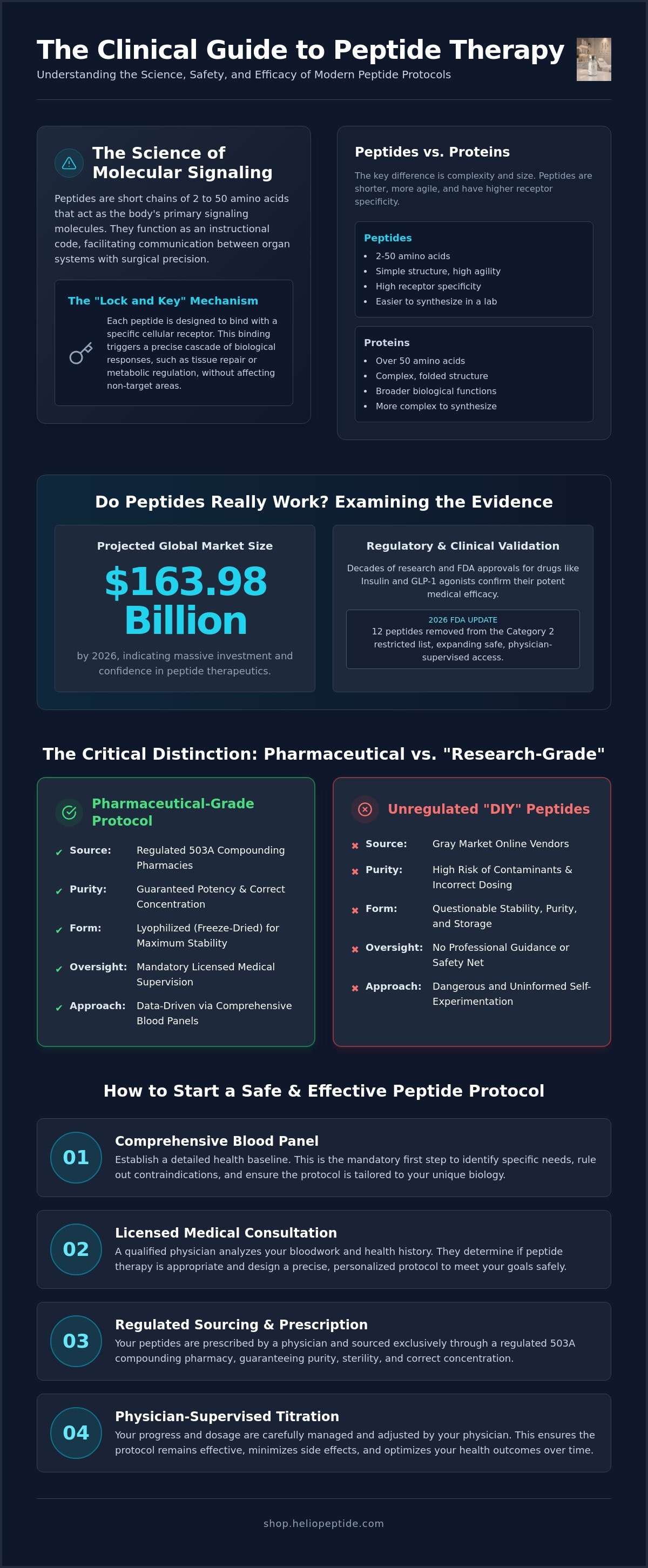
Peptides are defined as precise sequences of 2 to 50 amino acids linked by covalent peptide bonds. These molecules function as primary signaling ligands in the human body, facilitating communication between disparate organ systems. To understand What Are Peptides?, one must view them as the body's instructional code. While many individuals inquire whether do peptides really work, the scientific reality is that they're essential biological messengers. The body produces endogenous peptides naturally; however, exogenous therapeutic peptides are synthesized to mimic or enhance these existing pathways.
The efficacy of these molecules is rooted in a "lock and key" mechanism. Each peptide is structurally designed to bind with high affinity to specific cellular receptors. Once binding occurs, a cascade of intracellular biological responses is triggered. This specificity allows for precise modulation of physiological functions such as tissue repair, metabolic regulation, and hormonal signaling. Unlike systemic medications that may affect multiple non-target areas, peptides operate with surgical precision, targeting only the intended receptor sites to minimize collateral biological impact.
Peptides vs. Proteins: A Question of Complexity
The distinction between peptides and proteins is primarily a matter of molecular weight and structural folding. Proteins are longer chains, often exceeding 50 amino acids, and possess complex tertiary structures. Peptides are shorter and more agile. This reduced complexity allows for higher receptor specificity and easier laboratory synthesis. However, their biological half-life is often brief, as they're rapidly degraded by proteolytic enzymes. Modern Advanced Peptide Therapy utilizes specific molecular modifications to extend this half-life, ensuring the signaling remains active long enough to achieve the desired therapeutic outcome. This "biomimetic" signaling approach allows clinicians to restore physiological balance by replicating the body's natural biochemical language.
The Evolution of Peptide Pharmacology
The clinical application of these molecules began with the landmark discovery of insulin in 1921. Over the last century, the field has evolved from simple hormone replacement to the development of sophisticated GLP-1 receptor agonists and multi-target ligands. Pharmaceutical research increasingly favors peptides over traditional small-molecule drugs because they offer higher potency and significantly lower toxicity profiles. Since they're composed of amino acids, the body metabolizes them into natural components, reducing the risk of off-target accumulation. Peptide therapy is defined as a targeted medical intervention used to restore physiological balance. When patients evaluate the data to see if do peptides really work, they're looking at the result of decades of pharmaceutical refinement designed to optimize human performance at a cellular level.
Do Peptides Really Work? Examining the Clinical Evidence
The efficacy of peptide therapy is not a matter of anecdotal evidence; it's a conclusion supported by decades of rigorous pharmaceutical research and successful FDA approvals. When patients ask, do peptides really work, they're often looking for a bridge between the hype of wellness influencers and the reality of clinical outcomes. The clinical success of insulin, and more recently, GLP-1 receptor agonists, demonstrates that these molecules are among the most potent tools in modern medicine. These therapies are grounded in a sophisticated understanding of peptide benefits and safety concerns, focusing on biological signaling to achieve specific health outcomes.
Beyond simple weight management, peptides influence the broader concept of healthspan by targeting cellular repair pathways and mitochondrial function. By modulating these fundamental biological processes, peptide protocols can restore metabolic efficiency that often declines with age. This isn't about temporary fixes. It's about utilizing pharmaceutical-grade ligands to re-engage the body’s natural regenerative capabilities. For those seeking to optimize their physiological profile, reviewing Advanced Peptide Therapy options provides a path toward data-driven health optimization.
Metabolic Optimization and Weight Management
The most prominent evidence for peptide efficacy lies in the realm of metabolic health. Semaglutide, a GLP-1 receptor agonist, has revolutionized the field by mimicking the natural hormone responsible for appetite suppression and insulin sensitivity. Clinical data consistently shows that this targeted signaling leads to significant reductions in adipose tissue while improving cardiovascular markers. The evolution continues with the Retatrutide 10mg protocol, which utilizes a triple-agonist mechanism to target GLP-1, GIP, and glucagon receptors simultaneously. This multi-pathway approach offers a higher degree of metabolic support than previous generations of medication. However, the potency of these molecules necessitates professional titration. You can explore the full scope of peptide therapy for weight loss to understand how these clinical protocols are structured for maximum safety and efficacy.
Tissue Repair and Growth Hormone Secretagogues
Peptide therapy also excels in the domain of musculoskeletal recovery and tissue repair. Peptides like Ipamorelin function as growth hormone secretagogues, stimulating the pituitary gland to release endogenous growth hormone in a pulsatile manner. This approach is fundamentally different from synthetic HGH injections. By encouraging the body's natural production, peptide therapy avoids the "shutdown" of natural hormone pathways often seen with exogenous hormone replacement. This results in improved collagen synthesis and faster recovery from physical exertion. When considering if do peptides really work for recovery, the evidence points to a more "natural" physiological response that supports long-term musculoskeletal integrity without the harsh side effects of traditional anabolic substances.
Myth vs. Reality: Why "DIY" Peptides Often Fail
Skepticism regarding peptide efficacy is often rooted in the inconsistent results of unregulated sourcing. While clinical trials confirm that pharmaceutical-grade ligands are highly effective, the gray market of online vendors frequently provides sub-therapeutic or contaminated products. Many patients ask, do peptides really work, after experiencing failures with substances labeled "for research use only." These labels aren't merely regulatory formalities. They indicate a lack of quality control that can lead to systemic inflammation or treatment failure. True efficacy requires a level of purity that is rarely found outside of a clinical supply chain.
Peptides aren't magic pills that function in isolation. They require a stable metabolic foundation and precise, physician-led titration to achieve optimal results. Without professional oversight, users often mismanage dosages. This leads to receptor desensitization or avoidable side effects. Clinical success is the result of a coordinated protocol where the peptide acts as a catalyst within a larger, supervised health strategy. To evaluate if do peptides really work, one must first ensure the administration follows a legitimate medical framework.
The Danger of Unregulated "Research Chemicals"
Non-pharmaceutical peptides frequently contain impurities such as heavy metal contamination or bacterial endotoxins. These contaminants trigger immune responses that mask the peptide's intended therapeutic benefits. Budget-tier vendors often skip the critical process of lyophilization. This freeze-drying technique is essential for maintaining the molecular integrity and stability of the peptide chain. Pre-mixed liquid peptides degrade rapidly at room temperature. They lose their signaling potency before they ever reach the patient. Verification of purity through third-party Certificates of Analysis (COAs) is the only reliable method to ensure a vial contains the stated concentration without harmful additives or degradants.
The Bioavailability Barrier
Oral peptide administration is largely ineffective for the majority of therapeutic sequences. The gastrointestinal environment is rich in proteolytic enzymes designed to break down amino acid chains. Most oral peptides are destroyed before entering the bloodstream. A professional weight loss injection protocol remains the clinical standard because it ensures maximum bioavailability. Subcutaneous administration bypasses first-pass metabolism, ensuring near-100% peptide absorption and consistent signaling at the cellular level. This direct delivery system is what allows clinical-grade protocols to succeed where over-the-counter or oral alternatives fail.
The Clinical Standard: Sourcing and Stability
The clinical efficacy of any peptide protocol is inseparable from the standards of its manufacturing and storage. To determine if do peptides really work, one must examine the environment in which they're synthesized. Pharmaceutical-grade peptides are produced in 503A compounding pharmacies, which are strictly regulated to ensure sterile conditions and precise formulation. These facilities operate under rigorous quality control measures to prevent bacterial endotoxins and ensure every vial meets the exact concentration required for therapeutic signaling. Without these standards, even a promising amino acid sequence becomes a biological liability. Sterile manufacturing environments are essential to prevent injection-site infections and systemic inflammatory responses that often accompany unregulated products.
Stability remains the primary challenge in peptide pharmacology. When evaluating if do peptides really work, the molecular state of the substance is as critical as the sequence itself. Peptides are fragile chains; they're highly susceptible to environmental stressors. Professional protocols prioritize sourcing from facilities that adhere to pharmaceutical-grade stability testing, ensuring that the ligands remain viable from the point of manufacture to the moment of administration. This commitment to sourcing is the foundation of patient safety and predictable metabolic outcomes. You can access these high-standard formulations through Helio Peptide’s clinical-grade offerings.
Why Lyophilization Matters for Efficacy
Lyophilization, or freeze-drying, is the gold standard for preserving molecular integrity. This technical process involves removing water through sublimation at extremely low temperatures, which preserves the peptide’s complex molecular structure. Liquid peptides are highly unstable and can degrade rapidly at room temperature or during the mechanical stress of shipping. Hydrolysis, the chemical breakdown due to water exposure, often renders pre-mixed peptides biologically inert. Utilizing a semaglutide 15 mg lyophilized protocol ensures that the molecule remains stable until reconstitution, providing a consistent and potent therapeutic effect that liquid alternatives cannot match.
The Role of Physician Supervision
Physician oversight is the final pillar of a successful protocol. A medical consultation is the mandatory first step in any advanced peptide therapy program. Clinicians use this assessment to screen for contraindications and establish baseline blood markers, ensuring the therapy aligns with your unique hormonal profile. Ongoing monitoring is essential to prevent adverse effects like muscle wasting, which can occur during rapid weight loss if the dosage isn't properly titrated. By tracking biomarkers and adjusting concentrations, physicians ensure that the physiological response is optimized for fat loss and metabolic restoration rather than mere caloric restriction.
How to Start a Safe and Effective Peptide Protocol
Initiating a clinical peptide protocol requires a transition from theoretical knowledge to disciplined application. While the scientific data confirms that pharmaceutical-grade ligands are effective, the success of the treatment depends entirely on the quality of the entry point. To determine if do peptides really work for your specific physiological profile, you must move beyond anecdotal evidence and enter a structured medical framework. This process is not merely about acquiring a vial; it is about establishing a biological baseline and following a supervised titration schedule that respects the complexity of your endocrine system.
A successful protocol follows four essential steps to ensure safety and maximize metabolic outcomes:
- Step 1: Medical Assessment. Secure a comprehensive consultation and baseline blood panel to evaluate kidney function, liver enzymes, and hormonal markers.
- Step 2: Verified Sourcing. Ensure your peptides are sourced exclusively from a licensed US 503A pharmacy to guarantee purity and stability.
- Step 3: Precision Titration. Follow a professional dosing schedule where concentrations are adjusted based on your individual response and tolerance.
- Step 4: Metabolic Support. Integrate the therapy with high-protein nutrition and resistance training to preserve lean mass and optimize the signaling effects of the peptides.
Identifying a Legitimate Telehealth Provider
The proliferation of online vendors has made it difficult to distinguish between medical facilitators and unregulated retail sites. Legitimate providers always require a prescription and provide transparent information regarding their pharmacy partnerships. You should avoid any entity that sells substances "for research purposes only," as these products bypass the safety standards required for human administration. Comprehensive programs often incorporate physician-supervised HRT to address underlying hormonal imbalances that may otherwise hinder the efficacy of peptide therapy. A professional provider acts as a gatekeeper, ensuring that the treatment is both legally compliant and clinically appropriate.
Monitoring Your Progress and Safety
Efficacy is measured through consistent monitoring of biomarkers and physical response. A high-quality response is characterized by gradual metabolic improvement rather than unstable fluctuations. It's vital to follow "muscle-sparing" protocols during rapid weight loss phases; peptides are most effective when they target adipose tissue while preserving skeletal muscle integrity. If you're ready to move beyond the uncertainty of the gray market and utilize a data-driven approach to health, you can explore physician-supervised peptide programs at Helio Peptide. Professional oversight is the only way to answer the question of do peptides really work with a definitive, results-backed affirmative.
Establishing a Standard for Metabolic Excellence
The scientific data for 2026 confirms that peptide therapy is a highly effective medical intervention when executed within a rigorous clinical framework. Understanding the mechanisms of molecular signaling is the first step in moving beyond the ambiguity of the wellness industry. To answer the fundamental question, do peptides really work, one must look at the outcomes of pharmaceutical-grade ligands administered under professional supervision. Success is not a matter of chance. It's the inevitable result of utilizing clinical-grade lyophilized peptides for maximum stability and following protocols established by US-licensed physicians.
By prioritizing sourcing from FDA-regulated 503A pharmacies and engaging in comprehensive telehealth consultations, you eliminate the risks associated with unregulated research chemicals. This disciplined approach ensures that your metabolic optimization is both safe and sustainable. You now have the technical criteria to distinguish between unregulated hype and professional-grade solutions. You're invited to begin your physician-supervised peptide journey today and experience the benefits of a protocol defined by clinical precision and regulatory compliance. Your path to restored physiological balance is grounded in science.
Frequently Asked Questions
Is peptide therapy safe for long-term use?
Peptide therapy is considered safe for long-term use when managed within a structured medical protocol. Safety profiles vary between specific molecules; however, many metabolic peptides are designed for chronic administration. Consistent laboratory monitoring of renal and hepatic markers ensures that the biological signaling remains within therapeutic ranges without causing systemic stress. This professional oversight is the primary safeguard against the adverse effects associated with unmonitored use.
How long does it take to see results from peptides?
Biological responses typically manifest within four to twelve weeks of consistent administration. While metabolic signaling begins immediately, visible changes in body composition or tissue repair require time for cellular turnover. The specific timeline varies based on the individual's baseline health and the concentration of the protocol. Consistency is the most critical factor in achieving measurable results, as the signaling effect is cumulative rather than instantaneous.
Can I take peptides without a doctor’s prescription?
Legitimate, pharmaceutical-grade peptides require a physician's prescription for legal acquisition and safe administration. Substances sold without a prescription are often labeled "for research purposes only" to bypass FDA regulations. These unregulated products carry significant risks of contamination and lack the quality control found in licensed 503A pharmacies. Clinical safety is only possible when a licensed medical professional oversees the sourcing and dosing of these potent signaling molecules.
What is the difference between peptides and SARMs?
Peptides are short chains of amino acids that act as signaling ligands, whereas SARMs are synthetic compounds designed to mimic the effects of testosterone. Peptides generally have a superior safety profile because they're metabolized into natural amino acids. SARMs can cause significant hormonal suppression and liver toxicity, making them a higher-risk intervention. Peptides focus on cellular signaling rather than direct androgen receptor activation, which minimizes the risk of systemic hormonal imbalance.
Are there any natural ways to increase peptide levels?
Endogenous peptide production can be supported through optimized sleep, high-protein nutrition, and consistent resistance training. These lifestyle factors provide the raw materials and physiological stimuli needed for natural signaling. However, for significant metabolic optimization, exogenous therapeutic peptides are often necessary to overcome age-related declines in production. Professional protocols supplement these natural efforts to achieve a level of cellular signaling that lifestyle changes alone cannot produce.
What happens if I stop taking weight loss peptides?
Discontinuing weight loss peptides without a maintenance strategy can lead to a gradual return of baseline appetite levels and metabolic rate. To maintain results, patients must establish sustainable nutritional and exercise habits during the protocol. Physician-led titration often includes a tapering phase to help the body stabilize its natural signaling. This methodical transition prevents the rapid weight regain often associated with the abrupt cessation of unregulated substances.
Do peptides have side effects like traditional medications?
Peptides can cause side effects, though they're generally milder than traditional small-molecule drugs because they're composed of natural amino acids. Common reactions include localized injection site irritation or transient gastrointestinal discomfort. To evaluate if do peptides really work safely for you, a clinician will monitor your response and adjust the dosage to mitigate these effects. This proactive titration ensures that the therapeutic benefits outweigh any minor physiological adjustments.
How do I know if my peptides are real or counterfeit?
Authenticity is guaranteed by sourcing exclusively through US-licensed 503A compounding pharmacies that provide third-party Certificates of Analysis. Real peptides are typically provided in a lyophilized cake rather than a pre-mixed liquid. To confirm if do peptides really work as intended, ensure your provider offers transparent laboratory testing and physician oversight for every batch. Counterfeit products often lack these credentials and may contain incorrect concentrations or harmful impurities.
