
Clinical FAQ: Understanding Weight Loss Injections and Metabolic Peptide Therapy in 2026
By mid-2026, the FDA's approval of next-generation oral and high-dose injectable incretin mimetics has fundamentally altered the paradigm of metabolic management in the United States. It's common to feel overwhelmed by the transition from brand-name retail marketing to the technical reality of active pharmaceutical ingredients and rigorous regulatory sourcing standards. This clinical guide provides the definitive framework for understanding the science, sourcing, and precise administration of a modern weight loss injection for optimized metabolic performance.
We'll examine the physiological distinctions between GLP-1 and GIP pathways, the critical necessity of 503A pharmaceutical purity, and the structured roadmap for physician-led titration that ensures both safety and efficacy. By prioritizing clinical oversight over anecdotal trends, you can move toward a state of biological optimization grounded in pharmaceutical precision. This overview addresses the core anxieties regarding gastrointestinal tolerance and sourcing integrity, providing a clear path for those seeking a professional-grade metabolic reset.
Key Takeaways
- Understand the biochemical mechanisms of GLP-1 and GIP receptor agonists to discern how modern peptides influence satiety and gastric motility through targeted hormone signaling.
- Recognize the necessity of pharmaceutical-grade sourcing to ensure every weight loss injection is procured from a regulated 503A pharmacy rather than unverified or substandard research sources.
- Master the clinical titration protocols required to minimize gastrointestinal side effects while building long-term metabolic tolerance through a structured physician-led approach.
- Examine the comparative efficacy of semaglutide and tirzepatide alongside the clinical potential of emerging triple-agonist therapies for advanced weight management.
- Discover how to maximize physiological results by pairing peptide therapy with physician-supervised hormone replacement and comprehensive metabolic monitoring for peak performance.
Understanding Weight Loss Injections: Mechanisms of GLP-1 and Metabolic Peptides
Glucagon-Like Peptide-1 (GLP-1) represents a sophisticated class of natural hormone mimetics that have revolutionized the clinical approach to obesity. Unlike historical interventions, a modern weight loss injection functions by replicating endogenous signals that regulate energy homeostasis and metabolic pace. These peptides exert a dual action by slowing gastric motility to prolong postprandial fullness and engaging specific receptors in the hypothalamus to modulate satiety signaling. This complex mechanism of GLP-1 agonists ensures that weight reduction is a result of physiological recalibration rather than simple caloric restriction. They don't just mute hunger; they fundamentally alter the body's response to food intake.
While traditional pharmacological aids often relied on central nervous system stimulants to suppress appetite through adrenergic pathways, peptide therapy for weight loss focuses on metabolic restoration. These incretin mimetics are increasingly viewed as essential tools for healthspan optimization. They work with the body's existing biological frameworks to address the underlying hormonal imbalances that often impede sustainable fat loss. It's this shift toward restorative science that separates modern peptides from legacy diet pills, offering a path that respects the body's delicate endocrine balance.
The Incretin Effect and Blood Glucose Regulation
The primary efficacy of these peptides stems from their ability to enhance the incretin effect, which is the augmented insulin response observed after oral glucose ingestion. These mimetics stimulate insulin secretion from pancreatic beta cells in a strictly glucose-dependent manner, significantly reducing the risk of hypoglycemia. Simultaneously, they suppress the inappropriate secretion of glucagon from alpha cells during fasting or weight loss phases, preventing excessive hepatic glucose production. An incretin mimetic is technically defined as a synthetic exogenous compound that pharmacologically simulates the physiological actions of endogenous metabolic hormones to regulate glycemic indices and adiposity.
Peptides Beyond Satiety: Metabolic Rate and Cellular Signaling
Clinical evidence suggests that these injections transcend the role of simple anorectics by improving insulin sensitivity at the cellular level. By modulating intracellular signaling pathways, they facilitate more efficient nutrient partitioning and glucose uptake in peripheral tissues, which supports the preservation of lean muscle mass during fat loss phases. This classification as hormone therapy reflects their ability to influence adipose tissue thermogenesis, potentially enhancing the metabolic rate through the browning of white adipose cells. This systemic approach ensures that every weight loss injection contributes to a broader state of biological optimization rather than mere weight suppression. It's a method that prioritizes the long-term restoration of metabolic health over temporary aesthetic changes.
Comparative Analysis: Semaglutide, Tirzepatide, and the Triple-Agonist Evolution
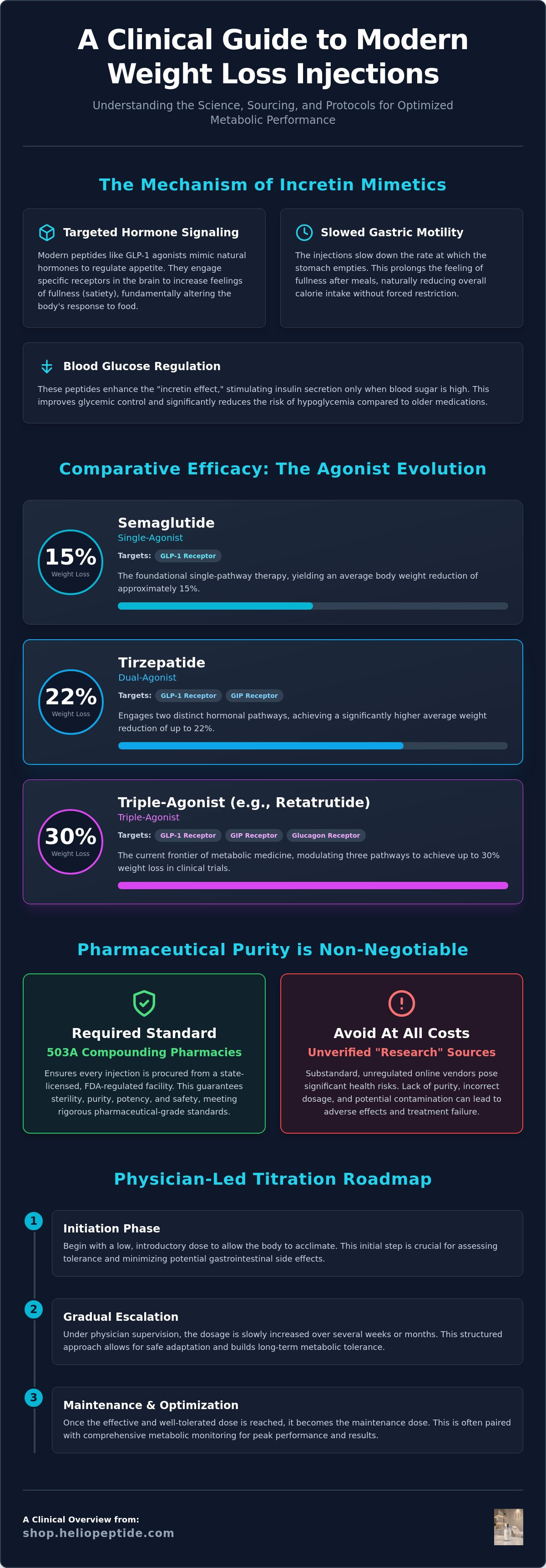
The hierarchy of weight loss injections in 2026 is defined by the number of hormonal pathways a single peptide can modulate. Clinical protocols have evolved from the single-agonist foundation of semaglutide to the dual-agonist efficiency of tirzepatide, and finally to the triple-agonist innovation of retatrutide. Each tier offers a distinct efficacy profile, with semaglutide typically yielding a 15% body weight reduction, while tirzepatide benchmarks reach approximately 22%. The most recent data from the TRIUMPH-1 study indicates that triple-agonists can achieve up to 30% weight loss over 104 weeks, representing the current frontier of metabolic medicine. Selecting the appropriate weight loss injection depends on the patient's biological baseline and specific metabolic resistance levels.
Choosing between these therapies requires a disciplined look at clinical data rather than anecdotal trends. While semaglutide targets the GLP-1 receptor exclusively, tirzepatide adds glucose-dependent insulinotropic polypeptide (GIP) agonism to enhance lipid metabolism. The newest class of "Triple G" agonists integrates a third pathway, glucagon receptor agonism, to increase basal metabolic rate. This progression reflects a move toward precision medicine, where the choice of peptide is tailored to the individual's hormonal deficiencies. For those ready to advance their metabolic optimization, you can review our clinical-grade peptide offerings to find a solution that aligns with your specific health objectives.
Semaglutide: The Established Foundation
Semaglutide remains the established foundation for many metabolic programs due to its extensive long-term safety profile and proven cardiovascular benefits. High-dose protocols, such as 15mg administrations, are frequently used as a first-line therapy for patients who are new to incretin mimetics or those who prioritize a well-documented clinical history. It's the ideal choice for individuals requiring steady glycemic control without the added metabolic complexity of multi-hormonal modulation. However, as sourcing becomes more complex, patients must adhere to FDA guidance on compounded GLP-1 drugs to ensure pharmaceutical purity and avoid substandard research-grade materials.
The Rise of Triple-Agonists: Retatrutide and GIP/Glucagon Integration
The integration of glucagon receptor agonism alongside GLP-1 and GIP marks a significant shift in clinical outcomes. While GLP-1 and GIP focus on insulin sensitivity and satiety, the addition of glucagon in Retatrutide 10mg targets energy expenditure directly. This "Triple G" mechanism stimulates adipose tissue thermogenesis, allowing the body to maintain a higher metabolic rate even during a caloric deficit. When reviewing a semaglutide vs retatrutide for weight loss comparison, the data-backed selection often favors triple-agonists for patients with significant metabolic resistance who haven't reached their goals on single or dual-agonist therapies.
Pharmaceutical Standards: Sourcing, Purity, and the Role of 503A Pharmacies
The integrity of a weight loss injection is fundamentally dependent on its pharmaceutical origin. In 2026, the distinction between professional-grade solutions and the unregulated "grey market" has never been more critical for patient safety. Section 503A compounding pharmacies serve as the primary conduit for patient-specific peptide therapy, operating under strict state board of pharmacy regulations and federal oversight. These facilities are authorized to compound medications based on individual prescriptions, ensuring that the chemical composition aligns precisely with a physician's clinical strategy for metabolic optimization. This regulated pathway guarantees that the medication is prepared in a sterile environment designed to prevent contamination and maintain molecular potency.
Clinical-grade peptides must meet rigorous purity standards, often exceeding 99% as verified by High-Performance Liquid Chromatography (HPLC) and Mass Spectrometry. This is a stark contrast to "research-grade" materials, which are frequently sold with disclaimers stating they aren't for human consumption. Research-grade substances often lack the sterile manufacturing environments and third-party testing necessary to guarantee the absence of endotoxins or heavy metals. Transparency in sourcing isn't merely a preference; it's a non-negotiable safety standard that protects the patient's biological systems from substandard contaminants. Professional oversight ensures that every vial is backed by a Certificate of Analysis (COA) confirming its chemical identity and purity.
Lyophilized Peptides vs. Liquid Formulations
Lyophilization, or freeze-drying, remains the gold standard for maintaining the molecular stability of sensitive peptides. This process removes moisture through sublimation under a vacuum, which prevents the hydrolytic degradation common in pre-mixed liquid solutions. While liquid formulations offer convenience, they're highly susceptible to structural breakdown during transit or storage. Reconstitution, the process of adding a bacteriostatic diluent to the lyophilized powder immediately before use, ensures that the weight loss injection remains bioactive and potent at the moment of administration. This precision-based approach preserves the delicate amino acid chains that are essential for effective receptor agonism.
Regulatory Compliance and Physician Supervision
Modern peptide therapy requires a clear understanding of regulatory boundaries to avoid the risks associated with unverified manufacturers. A 503A pharmacy facility is legally required to comply with USP <797> standards for sterile compounding, ensuring that every vial is produced in a highly controlled environment. This level of oversight is only accessible through a formal physician-led program. A comprehensive telehealth consultation acts as a mandatory safety barrier, allowing a clinician to review blood work and medical history before issuing a prescription. This protocol ensures that the therapy is both clinically appropriate and sourced from US-licensed manufacturers committed to pharmaceutical transparency.
Clinical Protocols: Administration, Dosage Titration, and Side Effect Management
Clinical success with a weight loss injection is predicated on a disciplined titration schedule designed to facilitate metabolic adaptation. The foundational principle of "starting low and going slow" is utilized to minimize gastrointestinal distress while the body adjusts to increased incretin levels. Most protocols begin with a sub-therapeutic dose for the first four weeks, with incremental increases occurring only after tolerance is established. This methodical escalation prevents the acute nausea and emesis often reported in accelerated dosing regimens, ensuring that the patient can maintain the therapy long enough to achieve significant body weight reduction through the weight loss injection protocol.
Effective side effect management requires a proactive rather than reactive framework. Nausea is frequently mitigated by ensuring adequate hydration and consuming smaller, nutrient-dense meals rather than larger portions. Fatigue, often a byproduct of a rapid caloric deficit, can be countered by maintaining a consistent electrolyte balance and prioritizing sleep hygiene. Constipation, a common secondary effect of delayed gastric emptying, is managed through increased dietary fiber and systemic hydration. Adhering to these clinical standards allows for a seamless transition through the titration phases, maximizing the efficacy of the metabolic reset.
The Step-by-Step Administration Guide
Subcutaneous administration is the preferred method for these peptides, typically targeted at adipose-rich areas such as the abdomen, thigh, or upper arm. Rotating injection sites weekly is a mandatory protocol to prevent lipodystrophy and ensure consistent absorption rates. Once-weekly dosing intervals are strategically utilized to maintain steady-state concentrations of the peptide in the bloodstream, accounting for the long half-life of modern GLP-1 mimetics. A sterile administration environment requires alcohol swabs, a sharps container, and calibrated insulin-style syringes to ensure precise volumetric accuracy during each cycle.
Mitigating Muscle Wasting and Nutritional Deficiencies
Rapid weight reduction carries the inherent risk of lean mass loss, which can compromise the basal metabolic rate and long-term functional health. To preserve skeletal muscle, a high-protein dietary protocol, targeting 1.2 to 1.5 grams of protein per kilogram of body weight, is recommended as a non-negotiable component of the program. Integrating structured resistance training provides the necessary mechanical stimulus to signal protein synthesis, ensuring that weight loss is primarily derived from adipose tissue rather than muscle. This holistic approach ensures that the physiological result is a leaner, more metabolically active body composition. To begin your supervised protocol, select your clinical-grade peptide therapy and consult with our medical team to ensure optimal results.
Optimizing Outcomes through Physician-Led Weight Loss Programs
The administration of a weight loss injection achieves its highest clinical utility when integrated into a structured, multi-dimensional wellness framework. While the biochemical leverage provided by GLP-1 and GIP agonists is profound, these peptides do not operate in a physiological vacuum. Metabolic optimization requires the simultaneous management of nutritional intake, physical activity, and systemic hormonal balance to ensure that fat loss is both sustainable and health-promoting. Helio Peptide acts as a specialized clinical facilitator in this process, positioning itself as a rigorous gatekeeper that prioritizes medical protocol over retail convenience. This comprehensive approach ensures that every patient receives the professional oversight necessary to translate scientific potential into measurable physical restoration.
Regular physician check-ins are a cornerstone of this model, allowing for real-time dosage adjustments based on individual patient response and metabolic markers. These consultations provide a critical safety buffer, ensuring that titration schedules are optimized to the patient's specific tolerance levels. There is a clear synergy between GLP-1 therapy and physician-supervised HRT, as balancing the broader endocrine system often unlocks stalled progress in weight reduction. By addressing the body as a unified biological system, clinicians can mitigate the plateaus that often occur when metabolic pathways are treated in isolation. This level of precision is only possible through a dedicated medical partnership that values long-term healthspan over temporary results.
The Role of Hormonal Balance in Metabolic Success
Metabolic vigor is often compromised by underlying endocrinological imbalances that a weight loss injection alone cannot fully resolve. Low testosterone levels in men or estrogen dominance in women can create a biological environment that favors adiposity and muscle wasting, regardless of peptide efficacy. Concurrent TRT or HRT programs work to restore the hormonal foundations required for peak performance and efficient nutrient partitioning. This integrated philosophy ensures that the body remains in an anabolic state for muscle preservation while the peptide therapy drives catabolic fat loss. It's a strategy designed for the high-performing individual who values scientific rigor and biological efficiency.
Transitioning to the Best Online Semaglutide Program
Identifying the best online semaglutide program requires a focus on three primary criteria: pharmaceutical transparency, physician-led supervision, and regulatory compliance. Helio Peptide utilizes a sophisticated telehealth model that combines the convenience of digital access with the clinical rigor of a traditional medical practice. This program isn't merely a distribution channel for medication; it's a comprehensive platform for health optimization that includes blood work analysis and structured titration guidance. For those ready to commit to a disciplined and scientifically backed metabolic reset, the path forward begins with a formal clinical consultation to establish your personalized protocol.
Advancing Toward Precision Metabolic Restoration
The landscape of metabolic health in 2026 is defined by the shift from generic weight reduction to precision-engineered hormonal optimization. Success with a modern weight loss injection requires a commitment to pharmaceutical transparency and the rigorous oversight of 503A compounding facilities. By integrating lyophilized peptide therapy with physician-led titration and concurrent hormonal monitoring, you ensure that physiological results are achieved through scientific methodology rather than anecdotal experimentation. It's a disciplined approach that minimizes common side effects while maximizing long-term metabolic vigor and body composition.
Helio Peptide provides the medical rigor and telehealth convenience necessary to facilitate this transition safely. Consult with a Helio Peptide Physician to start your supervised weight loss program and experience the intersection of clinical expertise and physical optimization. Your journey toward a restored biological baseline is supported by our commitment to pharmaceutical excellence and expert supervision. We prioritize your long-term healthspan through every phase of the protocol.
Clinical Frequently Asked Questions
Is a weight loss injection safe for long-term use?
Long-term administration of GLP-1 receptor agonists is considered safe when conducted under strict physician oversight and regular metabolic monitoring. Clinical data from the STEP trials demonstrate sustained efficacy and safety profiles over multiple years for chronic weight management. These medications are increasingly viewed as essential tools for long-term metabolic stabilization rather than temporary fixes. Continuous evaluation of renal and pancreatic function ensures the therapy remains appropriate for the patient's evolving biological needs.
How much weight can I expect to lose in the first month?
Most patients observe a reduction of 1% to 2% of their total body weight during the initial four-week titration phase of a weight loss injection protocol. This early stage focuses on building metabolic tolerance rather than achieving maximum fat oxidation. While some individuals may experience more rapid results, a controlled and steady decline is preferred to preserve lean muscle mass. The primary objective during the first month is the successful transition through the "start low and go slow" protocol.
What is the difference between compounded semaglutide and brand-name Wegovy?
Compounded semaglutide contains the same active pharmaceutical ingredient as brand-name versions but is prepared by a 503A pharmacy to meet specific patient requirements. This allows for greater flexibility in dosage titration and the use of lyophilized formulations which enhance molecular stability. Brand-name products are mass-produced in fixed-dose pens, whereas compounded options provide a tailored approach to metabolic optimization. Both must adhere to rigorous purity standards to ensure clinical safety and efficacy.
Can I get a weight loss injection prescription through telehealth?
It's entirely possible to secure a weight loss injection prescription through a regulated telehealth model that prioritizes clinical rigor. Helio Peptide utilizes a comprehensive digital platform where patients undergo thorough medical screenings and blood work analysis before a physician issues a prescription. This model ensures that distance doesn't compromise the quality of care or the necessity of professional supervision. The process remains strictly compliant with state and federal regulations regarding the prescription of controlled metabolic therapies.
Will I gain the weight back if I stop the injections?
Weight regain is a documented risk if the medication is discontinued without established lifestyle and hormonal foundations. These peptides work by recalibrating the body's metabolic set point; therefore, maintaining results requires a transition to a sustainable maintenance protocol. Many clinicians recommend a gradual tapering of the dose rather than an abrupt cessation. Long-term success is fundamentally linked to the integration of resistance training and nutritional discipline during the active treatment phase.
What are the most common side effects of GLP-1 peptides?
Gastrointestinal symptoms are the most frequently reported secondary effects, including transient nausea, delayed gastric emptying, and occasional constipation. These issues are typically mild to moderate and tend to subside as the body adapts to the peptide during the titration process. Fatigue may also occur as the metabolism shifts toward fat oxidation. Adhering to a physician-led dosing schedule is the most effective method for mitigating these biological responses.
Do weight loss injections cause "Ozempic Face" or muscle wasting?
The phenomena often termed "Ozempic Face" or muscle wasting are consequences of rapid subcutaneous fat loss and caloric deficits rather than the medication itself. When weight is lost quickly, the skin may lose structural support, and the body may catabolize muscle tissue for energy. To prevent this, our protocols emphasize high protein intake and resistance training to preserve lean mass and skin integrity. Proper hydration and balanced nutrient partitioning are essential to maintaining an aspirational, healthy appearance during the reduction phase.
How do I know if Retatrutide or Semaglutide is better for my metabolism?
The choice between semaglutide and retatrutide is determined by a physician's assessment of your metabolic resistance and hormonal profile. Semaglutide is an excellent foundational GLP-1 agonist for those new to peptide therapy. Retatrutide, as a triple agonist targeting GLP-1, GIP, and glucagon receptors, may be more appropriate for individuals requiring a more aggressive metabolic reset. A clinical consultation and comprehensive blood panel are required to identify which mechanism aligns with your specific physiological objectives.
