
TRT Programs: A Clinical Checklist for Evaluating Testosterone Replacement Therapy in 2026
The era of speculative hormone replacement has ended. While the market for testosterone replacement has expanded to a valuation exceeding 1.6 billion dollars, the proliferation of unregulated sources has made the selection of legitimate TRT programs a critical medical decision. You likely recognize that achieving peak physical performance is impossible without a foundation of clinical safety and pharmaceutical grade medication. It's often frustrating to encounter high costs and opaque protocols when your primary objective is simply to restore the energy and muscle mass necessary for a demanding lifestyle.
This article establishes a comprehensive clinical framework for evaluating the safety, purity, and efficacy of modern hormonal interventions. You'll gain a clear understanding of the medical protocols required to ensure your treatment meets the highest regulatory and clinical standards. We provide a methodical checklist covering 503A pharmacy sourcing, physician oversight, and the specific blood work required to ensure your protocol results in long term metabolic optimization.
Key Takeaways
- Understand the clinical transition from maintaining standard reference ranges to achieving physician-led hormonal optimization for enhanced physiological function.
- Identify why FDA-regulated 503A compounding pharmacies are the only acceptable standard for ensuring the purity and sterility of medications within TRT programs.
- Evaluate the streamlined telehealth protocol that integrates professional physician oversight with the convenience of remote diagnostic reviews.
- Learn how the integration of advanced peptide therapy can act synergistically with testosterone to improve metabolic signaling and body composition.
- Review the essential diagnostic biomarkers, including SHBG and Estradiol, that are required to establish a precise medical baseline before initiating therapy.
Clinical Foundations of Professional TRT Programs
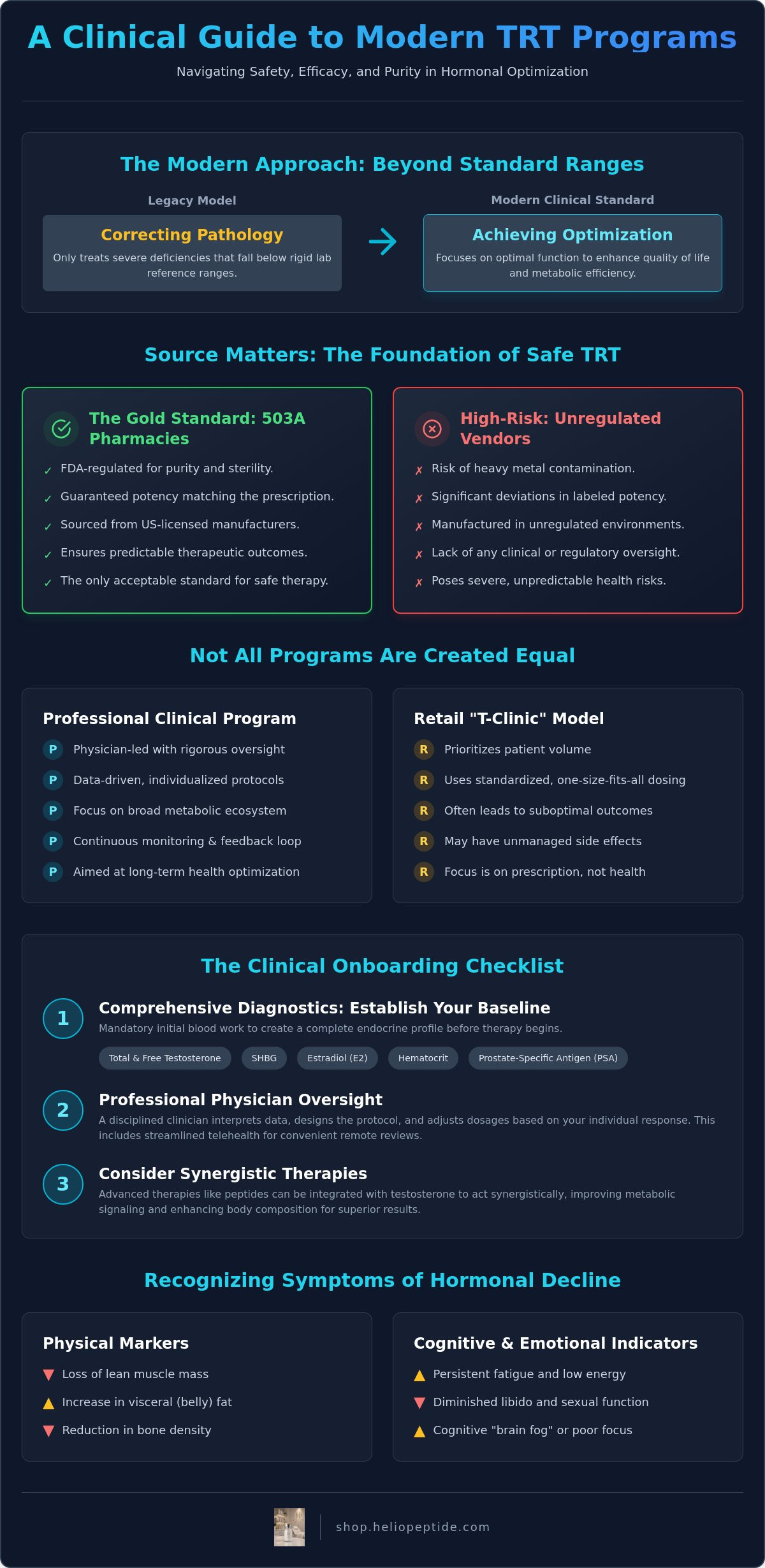
Professional TRT programs are defined as physician-led medical protocols engineered to restore and maintain physiological testosterone concentrations within a patient’s unique biological context. While legacy medical models often focused strictly on the correction of severe pathology, the clinical standard in 2026 has shifted toward the pursuit of optimal hormonal health. This transition recognizes that a patient's quality of life and metabolic efficiency are frequently compromised long before their serum levels fall below traditional laboratory reference ranges. A legitimate program is distinguished by its commitment to biochemical precision rather than the mere alleviation of symptoms through standardized prescriptions. For a foundational understanding of these medical applications, this Androgen Replacement Therapy Overview provides historical and technical context on the evolution of these treatments.
There's a significant distinction between retail-driven "T-clinics" and comprehensive clinical wellness programs. Retail models often prioritize volume and standardized dosing, which can lead to suboptimal outcomes or unmanaged side effects. In contrast, a clinical program functions as a specialized medical facilitator, treating testosterone as one component of a broader metabolic ecosystem. Success requires more than a simple prescription; it necessitates a continuous feedback loop between the patient's physiological data and the physician's expertise. This ongoing monitoring ensures that the therapy adapts to the patient’s changing biology, maintaining the delicate balance required for long-term health optimization.
The Role of Physician Supervision
Clinical safety within TRT programs depends entirely on rigorous diagnostic oversight. Initial blood work is a mandatory prerequisite to establish a comprehensive baseline of endocrine function. Beyond measuring total and free testosterone, a disciplined clinician monitors hematocrit levels, prostate-specific antigen (PSA), and estradiol to mitigate potential secondary effects. These biomarkers provide the data necessary to adjust dosages based on individual clinical response. This methodology ensures that therapy remains a tool for long-term health rather than a short-term performance boost. Regular laboratory reviews allow for the early detection of erythrocytosis or estrogenic imbalances, which are easily managed under professional guidance but can become problematic if ignored.
Identifying Symptoms of Hormonal Decline
The diagnosis of androgen deficiency requires a synthesis of laboratory data and clinical presentation. Physical markers often include a progressive loss of lean muscle mass, an increase in visceral adiposity, and a measurable reduction in bone density. Cognitive and emotional indicators are equally significant. Patients frequently report persistent fatigue, diminished libido, and a cognitive state often described as "brain fog." It's essential for medical facilitators to distinguish between natural age-related decline and secondary hypogonadism to ensure the chosen intervention addresses the root cause of the endocrine imbalance. By identifying these markers early, physicians can implement a protocol that doesn't just mask symptoms but restores the patient to a state of peak physiological performance.
Evaluating Sourcing: 503A Pharmacies and Purity Standards
The therapeutic integrity of modern TRT programs depends fundamentally on the pharmaceutical origin of the hormones prescribed. In 2026, the digital marketplace is saturated with "research-grade" substances that lack the rigorous oversight required for safe human administration. These unverified online vendors often distribute products manufactured in unregulated environments, posing severe risks of heavy metal contamination and significant deviations in labeled potency. Utilizing medications sourced exclusively from FDA-regulated 503A pharmacies remains the only viable method to guarantee that the chemical composition matches the clinical prescription. This NIH Androgen Replacement Clinical Review underscores the necessity of utilizing approved formulations to ensure predictable therapeutic outcomes while minimizing the risk of adverse systemic reactions.
Helio Peptide maintains a disciplined commitment to sourcing exclusively from US-licensed manufacturers and highly regulated compounding facilities. This rigorous approach ensures that every vial provided to a patient meets the exacting standards required for physician-supervised therapy. Patients should view sourcing as a primary safety protocol. It's not a mere logistical detail. Selecting clinical-grade solutions prevents the systemic inflammation and unpredictable hormonal fluctuations that occur when using underground alternatives. Maintaining this standard is crucial for anyone pursuing peak performance. Professional oversight ensures that every step of the manufacturing chain is verified for patient safety.
Understanding 503A Regulatory Oversight
503A compounding pharmacies operate under the direct oversight of state boards of pharmacy. They're required to comply with USP <797> standards for sterile compounding. These regulations mandate stringent environmental controls, including HEPA filtration and regular microbial testing. Such oversight ensures that medications are free from pathogens. This level of clinical precision is essential for long-term stability. Microscopic impurities can easily disrupt the endocrine system. By adhering to these standards, 503A facilities provide a level of reliability that retail-driven entities cannot match.
Lyophilized vs. Liquid Hormones
Lyophilized preparations offer significant advantages in stability and shelf-life compared to traditional liquid formulations. By removing moisture through a controlled sublimation process, the active compounds are protected from the degradation that can occur in aqueous environments over time. Lyophilization is a pharmaceutical stabilization technique where a substance is freeze-dried under a vacuum to preserve its molecular structure and maintain bioactivity for extended periods. Proper reconstitution with a sterile bacteriostatic agent then ensures the medication is ready for administration without compromising its potency. High-tier medical facilitators prioritize these advanced preparations. Those seeking to integrate these high-purity standards into their wellness routine can review the clinical standards for physician-supervised HRT to see how pharmaceutical quality directly influences metabolic results.
The Telehealth Protocol: Balancing Accessibility with Oversight
Telehealth has fundamentally altered the accessibility of specialized medicine. It permits patients to engage in physician-supervised HRT from a private environment while maintaining the same rigorous standards found in top-tier medical institutions. Professional TRT programs in 2026 leverage secure, encrypted platforms to facilitate high-level clinical oversight without the logistical burdens of traditional brick-and-mortar clinics. This digital shift ensures that patients receive expert guidance regardless of their proximity to a physical facility. It's a model built on efficiency and clinical transparency.
Safety remains the primary objective. Modern telehealth platforms utilize remote monitoring to track patient progress with clinical precision. Adherence to the Endocrine Society Clinical Practice Guideline provides a structured methodology for these remote evaluations, ensuring that every intervention is evidence-based. Privacy is maintained through strict HIPAA compliance, protecting sensitive biometric data from unauthorized access. This level of security is non-negotiable for maintaining the integrity of the clinical relationship.
The Virtual Consultation Process
The initial engagement begins with a comprehensive review of the patient's medical history and specific symptoms. During the video conference, the physician interprets diagnostic lab results to determine candidacy for therapy. This meticulous approach mirrors the standards found in protocols for how to get a glp-1 prescription online, where diagnostic data precedes any clinical recommendation. It's a structured exchange designed to establish a precise therapeutic baseline. Clear communication during this phase ensures that the patient understands the medical rationale behind their specific protocol.
Long-term Monitoring and Dose Titration
Sustained success within TRT programs requires a disciplined schedule of follow-up diagnostics. Patients typically undergo laboratory testing at three and six-month intervals, followed by annual reviews once stability is achieved. This data allows physicians to refine dose titration and evaluate delivery methods, such as the transition between subcutaneous and intramuscular injections. Managing the shift from the induction phase to long-term maintenance ensures that hormonal levels remain optimized without inducing systemic stress. Constant monitoring prevents the development of secondary complications and ensures the protocol remains aligned with the patient's physiological needs.
Synergistic Therapies: Integrating Peptides with TRT
Clinical TRT programs in 2026 have evolved beyond simple hormone replacement to incorporate comprehensive metabolic signaling. While exogenous testosterone restores androgenic levels, the addition of specific peptides addresses the broader biological environment, including cellular repair and metabolic efficiency. This multifaceted approach ensures that the hormonal foundation provided by testosterone is maximized through improved signaling pathways. These integrated TRT programs prioritize a multi-pathway approach to health, recognizing that testosterone alone cannot address every facet of physiological decline. Safety remains the priority.
The role of peptide therapy for weight loss is particularly significant for patients exhibiting metabolic syndrome or high visceral adiposity. Growth hormone secretagogues support muscle recovery and joint integrity by stimulating endogenous growth hormone pulses, which naturally decline with age. This synergy is crucial for maintaining the physical activity levels necessary to sustain hormonal benefits. For those specifically targeting resistant fat, the combination of testosterone and GLP-1 agonists like semaglutide 15 mg provides a potent mechanism for rapid and sustainable body recomposition. It's a strategy that treats the body as a unified system rather than a collection of isolated symptoms.
Metabolic Optimization Strategies
Combining testosterone with GLP-1 receptor agonists directly addresses insulin resistance while simultaneously improving body composition markers. This integration allows for a more efficient utilization of nutrients and enhanced mitochondrial function, which are often compromised in hypogonadal men. The application of advanced peptide therapy extends these benefits toward cellular repair and extended healthspan. Testosterone provides the anabolic drive while peptides act as metabolic catalysts to preserve lean muscle tissue during periods of caloric deficit and fat oxidation. This dual-action protocol ensures that fat loss doesn't occur at the expense of metabolic rate or physical strength. It's a structured approach.
Counteracting TRT Side Effects with Peptides
A sophisticated protocol also utilizes peptides to mitigate potential secondary effects of exogenous hormone use. Certain peptide sequences are employed to support natural pituitary signaling and maintain testicular health, preventing the total suppression of endogenous pathways often seen with solo testosterone use. Compounds such as BPC-157 or GHK-Cu may be integrated to manage systemic inflammation and promote tissue regeneration in the gut or musculoskeletal system. This strategy moves the patient toward a holistic state of wellness that transcends a single hormonal marker. By addressing inflammation and pituitary feedback loops, clinicians can ensure that the patient's long-term health is protected during optimization.
Explore our selection of clinical-grade peptide solutions to enhance your metabolic protocol.
The TRT Program Onboarding Checklist: Steps to Clinical Optimization
Professional TRT programs require a methodical approach to patient onboarding to ensure clinical safety and therapeutic success. This process is designed to move beyond the superficial "T-clinic" model by establishing a rigorous medical baseline before any intervention occurs. A structured checklist allows both the physician and the patient to align on health objectives while maintaining strict regulatory compliance. Following these steps ensures that the transition into hormone replacement is seamless, data-driven, and clinically sound.
- Step 1: Comprehensive Diagnostic Lab Panel. Patients must undergo detailed testing of Total and Free Testosterone, Estradiol, Sex Hormone Binding Globulin (SHBG), and a Complete Blood Count (CBC) to evaluate systemic health.
- Step 2: Medical History Review and Consultation. A specialized physician conducts a thorough assessment of symptoms, past medical history, and current medications to confirm candidacy and identify potential contraindications.
- Step 3: Clinical-Grade Medication Sourcing. All prescriptions are routed through a 503A compounding pharmacy to ensure medication sterility, potency, and pharmaceutical purity.
- Step 4: Administration Education. Patients receive comprehensive training on self-administration techniques, including sterile injection protocols and safety measures to prevent contamination.
- Step 5: Establishing a Monitoring Schedule. A recurring calendar for follow-up blood work and physician reviews is established to facilitate precise dose titration and long-term health tracking.
Preparing for Your Initial Labs
Accuracy in diagnostic testing is paramount. Morning blood draws are essential because testosterone levels follow a circadian rhythm and typically peak between 7:00 AM and 10:00 AM. Patients should also adhere to fasting requirements for at least eight to twelve hours to prevent acute nutritional intake from influencing metabolic markers. In 2026, the clinical focus has shifted from the "Reference Range," which often includes the average of a declining population, to the "Optimization Range." This standard seeks to restore levels to a state associated with peak physiological function and metabolic vitality. These baseline results are the foundation of your personalized protocol.
Initiating Your Helio Peptide Program
Once candidacy is confirmed, you'll review your personalized wellness plan with your assigned physician. This consultation isn't a mere formality. It's a detailed discussion regarding your specific biochemical needs and lifestyle objectives. Following this review, you'll receive your clinically sourced medications and necessary supplies directly from our pharmacy partners. Accessing ongoing support is a core component of the experience. Our facilitators provide continuous oversight for protocol adjustments, ensuring that your therapy remains aligned with your evolving physiological data. This commitment to physician-led guidance distinguishes our approach from standard retail models, positioning results as a direct consequence of scientific methodology.
Advancing Your Hormonal Optimization Strategy
The transition from physiological decline to peak metabolic performance requires a disciplined adherence to clinical standards. Selecting professional TRT programs is a critical medical decision that impacts long term health and systemic stability. You now understand that pharmaceutical purity from 503A pharmacies and rigorous physician oversight are the non negotiable pillars of a safe protocol. By integrating diagnostic precision with synergistic metabolic therapies, you can move beyond standard reference ranges toward true physiological restoration and improved body composition. This methodical approach ensures that your results are a direct consequence of scientific methodology rather than anecdotal speculation.
Helio Peptide facilitates this transition by providing a framework rooted in regulatory compliance and medical expertise. Our protocols utilize medications sourced from FDA regulated 503A pharmacies and maintain strict US licensed physician oversight to ensure patient safety. These comprehensive metabolic health protocols are designed to integrate seamlessly into your lifestyle while delivering predictable, clinical grade results. You have the tools necessary to evaluate your options with clinical clarity. Restore your vitality with a physician-supervised TRT program at Helio Peptide and begin your journey toward a state of optimized wellness and physical peak performance.
Frequently Asked Questions
What are the primary signs that I might need a TRT program?
Clinical indicators include persistent fatigue, diminished libido, and a measurable loss of lean muscle mass despite consistent training. Cognitive markers such as "brain fog" and increased visceral adiposity are also common presentations. These symptoms suggest a decline in androgenic signaling that warrants a comprehensive diagnostic evaluation to distinguish between natural aging and pathological hypogonadism. Professional oversight ensures these symptoms are mapped to precise biochemical markers.
Is telehealth TRT legal and safe in the United States?
Telehealth for testosterone replacement is both legal and safe when conducted through licensed medical facilitators. Current DEA regulations allow for the remote prescription of controlled substances following a physician consultation and diagnostic lab review. Safety is maintained through strict adherence to clinical protocols, ensuring that remote monitoring provides the same level of oversight as traditional in-person visits. This model prioritizes patient privacy and accessibility without compromising medical integrity.
How long does it typically take to see results from a TRT program?
Physiological changes generally follow a predictable timeline based on androgen receptor saturation. Improved libido and mood stabilization often occur within the first 3 to 6 weeks of initiating therapy. Significant changes in body composition, such as increased muscle mass and reduced fat, typically become measurable after 3 to 6 months of consistent adherence to professional TRT programs. Results are an inevitable consequence of maintaining stable, optimized serum concentrations over time.
Will TRT affect my natural fertility, and can this be managed?
Exogenous testosterone typically suppresses the pituitary signaling required for natural sperm production. This effect is a standard biological response to the presence of external androgens. However, physicians can manage fertility preservation by integrating ancillary medications that stimulate endogenous production. This ensures that reproductive health is maintained without compromising the benefits of the primary hormonal protocol. It's a structured approach that addresses the body as a unified system.
What is the difference between a 503A pharmacy and a standard retail pharmacy?
A 503A pharmacy specializes in patient-specific compounding and is regulated by state boards of pharmacy under USP <797> standards. Unlike retail pharmacies that dispense mass-produced medications, 503A facilities create customized preparations in sterile environments. This allows for precise dose adjustments and lyophilized formulations that are often unavailable through standard commercial channels. This level of pharmaceutical precision ensures the stability and purity required for long-term health optimization.
Do I need to stay on TRT for the rest of my life once I start?
Testosterone replacement is generally viewed as a long-term commitment to maintain optimized hormonal levels. Discontinuing treatment will cause serum concentrations to return to their pre-treatment baseline, potentially leading to the recurrence of symptoms. While cessation is possible under medical supervision, most patients choose to continue therapy to sustain the metabolic and cognitive advantages achieved during the program. It's a decision based on the pursuit of sustained physiological peak performance.
Can I combine TRT with weight loss peptides like Semaglutide or Retatrutide?
Combining testosterone with GLP-1 agonists like Semaglutide or Retatrutide is a highly effective strategy for metabolic optimization. Testosterone preserves lean muscle tissue while GLP-1 signaling targets visceral fat and improves insulin sensitivity. This synergistic approach allows for rapid body recomposition and addresses the underlying metabolic dysfunction often associated with low androgen levels. Integrating these therapies ensures that fat loss occurs without the sacrifice of metabolic rate or physical strength.
What specific blood markers are monitored during a professional TRT program?
Clinical oversight within professional TRT programs requires the regular monitoring of Total and Free Testosterone, Estradiol, and Sex Hormone Binding Globulin. Additionally, a Complete Blood Count is essential to track hematocrit and hemoglobin levels, ensuring blood viscosity remains within safe parameters. Monitoring Prostate-Specific Antigen is also a standard safety protocol to maintain long-term urological health. These biomarkers provide the data necessary to refine dose titration and ensure systemic balance.
