
How to Get a GLP-1 Prescription Online: A Clinical Protocol for 2026
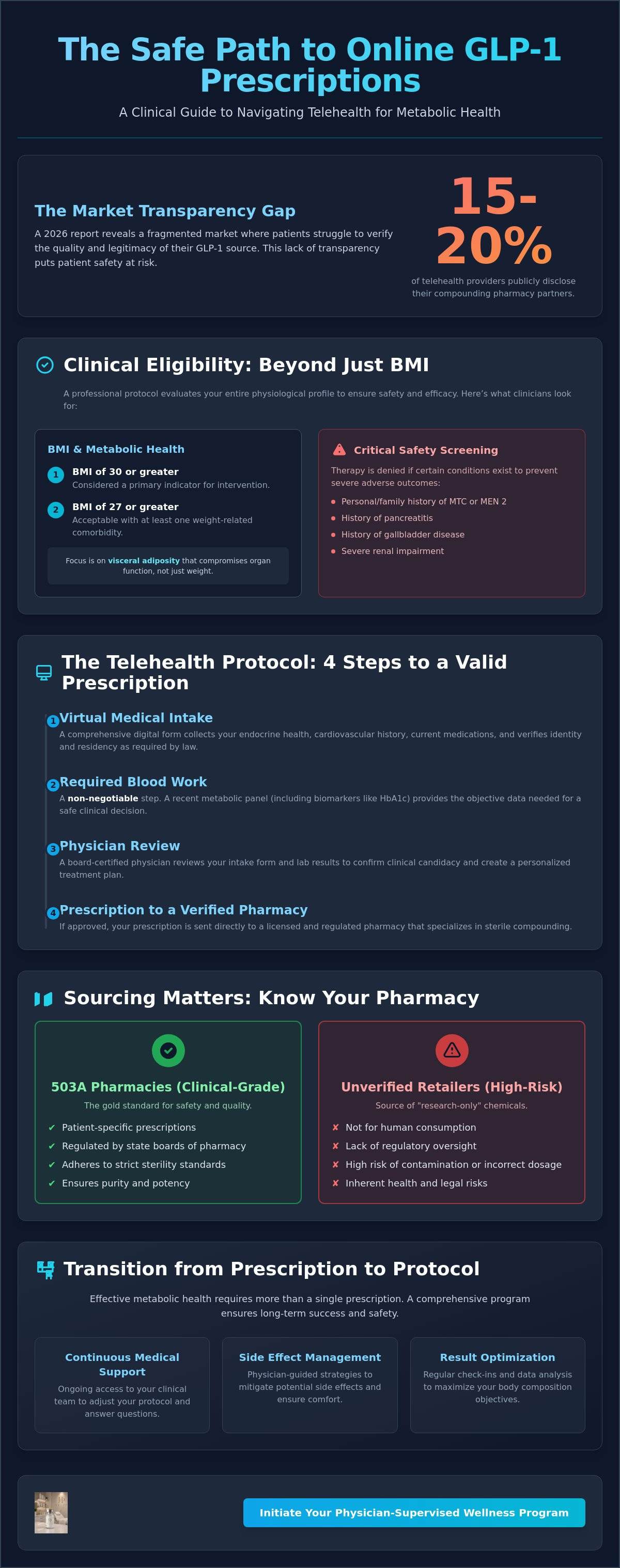
A 2026 report indicates that only 15% to 20% of telehealth GLP-1 providers in the United States publicly disclose their compounding pharmacy partners. This lack of transparency has created a fragmented market where patients often struggle to distinguish between regulated medical care and substandard sourcing. You've likely encountered the frustration of opaque pricing or strict BMI gatekeeping that characterizes traditional clinical environments. Understanding how to get a glp-1 prescription online requires more than just a search bar; it demands a rigorous adherence to clinical protocols and pharmaceutical standards.
This guide provides a comprehensive roadmap for navigating the virtual approval process while ensuring long-term metabolic health. You'll gain a clear understanding of the medical requirements and telehealth protocols necessary to secure a valid prescription under professional oversight. We'll detail the critical distinctions between 503A pharmacy sourcing and unverified alternatives to ensure your path to optimization is grounded in medical precision and legal compliance.
Key Takeaways
- Identify the modern metabolic markers used by clinicians to establish eligibility, moving beyond the limitations of simple BMI measurements.
- Navigate the clinical requirements of how to get a glp-1 prescription online, focusing on the essential role of virtual medical history reviews and blood panels.
- Differentiate between clinical-grade sourcing from 503A pharmacies and the inherent risks of unverified, research-only chemicals.
- Compare the mechanisms of action for Semaglutide and Retatrutide to identify the most effective peptide for your specific body composition objectives.
- Transition from a single prescription to a comprehensive health protocol that includes continuous medical support for managing side effects and optimizing results.
Clinical Eligibility for Online GLP-1 Prescriptions
Clinical candidacy for metabolic intervention is determined by a rigorous synthesis of biometric data and metabolic health markers. It's no longer sufficient to rely on a single data point; a professional protocol evaluates the patient's entire physiological profile to ensure safety and efficacy. When investigating how to get a glp-1 prescription online, patients must understand that the process is a medical gatekeeping function designed to identify those who will benefit most from peptide therapy while minimizing risk. This evaluation extends beyond the scale to include a detailed review of cardiovascular health, endocrine function, and personal medical history.
BMI Requirements and Metabolic Health
While many retail clinics utilize a simplified Body Mass Index (BMI) approach, a clinical protocol views BMI as an entry-level metric rather than a definitive diagnostic tool. Standard medical guidelines typically require a BMI of 30 or greater for intervention. Alternatively, a BMI of 27 is acceptable if it's accompanied by at least one weight-related comorbidity such as hypertension, dyslipidemia, or obstructive sleep apnea. Physicians look for signs of metabolic syndrome, which is a cluster of conditions that increase the risk of heart disease and type 2 diabetes. Body composition analysis often takes precedence over simple weight; physicians seek to address visceral adiposity that compromises organ function. Identifying how to get a glp-1 prescription online involves demonstrating a clear clinical need for metabolic restoration through these specific markers.
Medical Contraindications and Safety Screening
Safety remains the primary objective. Certain medical conditions serve as absolute barriers to therapy to prevent severe adverse outcomes. A personal or family history of Medullary Thyroid Carcinoma (MTC) or Multiple Endocrine Neoplasia syndrome type 2 (MEN 2) will disqualify a patient from using GLP-1 receptor agonists. Physicians also screen for a history of pancreatitis, gallbladder disease, and severe renal impairment. Modern virtual screening tools are engineered to emulate in-person clinical evaluations through comprehensive digital intake forms and mandatory physician reviews. These tools don't just collect data; they analyze family health history and current medication lists to prevent dangerous drug interactions. Clinical oversight ensures that therapy is only initiated for adults who are medically fit for the physiological shifts that occur during treatment. This rigorous screening process is what separates professional medical facilitators from unregulated retailers.
The Telehealth Protocol: From Consultation to Prescription
The transition from traditional office visits to virtual clinical oversight has transformed metabolic medicine into a streamlined, data-driven experience. This shift doesn't compromise medical rigor; instead, it utilizes digital infrastructure to enforce strict adherence to safety standards. When researching how to get a glp-1 prescription online, patients must recognize that the process is a structured sequence of medical validation steps. Each phase is designed to confirm clinical candidacy and establish a baseline for long-term physiological optimization.
The Virtual Medical Intake Process
The initial phase begins with a comprehensive digital medical history. This intake goes beyond basic demographics to probe into endocrine health, cardiovascular history, and previous weight management interventions. Verification of identity and residency is a mandatory legal requirement for valid prescription issuance in 2026. State-specific telehealth laws often dictate whether this consultation occurs via synchronous video or asynchronous data review. Regardless of the format, the objective is to provide a board-certified physician with the necessary context to make an informed clinical decision. Accuracy during this phase is paramount. Patients must disclose all current medications to avoid contraindications, particularly as regulatory bodies have increased scrutiny on virtual prescribing. For those seeking high-standard care, exploring physician-led metabolic programs ensures that this intake is handled with the appropriate clinical gravity.
Blood Work and Laboratory Requirements
A clinical protocol cannot rely solely on self-reported data. Recent lab work is a non-negotiable component of a responsible telehealth workflow. Physicians typically require a metabolic panel that monitors several key biomarkers:
- HbA1c: To assess long-term blood glucose regulation.
- Lipid Profile: To evaluate cardiovascular risk and metabolic balance.
- Renal and Hepatic Function: To ensure the kidneys and liver can process the medication safely.
- Thyroid Stimulating Hormone (TSH): To rule out underlying endocrine disorders.
Telehealth platforms now coordinate seamlessly with national lab networks, allowing patients to complete blood draws at local facilities. This baseline data is critical for tracking metabolic optimization and adjusting dosages as the body adapts to therapy. Scientific oversight is especially vital given the FDA safety warnings on compounded semaglutide regarding unverified sources. Once the physician reviews the laboratory results alongside the medical intake, a final determination is made. If approved, the patient enters a supervised program where dosage titration is managed methodically. This continuous monitoring allows for real-time adjustments based on patient response and side effect profiles, ensuring the process of how to get a glp-1 prescription online remains a safe gateway to physical restoration.
Evaluating Pharmaceutical Quality: 503A Pharmacies vs. Generic Retailers
Pharmaceutical integrity is the cornerstone of effective metabolic therapy. When investigating how to get a glp-1 prescription online, the clinical focus must shift from the convenience of the consultation to the rigor of the supply chain. High-register medical protocols prioritize sourcing from regulated entities that adhere to established manufacturing standards. This ensures that the active pharmaceutical ingredients (APIs) are pure, potent, and free from contaminants that often plague the unregulated gray market of research chemicals. Accessing these medications requires a disciplined approach to sourcing that favors clinical safety over retail speed.
Understanding 503A and 503B Regulations
The distinction between a licensed compounding pharmacy and a generic peptide retailer is defined by federal and state oversight. 503A pharmacies are state-licensed facilities that prepare patient-specific medications based on an individual prescription. These entities must comply with rigorous United States Pharmacopeia (USP) standards, which govern sterile compounding environments and quality control testing. In contrast, 503B facilities are outsourcing facilities that produce larger batches and are subject to more direct FDA inspection. Adherence to FDA guidance on compounded GLP-1s is a non-negotiable requirement for any legitimate telehealth platform. Patients should be wary of "research-only" sites that bypass these regulations; such products often lack the necessary certificates of analysis (COA) to verify their chemical composition and purity levels.
Lyophilized Peptides: Stability and Precision
Lyophilization, or freeze-drying, is the gold standard for preserving the structural integrity of complex peptides like semaglutide. This process involves freezing the medication and then reducing the surrounding pressure to allow the frozen water to sublimate directly from the solid phase to the gas phase. The resulting lyophilized powder is significantly more stable than pre-mixed liquid formulations, which are susceptible to rapid degradation through hydrolysis and temperature fluctuations. Clinical benefits of lyophilized peptides include:
- Enhanced Shelf-Life: Freeze-dried compounds remain viable for longer periods when stored in a controlled environment.
- Purity Maintenance: The dehydration process minimizes the risk of bacterial growth that can occur in aqueous solutions.
- Dosing Accuracy: Reconstitution at the point of use ensures the patient receives the exact milligram concentration intended by the physician.
Mastering how to get a glp-1 prescription online means recognizing that physician-supervised sourcing is the only way to guarantee access to these clinical-grade materials. Professional oversight ensures that the reconstitution protocol is followed with medical precision, maintaining the peptide's efficacy from the pharmacy to the patient. This level of technical detail is what separates a disciplined clinical program from a standard retail transaction, positioning the patient for optimal metabolic restoration.
Comparing GLP-1 Medications: Semaglutide, Retatrutide, and Beyond
The selection of a specific peptide protocol is a critical clinical determination that hinges on a patient's metabolic baseline and physical optimization goals. While the process of how to get a glp-1 prescription online has become more accessible, the medical complexity of choosing between single and multi-agonist therapies requires expert guidance. Physicians evaluate the degree of insulin resistance, cardiovascular history, and previous response to weight management interventions before recommending a specific molecule. This tailored approach ensures that the pharmacological intervention aligns with the patient's long-term health trajectory.
Semaglutide: The Gold Standard for Metabolic Restoration
Semaglutide is a potent GLP-1 receptor agonist that's established itself as the benchmark for medical weight management. It functions by mimicking the glucagon-like peptide-1 hormone, which targets areas of the brain that regulate appetite and food intake. Beyond satiety, semaglutide offers documented cardiovascular benefits and improves glycemic control. Clinical data consistently demonstrates significant weight reduction when combined with lifestyle modifications. To mitigate common gastrointestinal side effects, physicians implement a methodical dosage escalation protocol. This titration allows the body to adapt to the hormonal shift, ensuring the therapy remains sustainable and effective over the long term.
Retatrutide: The Triple-Agonist Frontier
Retatrutide represents the next evolution in metabolic science. Unlike semaglutide, which targets a single receptor, retatrutide is a triple-agonist that interacts with GLP-1, glucose-dependent insulinotropic polypeptide (GIP), and glucagon (GCG) receptors. This multi-pathway mechanism addresses metabolic dysfunction from three distinct angles. The inclusion of glucagon receptor agonism increases energy expenditure, while the GIP and GLP-1 components optimize insulin secretion and appetite suppression. This synergy results in weight loss trajectories that often exceed those of single-agonist therapies. Candidates for advanced tri-agonist therapy are typically those seeking the highest level of metabolic optimization or those who haven't reached their goals with traditional GLP-1 medications. You can access Retatrutide 10mg lyophilized through a supervised clinical protocol to ensure maximal purity and efficacy.
The choice between these medications isn't merely a matter of preference. It's a data-driven clinical decision. Understanding how to get a glp-1 prescription online involves recognizing that a physician must balance the potency of the medication with the patient's specific health profile. Whether utilizing the established efficacy of semaglutide or the advanced triple-mechanism of retatrutide, the goal remains the same: the restoration of metabolic balance and the achievement of peak physical performance.
Initiating Your Physician-Supervised Wellness Program
Securing a medical authorization is the initial step in a sophisticated metabolic restoration strategy. Understanding how to get a glp-1 prescription online is essential, but the subsequent execution of the clinical protocol determines the long-term success of the intervention. A professional wellness program transitions the patient from acute weight loss to a state of sustained metabolic optimization. This process requires a disciplined partnership between the patient and a clinical facilitator who prioritizes safety, pharmaceutical purity, and physiological balance above retail convenience.
Long-Term Support and Dosage Management
Pharmacological intervention with GLP-1 or tri-agonist peptides is not a static process. Physicians utilize real-time patient feedback and follow-up biomarkers to adjust titration schedules methodically. This continuous oversight is vital for managing common gastrointestinal side effects and ensuring the dosage remains effective as body composition shifts. During the maintenance phase, clinical guidance helps prevent the metabolic rebound often associated with unsupervised weight loss. Access to a board-certified physician ensures that questions regarding administration or physiological responses are addressed with medical precision rather than anecdotal speculation. This level of support transforms a simple prescription into a comprehensive health trajectory.
Beyond Weight Loss: Holistic Health Optimization
True vitality requires addressing the endocrine system as a cohesive unit. For many patients, metabolic dysfunction is intertwined with hormonal imbalances that GLP-1 therapy alone cannot resolve. Integrating Physician-Supervised HRT or specialized TRT Programs can enhance muscle preservation and energy levels during significant weight loss. This holistic approach ensures that as adiposity decreases, the body maintains the hormonal environment necessary for peak physical performance. The Helio Peptide methodology focuses on this intersection of science and physical optimization, providing a structured environment for total body restoration. To begin your journey toward clinical excellence, you can Explore Physician-Supervised GLP-1 Programs at Helio Peptide.
When selecting a clinical partner for your metabolic health, utilize this final checklist to ensure the highest standard of care:
- Regulatory Compliance: Does the provider exclusively utilize 503A or 503B compounding pharmacies?
- Clinical Rigor: Is a comprehensive blood panel mandatory before the initiation of therapy?
- Physician Access: Is there a direct, secure channel for ongoing consultation with board-certified medical professionals?
- Transparency: Are the pharmaceutical sources and manufacturing standards clearly disclosed?
By adhering to these standards, the process of how to get a glp-1 prescription online becomes a secure gateway to a disciplined, physician-led wellness program. This commitment to protocol ensures that your results are a predictable consequence of scientific methodology and professional oversight.
Establishing Your Metabolic Foundation
Achieving peak physical performance requires more than just access; it demands a disciplined adherence to medical standards and pharmaceutical excellence. By prioritizing 503A pharmacy sourcing and continuous physician oversight, you ensure that your metabolic restoration is both safe and sustainable. Understanding how to get a glp-1 prescription online is simply the entry point into a broader, more sophisticated wellness strategy. This protocol leverages the precision of clinical-grade lyophilized peptides to deliver measurable results under the guidance of US-licensed board-certified physicians. You're now equipped with the clinical roadmap necessary to navigate the complexities of modern peptide therapy with confidence. Every component of this protocol, from initial blood work to maintenance dosing, is designed to support your long-term vitality. Take the final step toward restoring your biological balance and optimizing your metabolic health today. Your path to physical restoration is grounded in scientific rigor and professional-grade solutions.
Begin Your Physician-Supervised Metabolic Consultation
Frequently Asked Questions
Can I get a GLP-1 prescription online without a primary care doctor?
Yes, you can obtain a prescription through specialized telehealth platforms that employ board-certified physicians to manage metabolic health. These clinicians conduct the necessary medical intake and clinical reviews independently of your local primary care provider. This process ensures that patients seeking to understand how to get a glp-1 prescription online receive professional oversight and valid medical authorizations that comply with all state-specific regulatory requirements.
What is the difference between a 503A pharmacy and a regular pharmacy?
A 503A pharmacy is a state-licensed facility that prepares patient-specific compounded medications based on an individual prescription. While a regular retail pharmacy dispenses mass-produced, brand-name drugs, 503A pharmacies adhere to strict United States Pharmacopeia standards for sterile compounding. This specialization allows for the creation of tailored formulations, such as lyophilized peptides, that meet the specific physiological needs of the patient under direct physician supervision.
How much does an online GLP-1 consultation and prescription cost?
Industry data from June 2026 shows that telehealth membership fees generally range from $49 to $149 per month. These fees typically cover the physician consultation and program management but don't always include the cost of the medication itself. Total investment varies significantly depending on whether a patient selects a brand-name pharmaceutical or a compounded alternative from a regulated facility.
For those looking for transparent pricing on metabolic health products, online pharmacies like Búho Chile offer a reliable way to access wellness supplements at competitive rates.
Do I need to do blood work before getting a GLP-1 prescription online?
Yes, a comprehensive metabolic panel is a mandatory clinical requirement for any responsible telehealth program. Physicians must evaluate baseline biomarkers, including HbA1c, liver enzymes, and renal function, to ensure the medication is appropriate for your biological profile. This data-driven approach is a critical component of how to get a glp-1 prescription online safely, as it allows for precise monitoring of your metabolic restoration.
Is lyophilized semaglutide as effective as the liquid versions?
Lyophilized semaglutide is chemically identical to the active ingredients in liquid versions but offers enhanced molecular stability. The freeze-drying process removes moisture to prevent the peptide degradation that often occurs in aqueous solutions over time. Once the lyophilized powder is reconstituted according to clinical protocol, it provides the same therapeutic efficacy while maintaining a superior purity profile and a longer shelf-life.
How long does it take for an online GLP-1 prescription to be approved?
The approval process typically requires several business days to a full week to complete. This timeline accounts for the submission of your medical history, the completion of laboratory blood work, and the subsequent review by a board-certified physician. Once the clinician verifies your candidacy through this rigorous data analysis, the prescription is electronically transmitted to a regulated pharmacy for processing.
Can I use insurance for online GLP-1 prescriptions?
Insurance coverage depends entirely on your specific policy and the FDA-approval status of the prescribed medication. While some platforms facilitate prior authorizations for brand-name drugs, compounded medications are typically a self-pay expense. It's important to verify your benefits, although a 2026 Medicare bridge program now allows eligible members to access certain approved GLP-1s for weight loss at a reduced monthly cost.
Are there specific BMI requirements for getting Retatrutide online?
Clinical eligibility for retatrutide generally follows the established threshold of a BMI of 30 or greater. Alternatively, a BMI of 27 is acceptable if it's accompanied by a weight-related comorbidity such as hypertension or insulin resistance. Because retatrutide is an advanced triple-agonist, physicians also consider your previous response to other metabolic therapies and your overall cardiovascular health during the evaluation process.
