
Peptides to Stack with TRT: Clinical Protocols for Hormonal Optimization in 2026
Achieving peak physiological performance requires more than just replacing deficient testosterone levels; it demands a sophisticated, multi-pathway approach to cellular signaling. It's common for patients to observe that while TRT effectively restores baseline vitality, there's often a point where progress stalls, particularly regarding recovery from high-intensity training or stubborn metabolic plateaus. Identifying the right peptides to stack with TRT is no longer a matter of trial and error but a disciplined clinical protocol designed to optimize growth hormone modulation and tissue regeneration.
We recognize that the current regulatory environment, specifically following the 2026 FDA Pharmacy Compounding Advisory Committee reviews, makes safety and pharmaceutical grade sourcing your primary concerns. This article provides a comprehensive overview of how to integrate advanced peptide therapy into your existing hormonal regimen to achieve superior metabolic health and physical restoration. We will analyze the clinical synergy of growth hormone secretagogues like CJC-1295 and Ipamorelin, alongside the emerging role of triple agonists, ensuring your protocol remains at the forefront of medical science while adhering to the highest standards of professional oversight.
Key Takeaways
- Understand how testosterone restoration serves as the primary hormonal foundation while specific peptides modulate secondary biological pathways for enhanced physical recovery.
- Identify the most effective clinical-grade peptides to stack with TRT to achieve a synergistic effect between androgen replacement and endogenous growth hormone stimulation.
- Learn why maintaining structural integrity through BPC-157 and Thymosin Beta-4 is essential as muscle strength and training intensity increase during testosterone therapy.
- Explore the integration of GLP-1 agonists and triple agonists to optimize body composition and insulin sensitivity without compromising lean muscle mass.
- Recognize the critical safety advantages of sourcing lyophilized medications through 503A regulated pharmacies under direct physician supervision to ensure protocol stability.
The Science of Synergistic Hormonal Optimization
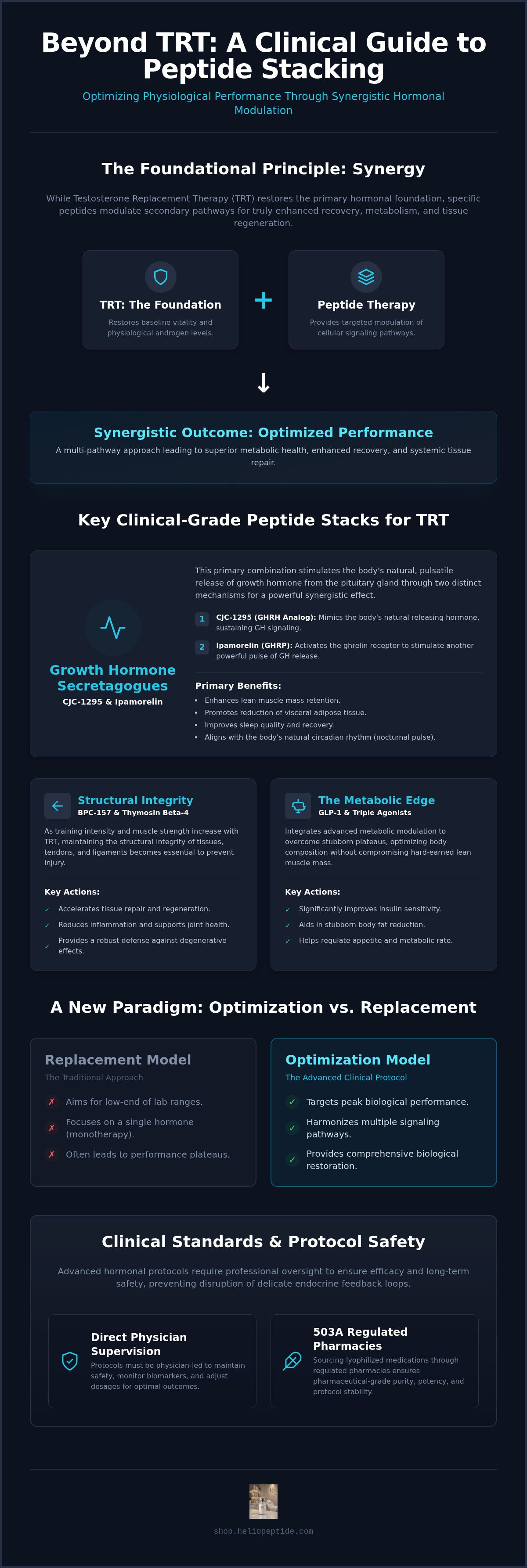
The clinical application of a hormonal stack represents a transition from simple hormone replacement to a multi-modal strategy for endocrine health. While TRT focuses on the restoration of physiological androgen levels, Peptide therapeutics provide targeted modulation of cellular signaling pathways that testosterone alone cannot influence. This synergy is particularly vital as patients age, since the decline in androgen production often coincides with a reduction in somatotropic activity. Identifying the most effective peptides to stack with TRT allows for a more comprehensive approach to biological restoration, addressing muscle mass, fat metabolism, and systemic tissue repair simultaneously. Without professional oversight, these combined protocols can inadvertently disrupt delicate endocrine feedback loops; therefore, physician-led guidance is a prerequisite for maintaining long term safety and efficacy.
The Hypothalamic-Pituitary Axis and Peptide Signaling
The integration of GHRH analogs and GHRPs is designed to stimulate the natural, pulsatile release of endogenous growth hormone from the pituitary gland. This method is physiologically superior to the administration of synthetic HGH, as it preserves the body's regulatory mechanisms and prevents receptor desensitization. When androgen levels are optimized through TRT, the body's sensitivity to insulin-like growth factor 1 (IGF-1) is often enhanced, creating a permissive environment for cellular regeneration. It's a clinical reality that exogenous testosterone alone may not address all aspects of metabolic aging, especially regarding the decline in mitochondrial efficiency and collagen synthesis. By utilizing specific peptides to stack with TRT, clinicians can effectively bypass the limitations of monotherapy, ensuring that the somatotropic axis remains active and responsive to physical demands.
Beyond Replacement: Achieving Biological Homeostasis
The optimization model of hormone therapy differs significantly from the traditional replacement model by seeking to harmonize the androgenic, somatotropic, and metabolic axes into a unified state of homeostasis. While replacement simply aims to reach the lower end of a laboratory reference range, optimization focuses on achieving peak biological performance through the precise modulation of multiple signaling pathways. This approach requires a deep understanding of how different hormones and peptides interact at the receptor level to produce a desired physiological outcome. The synergistic activation of androgen receptors and growth factor receptors facilitates a coordinated upregulation of protein synthesis through the cross-talk between the AR-mediated signaling and the IGF-1/PI3K/Akt pathway. This complex biological interaction ensures that structural integrity is maintained even as training intensity and muscle strength increase, providing a robust defense against the degenerative effects of aging.
Growth Hormone Secretagogues: CJC-1295 and Ipamorelin
The clinical pairing of CJC-1295 and Ipamorelin serves as the primary somatotropic foundation when patients evaluate peptides to stack with TRT. This combination is recognized for its ability to target the pituitary gland through two distinct biochemical mechanisms: the stimulation of the Growth Hormone Releasing Hormone (GHRH) receptor and the activation of the ghrelin receptor. By utilizing these dual pathways, the protocol creates a synergistic environment that significantly enhances the amplitude of endogenous growth hormone pulses. Clinical observations suggest that this heightened somatotropic activity facilitates lean muscle mass retention and the reduction of visceral adipose tissue, providing a metabolic counter-balance to the androgenic effects of testosterone. A recent systematic review and meta-analysis underscores the importance of multi-modal hormonal management, particularly when metabolic markers are a priority. Timing is critical. The most effective protocols prioritize the nocturnal pulse, requiring administration in a fasted state before sleep to align with the body's natural circadian rhythm.
CJC-1295: Sustaining Growth Hormone Signaling
CJC-1295 functions as a long-acting GHRH analog that sustains growth hormone signaling by mimicking the body's natural releasing hormone. In a clinical setting, the version without Drug Affinity Complex (DAC) is preferred to avoid the phenomenon of GH "bleed," which is characterized by a non-pulsatile, continuous release of growth hormone that can lead to receptor desensitization. This specific analog complements the anabolic environment established by TRT, supporting protein synthesis and mitochondrial function. For those seeking to refine their protocol, exploring Advanced Peptide Therapy options ensures that the compounds utilized meet high-grade pharmaceutical standards.
Ipamorelin: Selective and Potent GH Release
Ipamorelin is distinguished by its high selectivity for the ghrelin receptor, stimulating growth hormone release without the undesirable side effects associated with earlier generation peptides. Unlike GHRP-2 or GHRP-6, Ipamorelin does not induce significant spikes in cortisol or prolactin, making it an ideal candidate for a physician-supervised HRT program. Long-term safety is a cornerstone of this peptide's clinical profile. Practitioners often prescribe a once-daily nocturnal dose for general wellness and recovery, though twice-daily administration may be utilized in specific cases to address severe metabolic or tissue repair requirements. The stability of these lyophilized products ensures that the pharmacological potency remains consistent throughout the duration of the treatment cycle.
Structural Integrity: Stacking BPC-157 and Thymosin Beta-4
The rapid increase in contractile force associated with testosterone therapy often outpaces the adaptive capacity of connective tissues. This physiological discrepancy creates a distinct risk profile for tendon and ligament injuries as training intensity escalates. Integrating specific peptides to stack with TRT, such as BPC-157 and Thymosin Beta-4 (TB-4), addresses this gap by promoting structural integrity alongside muscular development. BPC-157, a pentadecapeptide, is utilized for its regenerative effects on the tendon-to-bone interface. Simultaneously, Thymosin Beta-4 acts as a primary actin-sequestering protein, facilitating the migration of progenitor cells to sites of injury. As of July 2026, these sequences remain under active review by the Pharmacy Compounding Advisory Committee (PCAC) following their removal from the Category 2 "do not compound" list in April 2026. This regulatory shift underscores the necessity of adhering to FDA rules for compounding pharmacies to ensure all substances are sourced from licensed 503A facilities under medical supervision.
Angiogenesis and Tissue Regeneration
The clinical utility of these peptides is largely driven by their ability to upregulate Vascular Endothelial Growth Factor (VEGF), which initiates the process of angiogenesis. The formation of new micro-vasculature is essential for delivering nutrients to bradytrophic tissues like tendons and ligaments, which naturally possess limited blood supply. This mechanism makes the combination highly effective for treating chronic tendinopathy and ligamentous laxity. Utilizing advanced peptide therapy within a TRT protocol supports athletic longevity by ensuring that the structural scaffolding of the body evolves in tandem with increased muscle mass. It's a proactive strategy for maintaining physical performance during high-intensity training cycles.
Mitigating Systemic Inflammation
Beyond direct tissue repair, BPC-157 and TB-4 serve as critical modulators of the systemic inflammatory response. High-intensity training induces significant oxidative stress and micro-trauma within the musculoskeletal system. These peptides assist in the resolution phase of inflammation, preventing the transition from acute recovery to chronic degenerative states. For patients over 40, the endogenous capacity for cellular repair is often diminished; this makes structural peptides a logical addition to a long-term hormonal optimization strategy. The objective is to maintain a state of biological resilience where the body can withstand the increased mechanical load facilitated by optimized testosterone levels. This methodical approach ensures that recovery times are minimized and training consistency is preserved.
The Metabolic Edge: Integrating GLP-1 and Triple Agonists
The emerging protocol of stacking TRT with GLP-1 agonists addresses the critical clinical challenge of maintaining metabolic efficiency without sacrificing musculoskeletal integrity. While testosterone replacement effectively restores androgenic signaling, it's often insufficient for patients facing significant metabolic resistance or stubborn visceral adiposity. When identifying the most effective peptides to stack with TRT, the integration of Semaglutide 15mg provides a sophisticated mechanism for enhancing insulin sensitivity and glycemic control. Testosterone acts as a decisive muscle-sparing agent during this process, preserving lean tissue and metabolic rate even during the aggressive caloric deficits required for significant fat loss. This dual approach ensures that weight reduction is derived primarily from adipose tissue rather than skeletal muscle, a common pitfall of GLP-1 monotherapy.
The pharmacological frontier has expanded with the introduction of Retatrutide 10mg, a triple agonist targeting GLP-1, GIP, and glucagon receptors. Clinical data from Phase 2 trials demonstrated an average weight loss of 24.2% over 48 weeks, representing a significant advancement in body recomposition technology. By combining these metabolic modulators with optimized testosterone, clinicians can facilitate a profound shift in biological homeostasis, addressing systemic inflammation and metabolic syndrome simultaneously. It's a protocol defined by precision, where each compound targets a specific metabolic pathway to achieve a unified physiological outcome.
Optimizing Body Composition and Insulin Sensitivity
High testosterone levels are intrinsically linked to improved glycemic control through the upregulation of GLUT4 transporters in muscle tissue. When paired with GLP-1 agonists, this effect is amplified, leading to a rapid reduction in visceral adiposity and improved lipid profiles. This synergy is detailed in our peptide therapy for weight loss overview, which highlights how metabolic optimization requires a multi-modal strategy. The objective is to achieve a lean, metabolically active phenotype while maintaining the strength and vitality provided by TRT.
Dosing and Management of Metabolic Stacks
Success in combined protocols depends on the methodical titration of multiple injectable medications under strict medical supervision. Patients must maintain a high protein intake, typically exceeding 1.6 grams per kilogram of body weight, alongside consistent resistance training to maximize the muscle-sparing effects of the testosterone. Clinical monitoring is essential to manage potential gastrointestinal side effects or rare instances of hypoglycemia, especially as insulin sensitivity begins to normalize. View our selection of lyophilized metabolic peptides to begin your physician-led optimization protocol with clinical-grade stability.
Clinical Standards: Sourcing through 503A Regulated Pharmacies
Sourcing is the most critical variable when selecting peptides to stack with TRT. The 503A pharmacy designation represents a regulatory framework where medications are compounded for specific patients under the oversight of state boards of pharmacy, ensuring compliance with rigorous USP <795>, <797>, and <800> standards. This environment contrasts sharply with the "research chemical" market, where substances are often sold in liquid form without regulatory oversight. Pharmaceutical grade peptides are typically lyophilized, a freeze-drying process that ensures molecular stability and prevents the degradation common in pre-mixed liquid solutions. Non-regulated products carry significant risks, including the presence of heavy metals, bacterial endotoxins, or incorrect peptide concentrations that can compromise an entire hormonal protocol. Positioning yourself within the best online semaglutide and TRT program ensures that every compound in your stack meets these exacting clinical standards.
The Necessity of Physician-Led Telehealth
Baseline blood work and ongoing laboratory monitoring are non-negotiable components of a safe optimization strategy. A specialized clinician doesn't just prescribe; they interpret complex data to adjust the peptides to stack with TRT based on real-time physiological responses. This includes monitoring IGF-1 levels to prevent over-stimulation of the somatotropic axis and tracking inflammatory markers like C-Reactive Protein (CRP) to gauge the efficacy of structural repair peptides. Professional guidance is essential for navigating the potential interactions between androgenic and metabolic medications. Without this oversight, patients risk endocrine feedback loop disruptions that can lead to long-term receptor desensitization or hormonal imbalances. Telehealth models have streamlined this process, providing access to expert clinicians who specialize in the intersection of traditional HRT and advanced peptide science.
Identifying Clinical-Grade Peptides
Verifying the legitimacy of a peptide source requires a methodical approach to credentials and manufacturing transparency. A legitimate clinical provider will always require a valid prescription and provide access to a Pharmacy Certificate of Analysis (COA) for every batch produced. This document confirms the purity and potency of the lyophilized sequence, ensuring it's free from the contaminants often found in "gray market" alternatives. The technical advantage of lyophilization cannot be overstated; it allows for high-stability shipping and storage, maintaining the pharmacological integrity of the peptide until the moment of reconstitution. This stability is vital for maintaining consistent dosing and predictable results in a multi-modal protocol. Ultimately, the use of US-licensed manufacturers provides the clinical peace of mind necessary for long-term health optimization. Success in hormonal therapy is a direct consequence of combining scientific methodology with pharmaceutical-grade precision.
The Future of Integrated Endocrine Health
Transitioning from a standard replacement model to a comprehensive optimization protocol requires a precise understanding of how different biological pathways interact. By identifying the most effective peptides to stack with TRT, you move beyond the simple restoration of testosterone levels to actively modulating growth hormone production, metabolic efficiency, and structural regeneration. This multi-modal approach ensures that your body maintains the resilience necessary to handle increased physical demands while optimizing long-term health markers. Success is not found in isolated treatments but in the clinical synergy between androgenic support and advanced peptide signaling.
Safety remains the non-negotiable foundation of any hormonal regimen. Utilizing clinical-grade lyophilized peptides sourced from FDA-regulated 503A pharmacies provides the stability and purity required for predictable results. Professional oversight ensures that every adjustment to your protocol is backed by laboratory data and US-licensed physician expertise. This methodical commitment to pharmaceutical standards protects your endocrine health while facilitating peak biological performance. Schedule your clinical consultation for a personalized TRT and peptide protocol at Helio Peptide to begin your journey toward a more sophisticated and secure hormonal future. Your commitment to scientific rigor is the final step in achieving lasting physical restoration.
Frequently Asked Questions
What are the best peptides to stack with TRT for muscle growth?
The combination of CJC-1295 and Ipamorelin is the clinical standard for patients identifying the best peptides to stack with TRT for muscle growth. These growth hormone secretagogues stimulate the pituitary gland to release endogenous growth hormone, which works synergistically with optimized testosterone to enhance protein synthesis. This dual-axis approach facilitates superior hypertrophy and muscle retention compared to testosterone monotherapy, specifically by targeting both androgenic and somatotropic pathways simultaneously.
Can I stack BPC-157 with testosterone to heal a sports injury?
Stacking BPC-157 with testosterone is a frequent clinical protocol for accelerating the repair of musculoskeletal injuries. While testosterone increases muscle strength and contractile force, BPC-157 targets the structural integrity of tendons and ligaments through the upregulation of vascular endothelial growth factor. This process promotes angiogenesis and collagen synthesis, ensuring that connective tissues can withstand the increased mechanical load facilitated by optimized androgen levels during your recovery phase.
Is it safe to use Semaglutide while on a TRT program?
It's safe and often clinically advantageous to integrate Semaglutide within a physician-supervised TRT program. Testosterone acts as a potent muscle-sparing agent, mitigating the risk of lean tissue loss that sometimes occurs during rapid weight reduction with GLP-1 agonists. This combination allows for aggressive fat loss and improved insulin sensitivity while maintaining the metabolic rate and physical strength provided by optimized androgen levels, leading to superior body recomposition.
Do I need to adjust my TRT dose when adding growth hormone secretagogues?
Adjustments to the TRT dose aren't typically required when adding growth hormone secretagogues like Ipamorelin. These peptides modulate the somatotropic axis, whereas TRT targets the androgenic axis; they function through independent biological pathways. However, ongoing laboratory monitoring remains essential to ensure that IGF-1 levels and other metabolic markers stay within the optimal range. Physicians may refine the protocol based on your individual physiological response and systemic balance.
How long does it take to see results from a peptide and testosterone stack?
Improvements in recovery and sleep quality are often observed within the first two to four weeks of utilizing peptides to stack with TRT. For significant changes in body composition, such as increased lean muscle mass or reduced visceral fat, a clinical cycle of three to six months is generally required. Consistency in administration and adherence to resistance training and nutritional standards are critical factors in achieving these peak biological outcomes over time.
Why should I source my peptides from a 503A pharmacy instead of a research site?
Sourcing from a 503A pharmacy is the only way to ensure pharmaceutical purity, potency, and sterility. Unlike research sites, 503A facilities are strictly regulated by state boards and must comply with rigorous USP standards. Research chemicals are often unverified, carrying risks of heavy metal contamination or incorrect concentrations. Lyophilized products from regulated pharmacies provide the molecular stability and clinical peace of mind necessary for safe human administration.
What is the difference between CJC-1295 with DAC and without DAC for TRT patients?
CJC-1295 without DAC is preferred for TRT patients because it mimics the natural, pulsatile release of growth hormone. The DAC version has a significantly longer half-life, which can lead to a continuous "GH bleed" and potential receptor desensitization. Utilizing the non-DAC version allows for more precise control over the somatotropic axis and reduces the risk of long-term endocrine disruption, making it a safer choice for long-term optimization protocols.
Are there any specific side effects to watch for when stacking multiple peptides?
Potential side effects when stacking multiple peptides include mild water retention, increased hunger, or localized irritation at the injection site. When integrating GLP-1 agonists, gastrointestinal symptoms like nausea or slowed digestion may occur during the initial titration phase. Most effects are dose-dependent and can be managed through precise protocol adjustments by a supervising physician. Regular blood work is necessary to monitor for any systemic imbalances or sensitivities.
