
Peptide Therapy vs Liposuction: A Clinical Comparison of Metabolic Intervention and Surgical Contouring
Physical transformation is often mistaken for a mechanical problem, yet the most enduring results are achieved through biological reprogramming. When evaluating peptide therapy vs liposuction, the choice isn't merely between a needle and a scalpel; it's a decision between temporary contouring and a fundamental shift in how your body processes energy. You've likely reached a stage where stubborn fat persists despite rigorous effort, leading to a frustrating metabolic plateau that makes surgical intervention seem like the only viable path.
This article provides an exhaustive clinical analysis of systemic metabolic restoration versus the mechanical removal of fat to help you achieve long-term body optimization. We'll explore how physician-supervised protocols utilizing lyophilized preparations ensure targeted fat loss without the risk of muscle wasting common in aggressive calorie deficits. The discussion includes a review of current pharmacological standards and the comparative efficacy of advanced peptide therapy to provide a comprehensive look at the 2026 landscape of metabolic medicine.
Key Takeaways
- Understand the fundamental distinction between systemic metabolic restoration and the localized, mechanical fat removal achieved through surgical intervention.
- Evaluate the clinical efficacy of advanced multi-agonist peptides, such as Retatrutide and Semaglutide, for achieving significant and sustainable weight reduction.
- Analyze the critical decision factors when comparing peptide therapy vs liposuction, specifically whether your objective is systemic fat loss or targeted body contouring.
- Recognize the necessity of pharmaceutical-grade, lyophilized medications sourced from 503A pharmacies to ensure clinical safety and molecular stability.
- Discover how physician-supervised HRT acts as a hormonal catalyst to overcome metabolic plateaus and enhance the efficacy of peptide protocols.
Biological Mechanisms: Systemic Metabolism vs. Surgical Contouring
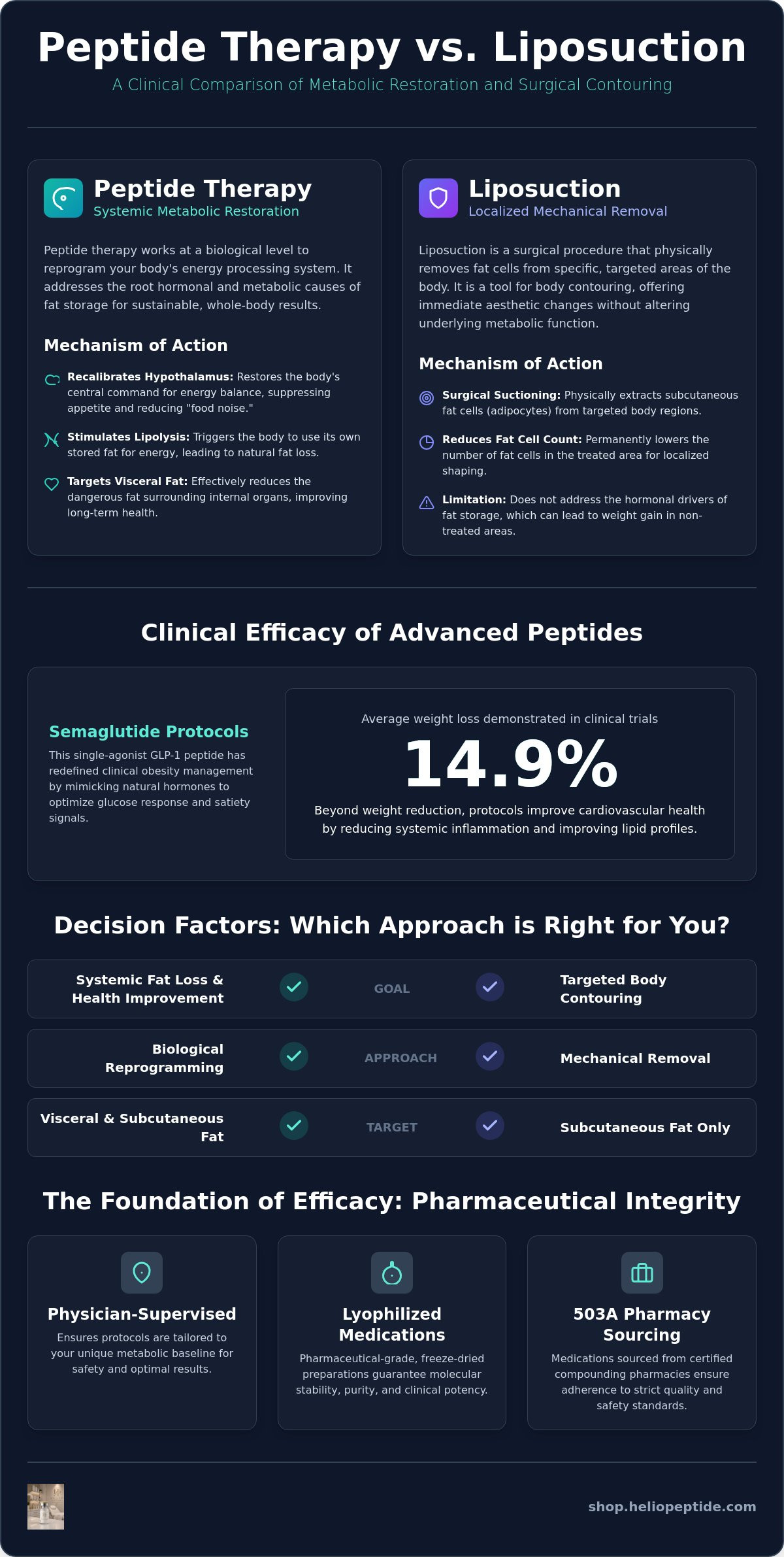
Peptides function as precision signaling molecules that orchestrate complex cellular responses by binding to specific receptors with high affinity. Unlike traditional weight loss methods, these amino acid sequences initiate targeted biological pathways to enhance lipid metabolism and facilitate cellular repair. The fundamental debate surrounding peptide therapy vs liposuction hinges on the distinction between systemic metabolic restoration and localized mechanical fat removal. While one addresses the underlying hormonal environment, the other focuses purely on the physical extraction of tissue.
The hypothalamus serves as the central command for energy homeostasis. Peptides recalibrate this system to suppress appetite and increase energy expenditure, significantly reducing "food noise" while enhancing satiety signals. Growth hormone secretagogues further complement this process by stimulating endogenous lipolysis. This mechanism triggers the body to utilize stored adipose tissue for energy, promoting a leaner body composition through natural physiological channels. This systemic approach ensures that fat loss occurs throughout the body rather than in a single, surgically altered zone.
GLP-1 Receptor Agonists and Metabolic Reprogramming
GLP-1 receptor agonists utilize the incretin effect to optimize glucose-dependent insulin secretion and delay gastric emptying. This mechanism is central to why peptide therapy for weight loss is considered a superior clinical intervention for addressing the root causes of obesity. By improving insulin sensitivity and metabolic flexibility, these therapies effectively target visceral fat, the dangerous adipose tissue surrounding internal organs, rather than just the subcutaneous layer. This biological reprogramming creates a sustainable foundation for long term health that surgery cannot replicate.
Liposuction: The Mechanical Removal of Adipocytes
In contrast to metabolic intervention, this Liposuction overview provides a technical perspective on the surgical suctioning of subcutaneous fat cells. This procedure physically reduces the total adipocyte count in specific regions like the abdomen or thighs to create immediate aesthetic changes. However, surgery remains a localized solution that doesn't alter an individual's underlying metabolic dysfunction. Because the hormonal drivers of fat storage remain unaddressed, patients often experience subsequent weight gain in non-treated areas if their metabolic baseline isn't corrected. Liposuction is a contouring tool, not a metabolic cure.
Clinical Peptide Profiles: Semaglutide, Retatrutide, and Tirzepatide
The landscape of metabolic intervention has shifted from simple appetite suppression to complex multi-receptor agonism. When comparing peptide therapy vs liposuction, the primary advantage of pharmacological intervention lies in its ability to modulate endogenous endocrine pathways rather than merely removing tissue. Semaglutide is a GLP-1 receptor agonist that has fundamentally redefined clinical obesity management. According to a clinical review of Semaglutide, this molecule mimics natural incretin hormones to optimize the body's response to glucose and satiety signals. Selecting the correct peptide requires matching specific molecular profiles to a patient's unique metabolic baseline and hormonal health.
The Efficacy of Semaglutide 15mg Protocols
Physician-led programs often utilize high-concentration semaglutide 15 mg to achieve superior glycemic control and sustained weight reduction. Clinical trials have demonstrated an average weight loss of 14.9% with this single-agonist approach. Precision titration schedules are essential to bypass the metabolic plateaus frequently encountered in standardized weight loss programs. Beyond weight reduction, these protocols contribute to long-term cardiovascular health by improving lipid profiles and reducing systemic inflammation. This systemic benefit is a critical differentiator in the peptide therapy vs liposuction debate, as surgery provides no such internal health optimization.
Retatrutide: The Triple-Agonist Frontier
The development of retatrutide 10mg represents the current pinnacle of metabolic science. This molecule functions as a triple agonist, targeting GIP, GLP-1, and glucagon receptors simultaneously. While GLP-1 and GIP optimize insulin secretion and satiety, the glucagon component is critical for increasing resting energy expenditure. In clinical trials, Retatrutide has demonstrated weight loss of up to 28.7%, a figure that begins to rival the volumetric results of invasive procedures. This triple-agonist mechanism addresses the patient's entire metabolic baseline, offering a non-surgical alternative that targets fat while preserving metabolic integrity. For those seeking a medical-grade solution, exploring advanced peptide therapy offers a path toward sustainable body optimization under professional oversight.
Pharmaceutical Integrity: The Clinical Superiority of Lyophilised Peptides
Sourcing is the foundational pillar of patient safety in metabolic medicine. The market's current saturation with "research-only" products presents significant clinical dangers, as these substances lack the physician oversight and valid prescriptions required for human administration. These unregulated chemicals often bypass the rigorous validation processes necessary to confirm molecular identity and purity. In contrast, 503A pharmacies are strictly regulated by state boards to ensure pharmaceutical-grade medication quality. This regulatory framework mandates third-party Certificate of Analysis (COA) testing to verify that every batch meets exact specifications for potency and sterile integrity. When evaluating peptide therapy vs liposuction, the safety profile of the pharmaceutical intervention depends entirely on this clinical provenance.
Lyophilisation vs. Liquid Stability
Freeze-drying, technically known as lyophilisation, is essential for maintaining the delicate molecular architecture of peptide chains. Liquid preparations are inherently unstable and susceptible to rapid degradation when exposed to light or temperature fluctuations during national transit. Lyophilised medications remain in a state of suspended animation, ensuring the patient receives the full therapeutic dose without loss of efficacy. It's critical to follow precise protocols when you reconstitute and store advanced peptide therapy products to maintain their molecular integrity. This stability is why professional-grade peptides are always shipped in a vacuum-sealed, powdered form rather than a pre-mixed solution.
Regulatory Compliance and Sourcing Safety
A profound gap exists between pharmaceutical-grade Active Pharmaceutical Ingredients (APIs) and industrial-grade research chemicals. Industrial chemicals aren't intended for human consumption and frequently contain manufacturing byproducts or heavy metals that pose severe health risks. Physician-led protocols protect patients by ensuring medications are sourced exclusively from US-licensed manufacturers that adhere to Current Good Manufacturing Practice (cGMP) standards. While all medical interventions involve certain Liposuction risks and benefits, the risks associated with unverified peptides are entirely preventable through professional procurement. Choosing a supervised clinical path ensures that the peptide therapy vs liposuction decision is based on high-purity biological interventions rather than the uncertainties of the grey market.
Navigating the Decision Matrix: Liposuction vs. Peptide Therapy
Selecting the appropriate intervention for adipose tissue reduction requires a clinical evaluation of your physiological objectives and metabolic state. The choice between peptide therapy vs liposuction isn't merely a preference for speed over process; it's a strategic decision based on whether you require systemic metabolic correction or localized tissue extraction. A comprehensive diagnostic approach is mandatory before initiating any protocol. Patients must undergo extensive blood work to assess markers such as fasting insulin, hemoglobin A1c, and lipid profiles to determine if their fat accumulation is driven by underlying metabolic dysfunction. Without these diagnostics, any intervention remains superficial.
The recovery trajectories for these two paths differ significantly in their physiological impact. Surgical procedures necessitate immediate downtime, often involving anesthesia risks and weeks of physical restriction to allow for tissue healing and inflammation reduction. Conversely, pharmacological intervention follows a gradual titration schedule. This methodical approach allows the body to adapt to shifting hormonal signals, minimizing side effects while steadily optimizing energy expenditure. Participation in the best online semaglutide program ensures that this titration is managed by clinicians who monitor your progress through continuous data tracking and iterative protocol adjustments.
Criteria for Liposuction Candidates
Surgical precision is best reserved for patients with stubborn, non-metabolic fat deposits that are resistant to systemic lipolysis. Success in these cases depends heavily on skin elasticity; patients with poor dermal integrity may experience suboptimal contouring results after the physical volume is removed. Liposuction serves as a finishing tool for body sculpting rather than a solution for obesity. It's a mechanical fix for localized concerns that don't stem from endocrine imbalances or insulin resistance.
Criteria for Peptide Therapy Candidates
Peptide therapy is the indicated clinical path for individuals presenting with metabolic syndrome or systemic obesity. These patients benefit from the restorative nature of GLP-1 and GIP agonists, which prioritize long-term healthspan over immediate aesthetic change. A primary advantage of this approach is the preservation of lean muscle tissue. While aggressive dieting or surgery can lead to catabolic muscle loss, advanced peptides support fat oxidation while maintaining the metabolic engine of skeletal muscle. This ensures that the resulting weight loss is both healthy and sustainable. If you're ready to begin a physician-led journey toward metabolic restoration, you can access our clinical-grade peptide protocols here.
The Helio Peptide Protocol: Physician-Supervised Synergy
Systemic fat loss is frequently obstructed by a dysregulated endocrine system. While previous sections detailed the molecular mechanisms of GLP-1 and GIP agonists, these peptides do not operate in a vacuum. True metabolic optimization requires a comprehensive approach that addresses underlying hormonal imbalances. In the clinical evaluation of peptide therapy vs liposuction, the most significant advantage of a pharmaceutical protocol is the ability to integrate physician-supervised HRT as a force multiplier. This synergy ensures that the body remains in an anabolic state, favoring fat oxidation while protecting vital structural tissues.
A primary concern during rapid weight reduction is the risk of sarcopenia, or the involuntary loss of skeletal muscle mass. When the body undergoes a significant caloric deficit, it often enters a catabolic state that sacrifices muscle alongside fat. Hormonal support acts as a protective barrier against this decline. By maintaining optimal physiological levels of key hormones, patients can ensure that weight loss is derived almost exclusively from adipose tissue. This preservation of lean mass is essential for maintaining a high basal metabolic rate, which is the primary driver of long term weight maintenance. Transitioning from active treatment to a maintenance phase requires a methodical strategy to solidify these metabolic gains.
The Synergy of TRT and Growth Hormone Secretagogues
Optimal testosterone levels significantly enhance the lipolytic effects of advanced peptide therapy. Testosterone increases the density of androgen receptors in adipose tissue, making fat cells more sensitive to the signaling of growth hormone and other lipolytic agents. Growth hormone secretagogues further complement this by stimulating the endogenous release of GH, which promotes cellular repair and bone density. This combination addresses the root causes of metabolic decline, particularly in aging patients who face decreasing hormonal output. It creates a biological environment where fat loss is a natural consequence of restored health rather than a forced mechanical change.
Long-term Maintenance and Healthspan Optimisation
Success in metabolic medicine is measured by the durability of the results. A physician-led approach provides a sustainable alternative to the "yo-yo" dieting cycle by developing post-treatment protocols that outlast the medication phase. These strategies focus on systemic inflammation reduction and the restoration of insulin sensitivity. Peptides facilitate cellular repair and improve metabolic flexibility, allowing the body to process energy more efficiently. By addressing the patient's entire biological profile, this protocol ensures that the aesthetic improvements seen in the peptide therapy vs liposuction comparison are supported by a foundation of genuine physiological health.
Achieving Sustainable Physiological Transformation
The transition from localized fat removal to systemic metabolic restoration represents a fundamental shift in health optimization. While surgical methods offer immediate physical changes, they don't address the underlying endocrine dysregulation that drives fat accumulation. In the clinical assessment of peptide therapy vs liposuction, the superiority of pharmacological intervention lies in its ability to restore metabolic flexibility while preserving essential lean tissue. Success requires a commitment to pharmaceutical integrity; only lyophilized medications sourced from regulated 503A compounding facilities ensure molecular stability and patient safety.
True body optimization occurs when advanced peptide protocols are integrated with physician-led hormonal support to overcome metabolic plateaus. This comprehensive methodology ensures that fat loss is a sustainable result of internal health rather than a temporary external modification. Through specialized telehealth oversight and rigorous clinical standards, you can achieve a state of peak performance that reflects your biological potential. Begin Your Physician-Supervised Body Optimisation Journey with Helio Peptide. It's time to prioritize a scientific approach that respects your body's complex metabolic architecture.
Frequently Asked Questions
How long does it take to see systemic fat loss results from peptide therapy?
Systemic fat loss typically becomes measurable within 4 to 12 weeks as the medication titration reaches therapeutic concentrations. While initial changes in satiety and "food noise" occur almost immediately, significant physiological body composition shifts generally manifest after the first three months of consistent administration. Full metabolic optimization and substantial adipose tissue reduction are often achieved over a 6 to 12 month clinical course.
Can I buy clinical-grade peptides for fat loss without a physician's prescription?
Clinical-grade peptides are regulated prescription medications and cannot be legally or safely obtained without a physician's oversight. Products sold without a prescription are classified as "research chemicals" and lack the pharmaceutical-grade validation required for human use. These unregulated substances carry significant risks of contamination, incorrect dosing, and lack of molecular stability, which can compromise both safety and efficacy.
What is the primary difference between Semaglutide and Retatrutide for fat loss?
Semaglutide functions as a single GLP-1 receptor agonist that primarily targets appetite regulation and glucose metabolism. Retatrutide represents a more advanced triple-agonist mechanism that targets GLP-1, GIP, and glucagon receptors simultaneously. The inclusion of the glucagon component in Retatrutide is specifically designed to increase resting energy expenditure, potentially leading to higher weight loss percentages compared to single-agonist protocols.
Is it safe to use fat loss peptides if I am already on TRT or HRT?
It's not only safe but often clinically advantageous to integrate peptide therapy with existing TRT or HRT programs. Hormonal optimization through testosterone or estrogen replacement acts as a protective mechanism for lean muscle tissue during rapid fat loss. This synergy prevents the catabolic muscle wasting sometimes associated with caloric deficits, ensuring that weight reduction is derived from adipose tissue rather than skeletal muscle.
Does liposuction provide more permanent results than peptide therapy?
Liposuction provides permanent removal of adipocytes in a localized area, but it does not alter the body's systemic fat-storage signals. In the peptide therapy vs liposuction comparison, surgery is a mechanical fix that can be undermined if the underlying metabolic environment remains dysregulated. Peptide therapy addresses the hormonal drivers of fat accumulation, providing a systemic solution that prevents future adipose storage across the entire body.
How do I ensure my peptides are sourced from a legitimate 503A pharmacy?
Verification of sourcing requires working with a licensed medical provider who utilizes established 503A compounding pharmacies. These facilities are strictly regulated by state boards of pharmacy and must provide a Certificate of Analysis (COA) for every batch to confirm purity and potency. Patients should avoid any provider that cannot verify the pharmaceutical provenance or the lyophilized state of their medications.
What are the common side effects of physician-supervised peptide therapy?
The most frequent side effects involve gastrointestinal symptoms such as nausea, delayed gastric emptying, or changes in bowel habits. These effects are usually transient and can be effectively managed through a precise, physician-led titration schedule that allows the body to adapt to the medication. Fatigue and mild injection site reactions are also reported but typically resolve as the patient reaches a stable maintenance dose.
Will I regain the weight if I stop taking weight loss peptides?
Weight regain is a risk if the patient doesn't transition into a structured metabolic maintenance strategy after the active treatment phase. Long-term success depends on the restoration of insulin sensitivity and the correction of underlying hormonal imbalances during the protocol. A physician-supervised transition ensures that the metabolic "set point" has been successfully recalibrated to support sustained weight maintenance without continuous pharmacological intervention.
