
Peptide Therapy for Weight Loss: A Clinical Overview of Metabolic Signalling
The problem isn't willpower. For a significant proportion of individuals who experience metabolic resistance, the fundamental signalling pathways governing appetite, glucose regulation, and fat utilisation are operating outside their optimal parameters, and no amount of caloric restriction corrects the underlying dysfunction. Peptide therapy for weight loss addresses precisely this gap, not as a shortcut, but as a precision-engineered intervention at the level of metabolic biochemistry.
If you've exhausted conventional approaches and found yourself researching peptides online, you've likely encountered a fragmented landscape of unverified sourcing, inconsistent dosing protocols, and very little clinical guidance. That confusion is legitimate, and the risks associated with grey-market compounds are not trivial.
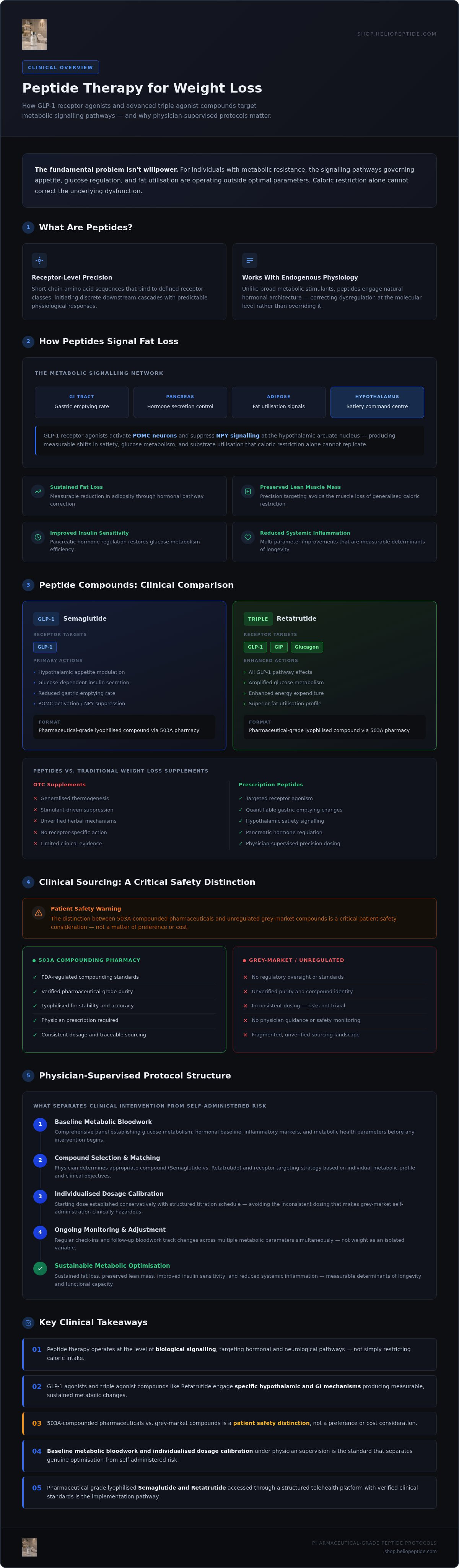
This article provides a rigorous clinical overview of how GLP-1 receptor agonists and advanced triple agonist compounds interact with metabolic signalling pathways, what distinguishes pharmaceutical-grade sourcing from unregulated alternatives, and how physician-supervised protocols are structured to achieve sustainable fat loss while preserving lean muscle mass. What follows is the scientific and clinical framework that separates genuine metabolic optimisation from the noise.
Key Takeaways
- Peptide therapy for weight loss operates at the level of biological signalling, targeting the hormonal and neurological pathways that govern appetite and fat metabolism rather than simply restricting caloric intake.
- GLP-1 receptor agonists and advanced triple agonist compounds such as Retatrutide engage specific hypothalamic and gastrointestinal mechanisms that produce measurable, sustained changes in metabolic function.
- The distinction between 503A-compounded pharmaceuticals and unregulated grey-market compounds is a critical patient safety consideration, not a matter of preference or cost.
- A physician-supervised protocol — including baseline metabolic bloodwork and individualised dosage calibration — is what separates clinically sound intervention from self-administered risk.
- Understanding how to access pharmaceutical-grade lyophilised Semaglutide and Retatrutide through a structured telehealth platform is the final step toward implementing a protocol built on verified clinical standards.
Understanding Peptide Therapy for Weight Loss in 2026
Peptides are short-chain amino acid sequences that function as biological signalling molecules, instructing target tissues, organs, and neurological pathways to perform highly specific physiological tasks. Unlike macronutrients or general metabolic stimulants, peptides operate with receptor-level precision. A given peptide binds to a defined receptor class, initiates a discrete downstream cascade, and produces a predictable physiological response. This specificity is what separates peptide-based interventions from the blunt instruments of conventional weight management.
The clinical conversation around obesity has shifted substantially. Where earlier frameworks centred on caloric arithmetic, current metabolic medicine recognises that body weight regulation is governed by an intricate network of hormonal signals, hypothalamic feedback loops, and gastrointestinal-derived peptides. Adiposity, in many individuals, reflects dysregulation within this signalling architecture rather than simple energy surplus. Correcting that dysregulation at the molecular level is the foundational rationale for peptide therapy for weight loss as a clinical discipline.
This approach has also become a cornerstone of contemporary healthspan medicine. Sustained fat loss, preserved lean muscle mass, improved insulin sensitivity, and reduced systemic inflammation are not merely cosmetic outcomes; they are measurable determinants of longevity and functional capacity. Peptide protocols, when structured within a physician-supervised framework, address multiple parameters of metabolic health simultaneously rather than targeting weight as an isolated variable.
The Evolution of Weight Loss Injections
Early injectable weight loss compounds operated primarily through adrenergic stimulation or thyroid axis manipulation, producing weight loss alongside significant cardiovascular and systemic side effects. Modern peptide therapeutics represent a categorical departure from that model. Compounds that engage glucagon-like peptide-1 signalling pathways, for instance, achieve appetite modulation and glucose regulation through receptor-specific agonism rather than broad hormonal disruption. The result is a substantially improved tolerability profile and a mechanism that works with endogenous physiology rather than overriding it. For patients also managing hormonal imbalances, integrating peptide therapy alongside physician-supervised HRT offers a more comprehensive metabolic restoration strategy.
Peptides vs. Traditional Weight Loss Supplements
Over-the-counter supplements typically operate through generalised thermogenesis, stimulant-driven appetite suppression, or unverified herbal mechanisms with limited clinical evidence and no receptor-specific action. Prescription-grade peptides function through targeted receptor agonism, producing quantifiable changes in gastric emptying rate, hypothalamic satiety signalling, and pancreatic hormone secretion. The distinction isn't a matter of potency alone; it's a difference in mechanistic precision. That precision is why pharmaceutical-grade compounds sourced from regulated compounding pharmacies, and administered under physician supervision, constitute the clinical standard rather than a premium option.
The Biological Mechanism: How Peptides Signal Fat Loss
Appetite isn't a simple sensation. It's the downstream output of an extraordinarily complex hormonal dialogue between the gastrointestinal tract, the pancreas, adipose tissue, and the hypothalamus. Peptide therapy for weight loss intervenes at specific nodes within this dialogue, producing measurable shifts in satiety signalling, glucose metabolism, and substrate utilisation that caloric restriction alone cannot replicate.
GLP-1 receptor agonists exert their primary appetite-modulating effect at the level of the hypothalamic arcuate nucleus, where they activate pro-opiomelanocortin (POMC) neurons and suppress neuropeptide Y (NPY) signalling. The net result is a sustained reduction in hunger drive that operates independently of conscious restraint. Simultaneously, GLP-1 agonism delays gastric emptying, extending the duration of postprandial satiety by slowing the transit of nutrients from the stomach into the small intestine. This mechanical effect compounds the central neurological signal, creating a dual-pathway reduction in caloric intake that is both physiologically robust and clinically reproducible.
Glucose-dependent insulinotropic polypeptide (GIP) adds a distinct and complementary dimension to this framework. Where GLP-1 primarily governs appetite and gastric motility, GIP acts on adipocyte receptors and pancreatic beta cells in a glucose-dependent manner, enhancing insulin secretion during hyperglycaemic states while simultaneously influencing lipid metabolism within adipose tissue. The distinction matters clinically: targeting GIP alongside GLP-1 doesn't simply amplify a single signal; it recruits an entirely separate hormonal pathway with its own receptor distribution and metabolic consequences.
Metabolic flexibility, the capacity to efficiently switch between glucose and fatty acid oxidation as primary fuel sources, is a defining characteristic of optimal metabolic function and a consistent casualty of insulin resistance. Sustained GLP-1 receptor agonism improves insulin sensitivity at the cellular level, reducing chronic hyperinsulinaemia and thereby lowering the hormonal barrier to adipose tissue mobilisation. The body is no longer biochemically locked into glucose dependency; stored fat becomes an accessible and actively utilised fuel substrate.
Semaglutide: The Gold Standard for GLP-1 Agonism
Semaglutide functions as a long-acting GLP-1 receptor agonist, delivering sustained glycaemic control and appetite suppression through high-affinity receptor binding that resists enzymatic degradation far longer than endogenous GLP-1. Semaglutide 15 mg in lyophilised form represents the high-potency end of this therapeutic class, structured for patients requiring meaningful metabolic correction rather than modest weight reduction. Its impact on postprandial glucose regulation is clinically significant: by stimulating insulin secretion in proportion to circulating glucose levels, it avoids the hypoglycaemic risk associated with non-glucose-dependent insulin secretagogues. Patients and clinicians considering this compound should review the FDA guidance on semaglutide and compounded peptide therapies to understand the regulatory framework governing both branded and compounded formulations.
The Triple-Agonist Frontier: Retatrutide
The evolution from single to dual to triple receptor agonism represents a genuine paradigm shift, not an incremental refinement. Retatrutide 10mg simultaneously engages GLP-1, GIP, and glucagon receptors, with the glucagon component adding a third metabolic lever that directly stimulates hepatic fat oxidation and increases energy expenditure. This synergistic mechanism produces outcomes that exceed what either GLP-1 or GIP agonism can achieve independently, because each receptor pathway operates on a distinct tissue target and triggers a discrete downstream cascade. The cumulative effect on adipose mobilisation, glucose homeostasis, and thermogenic output positions Retatrutide as the most mechanistically comprehensive metabolic compound currently available in clinical peptide protocols.
For those evaluating which compound aligns with their metabolic profile, a physician-supervised consultation provides the clinical context to make that determination accurately. Explore Helio Peptide's physician-led protocols to understand how baseline bloodwork and individual metabolic assessment inform compound selection and dosage calibration.
Clinical Sourcing: 503A Pharmacies vs. Unregulated Compounds
The compound in the vial matters as much as the compound's mechanism. Peptide therapy for weight loss delivers its clinical outcomes only when the administered molecule is what it claims to be, at the concentration stated, free of contaminants, and sterile. That chain of verified certainty begins and ends with sourcing, and the regulatory divide between legitimate compounding pharmacies and unregulated grey-market suppliers is not a technicality. It's a patient safety boundary.
The 503A Pharmacy Standard
Under United States federal law, 503A compounding pharmacies are licensed to prepare patient-specific medications pursuant to a valid physician prescription. These facilities operate within FDA-regulated environments, subject to state board of pharmacy oversight and compliance with current Good Manufacturing Practice standards. Every batch of lyophilised Semaglutide or Retatrutide produced within this framework is manufactured under documented quality controls that govern raw material sourcing, sterility testing, potency verification, and endotoxin screening. The physician prescription requirement is not an administrative formality; it ensures that the compound is clinically indicated, appropriately dosed, and dispensed within a supervised therapeutic relationship. For patients evaluating the best online semaglutide program, sourcing from a 503A-compliant pharmacy is the single most consequential criterion in that evaluation. The prescription peptide medications for obesity management framework established by the National Institute of Diabetes and Digestive and Kidney Diseases underscores why physician involvement and regulated sourcing are non-negotiable components of any legitimate protocol.
Risks of Unregulated Peptide Sourcing
Grey-market peptide suppliers routinely label their products "for research purposes only," a designation that exists specifically to circumvent pharmaceutical regulations rather than to describe any legitimate scientific application. This label carries no quality assurance, no sterility guarantee, and no regulatory accountability. Independent analyses of unregulated peptide products have identified a consistent pattern of problems:
- Under-dosing or mislabelled potency: Compounds frequently contain significantly less active peptide than stated, rendering the protocol clinically ineffective.
- Bacterial endotoxin contamination: Without mandatory endotoxin testing, injectable compounds can carry lipopolysaccharides that trigger systemic inflammatory responses.
- Heavy metal residues: Unregulated synthesis processes lack the purification steps required to eliminate toxic metal contaminants introduced during manufacturing.
- Impure or truncated peptide sequences: Substandard synthesis produces incomplete amino acid chains that may bind off-target receptors, with unpredictable biological consequences.
The long-term biological implications of repeated exposure to impure synthetic peptides are not fully characterised, which is itself a clinical argument for caution. What is documented is that contaminated injectables carry immediate risks, including injection-site reactions, pyrogenic responses, and systemic toxicity, that no weight loss outcome justifies.
Physician-supervised protocols structured around 503A-sourced compounds eliminate this risk category entirely. The clinical value of peptide therapy for weight loss is inseparable from the integrity of the compound being administered; one cannot be optimised while the other is compromised.
Implementing a Physician-Supervised Weight Loss Protocol
Protocol design precedes compound selection. Before a dose of Semaglutide or Retatrutide is administered, a structured baseline assessment establishes the metabolic parameters that will govern every subsequent clinical decision. This typically includes a comprehensive metabolic blood panel covering fasting glucose, HbA1c, insulin, lipid fractions, thyroid function, and hepatic markers. Without this foundation, dosage calibration is guesswork; with it, the physician has a quantified metabolic portrait from which to build an individualised intervention.
Personalisation at this stage is not a premium feature. It's a clinical necessity. Two patients presenting with identical body weight may carry entirely different hormonal profiles, insulin sensitivity ranges, and inflammatory burdens. The compound selected, the starting dose, and the titration schedule must reflect those distinctions. Peptide therapy for weight loss produces its most durable outcomes when the protocol is matched to the individual's actual biochemistry rather than a standardised template.
Precision Reconstitution and Administration
Lyophilisation, the freeze-drying process used to stabilise pharmaceutical-grade peptides, removes water content under vacuum conditions while preserving the peptide's molecular structure intact. The result is a stable powder that resists degradation during transit without requiring continuous cold-chain maintenance. Upon receipt, reconstitution with bacteriostatic water restores the compound to its active solution form. Bacteriostatic water, which contains a small concentration of benzyl alcohol, inhibits microbial growth in the reconstituted vial across multiple draws, a critical safety consideration for multi-dose preparations. Subcutaneous administration, typically into abdominal or lateral thigh tissue, delivers the compound directly into the interstitial space where absorption into systemic circulation is both predictable and complete. Oral bioavailability for peptides of this class is negligible; injection isn't a preference, it's a pharmacokinetic requirement.
Managing the "Month One" Transition
The initial weeks of a GLP-1 or triple-agonist protocol represent a period of genuine physiological adjustment. Gastrointestinal effects, including nausea, reduced gastric motility, and occasional bloating, are the most commonly reported early responses and are directly attributable to the mechanism of action rather than compound impurity. Structured titration protocols address this systematically: doses begin at a sub-therapeutic threshold and are incrementally increased over several weeks, allowing the gastrointestinal tract to adapt before full clinical dosing is reached.
Preserving lean muscle mass during this phase requires deliberate attention. Rapid fat loss in the absence of adequate protein intake and resistance stimulus creates conditions for muscle catabolism. Advanced peptide therapy frameworks address this directly, incorporating compounds and nutritional parameters that support anabolic signalling alongside fat mobilisation. The goal isn't weight loss as an isolated metric; it's a favourable shift in body composition that sustains metabolic rate over the long term.
Once target parameters are reached, a maintenance protocol replaces the active titration phase. Dosing frequency may be reduced, and ongoing bloodwork confirms that metabolic improvements are being sustained rather than eroded. This transition from intervention to maintenance is where physician oversight remains indispensable, not as a formality, but as the clinical mechanism that protects the outcomes achieved.
Implementing this level of structured, evidence-based care requires access to the right clinical infrastructure. Consult with Helio Peptide's physician-led team to begin with a baseline assessment and receive a protocol calibrated to your individual metabolic profile.
Optimising Metabolic Performance with Helio Peptide
Clinical outcomes in peptide therapy for weight loss are only as reliable as the infrastructure supporting them. Compound purity, physician involvement, and protocol personalisation aren't supplementary features; they're the structural requirements that determine whether a metabolic intervention succeeds or stalls. Helio Peptide is built around precisely this framework, operating as a physician-supervised telehealth platform that sources exclusively from FDA-regulated 503A compounding pharmacies and delivers individualised treatment plans through certified medical oversight.
The distinction between accessing peptides through a structured clinical platform and sourcing them independently isn't marginal. It's the difference between a calibrated intervention and an uncontrolled experiment. Every programme administered through Helio Peptide begins with verified medical assessment and ends with ongoing physician accountability, ensuring that the biological outcomes being pursued are matched by the clinical rigour required to achieve them safely.
The Helio Peptide Consultation Process
Certified physicians oversee every prescription and treatment plan issued through the platform. The consultation process is structured to bridge advanced metabolic science and patient accessibility, removing the barrier between clinical-grade intervention and the individuals who need it. Baseline biological data, including metabolic bloodwork and patient history, informs compound selection and dosage calibration from the outset. No protocol is templated; each programme is constructed around the patient's specific hormonal profile, metabolic markers, and therapeutic objectives. That level of individualisation is what separates a restoration-oriented wellness programme from a generic weight loss regimen.
Clinical-Grade Products for Advanced Goals
Helio Peptide's core clinical offerings reflect the most mechanistically advanced compounds currently available in physician-supervised peptide therapy for weight loss:
- Semaglutide 15 mg (3ml), Lyophilised: A high-potency GLP-1 receptor agonist formulated for patients requiring meaningful, sustained metabolic correction. Sourced from 503A-regulated facilities and dispensed pursuant to a valid physician prescription.
- Retatrutide 10mg (3ml), Lyophilised: The triple-agonist compound engaging GLP-1, GIP, and glucagon receptors simultaneously, representing the most comprehensive metabolic mechanism available in current clinical peptide protocols.
Both compounds are sourced from US-licensed, 503A-compliant pharmacies, manufactured under documented quality controls that include potency verification, sterility testing, and endotoxin screening. That sourcing standard isn't incidental; it's the foundation on which every clinical outcome rests.
Taking the first step toward a medically optimised metabolic programme begins with a single, structured decision: choosing a platform where physician oversight is built into the process rather than bolted on as an afterthought. Consult with Helio Peptide's physician-led team to initiate a baseline assessment and receive a protocol calibrated to your individual biology.
The Clinical Path Forward Starts Here
Peptide therapy for weight loss represents a genuine paradigm shift in metabolic medicine, but its outcomes depend entirely on the rigour of the framework surrounding it. Compound purity isn't negotiable. Physician oversight isn't optional. And sourcing from FDA-regulated 503A pharmacies isn't a premium consideration; it's the baseline standard that separates a clinically sound intervention from an uncontrolled risk.
Two decisions define whether this approach succeeds: choosing pharmaceutical-grade compounds manufactured under documented quality controls, and entering a protocol overseen by certified physicians who calibrate dosing to your individual metabolic profile. Helio Peptide's programmes are built on both. Lyophilised Semaglutide and Retatrutide, sourced from US-licensed 503A facilities and administered under certified physician supervision, give you the clinical infrastructure that produces durable, measurable results.
Your metabolic biology is specific. Your protocol should be too. Begin your physician-supervised peptide programme with Helio Peptide and take the first step toward a metabolic intervention built on verified clinical standards.
Frequently Asked Questions About Peptide Therapy for Weight Loss
How long does it take to see results from peptide therapy for weight loss?
Most patients notice measurable changes in appetite and food intake within the first two to four weeks, though visible body composition shifts typically become apparent between weeks six and twelve. The timeline depends on the compound selected, the titration schedule, baseline metabolic health, and adherence to the nutritional parameters established within the protocol. Retatrutide's triple-agonist mechanism tends to produce more rapid fat mobilisation than single-agonist approaches, though individual variation is clinically significant.
It's important to frame expectations accurately: the initial phase of any GLP-1 or triple-agonist protocol prioritises dose optimisation over immediate weight reduction. Titrating carefully through the early weeks produces better long-term tolerability and more durable outcomes than accelerating toward full clinical dosing prematurely.
Are peptides for weight loss safe for long-term use?
The long-term safety profile of GLP-1 receptor agonists is among the most extensively studied in contemporary metabolic medicine, with clinical trial data spanning multiple years across large patient populations. Sustained use under physician supervision, with periodic bloodwork monitoring hepatic markers, thyroid function, and glycaemic parameters, allows for early detection of any emerging concerns and protocol adjustment as needed.
The critical qualifier is physician oversight. Long-term self-administration of unverified compounds sourced outside regulated pharmacy channels introduces a separate and poorly characterised risk category that has nothing to do with the compounds themselves. Safety in this context is inseparable from sourcing integrity and ongoing clinical monitoring.
What is the difference between Semaglutide and Retatrutide?
Semaglutide is a selective GLP-1 receptor agonist, producing its metabolic effects through a single, well-characterised receptor pathway governing appetite suppression, gastric motility, and glucose-dependent insulin secretion. It represents the established clinical standard for GLP-1-based metabolic intervention. Retatrutide simultaneously engages three receptor pathways: GLP-1, GIP, and glucagon, with the glucagon component adding direct hepatic fat oxidation and increased thermogenic output to the mechanism.
The practical consequence is that Retatrutide targets metabolic function through three discrete tissue-level mechanisms rather than one, producing outcomes that exceed what GLP-1 agonism alone achieves. Compound selection between the two should be based on a physician's assessment of the patient's metabolic profile, therapeutic objectives, and baseline hormonal markers rather than a generalised preference.
Do I need a prescription to buy peptides for weight loss?
Yes. Pharmaceutical-grade compounded peptides, including lyophilised Semaglutide and Retatrutide, require a valid physician prescription when sourced from a legitimate 503A compounding pharmacy in the United States. This isn't a bureaucratic obstacle; it's the clinical mechanism that ensures the compound is indicated, correctly dosed, and dispensed within a supervised therapeutic relationship. The prescription requirement is also what distinguishes regulated compounds from unverified grey-market products.
Suppliers offering peptides without a prescription requirement are operating outside this regulatory framework entirely. The absence of a prescription process is a reliable indicator that the compound is not sourced from a licensed compounding pharmacy and carries none of the quality assurances that framework provides.
Can I use peptides for weight loss if I only have a small amount of fat to lose?
Peptide therapy for weight loss is most clinically appropriate for individuals with meaningful metabolic dysfunction, including insulin resistance, impaired satiety signalling, or body composition goals that haven't responded to conventional dietary and lifestyle interventions. It isn't a tool calibrated for marginal fat reduction in otherwise metabolically healthy individuals, and a physician-led consultation is the appropriate context for determining whether the intervention is clinically indicated for a given patient's specific presentation.
Patients with modest fat loss objectives but underlying metabolic markers suggesting hormonal dysregulation may still be appropriate candidates. The determination rests on baseline bloodwork and clinical assessment rather than on body weight or body mass index alone.
What happens if I stop taking weight loss peptides?
Discontinuing GLP-1 or triple-agonist therapy removes the pharmacological signal that has been suppressing appetite and modulating gastric motility. In the absence of sustained lifestyle modifications, some degree of appetite return and weight regain is clinically documented following cessation. The extent varies considerably between individuals and is influenced by how much the underlying metabolic environment has shifted during the active protocol period.
Structured maintenance protocols address this transition directly. Reducing dosing frequency rather than abrupt discontinuation, combined with ongoing physician monitoring, allows for a managed exit that preserves as much of the metabolic improvement as possible. Patients who have meaningfully improved insulin sensitivity and established consistent nutritional habits during their protocol tend to retain more favourable outcomes post-cessation than those who haven't.
How do I know if my peptides are sourced from a 503A pharmacy?
Legitimate 503A compounding pharmacies operate under state board of pharmacy licensure and are subject to FDA oversight. A compliant provider will be able to confirm the dispensing pharmacy's name, state licensure, and NABP (National Association of Boards of Pharmacy) accreditation status. Batch-level documentation covering potency verification, sterility testing, and endotoxin screening should be available upon request. If a supplier cannot provide any of this documentation, the compound is not sourced from a regulated 503A facility.
The physician prescription process is itself a structural indicator. Regulated 503A pharmacies don't dispense without a valid prescription from a licensed clinician. Any platform offering compounded Semaglutide or Retatrutide without requiring physician involvement is bypassing the regulatory framework that makes 503A sourcing meaningful in the first place.
Are there any natural alternatives to peptide injections?
No over-the-counter supplement replicates the receptor-specific agonism of pharmaceutical-grade GLP-1 or triple-agonist compounds. Certain dietary strategies, including high-protein intake and fibre-rich meals, stimulate endogenous GLP-1 secretion modestly, but the magnitude and duration of that effect don't approach what therapeutic peptide concentrations achieve. Berberine has attracted attention for its insulin-sensitising properties, though its mechanism and clinical effect size differ substantially from GLP-1 receptor agonism.
For individuals with genuine metabolic dysregulation, these alternatives don't address the underlying signalling dysfunction with sufficient precision to produce comparable outcomes. They may support a protocol as adjunctive measures, but they don't constitute a clinically equivalent substitute for physician-supervised peptide therapy in patients where that intervention is indicated.
