
Do Peptides Work? Peptide Therapy Reality in 2026
The distinction between biological potential and clinical reality in peptide therapy is defined strictly by the caliber of the compound and the rigor of medical oversight. While digital platforms frequently amplify anecdotal success, the fundamental question of do peptides really work depends entirely on whether the molecules are sourced from regulated 503A compounding pharmacies or acquired through the high-risk "grey market" of research chemicals. You've likely experienced the confusion caused by conflicting influencer claims and the technical complexity of recent regulatory shifts, including the July 2026 FDA Pharmacy Compounding Advisory Committee recommendations regarding the inclusion of specific peptides on the 503A bulks list.
This article provides an objective examination of the scientific mechanisms, clinical evidence, and safety protocols that determine whether peptide therapy delivers on its health optimization promises. We'll establish the necessary criteria for distinguishing professional-grade metabolic optimization from the inherent risks associated with unregulated DIY protocols. By the conclusion, you'll possess a clear understanding of how physician-led peptide administration facilitates hormonal balance and weight loss through precise biochemical signaling and pharmaceutical-grade manufacturing standards.
Key Takeaways
- Understand the biological mechanism of peptides as precision signalers that interact with specific cellular receptors to modulate metabolic and physiological functions.
- Review the clinical evidence from major trials to determine the specific conditions under which do peptides really work for sustainable weight loss and hormonal balance.
- Distinguish between high-purity medications sourced from FDA-regulated 503A pharmacies and the significant contamination risks associated with "research grade" compounds.
- Recognize the necessity of physician-supervised protocols to ensure personalized dosing and the mitigation of potential long-term side effects.
- Identify the therapeutic advantages of clinical-grade lyophilized products, such as Semaglutide and Retatrutide, within a structured health optimization framework.
Understanding Peptides: Biological Signalers vs. Social Media Hype
Peptides are frequently categorized as revolutionary compounds within the wellness sector, yet their fundamental utility is established through precise biochemical signaling. To understand do peptides really work, one must look past the social media headlines and examine the molecular interactions that govern cellular behavior. These short-chain amino acids function as ligands, binding to specific receptors to initiate physiological cascades that regulate everything from metabolic rate to tissue repair. While the human body naturally produces thousands of endogenous peptides, the field of advanced peptide therapy utilizes synthetic analogs designed for greater stability and targeted potency. This intersection of longevity science and clinical pharmacology has moved these compounds from specialized medical use into the mainstream spotlight. However, the "miracle cure" narrative often ignores the complexity of biological signaling, which requires strict adherence to medical protocols to achieve reproducible results.
Establishing a scientific foundation requires a clear definition of the molecules involved. What are peptides in the most literal sense? They are short chains of amino acids linked by peptide bonds, serving as the primary language of biological communication. Unlike broad-spectrum medications, peptides act with high specificity, targeting particular pathways without the systemic interference often associated with traditional pharmaceuticals.
Proteins vs. Peptides: A Matter of Scale
The primary distinction between proteins and peptides is determined by a 50-amino-acid threshold. While proteins are large, complex structures that often serve as structural components or enzymes, peptides are smaller sequences that excel at rapid cellular communication. Their reduced molecular weight allows them to penetrate tissues and engage with receptors more efficiently than larger proteins. In a clinical context, therapeutic peptides are engineered to mimic natural signaling molecules, providing the body with a precise "instruction" to restore balance or optimize a specific biological pathway. This mimicry is why the question of do peptides really work remains central for patients seeking metabolic restoration or hormonal optimization through professional-grade interventions.
The Rise of Synthetic Peptide Therapy
The evolution of peptide therapy has transitioned from the use of crude natural extracts to the production of high-purity synthetic analogs. Modern manufacturing employs sophisticated chemical synthesis to ensure that each sequence is identical to the desired biological template. A critical component of this process is lyophilization, a freeze-drying method that removes moisture to preserve the peptide's structural integrity and clinical potency during storage. This process is essential for maintaining the stability of advanced compounds like lyophilized Semaglutide and Retatrutide. This professional-grade preparation stands in stark contrast to the unregulated "research chemicals" often promoted by online influencers. While these research-grade substances are frequently marketed with aggressive claims, they lack the rigorous 503A pharmacy standards required to ensure purity, safety, and consistent physiological outcomes. Professional oversight ensures that these signaling molecules are integrated into a protocol-dependent strategy rather than a fragmented, high-risk experiment.
The Mechanism of Action: How Peptides Influence Cellular Processes
The efficacy of any peptide protocol is rooted in the precision of receptor-ligand interactions. These molecules act as specific keys designed to unlock biological locks on the surface of cells. When a peptide binds to its target receptor, it initiates a downstream signaling pathway that modifies cellular behavior without altering the cell’s genetic code. This targeted approach is the primary reason why clinical researchers continue to explore do peptides really work for complex metabolic and restorative objectives. Unlike broad-spectrum medications, peptides offer a high degree of selectivity, which often results in fewer off-target effects when administered under professional guidance.
GLP-1 and Triple-Agonist Pathways
The most prominent example of this mechanism is the glucagon-like peptide-1 (GLP-1) pathway utilized by Semaglutide. By mimicking the endogenous GLP-1 hormone, this peptide enhances insulin secretion and slows gastric emptying to regulate appetite and blood glucose. The clinical landscape has advanced significantly with the introduction of Retatrutide 10mg, which targets three distinct pathways: GIP, GLP-1, and glucagon. This multi-receptor approach provides a more comprehensive metabolic signal than single-agonist therapies. In this context, an agonist is a substance that binds to a receptor and activates it to produce a biological response.
Metabolic signaling extends beyond weight management. These pathways improve systemic insulin sensitivity and satiety through direct communication with the hypothalamus. While these results are scientifically documented, achieving them requires an understanding of the potential benefits and safety concerns associated with long-term receptor modulation. Tissue repair mechanisms represent another critical facet of peptide therapy. Compounds like BPC-157 and GHK-Cu influence biological processes by promoting angiogenesis and stimulating collagen synthesis. These peptides enhance blood flow to damaged tissues, facilitating a faster recovery profile for musculoskeletal injuries.
Hormonal Optimization and Secretagogues
Growth hormone secretagogues function by signaling the pituitary gland to release endogenous growth hormone in a pulsatile manner. This method avoids the risks of complete suppression often associated with direct hormone replacement. There is a significant synergy between physician-supervised HRT and specialized peptide protocols, as both seek to restore physiological balance to youthful levels. These cellular repair peptides are increasingly studied for their role in extending healthspan and improving overall longevity. The duration of these effects is governed by the peptide’s half-life. Some molecules degrade within minutes, necessitating daily administration, while others are engineered for extended stability to support weekly dosing schedules.
Optimizing these biological signals requires clinical-grade compounds and expert oversight. For those seeking to integrate these mechanisms into a personalized health strategy, exploring advanced peptide options provides a foundation for evidence-based results.
Clinical Evidence: Where Peptides Succeed and Where They Fall Short
The objective validation of therapeutic efficacy is the only reliable method to determine whether do peptides really work for complex health objectives. This validation is most evident in the "Gold Standard" of peptide science: FDA-approved medications such as insulin and GLP-1 receptor agonists. These compounds have been subjected to multi-phase clinical trials that establish definitive safety profiles and predictable physiological outcomes. While the success of these approved therapies is indisputable, a significant portion of the peptide landscape remains in a "Gray Area," where robust anecdotal evidence from the biohacking community precedes large-scale human data.
Delivery mechanisms play a decisive role in the "workability" of a given peptide protocol. Injectable administration remains the clinical preference because it bypasses the harsh enzymatic environment of the gastrointestinal tract, ensuring maximum bioavailability. Oral formulations, while more convenient, often suffer from significant degradation, which can lead to inconsistent results and a perceived failure of the therapy. Precision in administration is as critical as the molecular structure of the peptide itself.
Peptides for Metabolic Performance
Clinical data regarding peptide therapy for weight loss provides a clear answer to the question of do peptides really work when protocols are aligned with metabolic requirements. The STEP and SURMOUNT clinical trials for Semaglutide demonstrated that participants achieved substantial weight reduction, with many losing between 15% and 22% of their initial body mass. The use of Semaglutide 15mg specifically targets the root causes of metabolic syndrome by improving insulin sensitivity and reducing visceral fat deposits. This approach facilitates a comprehensive restoration of cardiovascular health rather than merely addressing the surface-level symptom of excess weight.
The Limits of Modern Peptide Science
Despite the clinical triumphs in metabolic health, certain "hype-heavy" peptides lack the necessary human data to support broad therapeutic claims. While this University of Washington peptide therapy review confirms promising preclinical results for tissue repair and muscle regeneration, the transition to standardized human protocols is ongoing. Individual biological variability means that peptides don't work identically for every patient; variations in receptor sensitivity and baseline hormonal levels can significantly alter the therapeutic trajectory. Results are also highly dependent on lifestyle factors. Peptide-led changes in body composition are most effective when paired with consistent resistance training and a diet optimized for protein synthesis, as the peptide acts as a biological signal that requires a supportive environment to manifest physical results.
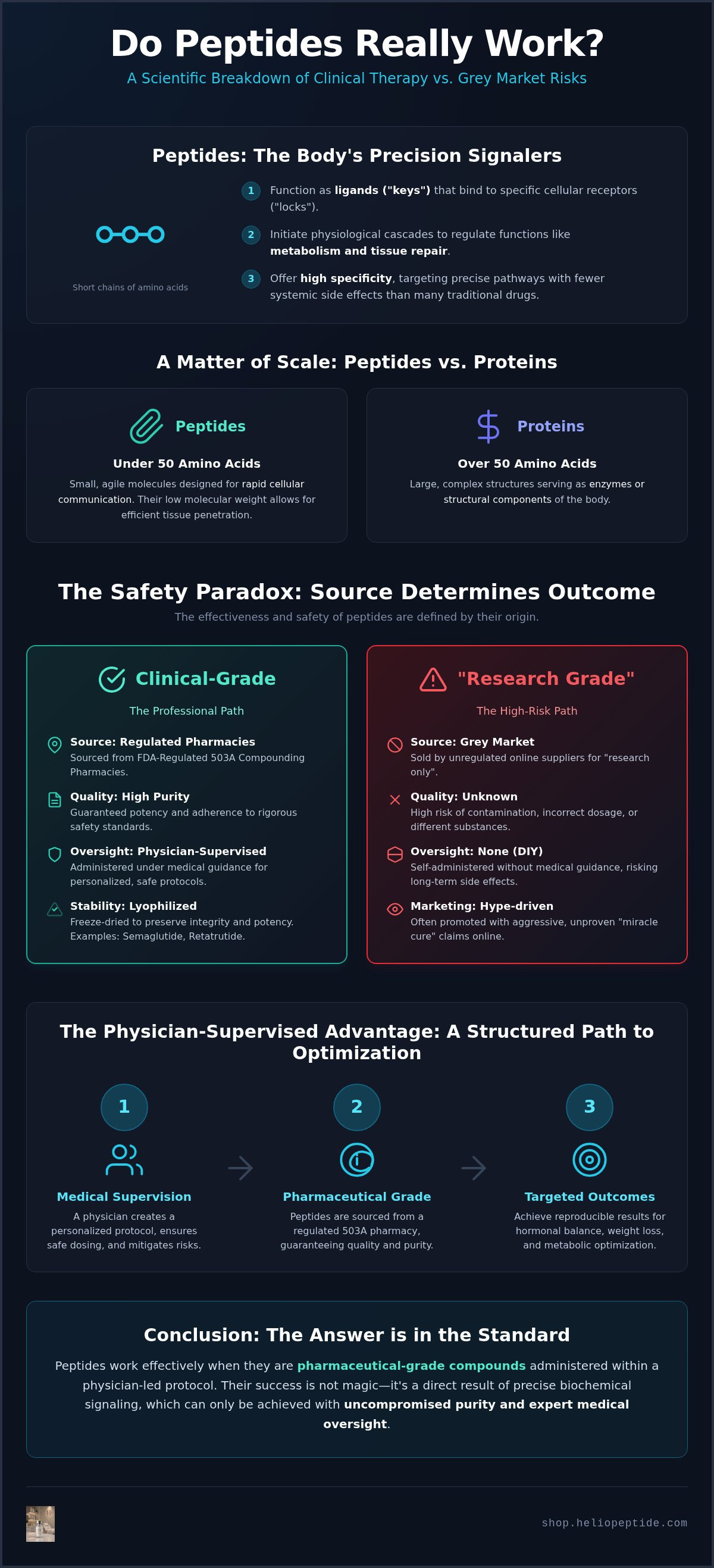
The Safety Paradox: 503A Pharmacies vs. 'Research Grade' Risks
The safety profile of any peptide is inextricably linked to its manufacturing origin. While patients frequently investigate do peptides really work, the more pertinent clinical question is whether the compound being administered is biologically identical to the intended therapeutic agent. The proliferation of online vendors selling "research chemicals" has created a significant safety paradox. These products carry "not for human consumption" labels as a legal disclaimer to bypass FDA oversight and rigorous manufacturing standards. This lack of regulation often results in batches contaminated with heavy metals, endotoxins, or residual solvents from the synthesis process. In contrast, the 503A standard for compounding pharmacies requires strict adherence to USP guidelines, ensuring each vial meets clinical-grade requirements for purity and potency.
Physician supervision is a non-negotiable component of a safe peptide protocol. Medical oversight is necessary to monitor for potential side effects such as nausea, hypoglycemia, or localized site reactions. A clinician ensures that the patient’s metabolic markers remain within a healthy range throughout the treatment duration. This professional gatekeeping distinguishes a medical treatment from a high-risk experiment, providing a framework where safety and efficacy are prioritized through regulatory compliance.
Why Sourcing Is the Most Critical Factor
Sourcing determines the ultimate clinical outcome. There is a profound difference between industrial-grade chemicals and the pharmaceutical-grade lyophilized peptides used in advanced peptide therapy. High-purity peptides are verified through a Certificate of Analysis (COA), which documents the results of High-Performance Liquid Chromatography (HPLC) and Mass Spectrometry testing. These tests confirm that the peptide sequence is correct and that purity levels exceed 99%. US-licensed manufacturers operate within a transparent supply chain that maintains these standards. This level of quality control is essential for maintaining therapeutic efficacy and minimizing the risk of adverse reactions. For those seeking a professional-grade solution, you can view clinical-grade peptide options here.
The Dangers of DIY Protocols
Self-administration without professional guidance introduces significant biological risk. Common errors in reconstitution, such as using incorrect bacteriostatic water volumes or improper storage temperatures, can degrade the peptide before it is even injected. Dosing errors are equally frequent. Many individuals operate under the misconception that "more is better," but excessive dosing can lead to receptor desensitization, where the body’s cells stop responding to the signal entirely. Baseline blood work is required to prevent hormonal imbalances and to tailor the dosing to the individual's unique physiological needs. Without this data, the question of do peptides really work becomes secondary to the immediate risks of unregulated administration.
Navigating Your Peptide Protocol: The Physician-Supervised Advantage
The transition from theoretical understanding to clinical application requires a structured framework that prioritizes patient safety and physiological precision. When evaluating do peptides really work, the outcome is heavily contingent upon the quality of the initial clinical consultation. A professional assessment involves a comprehensive review of metabolic markers and health history to identify specific deficiencies or optimization targets. This data-driven approach ensures that the resulting protocol is tailored to the individual's unique biological requirements rather than a generic, "cookie-cutter" template. Personalized dosing is fundamental; protocols that fail to account for individual receptor sensitivity or baseline hormonal levels often result in suboptimal outcomes or unnecessary side effects.
Ongoing monitoring is the hallmark of a legitimate medical program. As the body begins to respond to the peptide signals, dosages must be adjusted based on the patient's specific response and side effect profile. This iterative process is particularly vital when participating in a comprehensive online semaglutide program, where physician-led oversight ensures that metabolic optimization remains both safe and effective. This level of supervision facilitates a dynamic treatment plan that evolves alongside the patient's physiological progress.
What to Expect in a Professional Program
Patients must maintain realistic expectations regarding the timeline of results. Because peptides function through cellular signaling pathways, physical manifestations of these changes often take several weeks to become apparent. A professional program utilizes physician-led titration, which involves gradually increasing the dosage to minimize gastrointestinal side effects and allow the body to adapt to the new signaling environment. Identifying a legitimate telehealth provider is critical. Reputable services are distinguished by their requirement for comprehensive blood work, direct access to licensed clinicians, and the exclusive use of 503A pharmacies. This stands in stark contrast to "pill mills" that prioritize transaction volume over clinical rigor.
The Future of Health Optimization
Peptide therapy is currently undergoing a definitive shift from niche biohacking circles into mainstream medical wellness. This evolution reflects a broader movement toward restorative medicine, where the focus is on extending the metabolic healthspan through precise biological interventions. The final verdict on whether do peptides really work is clear: they are highly effective biological tools when they are clinical-grade, correctly dosed, and administered under strict medical supervision. As the regulatory landscape of 2026 continues to stabilize, the integration of these molecules into standard health optimization protocols will likely become the benchmark for evidence-based restorative care. Success is not found in the molecule alone, but in the medical protocol that governs its use.
Achieving Biological Precision in 2026
The evidence presented confirms that the answer to do peptides really work is found at the intersection of molecular purity and medical supervision. Success in metabolic optimization and cellular restoration is not a matter of chance; it's the result of utilizing clinical-grade signalers to engage specific biological pathways. By prioritizing compounds sourced from 503A regulated pharmacies and adhering to physician-led titration schedules, patients can bypass the contamination risks and "grey market" instability that often lead to treatment failure. This transition from unregulated experimentation to clinical protocol is the defining factor in achieving reproducible results.
True health optimization requires a departure from high-risk DIY protocols in favor of a disciplined, evidence-based approach. Integrating clinical-grade lyophilized peptides into a supervised strategy provides the necessary foundation for sustainable physical transformation and long-term metabolic health. You are invited to Begin Your Physician-Supervised Peptide Protocol at Helio Peptide to ensure your journey is defined by scientific rigor and professional-grade safety. Establishing this level of clinical oversight is the most reliable path toward realizing your peak physiological potential.
Frequently Asked Questions
Are peptides legal to use for weight loss and muscle growth?
Peptides are legal for medical use when prescribed by a licensed physician and sourced through regulated channels. While some molecules like Semaglutide are FDA-approved for chronic weight management, others are available as compounded medications through 503A pharmacies. The regulatory landscape in 2026 has clarified this through the Pharmacy Compounding Advisory Committee recommendations, which support the use of specific peptides like BPC-157 and TB-500 in clinical settings under professional oversight.
How long does it take for peptides to start working?
The timeline for physiological changes depends entirely on the specific signaling pathway being targeted. While GLP-1 agonists like Retatrutide 10mg may influence appetite and satiety within several days, significant weight loss and metabolic restoration typically require 8 to 12 weeks of consistent administration. Physical manifestations of cellular repair or body composition changes are cumulative and generally become visible after three to six months of a structured protocol.
Can I get a peptide prescription through a telehealth consultation?
Telehealth consultations are a standard and legitimate method for obtaining a peptide prescription, provided they include a rigorous clinical evaluation. A physician-led program must involve a comprehensive review of your medical history and a diagnostic analysis of blood work to assess baseline metabolic markers. This professional framework ensures that do peptides really work for your unique biology by allowing for personalized titration and remote monitoring of your systemic response.
What is the difference between peptides and steroids?
Peptides and steroids are distinct classes of molecules with different biological mechanisms. Peptides are short chains of amino acids that act as signalers to stimulate natural processes, such as the pulsatile release of endogenous growth hormone. Steroids are synthetic derivatives of hormones like testosterone that bind directly to nuclear receptors, often carrying a higher risk profile for endocrine suppression and systemic side effects compared to the targeted signaling of peptide therapy.
Are there any long-term side effects of peptide therapy?
The long-term safety of peptide therapy is maintained through strict adherence to medical protocols and continuous physician monitoring. While GLP-1 agonists have robust safety data from multi-year clinical trials, the long-term use of certain secretagogues requires oversight to prevent receptor desensitization. Establishing baseline blood work and performing regular diagnostic follow-ups allow clinicians to mitigate risks and adjust dosages before potential hormonal imbalances or adverse metabolic shifts occur.
Why are some peptides sold as 'research chemicals' only?
The "research chemical" label is a legal loophole utilized by unregulated vendors to sell substances without adhering to FDA manufacturing or safety standards. These products are explicitly not for human consumption and frequently contain heavy metals, endotoxins, or inaccurate concentrations of the active ingredient. Clinical-grade peptides must be sourced from 503A compounding pharmacies to ensure the purity and potency required for safe and effective medical administration.
Do I need to change my diet for peptides to be effective?
Dietary optimization is a critical requirement for the success of any peptide protocol. Peptides act as biological signalers that require adequate nutritional substrate, specifically high protein intake, to facilitate metabolic restoration and tissue repair. Without a supportive diet and resistance training, the question of do peptides really work is undermined by the lack of physical resources necessary for the body to respond to the peptide's instructions.
What happens if I stop taking weight loss peptides like Semaglutide?
Discontinuing a GLP-1 protocol like Semaglutide 15mg results in the gradual return of baseline appetite and gastric emptying speeds. Weight regain is a common outcome if the patient has not established sustainable lifestyle habits or if the medication is stopped abruptly without a physician-supervised maintenance plan. A structured titration-off protocol is often employed to help the body maintain metabolic equilibrium and preserve weight loss results after the active treatment phase concludes.
