
Physician Supervised Weight Loss Injections: The Clinical Standard for 2026
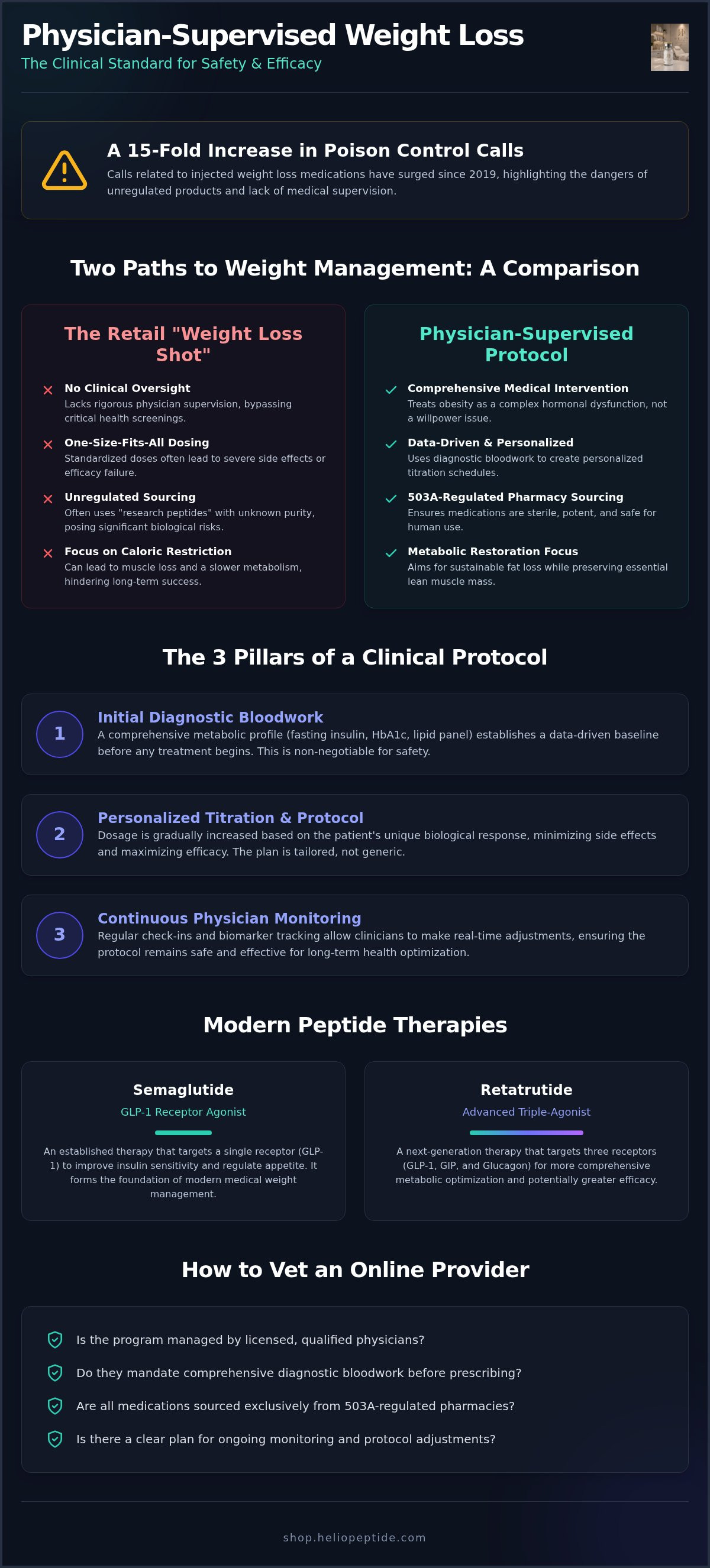
Poison control centers across the United States have documented a 15-fold increase in calls related to injected weight loss medications since 2019. This alarming surge highlights the inherent risks of self-administration and the proliferation of unregulated research peptides found in the retail market. You likely recognize that achieving sustainable metabolic health requires more than just a prescription; it demands a rigorous medical framework. Securing physician supervised weight loss injections is no longer a matter of convenience but a critical safety requirement for those seeking pharmaceutical-grade results without compromising biological integrity.
This article defines the medical protocols and safety standards that constitute the clinical standard for 2026. You will discover the specific medical protocols, safety standards, and advanced peptide therapies that define professional weight loss supervision. We examine the transition from high-volume compounding to precision-based care, ensuring that your path to physical optimization is grounded in regulatory compliance and clinical excellence. By prioritizing access to 503A-regulated medications and expert oversight, you can achieve sustainable metabolic restoration through a secure, telehealth-enabled framework.
Key Takeaways
- Understand why comprehensive metabolic intervention through physician supervised weight loss injections surpasses the limited scope and safety risks of retail weight loss shots.
- Learn the necessity of initial diagnostic bloodwork and personalized titration schedules to prevent the efficacy failures common in one-size-fits-all dosing models.
- Distinguish between the established GLP-1 receptor agonism of Semaglutide and the advanced triple-agonist metabolic optimization offered by Retatrutide.
- Identify the critical safety advantages of sourcing medications from 503A-regulated pharmacies compared to the significant biological risks associated with unregulated research peptides.
- Master the essential clinical questions required to evaluate online providers and ensure your treatment protocol is managed by a qualified medical facilitator.
The Evolution of Medical Weight Management: Beyond Retail Solutions
The evolution of medical weight management has transitioned from a focus on simple appetite suppression to a more sophisticated model of cellular metabolic restoration. While retail outlets and med-spas often market weight loss shots as a cosmetic convenience, these environments frequently lack the clinical rigors necessary to ensure long-term health. True physician supervised weight loss injections represent a comprehensive metabolic intervention. This approach treats obesity not as a failure of willpower, but as a complex hormonal dysfunction that requires precise pharmaceutical modulation and ongoing diagnostic assessment.
Retail programs often bypass the critical screening processes required to identify underlying contraindications. Without rigorous physician oversight, patients are at a higher risk for unmanaged gastrointestinal side effects, such as severe nausea or delayed gastric emptying. A clinical protocol prioritizes safety through gradual titration and frequent monitoring, allowing the body to adapt to GLP-1 receptor agonism without the metabolic shock often associated with standardized, non-supervised dosing. This professional gatekeeping ensures that medications serve as a bridge to health optimization rather than a temporary fix.
Metabolic Optimization vs. Caloric Restriction
Conventional weight loss strategies often rely on aggressive caloric deficits, which can inadvertently trigger a survival response that slows the metabolic rate. Professional peptide therapy addresses the physiological set point, the internal biological mechanism that regulates body weight. By improving insulin sensitivity and balancing satiety hormones, these treatments facilitate sustainable fat loss. Physician-led programs are specifically designed to prioritize lean muscle preservation. Maintaining muscle mass is essential because it serves as the primary engine for glucose disposal and metabolic longevity, ensuring that weight loss consists of adipose tissue rather than functional lean mass.
The Telehealth Clinical Model
The rise of digital health has redefined the delivery of specialized care, making it possible to maintain high safety standards without the need for frequent in-person clinic visits. Remote monitoring platforms allow clinicians to track patient progress and adjust protocols based on real-time feedback and reported biomarkers. When evaluating the best online semaglutide program, patients must verify that the provider utilizes 503A-regulated pharmacies and employs licensed physicians. This level of transparency is vital for ensuring that the medications received are stable, sterile, and potent. A legitimate telehealth model functions as a specialized medical facilitator, providing a structured environment where results are the direct consequence of scientific methodology and professional accountability.
The Clinical Protocol: What Real Physician Supervision Entails
A legitimate medical weight loss program is defined by its commitment to data-driven oversight rather than simple medication fulfillment. Physician supervised weight loss injections require a rigorous diagnostic foundation to ensure the patient’s biological environment is prepared for GLP-1 or triple-agonist administration. This process begins with a comprehensive metabolic profile, including fasting insulin levels, HbA1c, and a full lipid panel. These baseline metrics allow clinicians to tailor the intervention to the patient's specific metabolic resistance. Understanding these modern injectable protocols is essential for anyone transitioning from retail-grade solutions to clinical standards.
True supervision extends beyond the initial prescription. It involves the continuous monitoring of vital biomarkers and systemic inflammatory markers, such as C-reactive protein, to track the body’s response to treatment. For many patients, metabolic dysfunction is intertwined with broader endocrine imbalances. This is why the integration of physician-supervised HRT is often a critical component of a holistic restoration strategy. Addressing testosterone or estrogen deficiencies alongside weight management ensures that the body maintains the anabolic drive necessary for lean muscle preservation during fat loss.
The Consultation and Diagnostic Process
The clinical journey starts with an exhaustive review of medical history and current pharmacological intake. Physicians must identify specific contraindications, such as a history of medullary thyroid carcinoma or chronic pancreatitis, which would preclude certain therapies. Success is measured by clinical benchmarks that go beyond the scale, focusing on improved glycemic control, reduced visceral adiposity, and enhanced energy levels. Professional guidance helps patients understand these nuances before they begin a supervised peptide program.
Titration and Side Effect Management
Personalized titration is the cornerstone of clinical safety. One-size-fits-all dosing models often fail because they don't account for individual receptor sensitivity. A physician-led protocol utilizes incremental dose increases to allow the gastrointestinal system to adapt, minimizing the risk of nausea or dyspepsia. This decision-making framework is dynamic; if a patient experiences plateauing results or adverse reactions, the supervising clinician has the authority to adjust or pause treatment immediately. This level of precision is only possible through a dedicated medical facilitator who prioritizes long-term physiological stability over rapid, unsustainable weight loss.
Comparative Analysis of Modern Injectable Protocols
Selecting the appropriate pharmacological agent is a critical decision in the administration of physician supervised weight loss injections. The clinical landscape has moved beyond generic solutions, focusing instead on matching specific peptide mechanisms to a patient's degree of metabolic resistance. This precision ensures that the intervention addresses the root physiological barriers to fat loss, whether they stem from insulin dysregulation or a suppressed basal metabolic rate. Understanding the technical specifications of these molecules is paramount for maintaining the clinical standard in 2026.
A primary differentiator in professional-grade therapy is the stability of the medication itself. While retail programs often rely on pre-mixed liquid solutions, clinical protocols prioritize lyophilized formats to ensure molecular integrity. This focus on pharmaceutical-grade sourcing prevents the efficacy loss associated with temperature sensitivity and storage duration, providing a more predictable outcome for the patient's metabolic restoration.
Semaglutide 15mg: The Foundation of GLP-1 Therapy
Semaglutide remains the benchmark for GLP-1 receptor agonism, primarily functioning by slowing gastric emptying and enhancing glucose-dependent insulin secretion. This dual action significantly reduces post-prandial glucose spikes and suppresses appetite through central nervous system signaling. The use of Semaglutide 15mg Lyophilized represents a significant advancement in pharmaceutical stability. Unlike standard liquid formulations that are susceptible to rapid degradation, the lyophilization process—or freeze-drying—removes moisture to preserve the peptide's molecular structure. This ensures that the medication remains potent and sterile from the moment of reconstitution until the final dose, providing a reliable foundation for long-term metabolic correction.
Retatrutide 10mg: The Triple-Agonist Advantage
For patients with advanced metabolic resistance, the evolution of peptide therapy has introduced the triple-agonist approach. While traditional GLP-1s focus on satiety, Retatrutide 10mg targets three distinct pathways: GLP-1, GIP (glucose-dependent insulinotropic polypeptide), and glucagon receptors. The addition of glucagon agonism is particularly significant as it directly stimulates energy expenditure and promotes hepatic fat oxidation. This 'triple-threat' mechanism doesn't just suppress appetite; it actively increases the body's thermogenic capacity. Utilizing such advanced protocols requires expert oversight to monitor heart rate and metabolic rate, ensuring that the accelerated fat loss occurs within a safe clinical framework. Matching the right agonist to the patient’s biological profile is the hallmark of a disciplined clinical facilitator.
Sourcing and Safety: The 503A Pharmacy Standard
The integrity of physician supervised weight loss injections depends entirely on the regulatory environment of the manufacturing facility. In the current clinical landscape, a clear distinction exists between traditional 503A compounding pharmacies and 503B outsourcing facilities. While 503B facilities produce large batches for hospital use, 503A pharmacies are regulated by state boards to provide patient-specific medications. This individualized approach is the clinical standard for 2026. It ensures that every vial is prepared according to a precise medical directive, maintaining a direct chain of accountability between the physician, the pharmacist, and the patient.
Security in peptide therapy also requires a complete rejection of "Research Only" sourcing. These unregulated products, often found on gray-market websites, lack the necessary oversight for human administration. They frequently bypass sterility testing and purity verification, posing significant risks of heavy metal contamination or incorrect peptide sequences. Professional clinical facilitators rely on Third-Party Certificates of Analysis (COAs) to verify that a substance meets the 99% purity threshold. This rigorous verification process is the only way to guarantee that the metabolic intervention is both safe and effective.
Regulatory Compliance in Peptide Therapy
503A pharmacies operate under strict state board of pharmacy regulations, which require a valid, patient-specific prescription for every order. This mandate prevents the mass production of generic formulas and ensures that the medication is tailored to the diagnostic needs identified during the physician's assessment. When selecting a provider, it's essential to verify they utilize US-licensed manufacturers that adhere to current Good Manufacturing Practices (cGMP). This level of compliance ensures that the environment where your medication is handled meets the highest standards of pharmaceutical hygiene and precision.
Lyophilized vs. Liquid Stability
Stability is a primary concern in the administration of GLP-1 and triple-agonist peptides. Peptides are essentially chains of amino acids that are highly susceptible to degradation when suspended in liquid for extended periods. This biochemical breakdown, often caused by temperature fluctuations or light exposure, results in a loss of potency and the potential formation of impurities. Lyophilization, or freeze-drying, is the preferred method for maintaining molecular integrity. By removing moisture in a vacuum environment, the peptide enters a state of suspended animation, ensuring it remains stable during transit and storage. Once you access 503A-regulated clinical solutions, you must follow strict reconstitution protocols using bacteriostatic water to maintain this efficacy. This process guarantees that the final injection delivers the exact therapeutic dose required for metabolic restoration.
Initiating Your Clinical Weight Loss Journey
Transitioning from a retail-centric mindset to a professional medical framework is the final step in achieving sustainable metabolic health. Identifying the best online semaglutide program requires a critical evaluation of a provider’s clinical infrastructure. You shouldn't settle for simple medication fulfillment. Instead, seek a platform that prioritizes diagnostic accuracy and pharmaceutical integrity. Physician supervised weight loss injections function most effectively when they're part of a broader, data-driven strategy that adapts to your evolving biological needs.
Before beginning any protocol, you must engage in a rigorous dialogue with your supervising clinician. Essential questions should focus on the logic behind titration schedules, the management of potential gastrointestinal side effects, and the availability of Third-Party Certificates of Analysis. As you progress, the focus often shifts from acute fat loss to long-term metabolic maintenance. Integrating advanced peptide therapy into your wellness strategy can help stabilize your physiological set point, preventing the metabolic rebound often associated with unsupervised weight loss attempts.
The Helio Peptide Clinical Advantage
Helio Peptide functions as a specialized medical facilitator, providing a bridge between advanced pharmaceutical science and patient health optimization. Patients gain access to over 70 clinical-grade products and personalized programs designed by experts in metabolic health. Every protocol is supported by direct physician oversight and ongoing telehealth assistance, ensuring that safety standards are never compromised for convenience. By adhering strictly to 503A pharmacy standards and utilizing lyophilized medications, the platform guarantees that every dose meets the highest benchmarks for purity and molecular stability.
Next Steps for Metabolic Optimization
The path to physical optimization is methodical and begins with a commitment to clinical protocol. Your journey follows a structured progression:
- Clinical Consultation: Schedule an initial assessment to review your medical history and define your health objectives.
- Metabolic Profiling: Complete a comprehensive bloodwork panel to establish baseline biomarkers for insulin, glucose, and hormonal balance.
- Protocol Finalization: Work with your physician to select the appropriate agonist and titration schedule based on your specific diagnostic data.
This disciplined approach ensures that results aren't merely temporary, but the inevitable consequence of a scientifically sound methodology. By securing professional guidance and clinical-grade sourcing, you're investing in a future defined by peak metabolic performance and long-term biological resilience.
Establishing a Foundation for Metabolic Resilience
The landscape of medical weight management in 2026 demands a shift from retail convenience to clinical rigor. Achieving peak physical optimization is the direct result of a disciplined adherence to 503A pharmacy standards and the use of lyophilized peptides to ensure molecular stability. By prioritizing physician supervised weight loss injections over unregulated research alternatives, you ensure that your metabolic restoration is both safe and sustainable. True success is defined by professional oversight that monitors systemic biomarkers and adapts to your unique physiological requirements.
Helio Peptide provides the specialized medical facilitation necessary to navigate this complex environment. Our programs are built on physician-led clinical protocols and the distribution of clinical-grade lyophilized peptides sourced exclusively from regulated pharmacies. The transition from retail-grade options to professional medical standards is a critical step in health optimization. Begin Your Physician-Supervised Weight Loss Consultation at Helio Peptide to secure your access to pharmaceutical-grade solutions. Your path to long-term biological resilience is a direct consequence of scientific precision and professional clinical guidance.
Frequently Asked Questions
What exactly does 'physician-supervised' mean for weight loss injections?
Physician supervision indicates that a licensed medical professional manages every aspect of the pharmacological intervention. This process includes the analysis of diagnostic bloodwork, a comprehensive review of medical history, and the implementation of personalized titration schedules. It ensures that the treatment protocol is adjusted based on your specific biological response rather than a generic, one-size-fits-all dosing model found in retail environments.
Why should I choose compounded semaglutide from a 503A pharmacy over other sources?
503A pharmacies are strictly regulated by state boards to produce patient-specific medications under rigorous quality standards. Unlike "research" sites that sell unregulated peptides, a 503A pharmacy must verify the sterility and potency of every batch. This regulatory oversight protects you from the contaminants and inconsistent purity levels often associated with gray-market sourcing, ensuring the medication meets clinical-grade requirements.
How do I know if I am a candidate for Retatrutide vs. Semaglutide?
A supervising physician determines candidacy by evaluating your degree of metabolic resistance and previous weight loss history. Semaglutide is the established standard for GLP-1 receptor agonism and is effective for most patients. Retatrutide is a triple-agonist that targets GLP-1, GIP, and glucagon receptors. It's often reserved for advanced cases where additional stimulation of energy expenditure is necessary to overcome significant metabolic plateaus.
Can I really get a GLP-1 prescription through a telehealth consultation?
Yes, modern digital health platforms provide secure and efficient access to physician supervised weight loss injections without the need for in-person clinic visits. The process requires a comprehensive medical assessment and the submission of recent metabolic bloodwork. Once a physician verifies your eligibility and reviews your diagnostic markers, a patient-specific prescription is issued and fulfilled by a regulated 503A pharmacy.
What are the most common side effects and how does a doctor help manage them?
Gastrointestinal symptoms, including nausea, dyspepsia, or delayed gastric emptying, are the most frequently reported side effects. A supervising physician mitigates these risks through a controlled titration process, which involves slow, incremental dose increases to allow your body to adapt. If adverse reactions occur, the clinician provides immediate guidance on dose adjustment or supportive care to ensure the protocol remains safe and tolerable.
Is lyophilized semaglutide more effective than the liquid versions found in some clinics?
Lyophilized peptides offer superior molecular stability compared to pre-mixed liquid formulations. The freeze-drying process removes moisture, preventing the rapid degradation that occurs when peptides are suspended in liquid for extended periods. This ensures that the medication remains potent and sterile during transit and storage. You reconstitute the peptide immediately before use, guaranteeing that every injection delivers the full therapeutic dose intended by your physician.
How long does a typical physician-supervised weight loss program last?
The duration of a clinical program depends on your specific metabolic goals and the rate of physiological restoration. Most protocols consist of an active weight loss phase followed by a structured maintenance period. This transition is vital for stabilizing your body’s internal weight set point. A physician-led approach focuses on long-term metabolic health rather than a temporary fix, ensuring that the results are sustainable over several months or years.
Will my insurance cover physician-supervised peptide therapy?
Insurance coverage for compounded peptide therapy is often limited and frequently requires specific prior authorizations. While some plans may cover branded GLP-1 medications, compounded versions from 503A pharmacies are typically an out-of-pocket investment in your metabolic health. It's advisable to consult your insurance carrier regarding benefits for obesity management, though many patients find the clinical outcomes of supervised programs justify the direct cost of care.
