
Peptides for Anti-Aging: A Clinical Protocol for Longevity and Cellular Repair (2026)
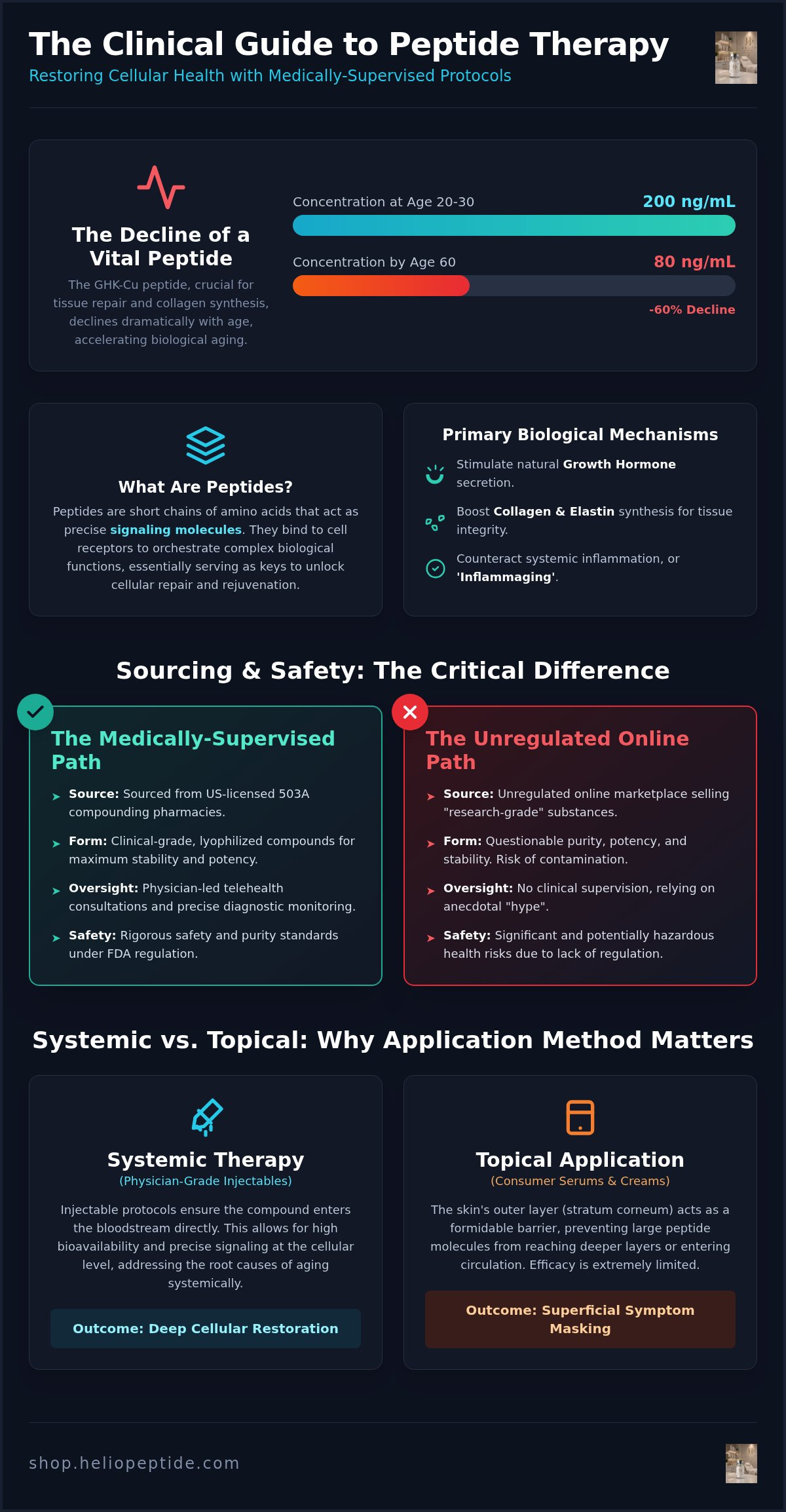
By the age of 60, the systemic concentration of GHK-Cu, a vital peptide-copper complex responsible for tissue repair and collagen synthesis, typically declines from 200 ng/mL to just 80 ng/mL. This physiological depletion represents a fundamental driver of biological aging that conventional medicine frequently overlooks. Many high-performance individuals feel a growing frustration with traditional healthcare models that fail to address these cellular deficits, leaving patients to seek solutions in an unregulated and often hazardous online marketplace. Understanding the clinical application of peptides for anti-aging is now essential for those committed to evidence-based longevity and physical optimization.
You deserve a strategy rooted in medical precision rather than anecdotal hype. This protocol outlines how physician-supervised therapy using lyophilized compounds sourced from US-licensed 503A pharmacies can effectively bridge the gap between chronological age and biological healthspan. We'll analyze the 2026 FDA regulatory shifts regarding biologics, the specific metabolic pathways of advanced peptides like Semaglutide and Retatrutide, and the rigorous safety standards required to ensure therapeutic purity and systemic restoration.
Key Takeaways
- Understand the role of peptides as essential signaling molecules that facilitate cellular repair and counteract the systemic inflammation associated with biological aging.
- Identify the therapeutic synergy between Growth Hormone Releasing Hormones and GLP-1 agonists like Semaglutide to optimize metabolic efficiency and hormonal balance.
- Learn why clinical oversight is mandatory when utilizing peptides for anti-aging to mitigate the significant risks associated with unregulated, "research-grade" online substances.
- Differentiate between standard retail supplements and clinical-grade lyophilized compounds produced within the rigorous safety standards of FDA-regulated 503A compounding pharmacies.
- Discover the process for establishing a personalized longevity protocol through physician-led telehealth consultations and precise diagnostic monitoring.
Understanding Peptides for Anti-Aging and Cellular Rejuvenation
Peptides are short-chain amino acids that function as primary signaling molecules within the human body. These precise sequences of amino acids orchestrate complex biological responses by binding to specific cell-surface receptors, effectively acting as molecular keys to unlock cellular repair mechanisms. It's a process of precise biological communication that maintains systemic homeostasis. As biological aging progresses, the endogenous production of these molecules diminishes significantly, leading to a breakdown in cellular communication and a subsequent increase in systemic inflammation, often referred to as inflammaging. Advanced clinical protocols utilizing peptides for anti-aging aim to restore these vital signals, thereby optimizing physiological functions and promoting systemic cellular repair.
The distinction between retail grade products and clinical interventions is critical for patient safety and therapeutic efficacy. While the wellness industry often promotes various over the counter solutions, these lack the potency and regulatory oversight of physician-grade protocols. True cellular rejuvenation requires a sophisticated understanding of how exogenous peptides interact with existing metabolic pathways to reverse the markers of biological decline.
Biological Mechanisms of Peptide Therapy
At a molecular level, peptide therapy influences gene expression and modulates pathways associated with cellular senescence. This process addresses cells that have stopped dividing but continue to release pro-inflammatory cytokines. By providing exogenous signals, clinicians can bypass the limitations of an aging endocrine system to restore youthful biological rhythms. Growth hormone secretagogues (GHSs) represent a critical class of these compounds, designed to stimulate the natural secretion of growth hormones from the pituitary gland rather than replacing them with synthetic alternatives. This method preserves the natural pulsatile release of hormones, which is essential for maintaining metabolic balance.
Specific tripeptide injections are frequently utilized to target the extracellular matrix, directly stimulating the synthesis of collagen and elastin to improve structural integrity and dermal thickness. These interventions don't just mask the signs of aging; they fundamentally alter the rate of tissue degradation. Cellular rejuvenation through peptide signaling is achieved by restoring mitochondrial efficiency and enhancing the autophagic processes required for the removal of damaged proteins.
Systemic Therapy vs Topical Applications
The consumer market is saturated with cosmetic peptide serums, yet these topical applications face insurmountable bioavailability challenges. The stratum corneum acts as a formidable barrier, preventing larger peptide molecules from reaching the deeper dermal layers or entering systemic circulation. In contrast, physician-grade injectable protocols ensure that the therapeutic compound enters the bloodstream with high precision, allowing for targeted metabolic signaling at the cellular level. This systemic approach is necessary to address the root causes of biological decline rather than merely treating superficial symptoms.
By utilizing advanced peptide therapy, patients establish a biological foundation for longevity that topical treatments simply can't replicate. These protocols rely on lyophilized compounds that maintain stability and potency, ensuring that the intended physiological response is achieved without the degradation common in retail formulations. Addressing systemic inflammation through internal metabolic signaling remains the only viable method for optimizing healthspan and achieving long term cellular restoration.
Primary Peptides for Longevity: GHRHs and GHRPs
Growth Hormone Releasing Hormones (GHRH) and Growth Hormone Releasing Peptides (GHRP) represent the foundational elements of clinical longevity protocols. As the human body enters somatopause, the natural pulsatile secretion of growth hormone (GH) from the pituitary gland declines by approximately 14% per decade after the age of 30. This hormonal recession is a primary driver of biological aging, contributing to reduced bone density, loss of skeletal muscle, and impaired cellular repair. Utilizing peptides for anti-aging through secretagogue therapy allows clinicians to restore these youthful GH pulses without the physiological risks associated with exogenous human growth hormone (HGH).
The therapeutic synergy between GHRHs and GHRPs is central to metabolic optimization. GHRHs provide the primary signal for GH production, while GHRPs act as catalysts by inhibiting somatostatin, the hormone responsible for suppressing GH release. This dual-action approach ensures a more robust and natural hormonal response. Patients committed to a disciplined protocol often experience enhanced fat oxidation and a significant improvement in systemic recovery. For those seeking to begin a supervised regimen, exploring clinical-grade peptide formulations is a necessary step toward achieving these outcomes.
Sermorelin and Ipamorelin: The Gold Standard for Repair
Sermorelin and Ipamorelin are frequently utilized in combination due to their high selectivity and safety profiles. Sermorelin, a GHRH analogue, stimulates the pituitary to increase endogenous GH production, while Ipamorelin, a highly selective GHRP, triggers a GH pulse without the undesirable side effects of increased hunger or cortisol elevation. This precision is essential for long term anti-aging protocols. Patients typically report significant improvements in deep sleep architecture, skin elasticity, and cognitive clarity. Clinical oversight is paramount in this area, as the FDA regulation of anti-aging products distinguishes these potent, physician-prescribed drugs from superficial cosmetic treatments that lack systemic efficacy.
Optimizing Body Composition as an Anti-Aging Strategy
The link between sarcopenia, or age-related muscle loss, and accelerated biological aging is well documented in clinical literature. Skeletal muscle is not merely a tissue for locomotion; it functions as a critical endocrine organ that regulates glucose metabolism and systemic inflammation. Maintaining lean muscle mass through optimized protein synthesis and peptide signaling reduces all-cause mortality markers by enhancing insulin sensitivity and mitigating the pro-inflammatory cytokines released from adipose tissue. Integrating peptide therapy for weight loss into a longevity program ensures that metabolic health is preserved while visceral fat, a major driver of cellular aging, is targeted for reduction.
The Role of GLP-1 and HRT in Systemic Anti-Aging
Systemic longevity is inextricably linked to metabolic efficiency and hormonal stability. While previous sections detailed the regenerative potential of growth hormone secretagogues, the integration of GLP-1 agonists and hormone replacement therapy (HRT) provides the metabolic infrastructure required for sustained cellular repair. Peptides for anti-aging, specifically GLP-1 analogues like Semaglutide and Retatrutide, function as potent metabolic regulators that extend beyond simple weight management. By optimizing glucose disposal and enhancing insulin sensitivity, these compounds mitigate the systemic oxidative stress that accelerates biological decline. This metabolic stabilization is a prerequisite for any effective longevity protocol.
Retatrutide represents a significant evolution in this field, acting as a triple-agonist that targets GLP-1, GIP, and glucagon receptors simultaneously. This multi-pathway activation facilitates a more comprehensive approach to healthspan optimization than single-agonist predecessors. When these metabolic interventions are combined with physician-supervised HRT, the resulting synergy addresses the root causes of age-related physiological degradation. It's a dual-pronged strategy that restores both the signaling molecules and the hormonal environment they operate within.
Metabolic Health as the Foundation of Longevity
Addressing insulin resistance is a primary objective for slowing the biological clock. Chronic hyperinsulinemia and glucose variability are known to catalyze cellular senescence and impair mitochondrial function. The clinical application of retatrutide 10mg offers a sophisticated mechanism for cardiac and metabolic protection by reducing intra-organ fat and lowering pro-inflammatory markers. In the clinical landscape of 2026, metabolic optimization isn't merely a weight loss strategy; it's a foundational anti-aging intervention that preserves vascular integrity and cognitive function. Maintaining stable blood glucose levels effectively reduces the formation of advanced glycation end-products (AGEs), which are known to damage long-lived proteins like collagen and elastin.
Hormonal Restoration and Vitality
The decline of sex hormones, including testosterone and estrogen, often triggers a "midlife crash" characterized by cognitive fog, sarcopenia, and diminished cellular repair capacity. Hormonal balance is essential for the effective signaling of peptides for anti-aging, as these systems are deeply interdependent. For instance, adequate testosterone levels are necessary to support the protein synthesis initiated by growth hormone secretagogues. Synergizing HRT with advanced peptide therapy allows for a more aggressive restoration of physical and mental performance. Clinical hormonal support ensures that the body's internal environment remains receptive to the regenerative signals provided by peptide protocols, effectively bridging the gap between chronological age and peak physiological vitality.
Sourcing and Safety: Why Physician Supervision is Mandatory
The proliferation of online marketplaces offering "research grade" substances has created a significant public health risk within the longevity community. These products are frequently marketed with disclaimers stating they are "not for human consumption" to bypass the stringent regulatory requirements governing pharmaceutical manufacturing. This legal loophole allows for the sale of compounds that may contain heavy metals, structural impurities, or incorrect amino acid sequences. For individuals utilizing peptides for anti-aging, the absence of sterility and potency verification can lead to systemic infections or unpredictable biological responses. Clinical safety is only achievable through a regulated supply chain involving licensed medical professionals and certified pharmaceutical facilities.
Maximum stability and clinical efficacy are maintained through the use of lyophilized (freeze-dried) peptides. This specialized manufacturing process involves removing moisture from the compound under a vacuum at extremely low temperatures, which preserves the delicate molecular structure of the peptide chains. Lyophilization prevents the rapid degradation that occurs in pre-mixed liquid solutions, ensuring that the medication remains biologically active until the moment of reconstitution. To ensure the safety and efficacy of your longevity protocol, you should only access physician-grade peptide therapy through regulated clinical channels.
The 503A Pharmacy Advantage
Sourcing exclusively from US-licensed 503A compounding pharmacies ensures that medications are produced under the direct supervision of pharmacists and in accordance with FDA-regulated manufacturing standards. These facilities must adhere to rigorous USP protocols for sterile compounding, which include environmental monitoring and strict garment requirements. Each batch undergoes third-party analytical testing to verify that the purity and potency match the labeled specifications exactly. There is a profound difference between retail-grade supplements, which lack standardized active ingredient concentrations, and clinical-grade pharmaceutical peptides manufactured for patient-specific use. This level of oversight guarantees that the compound is free from endotoxins and other contaminants that could trigger adverse immune responses.
Clinical Monitoring and Side Effect Management
Physician-led protocols begin with comprehensive baseline blood work to assess existing hormonal levels, metabolic markers, and organ function. This diagnostic data is essential for determining the appropriate starting dose and establishing a safe titration schedule. Adjusting dosages based on individual physiological response allows for the optimization of therapeutic benefits while minimizing potential side effects. The self-administration of potent signaling molecules without professional medical guidance carries the risk of inducing profound hormonal imbalances or metabolic dysregulation. Regular follow-up lab work ensures that the protocol remains aligned with the patient's evolving biological needs and safety profile.
Implementing a Clinical Peptide Protocol for Health Optimization
Utilizing professional-grade peptides for anti-aging requires a transition from fragmented self-care to a structured medical protocol. Implementing a clinical regimen is the final stage in moving from theoretical knowledge to physiological optimization. The process at Helio Peptide is designed to be methodical and transparent. It begins with a comprehensive telehealth consultation where certified physicians evaluate your medical history and specific health objectives. This isn't a retail transaction; it's a specialized medical facilitation. Once the diagnostic phase is complete, a tailored protocol is established, and medications are fulfilled by US-licensed 503A pharmacies. This professional workflow ensures that every patient receives clinical-grade lyophilized compounds delivered directly to their doorstep.
Your Personalized Wellness Roadmap
Effective longevity strategies require a granular understanding of an individual's unique biological environment. The initial assessment focuses on identifying specific metabolic and hormonal deficiencies that contribute to accelerated aging. By analyzing these biomarkers, physicians can customize a peptide stack that addresses your primary goals. A well-structured regimen often combines different classes of peptides for anti-aging to create a multi-modal approach to rejuvenation. Results require this level of precision.
- Metabolic Optimization: Integrating GLP-1 agonists to restore insulin sensitivity and reduce systemic oxidative stress.
- Hormonal Balance: Utilizing HRT to counteract the "midlife crash" and support cellular repair mechanisms.
- Growth Hormone Support: Implementing GHRHs and GHRPs to enhance systemic recovery and preserve lean muscle mass.
Continuous physician support is essential for maintaining peak performance over the long term. Regular follow-up consultations and diagnostic monitoring allow for the precise titration of dosages as the body's internal environment shifts. This iterative process ensures the protocol remains aligned with your evolving physiological response. Precision dosing prevents the plateau effect often seen in unmanaged programs.
Sourcing Clinical-Grade Solutions
The Helio Peptide platform provides secure access to over 70 clinical-grade products, including Semaglutide and Retatrutide. Each compound is sourced from US-licensed manufacturers that adhere to the highest regulatory standards for purity and sterility. By operating within a strictly regulated environment, the platform acts as a gatekeeper against the significant risks of unregulated online vendors. Results are a direct consequence of scientific methodology and professional oversight. Taking the first step toward cellular restoration requires a commitment to a disciplined, physician-led regimen. Systemic vitality is not a matter of chance; it's the result of rigorous adherence to established clinical standards.
Optimize your healthspan with a physician-supervised peptide program.
Achieving Peak Biological Potential Through Clinical Precision
The transition from standard wellness to advanced longevity requires a commitment to scientific rigor and medical oversight. As established throughout this protocol, the effective application of peptides for anti-aging depends on the precise integration of metabolic optimization and hormonal restoration. Relying on clinical-grade lyophilized peptides sourced from FDA-regulated 503A pharmacies ensures that the therapeutic compounds maintain the structural integrity and potency required for systemic cellular repair. This approach moves beyond the limitations of retail grade products, offering a verified path toward physical and cognitive optimization.
By prioritizing physician-led consultations and diagnostic monitoring, patients can safely navigate the complexities of peptide therapy while mitigating the risks of unregulated online sourcing. Every component of this clinical framework, from Growth Hormone secretagogues to triple-agonist metabolic regulators, serves as a catalyst for sustained biological vitality. You now have the foundational knowledge to replace anecdotal solutions with a professional, evidence-based strategy for healthspan extension.
Start your physician-supervised anti-aging protocol today at Helio Peptide
Your commitment to a disciplined, science-first approach is the most effective investment in your future health and longevity.
Frequently Asked Questions
Are peptides for anti-aging safe for long-term use?
Peptide therapy is considered safe for extended durations when conducted under the supervision of a licensed clinician who monitors systemic biomarkers. Because many peptides for anti-aging mimic endogenous signaling molecules, they work with the body's natural pathways rather than overriding them. Safety depends entirely on the purity of the compound and the precision of the dosing protocol. Continuous monitoring ensures that the therapy remains within therapeutic ranges to avoid receptor desensitization.
How long does it take to see results from anti-aging peptide therapy?
Therapeutic timelines vary based on the specific peptide and the physiological objective. Improved sleep quality and accelerated recovery from physical exertion are often observed within the first two to four weeks of a protocol. More substantial changes, such as increased lean muscle mass, reduced visceral fat, and enhanced dermal thickness, typically require three to six months of consistent administration. These systemic repairs occur at a cellular level and demand physiological patience.
Can I get a peptide prescription online through a telehealth consultation?
Legitimate peptide prescriptions are available through specialized telehealth platforms that connect patients with certified physicians. This process involves a comprehensive medical review and diagnostic assessment to ensure that the therapy is clinically indicated. Once a physician approves the treatment plan, the prescription is fulfilled by a regulated pharmacy. This model provides a secure and efficient pathway to access advanced peptide therapy without the risks associated with unregulated vendors.
What is the difference between 503A and 503B pharmacies for peptides?
503A pharmacies are traditional compounding facilities that fulfill patient-specific prescriptions and are regulated primarily by state boards of pharmacy. In contrast, 503B facilities are designated as outsourcing facilities that can manufacture large batches of medication for office use and are subject to more direct FDA oversight and Current Good Manufacturing Practice (CGMP) standards. Both play critical roles in the supply chain; however, 503A pharmacies are the standard for personalized longevity protocols.
Do I need to do blood work before starting peptides for anti-aging?
Baseline blood work is a mandatory component of any professional longevity protocol. Diagnostic testing allows the physician to identify existing hormonal deficiencies, assess metabolic health, and establish a safe starting point for titration. Without this data, dosing becomes speculative and carries an increased risk of adverse effects. Regular follow-up labs are also required to monitor the body's response and ensure that the protocol continues to optimize systemic health safely.
What happens if I stop taking anti-aging peptides?
Discontinuing peptide therapy typically results in a gradual return to the patient's physiological baseline. Because secretagogues like Sermorelin stimulate the body's natural production, there is no sudden hormonal crash often associated with direct hormone replacement. However, the cellular repair benefits and metabolic optimizations achieved during the protocol will slowly diminish as endogenous production levels return to their previous age-related state. Sustained results require long-term healthspan management.
Can peptides for anti-aging help with skin elasticity and wrinkles?
Systemic peptide therapy effectively improves skin elasticity and reduces the appearance of wrinkles by stimulating the synthesis of collagen and elastin. While topical treatments offer superficial benefits, injectable peptides for anti-aging trigger deeper regenerative processes within the dermal matrix. Compounds that increase growth hormone levels or target copper-dependent repair pathways enhance skin thickness and structural integrity. This results in a more resilient and youthful skin profile from the inside out.
Is a physician-supervised program better than buying peptides online?
Physician-supervised programs are the only way to ensure the purity, potency, and sterility of the compounds being administered. Peptides purchased from unregulated online sources often lack third-party testing and may contain harmful contaminants or incorrect dosages. A clinical program provides the necessary oversight to manage side effects, adjust protocols based on lab results, and ensure that the therapy is both effective and safe. Professional guidance is the only path to reliable optimization.
