
Peptide Therapy for Female Hormonal Balance: A 2026 Clinical Overview
Exogenous hormone replacement often fails to address the underlying cellular signaling deficiencies that drive metabolic dysfunction in the female body. You likely recognize the frustration of persistent fatigue, cognitive fog, and recalcitrant weight gain that characterizes the perimenopausal transition. It's a common experience to find that conventional interventions no longer yield the systemic vitality they once promised. This clinical overview explores how peptide therapy for female hormonal balance serves as a sophisticated signaling adjunct to restore endocrine homeostasis and optimize cellular health. By utilizing physician-supervised protocols, women can move beyond simple symptom management toward true physiological restoration. This article details the 2026 therapeutic landscape, including the critical role of lyophilized peptides sourced from regulated 503A pharmacies. We will examine how these precise amino acid sequences improve body composition and stabilize endocrine function. You'll discover a methodology that prioritizes pharmaceutical stability and clinical oversight to ensure safety and efficacy in your health optimization journey.
Key Takeaways
- Learn how peptides function as primary signaling ligands to modulate the hypothalamic-pituitary-gonadal (HPG) axis for systemic endocrine restoration.
- Understand the clinical roles of CJC-1295, Ipamorelin, and Kisspeptin when implementing peptide therapy for female hormonal balance to optimize metabolic and reproductive health.
- Explore the physiological synergy between peptide protocols and traditional HRT, including how cellular priming can overcome receptor fatigue and improve treatment outcomes.
- Recognize the necessity of sourcing lyophilized medications from FDA-regulated 503A pharmacies to ensure pharmaceutical stability and patient safety.
- Outline the professional requirements for initiating therapy, emphasizing the importance of comprehensive diagnostic testing and physician-supervised telehealth oversight.
Understanding the Mechanism: How Peptides Influence Female Endocrine Systems
Peptides are short chains of amino acids that serve as primary signaling ligands within the human body, facilitating precise communication between cellular receptors and metabolic pathways. Unlike larger proteins, these sequences are small enough to trigger specific biological responses without the systemic burden often associated with complex molecules. For those seeking a foundational definition, understanding what are peptide therapeutics? involves recognizing their role as biological messengers that direct physiological processes toward homeostasis. In the context of peptide therapy for female hormonal balance, these molecules act as targeted instructions that encourage the body to self-regulate its endocrine output. These sequences are precise. They offer a level of pharmaceutical specificity that allows for the modulation of complex pathways with minimal off-target effects.
The Hypothalamic-Pituitary-Gonadal (HPG) Axis
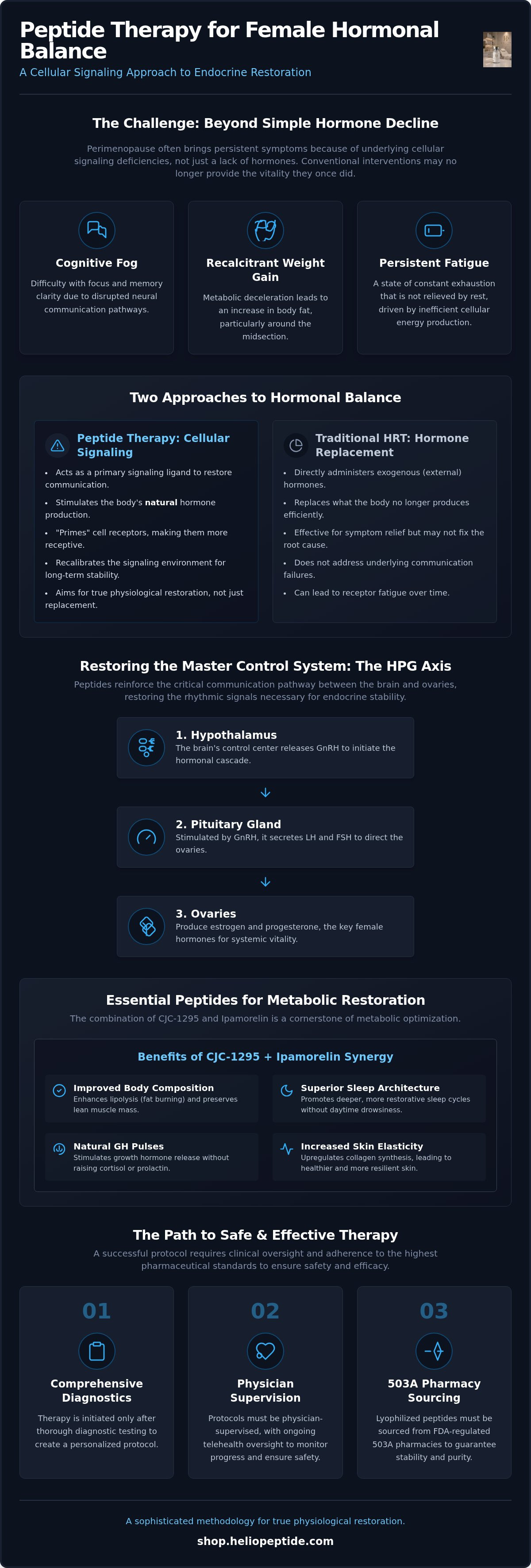
The HPG axis is the primary regulatory pathway through which the brain coordinates ovarian function to maintain systemic female vitality. This complex feedback loop begins in the hypothalamus, which releases gonadotropin-releasing hormone (GnRH) to stimulate the pituitary gland. The pituitary then secretes luteinizing hormone (LH) and follicle-stimulating hormone (FSH) to direct the production of estrogen and progesterone within the ovaries. As women age, particularly during the perimenopausal transition, the fidelity of these signals often attenuates. This decline in signaling efficiency leads to the common symptoms of hormonal imbalance, including cognitive fog and metabolic deceleration. Clinical peptide protocols work by reinforcing these signals. They bypass the noise of a degraded system. By mimicking natural signaling ligands, peptides can restore the rhythmic communication necessary for endocrine stability.
Cellular Signaling vs. Hormone Replacement
Traditional hormone replacement therapy (HRT) focuses on the direct administration of exogenous hormones to replace what the body no longer produces. While effective for symptom relief, this method does not necessarily address the underlying communication failures at the cellular level. Peptide therapy for female hormonal balance offers a more nuanced alternative by mimicking endogenous ligands to stimulate the body's natural production mechanisms. By restoring cellular communication, peptides can "prime" receptors, making them more receptive to both natural and supplemental hormones. This approach is particularly beneficial for metabolic health; for example, peptides targeting the growth hormone axis can enhance lipid metabolism and preserve lean muscle mass. The objective is not merely to supplement a deficiency but to recalibrate the signaling environment for long-term endocrine stability. This methodology ensures that results are a direct consequence of improved biological function.
Essential Peptides for Hormonal Optimization and Cellular Repair
Specific amino acid sequences provide a targeted methodology for addressing the biological shifts that occur during perimenopause and menopause. While traditional interventions often prioritize broad hormone replacement, peptide therapy for female hormonal balance utilizes precise signaling to restore endogenous production and cellular resilience. This approach is not monolithic; it requires a curated selection of peptides that target distinct physiological axes to achieve comprehensive endocrine stability. These protocols are designed to work with the body's natural architecture rather than overriding it.
CJC-1295 and Ipamorelin for Metabolic Restoration
Growth Hormone Secretagogues (GHS), specifically the combination of CJC-1295 and Ipamorelin, represent a cornerstone in metabolic optimization. These peptides act synergistically to stimulate the pituitary gland, encouraging the release of natural growth hormone pulses without the undesirable cortisol or prolactin spikes often associated with older secretagogues. Clinical benefits include improved body composition through enhanced lipolysis and the preservation of lean muscle mass. Patients frequently report superior sleep architecture and increased skin elasticity due to upregulated collagen synthesis. This protocol aligns naturally with broader peptide therapy for weight loss strategies, providing a physiological foundation for sustainable fat loss and energy restoration.
Kisspeptin and Reproductive Health
Kisspeptin is recognized as the "master switch" for the female reproductive system due to its role in regulating gonadotropin-releasing hormone (GnRH) pulses. By modulating these pulses, Kisspeptin supports the natural rhythm of the hypothalamic-pituitary-gonadal axis, which is essential for mood stability and libido enhancement. Research into this peptide suggests significant potential for restoring menstrual cycle regularity and addressing hypothalamic amenorrhea. In the broader context of female sexual wellness, practitioners often look to related signaling molecules; for instance, a clinical overview of bremelanotide highlights how specific peptide interventions can target melanocortin receptors to address hypoactive sexual desire disorder. Integrating Kisspeptin into a protocol provides a sophisticated layer of control over reproductive health that traditional HRT may overlook.
Beyond reproductive and metabolic signaling, BPC-157 serves as a critical agent for addressing systemic inflammation and gut-hormone health. This pentadecapeptide promotes tissue repair and modulates the inflammatory response, which is vital for women experiencing the joint pain and digestive issues often associated with hormonal fluctuations. When these various peptides are combined into a physician-led protocol, the result is a synergistic effect that addresses the multifaceted nature of endocrine decline. For those ready to explore these advanced options, reviewing the available Advanced Peptide Therapy programs is a logical next step in clinical optimization. This multi-peptide approach ensures that every facet of cellular health is addressed, from metabolic efficiency to systemic repair.
The Clinical Synergy: Combining Peptide Therapy with Traditional HRT
Exogenous hormone replacement protocols often reach a plateau where symptom relief remains incomplete despite optimal serum levels. This phenomenon is frequently attributed to cellular fatigue or receptor desensitization, where the body’s internal environment is no longer receptive to the hormones being introduced. Using the framework of Therapeutic Peptides in Endocrine Conditions, practitioners can address these signaling gaps. Peptide therapy for female hormonal balance acts as a biological primer, enhancing the environment in which traditional hormones operate. This synergy allows for a more nuanced restoration of systemic vitality that moves beyond simple replacement.
Optimizing Receptor Sensitivity
Many patients ask why both modalities are necessary for total optimization. The answer lies in the distinction between supplementation and signaling. While bioidentical hormones replace missing substrates, peptides recalibrate the cellular response to those substrates. A physician-supervised HRT program that incorporates peptides often requires lower exogenous doses to achieve the same therapeutic effect. This reduction in dosage is a critical safety advantage, as it minimizes potential side effects while maximizing the efficiency of the endocrine system. It's a precise strategy for women whose systems have become sluggish or unresponsive to standard replacement protocols. By improving receptor sensitivity, peptides ensure that every milligram of HRT is utilized effectively by the target tissues.
Metabolic Optimization and GLP-1 Integration
Hormonal shifts are inextricably linked to insulin resistance and changes in body composition. When utilizing peptide therapy for female hormonal balance alongside GLP-1 agonists, the metabolic impact is significantly amplified. The integration of clinical-grade semaglutide 15 mg provides a solution for the weight gain that often accompanies perimenopause. These medications improve glucose disposal and satiety, addressing the metabolic deceleration that hormones alone may not fix. Maintaining lean muscle mass is a priority in these clinical protocols. By combining metabolic signaling with hormonal support, women can achieve fat loss without sacrificing the structural integrity of their musculoskeletal system. This dual approach ensures that weight management is a function of improved biological health rather than unsustainable caloric restriction.
Total endocrine balance requires rigorous clinical monitoring to ensure all pathways are functioning in harmony. Physician supervision ensures that the interaction between peptides and HRT is managed safely and effectively. This oversight includes regular lab work to track both hormone levels and metabolic markers like HbA1c and fasting insulin. It's a high-level medical strategy that moves beyond retail wellness into the space of professional-grade health optimization. Results are the inevitable consequence of this disciplined scientific methodology.
Evaluating Quality: 503A Pharmacy Standards and Physician Oversight
Clinical success in peptide therapy for female hormonal balance depends entirely on the provenance and stability of the compounds utilized. While the "research chemical" market offers lower barriers to entry, it lacks the rigorous regulatory oversight required for human clinical application. For women seeking to restore endocrine homeostasis, the distinction between a licensed 503A compounding pharmacy and an unregulated online vendor is a matter of both safety and efficacy. Professional-grade protocols require medications produced in facilities that adhere to the highest standards of pharmaceutical manufacturing. This ensures that the amino acid sequences are precise, sterile, and free from the contaminants often found in lower-tier products.
The Risks of Non-Regulated Peptides
Procuring peptides from sources that label their products "for research use only" introduces significant clinical risks. These vendors are not subject to the same oversight as FDA-regulated pharmacies, often resulting in products with incorrect concentrations or structural impurities. Such inconsistencies can lead to unpredictable biological responses or localized injection site reactions. In contrast, FDA-regulated 503A pharmacies operate under strict state and federal guidelines to ensure that every patient receives a medication of documented purity and potency. Physician supervision remains non-negotiable because only a qualified clinician can interpret lab work and adjust dosages to prevent the side effects associated with improper administration. Safety is the direct result of a controlled, transparent supply chain.
The Importance of Lyophilization
Lyophilization, or freeze-drying, is the gold standard for preserving the structural integrity of peptide chains during transit and storage. This process removes moisture from the compound while it is frozen, creating a stable powder that resists degradation from temperature fluctuations. Compared to pre-mixed liquid peptides, which begin to lose potency the moment they are reconstituted, lyophilized peptides offer a significantly longer shelf life and superior clinical stability. The protocol for reconstitution requires precise handling using bacteriostatic water to maintain sterility and maximum efficacy. This methodical approach ensures that the signaling ligands remain active until the moment of administration. You can explore a range of clinical-grade options by visiting our Advanced Peptide Therapy shop.
Regulatory compliance is not a mere formality; it is the foundation of patient safety. Sourcing from US-licensed manufacturers ensures that the peptides are produced in environments that meet stringent CGMP (Current Good Manufacturing Practice) standards. This level of quality control is essential when integrating peptide therapy for female hormonal balance into a broader health optimization strategy. By prioritizing pharmaceutical stability and physician oversight, women can achieve their health objectives with the confidence that their protocol is grounded in medical precision. Results in endocrine restoration are never accidental; they are the inevitable consequence of high-standard sourcing and clinical discipline.
Initiating a Supervised Peptide Protocol with Helio Peptide
Transitioning from clinical theory to practical application requires a structured, physician-led framework that prioritizes safety and pharmaceutical precision. Helio Peptide bridges the gap between sophisticated endocrine science and patient accessibility through a comprehensive telehealth model. This process ensures that peptide therapy for female hormonal balance is administered with the same rigor as traditional medical interventions while utilizing the convenience of a digital-first approach. Every protocol is grounded in objective data. This moves the patient away from the "one-size-fits-all" retail model toward a strategy defined by individual biological requirements. Results are the direct consequence of this methodical, data-driven approach.
The journey toward endocrine restoration begins with diagnostic precision. Patients undergo comprehensive lab work to establish baseline markers, including thyroid function, metabolic health, and reproductive hormone levels. This data is reviewed during a physician consultation to ensure the proposed intervention aligns with the patient’s clinical history and specific health objectives. Following this assessment, a custom protocol is designed using specific amino acid sequences tailored to the individual's needs. Fulfillment is handled through direct-to-patient shipping from regulated 503A pharmacies. This ensures the medication arrives in its stable, lyophilized form, ready for reconstitution and administration according to professional standards.
National Telehealth Accessibility
Helio Peptide eliminates the geographical barriers often associated with high-level endocrine optimization. By leveraging a national telehealth platform, women can access advanced peptide therapy without the necessity of in-person clinic visits. This model includes ongoing physician monitoring and periodic protocol adjustments based on follow-up diagnostics. It represents a shift toward a more responsive form of healthcare where clinical oversight is continuous rather than episodic. Patients receive professional guidance throughout their entire protocol. This ensures that safety and efficacy remain the primary focus of the treatment plan.
Your Personalized Wellness Roadmap
The first 90 days of a supervised protocol serve as a critical period for recalibrating cellular signaling and restoring metabolic efficiency. During this window, patients typically track improvements in energy levels, cognitive clarity, and body composition. These subjective improvements are validated by follow-up lab work to ensure the hypothalamic-pituitary-gonadal axis is responding as intended. Peptide therapy for female hormonal balance is a long-term strategy for physiological restoration. It's not a temporary fix. Initiating this process requires a commitment to clinical discipline and regular monitoring. You can begin this optimization journey by scheduling a clinical consultation today through the Helio Peptide platform.
Advancing Toward Total Endocrine Restoration
Achieving physiological homeostasis in the modern endocrine environment requires a methodology that transcends conventional hormone replacement. You've learned how specific amino acid sequences serve as precise signaling ligands, recalibrating the hypothalamic-pituitary-gonadal axis and priming receptors for enhanced metabolic function. This scientific approach ensures that peptide therapy for female hormonal balance is not merely a reactive treatment but a proactive strategy for cellular health. Safety remains the primary objective, necessitating the use of clinical-grade lyophilized peptides sourced exclusively from FDA-regulated 503A pharmacies. The transition from hormonal decline to systemic vitality is most effective when managed under rigorous US-licensed physician supervision. This professional oversight allows for protocol adjustments based on objective diagnostic markers rather than anecdotal reports. You can now take the next step in your clinical optimization journey by choosing a path defined by pharmaceutical stability and medical expertise. Consult a physician to begin your personalized peptide protocol and reclaim your physiological baseline. Your commitment to a disciplined, science-based regimen is the foundation for sustainable health and peak performance.
Frequently Asked Questions
Is peptide therapy safe for women during perimenopause?
Peptide therapy for female hormonal balance is considered safe when conducted under strict physician supervision and sourced from FDA-regulated 503A compounding pharmacies. These protocols utilize precise amino acid sequences to support the hypothalamic-pituitary-gonadal axis during the perimenopausal transition. Clinical oversight is essential to monitor systemic markers and adjust dosages based on individual response. This regulated approach minimizes risks associated with unregulated research compounds while ensuring that the medications meet stringent purity and sterility standards for clinical application.
How long does it take to see results from hormonal peptide therapy?
Initial physiological improvements, such as enhanced sleep quality and increased energy, are typically observed within the first two to four weeks of a supervised protocol. However, significant changes in body composition and metabolic health generally require a duration of three to six months to manifest fully. The timeline is dependent on the specific peptides utilized and the patient's baseline endocrine status. Consistent adherence to the prescribed signaling schedule is necessary to achieve long-term physiological restoration.
Can I use peptides if I am already on bioidentical hormone replacement therapy (BHRT)?
Integrating peptides with bioidentical hormone replacement therapy is a common clinical strategy to optimize receptor sensitivity and improve systemic outcomes. Peptides function as signaling ligands that "prime" the cellular environment, allowing for more efficient utilization of exogenous hormones. This synergy often enables patients to achieve therapeutic goals with lower doses of BHRT, reducing the potential for side effects. It's a precise methodology for women who haven't reached full symptom relief through traditional hormone replacement alone.
What are the most common side effects of female peptide protocols?
The most frequently reported side effects include localized injection site reactions, such as mild redness or swelling, which typically resolve quickly. Some patients may experience transient water retention or mild lethargy as the body adjusts to new signaling pulses. These effects are generally dose-dependent and can be mitigated through physician-led adjustments to the protocol. Because these compounds are bio-identical signaling molecules, they are usually well-tolerated when administered according to established clinical standards and safety protocols.
Do I need a prescription for peptide therapy in the United States?
A valid physician's prescription is required to obtain clinical-grade peptides from regulated 503A compounding pharmacies in the United States. While unregulated vendors sell "research grade" peptides without a prescription, these products lack the necessary oversight for human consumption and carry significant risks of contamination or incorrect dosing. Adhering to legal, prescription-based channels ensures that you receive lyophilized medications that meet high regulatory standards for safety, purity, and documented pharmaceutical potency.
How do peptides help with weight loss during hormonal shifts?
Peptides facilitate weight management by addressing the metabolic deceleration and insulin resistance that often accompany hormonal shifts. Growth hormone secretagogues stimulate lipolysis to target visceral fat, while GLP-1 agonists like semaglutide improve glucose disposal and satiety. This dual action preserves lean muscle mass while optimizing the body's ability to utilize stored energy. By recalibrating these metabolic pathways, peptide therapy for female hormonal balance provides a physiological solution for weight gain that resists traditional diet and exercise.
What is the difference between pharmacy-grade and research-grade peptides?
Pharmacy-grade peptides are produced in FDA-regulated 503A facilities that adhere to CGMP standards, ensuring documented purity and absolute sterility. In contrast, research-grade peptides are intended for laboratory use only and are not subject to the same rigorous testing for human safety. These unregulated products often contain structural impurities, heavy metals, or inconsistent concentrations that can lead to adverse biological reactions. Utilizing pharmacy-grade, lyophilized compounds is essential for maintaining the clinical integrity of an endocrine optimization protocol.
How are peptides administered for hormonal balance?
Most peptides are administered via subcutaneous injection using a small gauge needle, typically in the abdominal area or thigh. This delivery method ensures optimal bioavailability and allows the signaling molecules to enter the bloodstream with minimal degradation. Clinical protocols involve reconstituting lyophilized peptide powder with bacteriostatic water immediately before use to maintain pharmaceutical stability. Patients receive detailed instructions on sterile technique and precise dosing to ensure the highest levels of safety and therapeutic efficacy throughout the optimization protocol.
