
Compounded Semaglutide: A Clinical Reference on Safety, Sourcing, and Standards in 2026
The 2025 conclusion of the official FDA shortage didn't eliminate the need for customized metabolic care; it simply raised the stakes for clinical safety and regulatory compliance. You've likely felt the tension between the rising costs of brand-name medications and the documented expansion of "research-grade" substances that lack professional oversight. It's a challenging environment where the distinction between a legitimate 503A pharmacy preparation and an unverified counterfeit is often difficult to discern. This clinical reference provides the necessary clarity on compounded semaglutide, detailing the standards required for high-purity sourcing and physician-supervised protocols in 2026.
We'll examine the specific legal frameworks governing patient-specific prescriptions and the critical importance of utilizing lyophilized, clinical-grade peptides to ensure biological stability. You'll gain a comprehensive understanding of how to navigate the current pharmaceutical sector, moving away from the uncertainty of retail shortages toward a disciplined, medical model of health optimization. This guide outlines the precise safety benchmarks and sourcing protocols essential for achieving sustainable metabolic results under rigorous professional guidance.
Key Takeaways
- Identify the critical distinctions between regulated 503A compounding pharmacies and high-risk "research peptide" vendors to ensure pharmaceutical-grade quality and safety.
- Learn why lyophilized compounded semaglutide offers superior chemical stability and purity compared to the unverified pre-mixed liquids often found on the gray market.
- Understand the specific 2026 regulatory requirements that mandate a documented clinical justification for patient-specific prescriptions following the end of mass-production shortages.
- Discover how physician-led titration schedules can be customized to mitigate common gastrointestinal side effects while maintaining therapeutic efficacy for metabolic restoration.
- Recognize the clinical necessity of professional medical supervision to integrate peptide therapy into a comprehensive protocol for sustainable, long-term health optimization.
Defining Compounded Semaglutide in the Modern Clinical Landscape
Pharmaceutical compounding represents a specialized branch of pharmacy practice where medications are customized to meet the unique physiological requirements of a specific patient. Compounded semaglutide is a physician-prescribed, pharmacy-prepared medication tailored to individual clinical requirements. Under Section 503A of the Federal Food, Drug, and Cosmetic (FD&C) Act, licensed pharmacists are permitted to prepare these formulations when a commercially available drug doesn't meet a patient's medical needs. While national drug shortages often catalyze the use of compounded alternatives, the 2026 clinical landscape is defined by a shift toward precision and individualized care rather than mere availability.
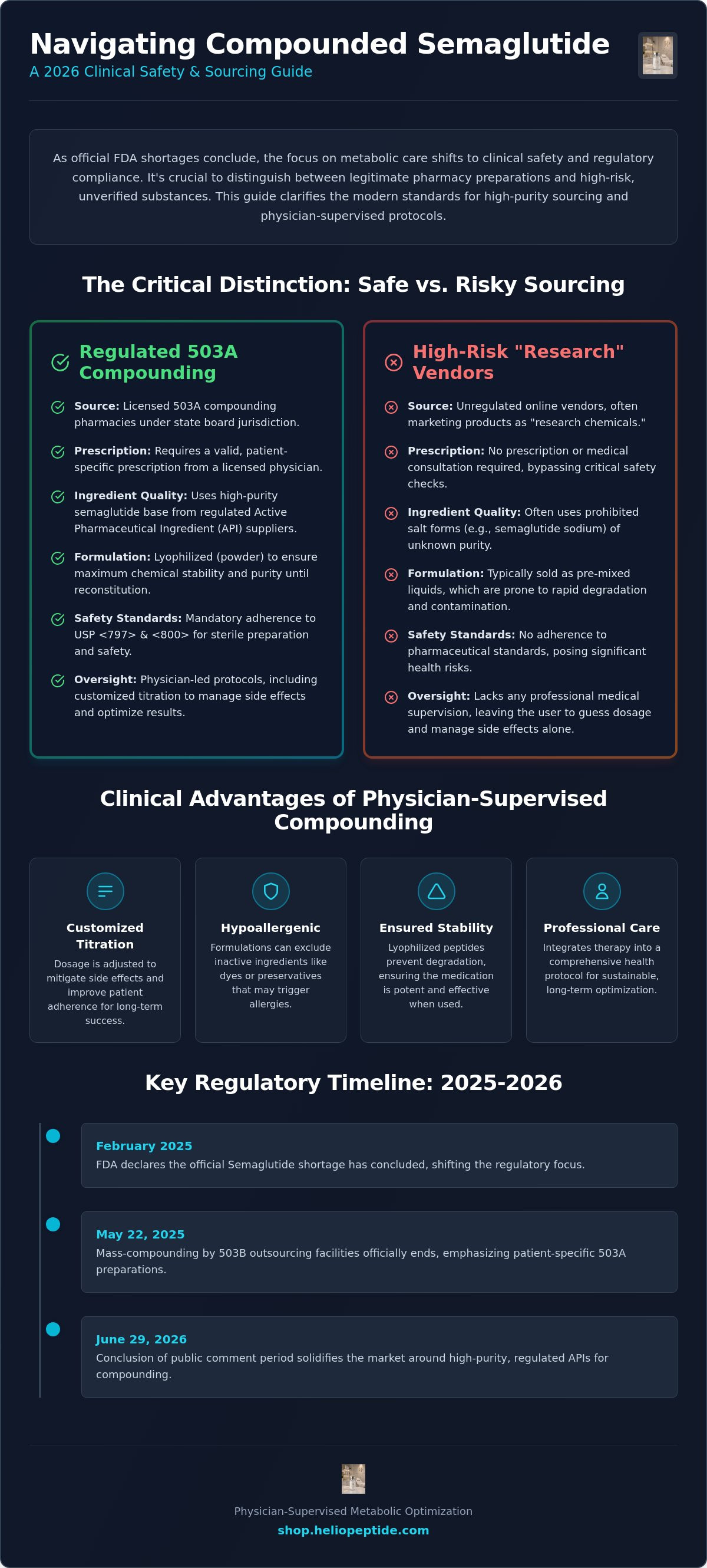
The regulatory environment underwent a significant transformation following the FDA's February 2025 declaration that the Semaglutide shortage had officially concluded. This shift effectively ended mass-compounding by 503B outsourcing facilities as of May 22, 2025, refocusing the industry on the patient-specific model of 503A pharmacies. In this modern context, the distinction between high-purity semaglutide base and prohibited salt forms, such as semaglutide sodium or semaglutide acetate, is a non-negotiable standard for clinical safety. Current 2026 standards require that every prescription is backed by a documented clinical justification, ensuring that the medication is prepared specifically for the individual's metabolic profile.
The Evolution of GLP-1 Compounding
Telehealth platforms initially utilized compounding as a solution for supply chain volatility, but the practice has matured into a sophisticated medical service. The industry has transitioned from broad retail distribution toward specialized 503A facilities that adhere to rigorous sterile preparation protocols. These pharmacies serve as essential partners for clinicians who require specific concentrations or delivery formats that are not provided by mass-market pharmaceutical manufacturers. Following the June 29, 2026, conclusion of the public comment period regarding bulk drug substances, the market has solidified around high-purity compounded semaglutide sourced from regulated APIs rather than unverified research-grade materials.
Therapeutic Objectives of Compounded Formulations
Clinicians often utilize compounded formulations to resolve issues related to inactive ingredients, such as dyes or preservatives, which may trigger hypersensitivity in certain individuals. The ability to customize titration schedules is a vital tool for clinicians managing semaglutide side effects; this allows for incremental dosage adjustments that improve patient adherence. By prioritizing the chemical stability of the active pharmaceutical ingredient, these tailored preparations facilitate a more controlled approach to metabolic restoration. This methodology ensures that patients receive a dose optimized for their specific tolerance levels, leading to more sustainable health outcomes.
The Regulatory Framework: 503A Pharmacies and Pharmaceutical Standards
The 503A designation serves as a primary indicator of clinical legitimacy within the pharmaceutical landscape. These facilities operate under the jurisdiction of state boards of pharmacy and are restricted to preparing medications only upon receipt of a valid, patient-specific prescription. Physician leadership is a non-negotiable component of this framework. It ensures that every order of compounded semaglutide is justified by a documented clinical need, such as an allergy to a specific excipient or the requirement for a customized dosage strength not available in brand-name versions.
Adherence to USP <797> and <800> standards is mandatory for sterile preparation and the safe handling of hazardous materials. These protocols define the stringent requirements for air quality, technician hygiene, and surface disinfection within the cleanroom environment. Peptides are highly sensitive molecules. Without these rigorous safeguards, they're susceptible to rapid degradation or microbial contamination, which can compromise both safety and efficacy.
Batch-specific Certificates of Analysis (COA) provide a transparent record of pharmaceutical integrity. This document confirms the absence of heavy metals and verifies that the potency matches the label claim. It's the primary tool used by clinicians to ensure that the active pharmaceutical ingredient (API) meets established purity thresholds before it's dispensed to the patient. A COA acts as a verifiable guarantee that the medication hasn't been diluted or adulterated during the manufacturing process.
Sourcing Purity: Base Semaglutide vs. Prohibited Salts
The clinical danger of semaglutide sodium and acetate forms is a significant concern in 2026. These salt forms aren't the same active ingredient found in FDA-approved medications and haven't undergone the same rigorous safety evaluations for human use. Professional 503A pharmacies exclusively utilize the semaglutide base to maintain molecular integrity. This distinction is vital for achieving predictable metabolic results and avoiding unverified substances. Patients must exercise extreme caution when buying semaglutide online to ensure they aren't receiving "research-only" chemicals that lack these essential certifications.
Quality Control in Sterile Compounding
Sterile compounding requires more than just a clean environment; it demands rigorous endotoxin testing and potency verification through independent, third-party laboratories. The FDA has issued alerts regarding reports of adverse events often linked to dosing errors or contamination in substandard facilities. Maintaining peptide stability requires continuous environmental monitoring to prevent thermal or light-induced degradation. Patients seeking a disciplined approach to health optimization should prioritize physician-led peptide programs that emphasize these rigorous regulatory benchmarks and prioritize pharmaceutical-grade sourcing.
Compounded Semaglutide vs. Brand-Name GLP-1s: A Comparative Analysis
Comparing pharmaceutical-grade preparations with mass-market retail brands requires an analysis of active pharmaceutical ingredients (API) and delivery mechanisms. Both formulations utilize the same core peptide molecule to achieve metabolic signaling. However, brand-name GLP-1 medications are produced in fixed-dose increments that often don't align with an individual patient's physiological tolerance or metabolic rate. Compounded semaglutide provides a solution to these rigid structures by allowing for precise titration and the removal of specific inactive ingredients that may cause adverse reactions. This streamlined model reduces the administrative overhead associated with retail pharmacy networks without sacrificing the clinical-grade purity of the API.
Supply chain stability remains a primary differentiator in 2026. Retail brands continue to face logistical hurdles, leading to frequent "out of stock" notifications that disrupt the continuity of care. Such interruptions are clinically significant; they often lead to a cessation of metabolic progress and a heightened risk of "rebound" weight gain. Utilizing 503A pharmacies ensures a more resilient supply chain, providing patients with consistent access to medication without the volatility associated with traditional retail channels. This reliability supports long-term adherence, which is the most critical factor in achieving sustainable physical optimization.
Personalized Titration Protocols
The ability to implement micro-dosing strategies is a significant clinical advantage. While brand-name pens offer fixed doses, compounded vials allow for surgical precision in dosage adjustments. This granular control is particularly useful when managing semaglutide side effects, such as persistent nausea or gastrointestinal distress. By utilizing a gradual dose escalation protocol, clinicians can minimize initial discomfort and improve the patient's long-term experience. This methodical approach ensures that the body adapts to the medication at a sustainable pace, maximizing the therapeutic window while minimizing systemic stress.
Accessibility and Continuity of Care
Consistency is the foundation of any successful metabolic program. Chronic shortages of brand-name injections often force patients into "drug holidays" that can reverse months of physiological progress. Sourcing compounded semaglutide from regulated 503A facilities mitigates this risk by providing a direct and reliable pathway to high-purity medication. For those requiring higher concentrations, the Semaglutide 15 mg Lyophilized protocol offers a stable and potent option for advanced therapy. This focus on continuity ensures that metabolic signaling remains active, facilitating the deep biological changes required for peak performance and restoration.
Identifying Clinical Purity: Sourcing Indicators for Patients
The gold standard for pharmaceutical stability in the peptide sector is the lyophilized state. Peptides are fragile. While many telehealth vendors provide pre-mixed aqueous solutions, these liquid formulations are susceptible to rapid hydrolytic degradation and microbial growth. Compounded semaglutide in a lyophilized, or freeze-dried, format ensures that the molecular structure remains intact until the point of reconstitution. This method is essential for maintaining the potency required for effective metabolic signaling and long-term restoration.
Verification of pharmacy credentials is a primary safety requirement for any patient. Legitimate sourcing occurs exclusively through state-licensed 503A pharmacies, many of which hold PCAB (Pharmacy Compounding Accreditation Board) accreditation. These facilities are transparent regarding their regulatory standing and avoid the "research-only" or "not for human consumption" labeling common among illicit gray-market vendors. Cold-chain logistics are equally critical. Clinical-grade peptides must be transported in temperature-controlled packaging to prevent thermal denaturation during transit.
The Science of Lyophilization
Freeze-drying removes moisture from the peptide through sublimation while the substance remains frozen. This technical process preserves the delicate peptide bonds and prevents the molecular degradation that occurs in water-based environments. Lyophilized solids offer a significantly longer shelf-life and superior chemical stability compared to aqueous solutions. This pharmaceutical precision is a hallmark of advanced peptide injections, ensuring that each dose delivers the exact therapeutic concentration intended by the prescribing physician.
The Physician Consultation Framework
Professional medical supervision is a non-negotiable prerequisite for metabolic therapy. A comprehensive consultation must include a review of a current blood panel and a detailed medical history to identify potential contraindications. Ongoing monitoring of metabolic markers, such as fasting insulin and glucose levels, allows for data-driven adjustments to the protocol. DIY peptide therapy lacks these essential safeguards and increases the risk of systemic imbalances. To ensure clinical safety and pharmaceutical integrity, explore our physician-supervised semaglutide programs which prioritize regulated 503A sourcing and rigorous diagnostic oversight.
The Helio Peptide Standard: Physician-Supervised Metabolic Optimization
The Helio Peptide methodology is predicated on the belief that metabolic restoration requires more than a standard prescription; it demands a disciplined integration of pharmaceutical precision and physician-led oversight. This standard is exemplified by our Semaglutide 15 mg (3ml) - Lyophilized protocol. By utilizing a high-concentration, freeze-dried format, we ensure that the active pharmaceutical ingredient maintains peak therapeutic efficacy from the point of manufacture to the moment of administration. Our commitment to sourcing exclusively from FDA-regulated 503A pharmacies provides a level of transparency and safety that is often absent in the broader retail and "research peptide" markets. This rigorous approach ensures that every patient receives compounded semaglutide that meets stringent molecular purity benchmarks.
US-licensed physicians serve as the essential gatekeepers of this optimization journey. These clinicians don't simply facilitate access; they design individualized titration schedules based on a comprehensive analysis of a patient's unique biochemical markers. This professional supervision is vital for navigating the complexities of GLP-1 therapy, ensuring that dosage adjustments are data-driven and focused on long-term physiological balance. Our clinical framework prioritizes the restoration of metabolic signaling, moving beyond the superficial metrics of the scale to address the underlying biological processes that govern body composition and energy regulation.
Comprehensive Wellness Integration
Metabolic health is inextricably linked to hormonal equilibrium. For many patients, the use of semaglutide is most effective when integrated into a broader program that may include physician-supervised HRT. This synergistic approach allows for the simultaneous optimization of insulin sensitivity and androgenic or estrogenic balance, leading to superior results in muscle preservation and fat oxidation. We view these therapies as complementary tools for extending the human healthspan. By addressing metabolic and hormonal deficiencies in tandem, patients can achieve a state of physical vitality that is sustainable well beyond the initial phases of treatment.
The Patient Journey at Helio Peptide
The journey toward peak performance begins with a thorough clinical consultation and a diagnostic review of relevant metabolic markers. This initial assessment ensures that the chosen protocol is safe and appropriate for your specific health profile. Once a program is established, we provide continuous support to manage gastrointestinal response and monitor progress toward your health objectives. This methodical process removes the uncertainty often associated with self-directed peptide use, replacing it with a transparent and evidence-based medical model. You can start your physician-supervised semaglutide program today and experience a higher standard of clinical care and pharmaceutical integrity.
Advancing Toward Precision Metabolic Restoration
The transition from standard retail care to a disciplined optimization protocol requires a focus on pharmaceutical integrity and professional guidance. You now understand the critical role of 503A pharmacies in maintaining molecular purity and the technical superiority of lyophilized formulations for peptide stability. Utilizing compounded semaglutide within this regulated framework allows for a level of dosage precision and supply chain reliability that mass-market alternatives don't provide. This medical model ensures that your metabolic progress is supported by data-driven adjustments rather than generalized titration schedules.
Helio Peptide remains committed to these rigorous standards by providing clinical-grade 15mg lyophilized semaglutide sourced from FDA-regulated 503A facilities. Every program includes comprehensive physician oversight and a thorough bloodwork review to ensure your safety and maximize physiological results. This methodical approach transforms metabolic health from a temporary goal into a sustainable, long-term healthspan optimization. Consult with a Helio Peptide Physician to begin your metabolic optimization program. Your journey toward peak physical performance is supported by clinical expertise every step of the way.
Frequently Asked Questions
Is compounded semaglutide as effective as Ozempic or Wegovy?
Compounded formulations are clinically effective when they utilize the same high-purity active pharmaceutical ingredient as brand-name versions. The efficacy of compounded semaglutide depends entirely on the sourcing of the peptide base and the pharmacy's adherence to sterile preparation standards. When prepared by a regulated 503A pharmacy, these medications provide the same GLP-1 receptor agonism required for metabolic signaling and weight management results, provided the molecular integrity of the API is maintained.
How do I know if a compounding pharmacy is legitimate and safe?
Verification of legitimacy requires confirming the pharmacy's state licensure and checking for PCAB (Pharmacy Compounding Accreditation Board) accreditation. A safe facility will always require a patient-specific prescription and provide a batch-specific Certificate of Analysis upon request. Patients should avoid any vendor that uses "research-only" labels or operates without a clear physician consultation framework; these are primary indicators of substandard or counterfeit materials that lack professional oversight.
What is the difference between 503A and 503B compounding pharmacies?
Section 503A pharmacies are state-licensed facilities that prepare medications for individual patients based on specific prescriptions. In contrast, 503B outsourcing facilities are permitted to compound in larger batches for office use, though federal restrictions in May 2025 significantly limited their role in GLP-1 production. For most patients in 2026, the 503A model is the standard for receiving customized, high-purity compounded semaglutide tailored to their unique clinical requirements and physiological tolerance.
Does compounded semaglutide require a prescription from a doctor?
A valid, patient-specific prescription from a licensed healthcare provider is a legal and clinical requirement for all compounded medications. Federal law under the FD&C Act prohibits 503A pharmacies from dispensing these substances without a documented medical necessity. This oversight ensures that a physician has reviewed the patient's blood panels and medical history to confirm that the therapy is appropriate for their specific metabolic profile and to monitor for potential contraindications.
What are the risks of using semaglutide "salt" forms?
Salt forms such as semaglutide sodium or semaglutide acetate carry significant clinical risks because they aren't the active ingredient used in FDA-approved medications. The FDA has issued specific warnings against these forms; they lack the established safety and efficacy data of the semaglutide base. Using unapproved salts can lead to unpredictable biological responses or systemic toxicity, making it essential to verify that only clinical-grade base peptides are utilized in any compounded preparation.
How should compounded semaglutide be stored to maintain potency?
Lyophilized peptides must be stored in a controlled, cool environment and protected from light to prevent molecular denaturation. Once the medication is reconstituted into an aqueous solution, it requires continuous refrigeration between 36°F and 46°F to maintain its therapeutic potency. Maintaining the cold chain during transit and storage is vital for preserving the delicate peptide bonds that facilitate metabolic optimization and prevent the growth of microbial contaminants in the vial.
Why do some compounded versions include Vitamin B12?
Compounding pharmacies often integrate Vitamin B12 to create a customized formulation that addresses specific patient needs, such as mitigating the nausea associated with GLP-1 therapy. This addition also fulfills the regulatory requirement that a compounded drug must be materially different from a commercially available product. While the B12 may support cellular energy levels, the primary therapeutic driver remains the high-purity semaglutide base responsible for glycemic control and appetite regulation.
Can I switch from brand-name semaglutide to a compounded version?
Switching from brand-name pens to a compounded format is a standard clinical transition that must be managed by a qualified physician. This process allows for more granular titration adjustments, which can be particularly beneficial if the patient experienced gastrointestinal distress on fixed retail doses. A physician-led transition ensures that the change in delivery mechanism doesn't disrupt metabolic progress or lead to the rebound effects often seen with inconsistent medication access during retail shortages.
