
Semaglutide Side Effects: A Clinical Guide to Management and Safety
The clinical success of a GLP-1 protocol is rarely determined by the medication's potency alone, but rather by the rigor with which a patient manages the physiological transition. It's common for individuals to feel significant apprehension regarding semaglutide side effects, particularly when persistent gastrointestinal distress or confusion over black box warnings threatens to derail therapeutic progress. This guide provides a comprehensive medical overview designed to transform that anxiety into informed clinical action. We'll outline the established protocols for mitigating common adverse events while ensuring long-term metabolic safety and health optimization. Through this analysis, you'll gain a clear understanding of the distinction between transient risks and rare complications, alongside actionable strategies for managing dose-dependent responses. We'll also examine the critical necessity of sourcing clinical-grade, lyophilized peptides in an era of shifting FDA regulations, such as the proposed 503B exclusions currently under review in June 2026. This methodical approach ensures that your pursuit of peak performance is supported by professional oversight and the highest standards of pharmaceutical purity.
Key Takeaways
- Understand the interaction between GLP-1 receptor agonists and the enteric nervous system to anticipate and manage primary gastrointestinal responses effectively.
- Identify specific clinical markers for rare adverse events and evaluate the empirical data surrounding FDA black box warnings to ensure long-term patient safety.
- Apply evidence-based management protocols, including strategic dose titration and electrolyte chemistry, to mitigate semaglutide side effects without compromising metabolic progress.
- Recognize the clinical significance of lyophilization and 503A compounding standards in maintaining the structural integrity and purity of advanced peptide therapies.
- Transition toward a proactive health optimization model by integrating physician-supervised oversight into a comprehensive metabolic and hormonal strategy.
The Gastrointestinal Profile of Semaglutide Therapy
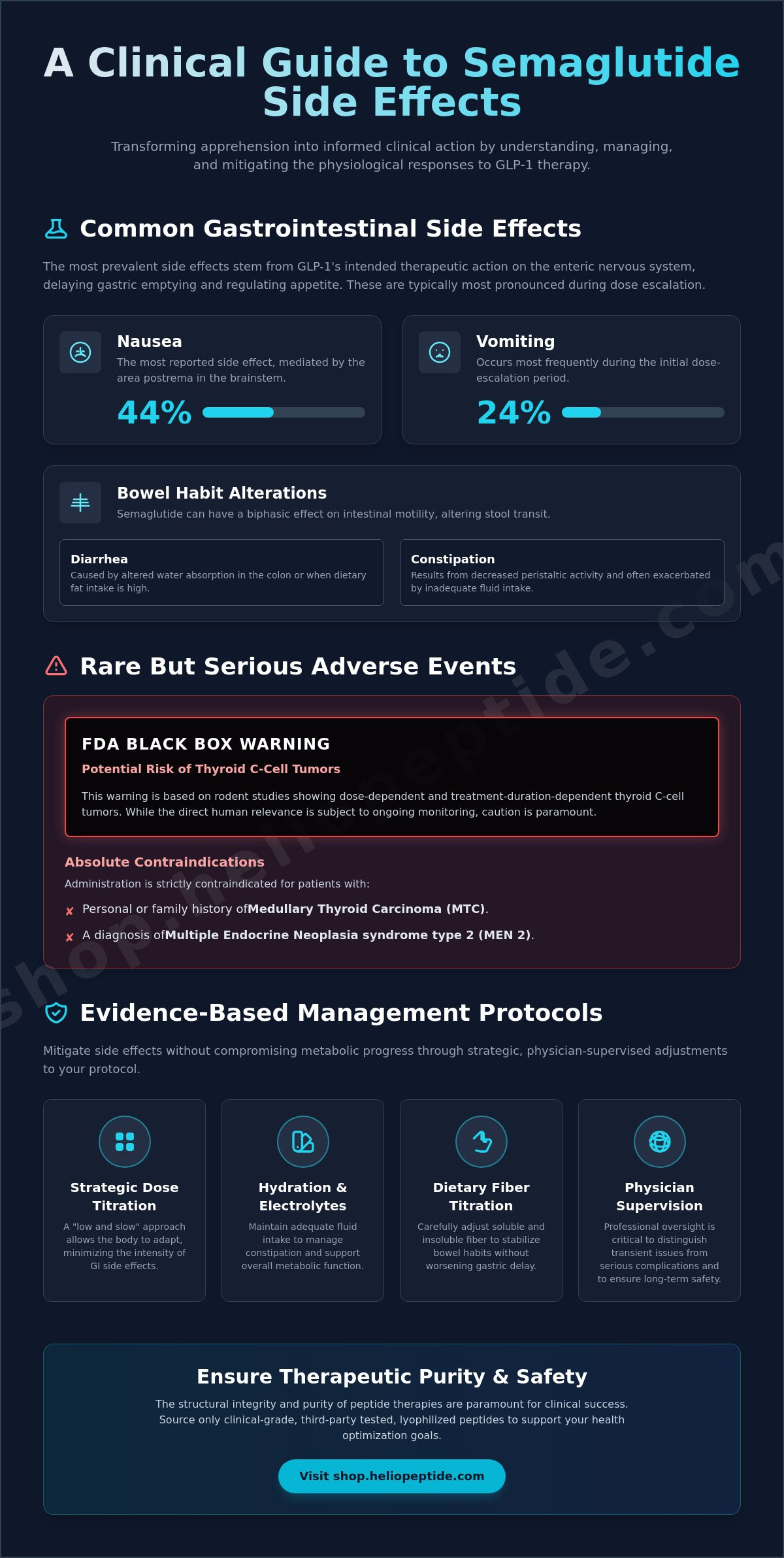
The enteric nervous system serves as the primary interface for GLP-1 receptor agonists. For a comprehensive overview of semaglutide and its therapeutic indications, one must recognize that its efficacy is inextricably linked to its influence on the digestive system. Clinical trials have consistently demonstrated that semaglutide side effects are predominantly gastrointestinal. Nausea is reported in approximately 44% of patients. Vomiting occurs in roughly 24% during the dose-escalation period. These symptoms result from the medication's designed impact on gastric motility and central appetite regulation. Distinguishing between transient adaptation and persistent intolerance is a critical component of clinical oversight. It's often difficult for patients to differentiate between the therapeutic slowing of digestion and a pathological response.
The Pathophysiology of Nausea and Vomiting
Nausea is primarily mediated through the area postrema. This brainstem region lacks a blood-brain barrier and contains a high density of GLP-1 receptors. Stimulation triggers a central emetic response while inducing a significant delay in gastric emptying. This physiological slowing ensures that food remains in the stomach longer. It promotes early satiety. However, it can also manifest as persistent bloating or upper abdominal discomfort. Gastroparesis is a rare condition involving severely delayed stomach emptying that requires immediate medical assessment.
Bowel Habit Alterations: Diarrhoea vs. Constipation
The influence of semaglutide on intestinal motility is often biphasic. This leads to either accelerated or decelerated stool transit. Diarrhoea occurs when the medication alters water absorption within the colon. It also happens when dietary fat intake exceeds the body's reduced processing capacity. Conversely, constipation is frequently observed. This stems from decreased peristaltic activity and inadequate fluid intake. Clinical management requires a meticulous fibre titration strategy. Soluble and insoluble fibres must be adjusted to stabilize consistency without exacerbating gastric delay. It's essential to monitor these changes during the induction phase.
Abdominal Pain and Dyspepsia
Dyspepsia and epigastric discomfort are common consequences of altered stomach acid production. These issues arise from the prolonged exposure of the gastric mucosa to food boluses. Mild indigestion is expected during dose titration. Clinicians must distinguish these symptoms from acute pain requiring intervention. Persistent epigastric pain demands diagnostic evaluation. This is especially true if it radiates to the back. Proactive monitoring of semaglutide side effects allows for the maintenance of the protocol while ensuring safety. Success depends on professional guidance. It doesn't merely indicate medication intolerance; it reflects a need for protocol adjustment.
Clinical Contraindications and Rare Adverse Events
The safety profile of GLP-1 therapy extends beyond common gastrointestinal distress to include rare but clinically significant systemic risks. While most patients experience manageable symptoms, a subset of semaglutide side effects involves serious metabolic and endocrine complications that require rigorous professional oversight. The FDA has mandated a black box warning regarding the potential risk of thyroid C-cell tumors. This warning is primarily based on rodent studies where semaglutide induced dose-dependent and treatment-duration-dependent thyroid C-cell tumors. Human relevance remains a subject of ongoing clinical monitoring; however, the contraindication for patients with a personal or family history of Medullary Thyroid Carcinoma (MTC) is absolute. Understanding these parameters is essential for patient health optimization.
Endocrine Considerations and Thyroid Safety
Screening for Multiple Endocrine Neoplasia syndrome type 2 (MEN 2) is a non-negotiable prerequisite for peptide administration. Rodent thyroid C-cell receptors are significantly more sensitive to GLP-1 stimulation than human receptors. This biological distinction suggests a lower risk profile in humans, yet clinical protocols must prioritize caution. Physician-supervised programs incorporate thorough genetic and family history assessments to mitigate these theoretical risks. Establishing a baseline through professional evaluation ensures that the pursuit of metabolic restoration does not compromise long-term endocrine health.
Systemic Risks: Pancreatitis and Renal Function
Acute pancreatitis represents a rare but severe inflammatory response that demands immediate clinical intervention. Clinical markers include persistent, severe abdominal pain that often radiates to the back and may be accompanied by vomiting. If pancreatitis is suspected, the protocol must be discontinued immediately and diagnostic imaging should be performed. Additionally, Semaglutide Injection side effects can indirectly impact renal health. Acute kidney injury has been reported in patients experiencing severe gastrointestinal distress. The primary driver is secondary dehydration. Maintaining serum hydration and electrolyte balance is essential for protecting renal filtration.
Rapid weight loss also increases the risk of cholelithiasis and gallbladder disease. This occurs as the composition of bile changes during significant caloric deficits. Baseline metabolic panels and ongoing monitoring of lipase and creatinine levels are standard requirements for safe therapy. Ensuring you utilize high-purity lyophilized peptides under professional guidance remains the most effective way to navigate these complexities safely. Success is a direct consequence of adhering to established safety standards and medical protocols. Monitoring semaglutide side effects through a clinical lens allows for proactive management rather than reactive crisis control.
Evidence-Based Mitigation and Management Protocols
The transition from identifying semaglutide side effects to implementing active mitigation protocols is essential for therapeutic adherence. Effective management relies on a structured clinical framework that prioritizes physiological adaptation over rapid weight loss. This approach ensures that the metabolic benefits of peptide therapy are realized without compromising patient comfort or safety. Physician-supervised oversight remains the cornerstone of this process.
Dose Titration: The Gold Standard for Tolerance
Biological receptor adaptation is the primary goal of a gradual dose titration schedule. By initiating therapy at a sub-therapeutic level, the enteric nervous system and the area postrema are allowed to adjust to GLP-1 receptor saturation. This start low, go slow methodology minimizes the intensity of induction-phase nausea. Some patients with heightened sensitivity may benefit from microdosing strategies. These adjustments facilitate a smoother transition through various dosage tiers. All titration schedules must be managed by a clinician; patients should never self-adjust their dosage.
Dietary Adjustments for Symptom Control
Nutrient timing and composition are fundamental to managing the rate of gastric emptying. High-fat meals act as potent triggers for nausea and dyspepsia because they further delay an already slowed digestive process. Patients should prioritize lean protein sources to support muscle mass preservation during rapid fat loss while managing semaglutide side effects. Smaller, more frequent meal volumes reduce the mechanical pressure on the stomach. This significantly alleviates the sensation of early satiety and bloating. Maintaining a precise macronutrient ratio is a proven strategy for stabilizing the digestive environment.
Pharmacological Support and Supplements
Clinical adjuncts provide necessary relief when dietary and titration adjustments are insufficient. Pharmacological interventions, such as the short-term use of anti-emetics, are sometimes required to manage severe nausea during dose escalation. Supplemental Vitamin B6 and high-quality ginger extracts have shown efficacy in mitigating the central emetic response. Hydration chemistry must also be addressed. Simple water intake is often inadequate when GI symptoms occur. Ensuring a proper serum electrolyte balance through the administration of sodium, potassium, and magnesium is vital for preventing secondary complications like renal strain. All supplemental treatments require physician oversight to ensure compatibility with the primary peptide protocol.
The Role of Compounding Standards in Therapeutic Safety
Sourcing is a critical variable in patient safety. Substandard manufacturing often introduces impurities that intensify semaglutide side effects or lead to unanticipated inflammatory responses. While the FDA resolved the official drug shortage in February 2025, the regulatory landscape continues to evolve. Proposed exclusions of semaglutide from the 503B bulks list in June 2026 highlight the necessity of utilizing established, high-compliance channels. Patients must prioritize transparency in manufacturing to ensure their metabolic goals aren't undermined by poor quality control.
503A Compounding Pharmacy Standards
503A compounding pharmacies operate under strict state board oversight. They're restricted to fulfilling patient-specific prescriptions, which ensures a higher level of individual clinical scrutiny. This regulatory environment requires that every batch meets clinical-grade quality standards for potency and purity. Sourcing from unregulated online vendors bypasses these essential safeguards. It's a practice that exposes patients to risks ranging from incorrect peptide concentrations to the presence of harmful pyrogens. Utilizing FDA-regulated facilities is a non-negotiable requirement for those who value safety and professional oversight.
Lyophilised Peptides vs. Liquid Solutions
Lyophilisation, or freeze-drying, is the gold standard for maintaining the molecular integrity of peptide chains. This process removes moisture through sublimation under a vacuum. It prevents the chemical degradation commonly seen in pre-mixed liquid solutions. Lyophilised semaglutide offers superior shelf-life and stability, ensuring the peptide remains biologically active until the moment of administration. Proper reconstitution requires the use of bacteriostatic water. This maintains sterility and prevents bacterial growth within the vial over the course of the treatment cycle. Don't settle for unstable liquid formats that compromise efficacy.
Analytical testing serves as the final gatekeeper for therapeutic safety. Every batch of clinical-grade peptides must be accompanied by a comprehensive Certificate of Analysis (COA). This document provides empirical verification of both potency and purity through High-Performance Liquid Chromatography (HPLC) and Mass Spectrometry. These tests ensure the product is free from heavy metals, residual solvents, and related substances that could exacerbate semaglutide side effects. Licensed US facilities also conduct rigorous sterility and pyrogen testing. This eliminates the risk of systemic infection or acute immune reactions. If you're seeking the highest standard of metabolic support, you can access clinical-grade semaglutide 15 mg to ensure your protocol is built upon a foundation of pharmaceutical precision. This methodical approach to sourcing eliminates the anxiety associated with purity and focuses entirely on physiological results.
Navigating Your Protocol with Physician Supervision
The ultimate objective of GLP-1 therapy is not merely the mitigation of discomfort but the achievement of a refined metabolic state. Transitioning from a reactive stance toward semaglutide side effects to a proactive wellness model requires a shift in clinical perspective. Professional oversight ensures that the physiological data gathered during the induction phase informs long-term protocol adjustments. This methodical approach reduces the risk of adverse outcomes while maximizing the efficiency of the medication. Constant access to a clinician allows for the real-time modulation of dosage based on individual metabolic responses. It's the difference between merely tolerating a treatment and thriving under a physician-led strategy.
Personalised Wellness and Hormonal Balance
Semaglutide often serves as a foundational component within a broader hormone and metabolic strategy. Its interaction with other therapeutic modalities, such as TRT or HRT, requires careful synchronization to optimize body composition and androgen levels. Baseline bloodwork is essential for establishing a bespoke treatment plan that addresses the patient's unique biological markers. Monitoring muscle-to-fat ratios provides a more accurate assessment of progress than simple scale weight. This level of precision prevents the sarcopenia often associated with rapid weight loss. A physician ensures that the caloric deficit induced by semaglutide doesn't compromise hormonal restoration or physical performance.
The Helio Peptide Clinical Advantage
Our platform facilitates a rigorous physician-supervised consultation process for the administration of Semaglutide 15 mg (3ml) - Lyophilized. This oversight ensures that every aspect of the protocol is grounded in clinical necessity and regulatory compliance. We connect patients with US-licensed manufacturers to guarantee the delivery of high-purity peptides that meet stringent pharmaceutical standards. This eliminates the uncertainty of unregulated sourcing and provides a transparent pathway to health optimization. You can Explore our physician-supervised semaglutide programmes to begin a protocol defined by safety and scientific rigor. Success is the inevitable result of disciplined methodology and expert guidance. By integrating semaglutide into a managed wellness environment, you can navigate semaglutide side effects with confidence while pursuing peak physical performance.
Optimising Your Metabolic Protocol
Successful GLP-1 therapy is defined by a commitment to clinical precision and physiological adaptation. By understanding the mechanisms behind semaglutide side effects, patients can transition from reactive symptom management to proactive health optimization. The implementation of a structured dose titration schedule, combined with a focus on hydration chemistry and nutrient timing, ensures that the therapeutic benefits of the medication are realized without compromising long-term wellness. Safety is further reinforced through the use of clinical-grade lyophilised peptides, which preserve molecular integrity and ensure pharmaceutical purity.
The pursuit of peak physical performance requires more than just high-purity compounds; it demands rigorous professional oversight. Our programmes provide access to medications sourced from FDA-regulated 503A pharmacies and are supported by continuous physician-led clinical oversight. This integrated approach allows for real-time protocol adjustments based on your unique biological markers and metabolic goals. You can begin your physician-supervised semaglutide programme today to ensure your journey toward metabolic restoration is both safe and effective. It's time to elevate your standards and achieve the results your discipline deserves.
Clinical Frequently Asked Questions
How long do semaglutide side effects typically last?
Gastrointestinal semaglutide side effects are typically transient and resolve as the body achieves physiological adaptation. Most patients report that symptoms like nausea or dyspepsia are most acute during the initial 48 to 72 hours following a dose escalation. These effects usually dissipate within a few weeks of maintaining a consistent dosage tier. Persistent symptoms beyond the titration phase require clinical evaluation to rule out underlying intolerance or secondary complications.
Can I drink alcohol while taking semaglutide?
Alcohol consumption isn't strictly contraindicated, but it can significantly exacerbate gastrointestinal distress and metabolic instability. Ethanol increases the risk of dehydration and may trigger acute pancreatic inflammation in susceptible individuals. The high sugar content in many alcoholic beverages can also counteract the glycemic control benefits of the peptide. Moderation is essential for maintaining the integrity of the metabolic protocol and ensuring optimal results.
What should I do if the nausea becomes unbearable?
Unbearable nausea requires immediate clinical intervention and a reassessment of the current titration schedule. A physician may prescribe anti-emetics such as ondansetron to manage acute emetic responses during the induction phase. It's often necessary to reduce the dosage or pause the escalation until the enteric nervous system stabilizes. Maintaining precise electrolyte balance through oral rehydration solutions is vital for preventing secondary renal strain during these episodes.
Does semaglutide cause "Ozempic face" or muscle loss?
Changes in facial volume and muscle mass are consequences of rapid fat loss rather than direct pharmacological effects of the medication. Facial volume loss occurs when subcutaneous fat is depleted quickly. Muscle loss, or sarcopenia, can be mitigated through high-protein dietary protocols and resistance training. Monitoring body composition rather than just total weight is a standard component of professional oversight to ensure healthy tissue preservation.
When significant weight reduction leads to a hollowed facial appearance, often referred to as "Ozempic face," specialized aesthetic support from the Best Filler Clinic can help restore lost volume and enhance facial contours through professional dermal treatments.
What is the black box warning on semaglutide?
The FDA black box warning pertains to the potential risk of Medullary Thyroid Carcinoma (MTC) observed in rodent trials. While human relevance hasn't been established; the medication is contraindicated for individuals with a personal or family history of MTC or Multiple Endocrine Neoplasia syndrome type 2. This warning highlights the necessity of thorough genetic screening before commencing therapy. Safety is maintained through rigorous patient selection and professional history verification.
Can semaglutide cause low blood sugar (hypoglycaemia)?
Hypoglycaemia is rare when semaglutide is used as a monotherapy but can occur when it's combined with other glucose-lowering agents. The medication stimulates insulin secretion in a glucose-dependent manner; this naturally reduces the risk of blood sugar dropping too low. However, patients using insulin or sulfonylureas must be monitored closely for signs of low blood sugar. Proactive monitoring of blood glucose levels ensures the protocol remains within safe physiological parameters.
How does physician supervision help reduce side effects?
Physician supervision facilitates a proactive approach to managing semaglutide side effects through personalized dose titration and metabolic monitoring. A clinician can identify early markers of systemic inflammation or dehydration that a patient might otherwise overlook. This oversight includes baseline bloodwork and regular check-ins to adjust the protocol based on real-time physiological data. Professional guidance transforms a standard medication into a comprehensive and safe health optimization strategy.
Is lyophilised semaglutide safer than pre-mixed versions?
Lyophilised semaglutide offers superior molecular stability and purity compared to pre-mixed liquid solutions. The freeze-drying process removes moisture to prevent chemical degradation; this ensures the peptide remains biologically active until the moment of reconstitution. Pre-mixed versions are more susceptible to temperature fluctuations and structural breakdown during transit or storage. Utilizing lyophilised compounds from 503A pharmacies ensures that the medication meets the highest standards for pharmaceutical precision.
