
Peptide Injections: A Clinical Reference for Metabolic and Hormonal Optimization
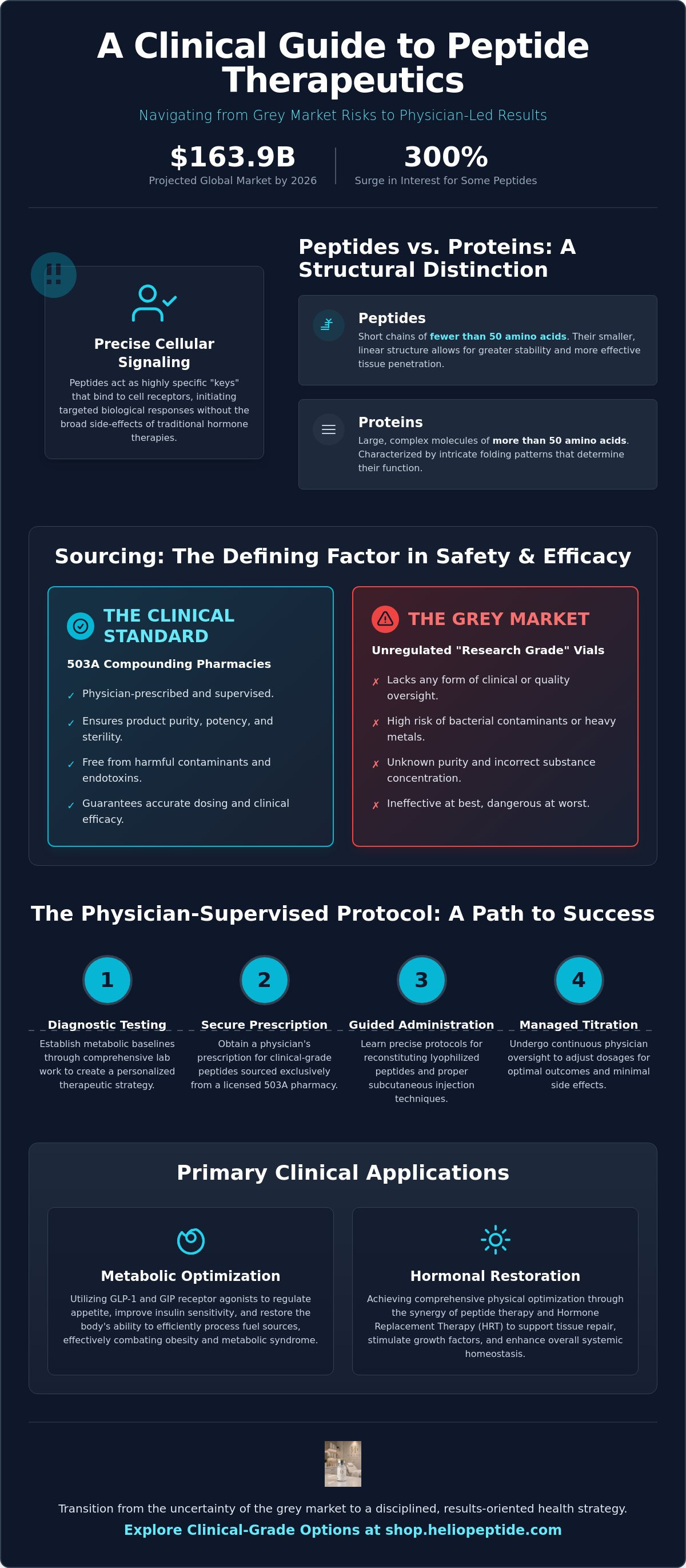
The global peptide therapeutics market is projected to reach 163.98 billion dollars by the end of 2026, reflecting a significant shift toward precision metabolic medicine. While mainstream interest in peptide injections has surged by as much as 300 percent for certain cost-related queries, this visibility has also introduced a dangerous volume of unregulated research grade products into the consumer space. You likely recognize the frustration of trying to distinguish between legitimate pharmaceutical interventions and the substandard vials found on the unregulated market. It's common to feel a sense of apprehension when faced with complex reconstitution requirements or the lack of clear clinical oversight.
This reference serves as a comprehensive medical guide to the science and safety standards of physician-led therapy. We will analyze the biological mechanisms of GLP-1 and GIP peptides to explain how they facilitate weight loss and metabolic restoration. You'll also learn to identify secure sourcing paths through 503A compounding pharmacies and master the precise protocols for administration. By prioritizing clinical-grade standards and professional supervision, you can transition from the uncertainty of the grey market to a disciplined, results-oriented health strategy.
Key Takeaways
- Peptides operate as precise amino acid sequences that facilitate receptor-specific signaling, offering a more targeted approach than broad-spectrum hormonal interventions.
- Therapeutic applications focus on the synergy between GLP-1 receptor agonists for metabolic regulation and Hormone Replacement Therapy for comprehensive physical optimization.
- Clinical safety is predicated on the use of 503A pharmacy standards to ensure that peptide injections are free from the contaminants often found in research-grade products.
- Proper administration requires a disciplined protocol for the reconstitution of lyophilized peptides and the use of specialized equipment for accurate subcutaneous delivery.
- Physician oversight is essential for establishing metabolic baselines through diagnostic testing and managing the titration process for optimal patient outcomes.
The Pharmacology of Peptide Injections: Mechanisms and Biological Signaling
Peptides are defined as precise sequences of amino acids, linked by covalent peptide bonds, that function as primary signaling molecules within the human endocrine and paracrine systems. Unlike broad-spectrum hormone therapies that often exert systemic effects across various tissue types, Peptide therapeutics utilize a highly specific "lock and key" mechanism. This process involves the binding of a peptide ligand to a cognate receptor on the cell surface, triggering a cascade of intracellular events without the extensive off-target interactions associated with less refined treatments. Physician-supervised peptide injections provide a methodology for introducing these synthetic analogs into the systemic circulation, bypassing the digestive enzymes that would otherwise degrade the molecular structure and render the treatment ineffective.
The strategic use of peptide injections ensures that these molecules reach their target tissues with high bioavailability. Endogenous peptides produced naturally by the body often possess extremely short biological half-lives, sometimes lasting only minutes before being cleared by proteolytic enzymes. Synthetic therapeutic analogs are engineered to resist this rapid degradation. By modifying the amino acid sequence or adding fatty acid chains, researchers can extend the duration of action, allowing for consistent metabolic signaling. Injection remains the preferred delivery method because it avoids the first-pass metabolism of the liver, ensuring that the precise dosage of the peptide reaches the intended cellular receptors.
Peptides vs. Proteins: A Structural Distinction
The primary distinction between a peptide and a protein is established by a threshold of approximately 50 amino acids. While proteins are characterized by complex tertiary and quaternary folding patterns that determine their biological function, peptides remain relatively short and linear. This lack of intricate folding results in different pharmacokinetic properties. Peptides are generally more stable during transport and less prone to the structural denaturation that can affect larger proteins. The integrity of the peptide bond is critical; it must remain stable enough to navigate the extracellular environment until it reaches its target receptor. Because of their smaller size, peptides can often penetrate tissues more effectively than bulky proteins, facilitating more efficient cellular communication.
Cellular Signaling and Metabolic Impact
Sequence precision is the cornerstone of metabolic optimization. Peptides act as specific keys that unlock cellular functions such as lipolysis, tissue repair, or the release of growth factors. A single amino acid substitution can entirely alter the signaling profile of a molecule, potentially shifting its function from glucose regulation to appetite suppression. This high degree of specificity is what allows for targeted therapeutic outcomes with a reduced risk of side effects. Biological signaling occurs when an extracellular peptide ligand binds to a G-protein coupled receptor, thereby initiating a specific intracellular response through a conformational change in the receptor’s structure. This mechanism ensures that the physiological response is localized and proportionate to the dosage administered under clinical supervision.
Clinical Applications: Metabolic Optimization and Hormonal Restoration
The clinical utility of peptide injections is most evident in the treatment of metabolic syndrome and the restoration of systemic homeostasis. Modern medicine has transitioned from broad interventions toward targeted molecular signaling. This approach allows for the precise modulation of metabolic pathways, such as the incretin system, which governs insulin secretion and appetite regulation. By utilizing synthetic analogs that persist longer than endogenous molecules, clinicians can effectively address chronic conditions like obesity and insulin resistance. The primary objective is to restore metabolic flexibility, enabling the body to switch efficiently between fuel sources while maintaining stable blood glucose levels.
GLP-1 and GIP: The New Standard in Metabolic Health
The introduction of glucagon-like peptide-1 (GLP-1) receptor agonists has redefined weight management protocols. Semaglutide 15 mg (3ml) - Lyophilized functions by mimicking the GLP-1 hormone to enhance glucose-dependent insulin secretion and delay gastric emptying. This mechanism provides a dual benefit of glycemic control and significant reduction in caloric intake. While single-agonist therapies are highly effective, the emergence of multi-agonist peptides represents a technological leap in metabolic medicine.
Triple-hormone agonists like Retatrutide (10mg, 3mL) - Lyophilized target the GLP-1, glucose-dependent insulinotropic polypeptide (GIP), and glucagon receptors simultaneously. This multi-receptor approach addresses metabolic syndrome with greater efficacy by increasing energy expenditure through glucagon signaling while maintaining the potent appetite suppression of GLP-1 and GIP. These peptide injections are often the preferred choice for patients who require a more aggressive intervention to overcome metabolic plateaus. For those seeking standardized clinical options, exploring advanced peptide therapy formulations can provide clarity on available concentrations.
Peptide Synergy with TRT and HRT Programs
Hormonal optimization is rarely a singular process. Within TRT Programs, the addition of specific peptides can mitigate common side effects like muscle wasting or reduced natural growth hormone production. While testosterone replacement effectively restores androgen levels, it doesn't always address the decline in cellular repair mechanisms. Growth hormone secretagogues work synergistically with androgens to support lean muscle mass retention and accelerate recovery times. This integration is a hallmark of the Physician-Supervised Model, where safety and dosage titration are prioritized to avoid the pitfalls of unregulated self-administration.
The combined use of peptides and Physician-Supervised HRT allows for a holistic approach to vitality. Peptides act as secondary messengers that refine the primary signals provided by bioidentical hormones. This synergy ensures that metabolic flexibility is maintained, preventing the fat accumulation often seen when testosterone levels are optimized in an insulin-resistant environment. Clinical precision in these protocols is non-negotiable for long-term health outcomes.
Pharmaceutical Standards: The Role of 503A Pharmacies and Lyophilization
The therapeutic efficacy of peptide injections is fundamentally reliant on the pharmacological integrity of the compound. As the global peptide therapeutics market is projected to reach 163.98 billion dollars by 2026, the proliferation of unregulated "research grade" products has created a landscape of significant risk for the uninformed consumer. These substances often bypass the stringent regulatory oversight necessary for human administration, which doesn't allow for the consistency in purity and concentration required for clinical success. Sourcing from US-licensed manufacturers ensures adherence to FDA Guidance on Synthetic Peptide Drugs, which establishes the rigorous criteria for molecular identity. Without this oversight, patients risk exposure to heavy metal contaminants, bacterial endotoxins, and significant dosage variances that can lead to unpredictable biological responses or systemic inflammation.
Why Lyophilization Matters for Peptide Integrity
Lyophilization, or freeze-drying, is a sophisticated dehydration process used to preserve the structural stability of delicate amino acid chains. By removing water through sublimation under a vacuum, the peptide is converted into a stable powder that resists the proteolytic degradation common in liquid formulations. This process significantly extends the shelf-life and maintains the potency of the molecule compared to pre-mixed liquid alternatives, which are highly sensitive to temperature fluctuations and mechanical agitation. For a detailed analysis of these differences, refer to our guide on Lyophilized vs Liquid Peptides: Quality and Stability. Lyophilized peptides remain biologically inert until reconstituted with bacteriostatic water, ensuring that the patient receives the exact concentration required for their clinical protocol without the risk of premature degradation.
503A Pharmacy Compliance and Patient Safety
A 503A compounding pharmacy operates under strict state board of pharmacy regulations and federal guidelines to provide patient-specific medications tailored to individual metabolic needs. These facilities must conduct exhaustive testing for sterility, potency, and the presence of pyrogens before any product is dispensed to a patient. This level of scrutiny distinguishes clinical-grade therapy from the unregulated vendors who often operate without pharmaceutical licenses or third-party laboratory verification. Each batch must be accompanied by a Certificate of Analysis (COA) to confirm that the peptide meets the specified purity standards. The 503A standard serves as the definitive cornerstone of pharmaceutical safety in the United States, providing a regulated framework that prioritizes patient protection over retail convenience. Physician oversight acts as the final safeguard, ensuring that the prescribed peptide aligns with the patient's diagnostic data and long-term health objectives.
Administration Protocols: Reconstitution and Subcutaneous Delivery
The transition from pharmaceutical procurement to clinical application requires a disciplined adherence to administration protocols. While the molecular integrity of the compound is established within the 503A pharmacy, the ultimate therapeutic efficacy of peptide injections depends on the precision of the reconstitution process and the technique used for delivery. Subcutaneous injection is the preferred route for most metabolic signaling molecules because the adipose tissue layer allows for a gradual, sustained release into the systemic circulation. This delivery method mimics the endogenous pulsatile secretion of hormones, providing a stable pharmacological profile that minimizes the risk of rapid peaks or premature clearance by proteolytic enzymes.
Adhering to aseptic technique is non-negotiable for preventing localized irritation or secondary infections. Clinicians emphasize the use of 31-gauge insulin syringes, which are designed for minimal tissue trauma and accurate dosage measurements. Before any procedure begins, the workspace must be sanitized, and all vial stoppers must be cleansed with 70 percent isopropyl alcohol. Establishing a sterile environment is the primary safeguard in a self-administration model. For those requiring the necessary supplies to begin their protocol, you can order clinical-grade reconstitution kits and peptides through our secure portal.
The Reconstitution Process
Reconstitution is the process of restoring a lyophilized powder to a liquid state for injection. This must be performed using bacteriostatic water, which contains 0.9 percent benzyl alcohol to inhibit bacterial growth. The diluent should be introduced to the vial slowly, allowing the liquid to orate down the interior glass wall rather than dropping directly onto the lyophilized cake. This "gentle stream" method prevents the mechanical stress that can lead to the structural denaturation of delicate amino acid chains. Patients are instructed to rotate the vial between their palms until the solution is completely clear; shaking the vial is strictly prohibited as it can cause foaming and compromise the molecular stability of the peptide. Precise volume calculations, as dictated by the physician's dosage titration plan, must be followed to ensure the concentration remains consistent across the entire treatment cycle.
Injection Technique and Best Practices
Optimal subcutaneous delivery sites include the periumbilical region of the abdomen, the anterior aspect of the thighs, or the outer surface of the upper arms. Site rotation is a critical component of the protocol to prevent the development of lipohypertrophy or localized tissue hardening. Aseptic technique involves pinching a small fold of skin and inserting the needle at a 90-degree angle to ensure the medication is deposited into the fatty layer rather than the underlying muscle. Once the administration is complete, the needle must be withdrawn immediately and disposed of in a puncture-resistant sharps container. Managing localized side effects, such as mild erythema or bruising, is typically achieved through proper technique and ensuring the reconstituted solution has reached room temperature before use. Ongoing monitoring by a medical professional ensures that the administration remains compliant with safety standards.
The Physician-Supervised Model: Establishing a Clinical Protocol
Scientific literacy regarding peptide injections is the first step toward metabolic restoration; however, the transition from theoretical knowledge to therapeutic application requires a rigorous clinical framework. A physician-supervised model ensures that every intervention is predicated on objective diagnostic data rather than anecdotal trends. This process begins with the establishment of metabolic baselines, where a clinician evaluates systemic health through comprehensive blood chemistry. By identifying specific deficiencies or markers of insulin resistance, a medical professional can design a protocol that aligns with the patient's unique biological requirements. This gatekeeper role is essential for maintaining the safety standards that distinguish medical therapy from unregulated retail experimentation.
Personalized wellness programs offer a level of precision that "one-size-fits-all" products cannot replicate. Generic solutions often fail because they ignore the individual variance in receptor sensitivity and metabolic rate. Within a clinical environment, such as the restorative setting provided by Pellis Medispa, the focus shifts from mere product acquisition to the long-term optimization of hormonal vitality and physical rejuvenation. Physicians utilize ongoing lab work to monitor physiological responses, ensuring that the introduction of synthetic peptides results in a restorative balance rather than systemic stress. This disciplined approach provides the necessary oversight to manage complex treatments like Advanced Peptide Therapy or TRT Programs with confidence.
The Telehealth Consultation Journey
Modern telehealth platforms have eliminated the traditional barriers to specialized care, providing an efficient pathway to professional guidance. The journey begins with an exhaustive medical history review and a clear identification of the patient's health objectives. A requirement for recent blood panels is non-negotiable; these metrics allow the physician to assess markers such as HbA1c, fasting insulin, and lipid profiles to ensure therapeutic safety. This diagnostic depth is what validates the entire treatment plan. Patients seeking to understand the intersection of convenience and safety should read our resource on Buy Semaglutide Online: The Importance of Physician Care to understand why professional oversight remains the primary safeguard in metabolic medicine.
Ongoing Clinical Support and Optimization
Therapeutic success is rarely achieved through a static dosage. Ongoing clinical support involves regular check-ins where the physician assesses progress and manages dosage titration. This is particularly critical when utilizing GLP-1 receptor agonists, as a gradual increase in concentration is necessary to mitigate gastrointestinal side effects while maximizing the impact on appetite suppression and glucose regulation. Medical oversight allows for real-time adjustments based on the patient's evolving metabolic state. This proactive monitoring ensures that the protocol remains effective and sustainable over the long term. To transition from informational research to a structured medical strategy, you may Schedule a physician consultation to begin your personalized peptide program and secure a path toward verified results through peptide injections and professional guidance.
Advancing Toward Precision Metabolic Restoration
Achieving peak physiological function requires moving beyond the fragmented data found in the retail marketplace. Clinical-grade peptide injections represent a sophisticated intersection of biotechnology and endocrine science, offering a targeted alternative to conventional metabolic interventions. By prioritizing lyophilized formulations and the rigorous standards of 503A compounding pharmacies, you ensure that every administration is defined by purity and pharmacological stability. This methodology establishes a secure foundation for long-term metabolic optimization.
The transition to a high-performance state is most effectively managed through a disciplined, physician-led protocol. This approach replaces the uncertainty of the grey market with a structured framework of diagnostic testing and professional titration. Our platform provides access to over 70 clinical-grade products, all sourced from FDA-regulated 503A pharmacies and supervised by US-licensed physicians. You can Explore Physician-Supervised Peptide Programs to begin your journey toward systemic balance. Restoring your metabolic vitality is the logical consequence of applying precise scientific methodology to your personal health strategy.
Frequently Asked Questions
Are peptide injections safe for long-term use?
Peptide injections are considered safe for long-term use when administered under the rigorous supervision of a licensed physician who monitors metabolic markers and systemic health. Safety profiles vary between specific molecules; for example, GLP-1 receptor agonists have been studied for multi-year durations in extensive clinical trials. Continuous oversight ensures that dosage titration remains aligned with the patient's evolving physiological state, effectively mitigating potential risks associated with prolonged biological signaling.
How long does it take to see results from peptide therapy?
Clinical results from peptide therapy typically manifest within a timeframe of four to twelve weeks, depending on the specific metabolic objective. While initial biological signaling changes occur within days of the first administration, visible outcomes such as fat loss or improved insulin sensitivity require consistent adherence to achieve measurable shifts in body composition. Patients focused on tissue repair or growth hormone stimulation may require longer cycles to observe significant structural restoration.
What is the difference between research-grade and clinical-grade peptides?
The primary distinction lies in the manufacturing environment and the presence of third-party verification for human safety. Clinical-grade peptides are produced in FDA-regulated 503A or 503B facilities, where they undergo exhaustive testing for sterility, endotoxins, and exact potency. Research-grade products are intended strictly for laboratory use and lack the pharmaceutical-grade certifications necessary to guarantee they are free from heavy metals, contaminants, or incorrect amino acid sequences.
Do I need a prescription for peptide injections in the United States?
A valid medical prescription is required for the legal acquisition and administration of clinical-grade peptide injections in the United States. This requirement ensures that a physician has evaluated the patient's diagnostic data and determined that the therapy is medically appropriate for their specific health profile. Sourcing these compounds without a prescription through "research use only" vendors bypasses essential safety protocols and increases the risk of administering substandard or contaminated substances.
What are the most common side effects of GLP-1 peptide injections?
Gastrointestinal disturbances represent the most frequently reported side effects of GLP-1 receptor agonists, including nausea, vomiting, and constipation. These effects are typically dose-dependent and can often be mitigated through a disciplined titration schedule managed by a medical professional. Proper hydration and dietary adjustments are recommended during the initial phases of therapy to support the body's adaptation to the slowed gastric emptying process and altered insulin signaling.
How should lyophilized peptides be stored before and after reconstitution?
Lyophilized peptides should be stored in a cool, dark environment, ideally a refrigerator at temperatures between 36 and 46 degrees Fahrenheit, to maintain molecular stability. Once the powder has been reconstituted with bacteriostatic water, refrigeration becomes mandatory to prevent the rapid degradation of the delicate amino acid chains. Exposure to direct sunlight, extreme heat, or excessive mechanical agitation must be avoided to preserve the biological activity and potency of the solution.
Can peptide therapy be combined with testosterone replacement therapy (TRT)?
Peptide therapy is frequently integrated into TRT Programs to enhance metabolic efficiency and support lean muscle mass retention. While testosterone addresses androgenic deficiencies, specific peptides can optimize growth hormone secretion and improve insulin sensitivity, creating a synergistic effect on body composition. This multi-modal approach allows for a more comprehensive restoration of hormonal vitality and physical performance when managed within a professional clinical framework.
How do I know if my peptides are sourced from a 503A pharmacy?
Verification of 503A sourcing is achieved by reviewing the medication's labeling for the pharmacy's name, license number, and the inclusion of a patient-specific prescription. Reputable medical facilitators provide a Certificate of Analysis (COA) for each batch, documenting the results of sterility and potency testing. Transparency regarding the manufacturing facility is a hallmark of professional peptide therapy, distinguishing it from the opaque sourcing and lack of accountability found in unregulated online vendors.
