
Semaglutide Prescription Requirements: A Clinical Guide to Medical Qualification
As of March 2026, nearly 8% of all pharmaceutical prescriptions in the United States are for GLP-1 receptor agonists, a statistic that underscores the transition toward evidence-based metabolic optimization. Understanding the rigorous semaglutide prescription requirements is essential for patients navigating a regulatory environment where the FDA has resolved previous shortages and tightened the oversight of compounded formulations. You've likely experienced the frustration of opaque insurance protocols or felt legitimate concern regarding the purity of unregulated peptides found outside of professional clinical settings.
This clinical overview clarifies the physiological and regulatory criteria required to qualify for therapy, moving beyond surface-level trends toward a disciplined medical framework. We'll detail the specific Body Mass Index (BMI) thresholds, mandatory diagnostic screenings for contraindications such as medullary thyroid carcinoma, and the importance of sourcing through regulated 503A pharmacies. By establishing a clear understanding of these standards, you can secure a safe, physician-supervised path toward achieving restoration and peak physical performance.
Key Takeaways
- Establish clinical eligibility by identifying the specific BMI and comorbidity thresholds mandated for GLP-1 receptor agonist therapy in 2026.
- Understand why comprehensive metabolic blood panels are essential to move beyond simple questionnaires and ensure a safe, data-driven treatment path.
- Differentiate between 503A-regulated pharmacy standards and unregulated "research chemical" vendors to fulfill semaglutide prescription requirements safely.
- Learn the physiological rationale for a methodical 0.25mg titration schedule to manage side effects under professional clinical supervision.
- Follow a professional telehealth protocol to confirm eligibility for physician-led programs featuring high-purity lyophilized medication.
Clinical Eligibility: Understanding BMI and Comorbidity Requirements
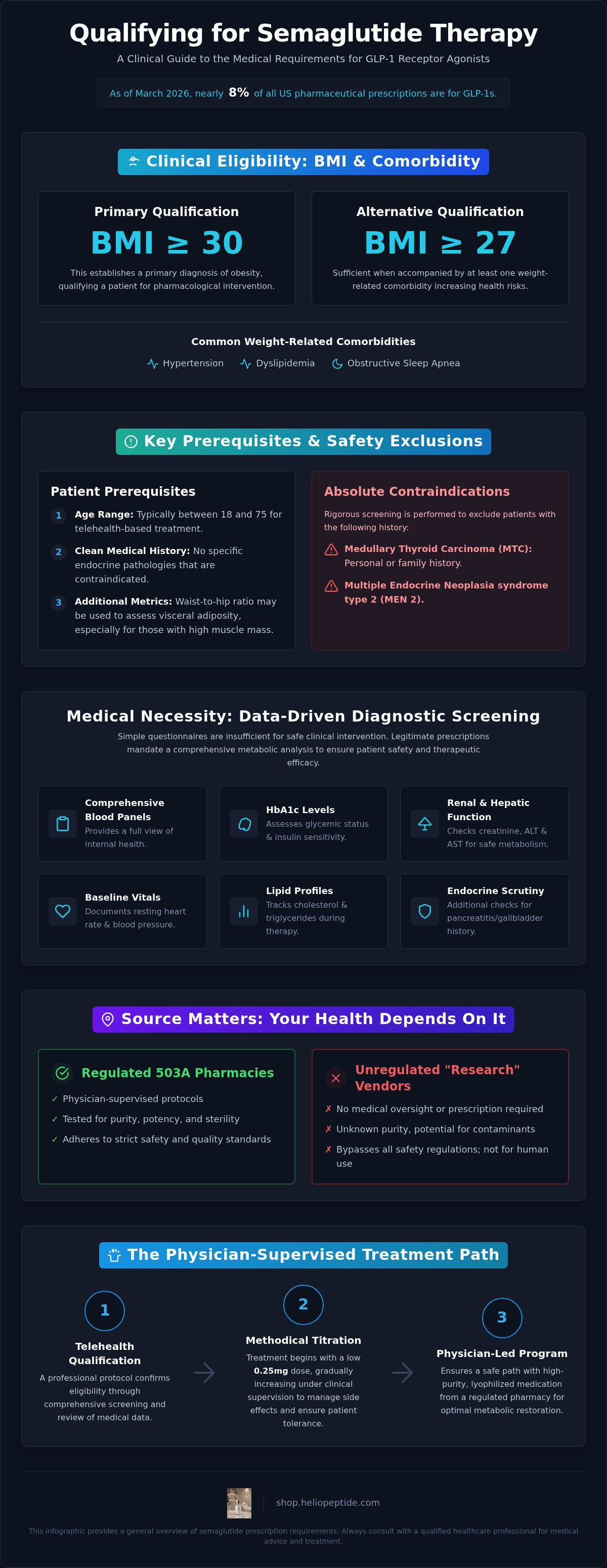
The qualification for GLP-1 receptor agonist therapy is governed by a rigorous medical framework designed to prioritize patient safety and metabolic efficacy. Clinical standards dictate that semaglutide prescription requirements begin with an objective assessment of an individual’s Body Mass Index (BMI). A BMI of 30.0 kg/m² or higher establishes a primary diagnosis of obesity, qualifying the patient for pharmacological intervention. Alternatively, a BMI of 27.0 kg/m² or higher is considered sufficient if it is accompanied by at least one weight-related comorbidity that increases cardiovascular or metabolic risk.
Identifying these comorbidities is a critical component of the diagnostic process. Physicians typically screen for conditions such as hypertension, dyslipidemia, and obstructive sleep apnea. The presence of these markers indicates that excess adiposity is actively impacting physiological function. By adhering to these thresholds, clinicians ensure that semaglutide is utilized as a medical tool for restoration rather than a cosmetic supplement. This evidence-based approach aligns with the 2026 clinical guidelines for anti-obesity medications, ensuring that treatment is targeted toward those who will derive the most significant health benefits.
Exceptions to the Standard BMI Rule
BMI serves as a foundational metric, but it's not an exhaustive indicator of metabolic health. Clinical consideration is frequently given to individuals with high muscle mass; in these cases, a high BMI may not reflect excess adipose tissue. Additionally, medical practitioners recognize that specific ethnic groups may develop metabolic diseases at lower BMI thresholds, necessitating adjusted criteria for qualification. Physicians may also utilize the waist-to-hip ratio to assess visceral adiposity. This measurement provides a more precise understanding of fat distribution and its associated risks to internal organ function than weight alone.
Age and General Health Prerequisites
Eligibility for physician-led programs is also contingent upon age and a clean medical history regarding specific endocrine pathologies. Most clinical protocols establish a standard age range of 18 to 75 for telehealth-based treatment. Rigorous screening is conducted to identify absolute contraindications, most notably a personal or family history of medullary thyroid carcinoma (MTC). Patients are also evaluated for Multiple Endocrine Neoplasia syndrome type 2 (MEN 2). These exclusion criteria are essential for maintaining the high safety standards required in advanced peptide therapy and protecting patients from avoidable complications.
Medical Necessity: Metabolic Markers and Diagnostic Screening
A simple digital questionnaire lacks the diagnostic depth required for a safe clinical intervention. Legitimate semaglutide prescription requirements mandate a comprehensive metabolic analysis to ensure the patient's physiology can tolerate and benefit from GLP-1 receptor agonism. This data-driven approach protects the patient from potential complications while optimizing the therapeutic outcome. Relying solely on self-reported data is insufficient; objective laboratory evidence is the only standard that ensures clinical safety and efficacy.
Comprehensive blood panels provide a window into the patient's internal environment. HbA1c levels are assessed to determine glycemic status and insulin sensitivity, providing a baseline for metabolic response. Evaluating renal and hepatic function through markers such as serum creatinine and liver enzymes, specifically ALT and AST, is essential for safe medication metabolism. These tests confirm that the body’s filtration and detoxification pathways are functioning at a level that supports long-term therapy. Detailed clinical information regarding these systemic requirements is available through Semaglutide: MedlinePlus Drug Information.
Cardiovascular and Endocrine Assessment
Baseline vitals, including resting heart rate and blood pressure, must be documented before initiating therapy. Patients with a history of pancreatitis or gallbladder disease require additional clinical scrutiny, as GLP-1 medications can influence these organ systems. Monitoring lipid profiles during rapid weight loss is vital to track changes in cholesterol and triglycerides. This ensures that the reduction in adipose tissue translates to improved cardiovascular health and overall physiological balance.
Hormonal Balance and Weight Resistance
Metabolic resistance often stems from underlying endocrine deficiencies that a standard weight loss program might ignore. Integrating physician-supervised HRT can address hormonal imbalances, such as low testosterone or estrogen dominance, which might otherwise hinder the efficacy of GLP-1 therapy. Optimizing thyroid function further enhances the metabolic environment. This creates a synergistic effect that promotes sustainable weight loss and physical restoration. For those seeking a rigorous, data-backed approach to metabolic health, choosing physician-led clinical programs ensures that all diagnostic requirements are met with medical precision.
The medical landscape for GLP-1 receptor agonists has evolved significantly since the FDA declared the semaglutide shortage resolved on February 21, 2025. This regulatory shift emphasizes that semaglutide prescription requirements now demand a strict adherence to patient-specific compounding within 503A pharmacies. Unlike "research chemical" vendors that operate in a gray market without clinical oversight, 503A pharmacies are state-licensed facilities subject to rigorous board of pharmacy regulations. These entities are legally permitted to prepare medications only upon receipt of a valid, patient-specific prescription, ensuring that the therapy is tailored to the individual’s documented clinical need.Securing a legitimate prescription requires verification of the medication’s origin and composition. Clinical protocols necessitate the use of a Certificate of Analysis (COA) for every batch to confirm a peptide purity of 99% or greater. This documentation is vital for distinguishing professional-grade solutions from substandard alternatives that may contain impurities or incorrect concentrations. While many patients are familiar with FDA-approved semaglutide indications for weight management and diabetes, the transition to compounded therapy requires an even higher degree of vigilance regarding sourcing. Adhering to these semaglutide prescription requirements protects the patient from the risks associated with unverified sourcing.
USP <797> Compliance for Sterile Compounding
Injectable medications must be prepared in environments that meet USP <797> standards for sterile compounding. These regulations mandate specific cleanroom classifications and environmental monitoring to prevent the introduction of bacterial endotoxins or particulate matter. Substandard sourcing from unregulated vendors carries the risk of systemic infection or localized injection site reactions. 503A oversight ensures that the Active Pharmaceutical Ingredient (API) is sourced from FDA-registered facilities and processed under conditions that maintain absolute sterility and potency throughout the manufacturing cycle.
The Helio Peptide Quality Protocol
Helio Peptide maintains a disciplined approach to sourcing peptides safely by utilizing US-licensed 503A pharmacies. We prioritize lyophilized semaglutide 15 mg over pre-mixed liquid versions due to the superior molecular stability and extended shelf life offered by the freeze-drying process. This protocol involves third-party testing to verify that every vial meets our internal benchmarks for 99%+ purity. By operating within this highly regulated framework, we act as a specialized medical facilitator, ensuring that results are a direct consequence of scientific methodology and pharmaceutical-grade quality.
Clinical Supervision: Titration and Side Effect Management
Adherence to a structured titration schedule is a cornerstone of professional clinical oversight. Unlike standard medications with static dosing, the physiological response to GLP-1 receptor agonists necessitates a gradual introduction to minimize gastrointestinal distress. Initiation begins at a sub-therapeutic dose of 0.25mg once weekly for the first four weeks. This phase isn't intended for significant weight reduction but serves as a critical period for the body to develop tolerance to the medication’s influence on gastric emptying and satiety signaling.
A fundamental component of semaglutide prescription requirements includes mandatory monthly physician consultations. These sessions allow for a precise assessment of the patient’s tolerance and the titration of the dose to 0.5mg, 1.0mg, or higher as clinically indicated. Following the March 2026 FDA approval of the 7.2mg HD version, physicians now have a broader range of maintenance options for patients who require additional support after tolerating the standard 2.4mg dose. If severe nausea or vomiting occurs, the physician may elect to extend the current dose level or implement supportive interventions. Adherence to these semaglutide prescription requirements ensures that the patient doesn't experience the overwhelming side effects often reported in unsupervised settings.
Preventing Muscle Wasting and Nutritional Deficiencies
Rapid weight loss carries the risk of sarcopenic obesity, a condition where muscle mass is lost alongside adipose tissue. To mitigate this, clinical protocols mandate a high-protein nutritional framework and integrated resistance training. Incorporating peptide therapy for weight loss within a supervised program provides the metabolic support necessary to preserve lean tissue while optimizing fat oxidation. Monitoring body composition rather than just total weight is essential for maintaining long-term physical performance and metabolic health.
Long-term Maintenance and Tapering Protocols
Transitioning to a maintenance phase requires a methodical assessment of metabolic stability. The objective is to identify the lowest effective dose that maintains the patient’s weight without inducing further loss. This phase involves psychological and physiological screening to ensure long-term safety and the prevention of weight regain. Clinical requirements for maintenance may involve a gradual tapering of the dose or a shift in injection frequency based on the patient’s individual response. For those ready to begin a structured, physician-led program, you can apply for a clinical consultation to determine your specific titration path.
The Prescription Process: How to Qualify via Telehealth
The transition from clinical eligibility to active therapy follows a methodical five-step protocol designed to ensure regulatory compliance and patient safety. Semaglutide prescription requirements in 2026 demand more than a cursory digital interaction; they require a structured medical intake where a patient's full health history is disclosed. This initial data collection allows the physician to identify potential contraindications before the first consultation occurs. It's a rigorous gatekeeping process that prioritizes long-term health outcomes over immediate access.
- Step 1: Digital Medical Intake. Patients provide detailed information regarding current medications, previous weight loss attempts, and family medical history to establish a clinical baseline.
- Step 2: Physician-Led Consultation. A specialized clinician conducts a synchronous review to verify clinical eligibility and discuss the physiological implications of GLP-1 receptor agonism.
- Step 3: Laboratory Bloodwork. Diagnostic screening establishes metabolic baselines, ensuring that renal, hepatic, and endocrine markers support safe medication metabolism.
- Step 4: Personalized Program Design. The physician establishes a titration schedule and nutritional framework tailored to the patient's specific metabolic profile and body composition goals.
- Step 5: Clinical-Grade Fulfillment. Medication is dispatched directly from a regulated 503A pharmacy, ensuring the receipt of verified, lyophilized peptides that meet USP <797> standards.
Adhering to these semaglutide prescription requirements ensures that the patient enters a highly regulated environment defined by physician-led guidance. This process moves beyond the "standard retail" experience, positioning the patient within a specialized medical framework where safety is a permanent priority.
Telehealth vs. In-Person Consultations
Telehealth has matured into a sophisticated medium for metabolic optimization, offering national access to specialized clinicians who might be unavailable locally. Legal requirements for these consultations vary by state, often necessitating a synchronous video interaction to establish a valid physician-patient relationship. Maintaining HIPAA compliance in digital medical records is a foundational standard, ensuring that sensitive health data remains encrypted and secure. This digital framework provides a level of efficiency and privacy that traditional in-person visits often lack, without compromising the depth of clinical oversight required for advanced peptide therapy.
Initiating Your Metabolic Protocol
The final phase of qualification involves selecting the appropriate concentration, such as semaglutide 15 mg, to align with the prescribed titration path. Patients must understand the reconstitution process for lyophilized peptides, as the stability and sterility of the medication depend on precise preparation using bacteriostatic water. A final clinical review is conducted before the first administration to confirm that the patient is comfortable with the injection technique and the initial 0.25mg dosing schedule. This transparent and honest pace ensures that results are a predictable consequence of a strictly managed scientific methodology.
Securing Your Path to Metabolic Restoration
Navigating the landscape of GLP-1 therapy requires a disciplined commitment to clinical rigor and regulatory compliance. By strictly adhering to semaglutide prescription requirements, you move beyond the inherent risks of the unregulated peptide market toward a structured, physician-led framework. This journey is defined by comprehensive diagnostic screening, the utilization of FDA-regulated 503A pharmacies, and a methodical titration schedule designed to preserve metabolic health and lean muscle mass. These standards aren't merely administrative hurdles; they're the essential safeguards of your physiological well-being.
True optimization is the direct consequence of scientific methodology and professional oversight. Helio Peptide provides access to physician-supervised telehealth consultations and clinical-grade medications characterized by 99%+ peptide purity. You don't have to manage these complex medical protocols alone. By prioritizing safety and pharmaceutical-grade sourcing, you ensure that your metabolic transformation is both sustainable and secure. This evidence-based approach removes the ambiguity of "gray market" alternatives and replaces it with clinical certainty.
Consult with a Physician for Your Personalized Semaglutide Program and take the definitive step toward physical restoration and peak performance. Your commitment to a safe, data-driven protocol today establishes the foundation for your long-term metabolic success.
Frequently Asked Questions
Can I get a semaglutide prescription if my BMI is under 27?
Clinical qualification for therapy generally requires a minimum BMI of 27.0 kg/m² when accompanied by at least one weight-related comorbidity, such as hypertension or dyslipidemia. For individuals without these metabolic conditions, the standard threshold is 30.0 kg/m². These metrics ensure that the medication is utilized as a medical intervention for obesity rather than for cosmetic purposes, adhering to established safety protocols for metabolic restoration.
Do I need to see a doctor in person to get semaglutide?
An in-person visit isn't required to secure a legitimate prescription, as telehealth is a legally recognized channel for metabolic therapy in 2026. Synchronous video consultations allow specialized physicians to verify clinical eligibility and review diagnostic data with the same rigor as an office visit. This digital framework provides a secure and efficient path for patients to access professional oversight and high-purity clinical programs from any location.
What medical conditions automatically disqualify me from semaglutide?
A personal or family history of Medullary Thyroid Carcinoma (MTC) or Multiple Endocrine Neoplasia syndrome type 2 (MEN 2) are absolute contraindications for therapy. Additionally, physicians will typically disqualify individuals with a history of severe pancreatitis or known hypersensitivity to the peptide's chemical composition. Rigorous screening for these conditions is a foundational step in the medical intake process to prevent avoidable physiological complications.
Is bloodwork a mandatory requirement for a semaglutide prescription?
Comprehensive laboratory bloodwork is a non-negotiable component of semaglutide prescription requirements to ensure patient safety and therapeutic efficacy. Physicians must evaluate HbA1c levels, renal function through creatinine markers, and hepatic health to establish a physiological baseline before authorizing treatment. This data-driven approach allows for the precise monitoring of the body's response to GLP-1 receptor agonism and ensures the medication is metabolized safely.
How long does the medical qualification process take?
The timeline for qualification is primarily determined by the speed of diagnostic laboratory testing and physician review. Most patients complete the digital medical intake and bloodwork requirements within three to five business days. Once the laboratory results are available, a clinical consultation is scheduled to verify eligibility and finalize the personalized dosing schedule. This methodical pace ensures that all safety protocols are satisfied before the first administration.
Can I use insurance for compounded semaglutide programs?
Insurance coverage is rarely available for compounded medications, which are typically managed as out-of-pocket clinical programs. While brand-name versions like Wegovy may have specific 2026 coverage updates through Medicare or private plans, compounded solutions from 503A pharmacies prioritize pharmaceutical-grade purity and accessibility. Patients often find that the predictable cost of a physician-supervised program offers a more transparent financial path than navigating traditional insurance hurdles and prior authorizations.
What is the difference between research-grade and prescription-grade semaglutide?
Prescription-grade semaglutide is produced in regulated 503A pharmacies under strict USP standards, ensuring 99%+ purity and absolute sterility for human use. Research-grade peptides are sold by unregulated vendors for laboratory use only and lack the clinical oversight, third-party testing, and manufacturing certifications required for safe administration. Utilizing research-grade substances carries significant risks of contamination, incorrect dosing, and systemic infection due to the absence of regulatory safeguards.
Is a prescription required for lyophilized semaglutide?
A valid, patient-specific prescription is mandatory for obtaining lyophilized semaglutide from any regulated pharmacy. Legitimate semaglutide prescription requirements prohibit the distribution of these peptides for human use without a physician's authorization and a documented clinical necessity. Sourcing lyophilized medication through a professional medical facilitator ensures that the product is handled within a legal, regulated framework that prioritizes patient safety and manufacturing transparency.
