
How to Get Semaglutide: A Clinical Guide to Sourcing and Medical Supervision
The pursuit of metabolic optimization through GLP-1 therapy has moved beyond the era of unregulated compounding and into a phase of strict clinical accountability. As of early 2026, the FDA resolution of the semaglutide shortage has fundamentally shifted the landscape, making it vital to understand the precise protocols for safe acquisition. You are likely searching for how to get semaglutide while facing a fragmented healthcare system, navigating insurance hurdles, and worrying about the chemical purity of the products available online. We acknowledge that the transition from general interest to active treatment is often hindered by a lack of transparent, medical-grade guidance and a fear of substandard sourcing.
This article provides a definitive roadmap for obtaining semaglutide through legitimate telehealth channels under the direct supervision of licensed physicians. You'll gain a clear understanding of the 1-2-3 process for clinical qualification, learn how to ensure your medication meets rigorous manufacturing standards, and see how these peptides function as a core component of a broader metabolic health strategy. By following this professional framework, you can move forward with the confidence that your health optimization is grounded in scientific rigor and regulatory compliance.
Key Takeaways
- Understand the rigorous regulatory environment and why a physician-led prescription is the mandatory standard for securing safe GLP-1 medications.
- Identify the specific clinical eligibility criteria, including BMI thresholds and metabolic indicators, required to understand how to get semaglutide through professional channels.
- Navigate the four-step medical roadmap, moving from initial digital health intake to comprehensive diagnostic laboratory analysis under expert supervision.
- Verify medication purity and stability by prioritizing 503A pharmacy standards and the clinical advantages of lyophilized semaglutide formulations.
- Learn how to integrate peptide therapy into a broader metabolic health plan, utilizing the synergistic benefits of physician-supervised hormone replacement therapy.
Understanding the Semaglutide Prescription Landscape
Semaglutide represents a significant advancement in the clinical management of metabolic dysfunction and obesity. As a glucagon-like peptide-1 (GLP-1) receptor agonist, this medication is a sophisticated pharmaceutical intervention designed to restore metabolic balance. Understanding What is Semaglutide? involves recognizing its role as a biological regulator rather than a simple weight loss aid. Because of its systemic impact on endocrine function and glucose metabolism, a physician-led prescription is a non-negotiable regulatory requirement. This oversight ensures that the patient’s physiological profile aligns with the medication’s mechanism, mitigating risks while maximizing clinical outcomes.
For patients investigating how to get semaglutide, the landscape is defined by two primary sourcing paths: commercially branded products and clinical-grade peptides prepared by specialized pharmacies. While the pharmaceutical composition remains consistent, the delivery methods and accessibility vary based on current supply chain dynamics and specific patient needs. Proper sourcing is the foundation of a successful metabolic performance plan, as it guarantees the chemical integrity of the hormone mimics being introduced into the body.
The Mechanism of GLP-1 Therapy
The efficacy of semaglutide is rooted in its ability to interact with the central nervous system and the gastrointestinal tract simultaneously. Within the hypothalamus, the medication modulates satiety signals, effectively reducing the biological drive for excessive caloric intake. This neurological influence is complemented by a physiological delay in gastric emptying, which prolongs the sensation of fullness and prevents rapid spikes in blood sugar. Semaglutide functions as an incretin mimetic, effectively replicating the hormonal signals that regulate post-meal glucose levels and appetite suppression. This dual-action approach facilitates a controlled, predictable environment for metabolic restoration and sustained weight management.
Branded vs. Compounded Semaglutide
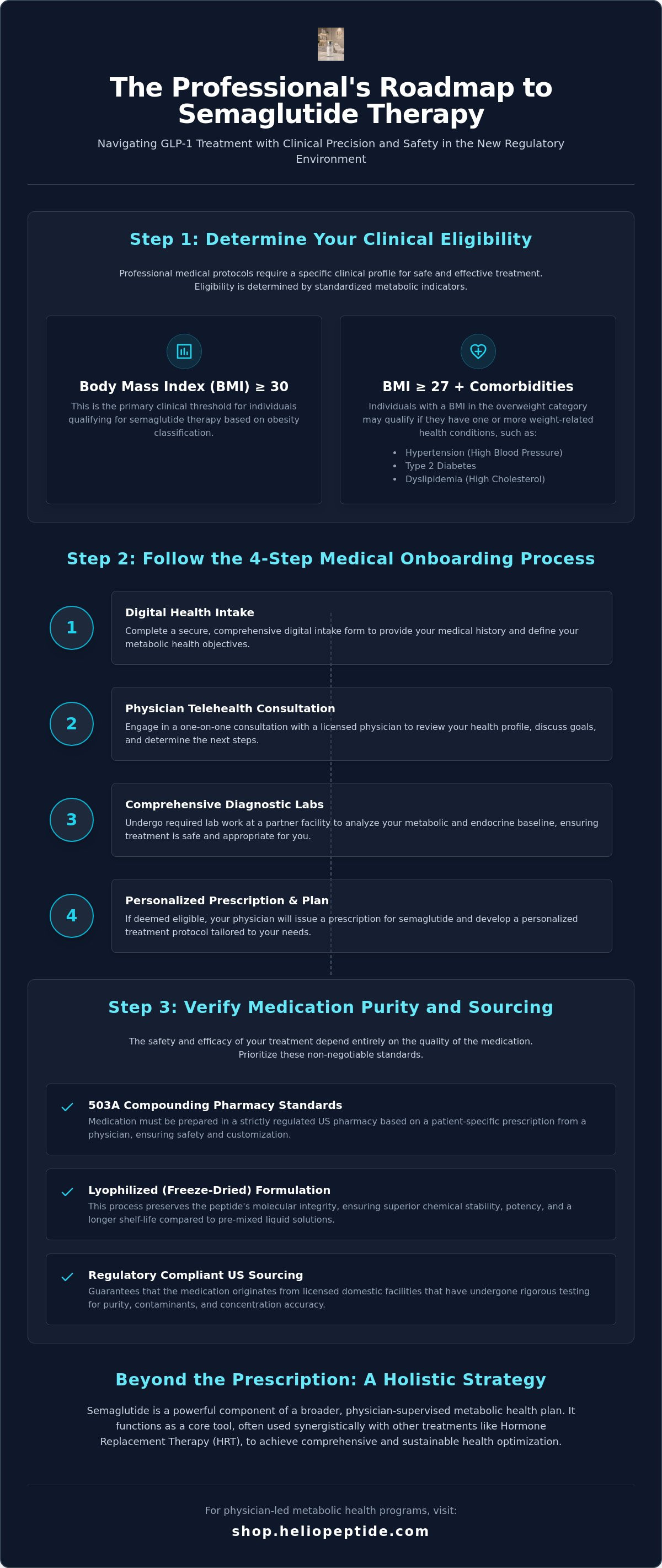
The current regulatory environment distinguishes between retail branded medications and the precise formulations provided through 503A compounding pharmacies. In clinical wellness programs, practitioners often utilize lyophilized semaglutide due to its enhanced chemical stability and extended shelf-life compared to pre-mixed liquid solutions. This freeze-drying process ensures that the peptide remains potent and free from degradation during transport and storage. Maintaining high standards of purity requires sourcing from US-licensed manufacturers that adhere to stringent quality control protocols.
- 503A Standards: These pharmacies are strictly regulated to prepare patient-specific medications based on individual physician orders, ensuring high levels of customization and safety.
- Lyophilization: The process of freeze-drying preserves the molecular integrity of the peptide, ensuring consistent bio-availability and potency upon reconstitution.
- Regulatory Compliance: Sourcing from domestic, licensed facilities guarantees that the medication has undergone rigorous testing for contaminants and concentration accuracy.
Learning how to get semaglutide safely requires a focus on these pharmaceutical standards to ensure that the intervention is both safe and effective for long-term metabolic optimization.
Clinical Eligibility: Are You a Candidate for Semaglutide?
Determining clinical suitability is the first critical step for anyone researching how to get semaglutide safely. While many retail platforms offer rapid approval based on self-reported data, a professional medical facilitator requires a nuanced assessment of your endocrine profile and metabolic baseline. This process is not merely a bureaucratic hurdle but a vital safety mechanism designed to ensure that the medication aligns with your biological needs. Standard protocols follow clinical guidelines for semaglutide, which typically prioritize individuals with a Body Mass Index (BMI) of 30 or greater. For those with a BMI of 27 or higher, eligibility is often established through the presence of weight-related comorbidities such as hypertension, type 2 diabetes, or dyslipidemia.
Absolute contraindications must be respected to ensure patient safety and long-term health. Individuals with a personal or family history of medullary thyroid carcinoma (MTC) or Multiple Endocrine Neoplasia syndrome type 2 (MEN 2) are disqualified from this specific peptide therapy. A thorough health history review is conducted to identify potential risks of pancreatitis or gallbladder disease, ensuring the treatment plan doesn't exacerbate underlying pathologies. This rigorous screening process distinguishes professional clinical care from standard retail transactions, positioning the physician as a disciplined gatekeeper to health optimization.
Beyond the BMI Scale
BMI is a limited metric that fails to distinguish between adipose tissue and lean muscle mass. In a clinical setting, we evaluate body composition to ensure that weight reduction targets fat mass while preserving metabolic health. Patients often combine GLP-1 therapy with specific peptides to prevent muscle loss, maintaining the structural integrity of the physique during the fat loss phase. This comprehensive approach addresses cardiovascular health and metabolic syndrome, moving beyond simple numbers on a scale toward true physical restoration.
Medical Screenings and Lab Work
Laboratory analysis provides the empirical data required for continuous physician oversight. Baseline blood work must include markers such as HbA1c to assess long-term glucose management and fasting insulin to detect occult insulin resistance. Lipid panels and renal function tests are also analyzed to create a comprehensive metabolic map. The interpretation of these complex data points allows a clinician to customize the dosage and monitoring frequency, avoiding the risks associated with blind dosing. This level of precision is a vital part of the process when learning how to get semaglutide within a professional wellness framework that prioritizes chemical purity and patient safety.
The 4-Step Process to Obtaining Semaglutide
The acquisition of clinical-grade peptides follows a structured medical protocol designed to ensure physiological compatibility and patient safety. For those determining how to get semaglutide through professional channels, the process is defined by four distinct phases of clinical oversight. This methodical approach begins with a comprehensive digital health intake, where your medical history, current pharmacological profile, and health objectives are documented with precision. This data provides the foundational context for the subsequent diagnostic phase, ensuring that the physician has a transparent view of your current health status before proceeding.
Physician-ordered laboratory analysis constitutes the second step, providing the empirical data necessary to validate clinical candidacy. These diagnostics evaluate metabolic health markers and endocrine function, ensuring that the treatment plan is grounded in your specific biological reality. Once the results are reviewed, a clinical consultation with a certified medical provider takes place. This session focuses on a clinical overview of semaglutide, its expected interactions, and the establishment of a baseline dosing schedule. Understanding how to get semaglutide requires a commitment to this disciplined roadmap, which concludes with prescription fulfillment and the initiation of ongoing metabolic monitoring.
The Virtual Consultation Experience
Telehealth has evolved into a sophisticated platform for health optimization. During a specialized GLP-1 appointment, the dialogue shifts from general weight loss to total metabolic restoration. The physician evaluates your goals, whether they involve specific fat loss targets or broader improvements in insulin sensitivity. This interaction is critical for creating a personalized dosing protocol that responds to your unique physiological feedback. It's a professional exchange where clinical expertise meets your personal health objectives, ensuring the medication is integrated safely into your lifestyle.
Prescription Fulfillment and Logistics
Once a prescription is authorized, the logistical phase ensures the medication's chemical integrity remains uncompromised. Medications are shipped directly from US-licensed, regulated pharmacies to the patient's residence. Because peptides are sensitive to thermal fluctuations, the fulfillment process utilizes temperature-controlled packaging to maintain molecular stability. This transition from the clinical consultation to the active treatment phase is seamless. You'll receive the necessary supplies along with clear instructions for administration, allowing you to begin your metabolic health plan with confidence in the purity of the product.
Sourcing Standards: Ensuring Medication Purity and Safety
The clinical efficacy of GLP-1 therapy is inextricably linked to the chemical integrity of the peptide itself. For those investigating how to get semaglutide, the primary risk isn't the medication's mechanism but rather the proliferation of unregulated sourcing channels. Professional medical facilitators distinguish between pharmaceutical-grade formulations and the "research chemicals" found in the grey market. These unregulated products often lack a Certificate of Analysis (COA), leaving patients vulnerable to contaminants, incorrect concentrations, or degraded molecular structures. Securing medication through a licensed medical entity ensures that every vial has been subjected to rigorous verification protocols and clinical-grade manufacturing standards.
Safety in peptide therapy requires a transparent chain of custody from the manufacturer to the patient. Clinical sourcing relies on established regulatory environments that mandate third-party testing for sterility and pyrogenicity. When you prioritize professional oversight, you're not just purchasing a product; you're investing in a verified pharmacological process that guarantees the bioavailability and safety of the compound. This level of scrutiny is essential for maintaining the metabolic balance that semaglutide is designed to restore.
Understanding 503A Pharmacy Regulations
State boards of pharmacy regulate 503A facilities to ensure they meet high standards for patient-specific compounding. These pharmacies are prohibited from mass-producing medications, focusing instead on the precise needs of an individual patient as dictated by a physician's prescription. This model allows for a higher degree of customization and safety monitoring than large-scale industrial manufacturing. The 503A pharmacy standard is a clinical safeguard that guarantees your medication is prepared in a sterile environment under the supervision of licensed pharmacists.
Lyophilization vs. Liquid Stability
The stability of a peptide is a critical factor in its long-term performance. While many commercial products are distributed in pre-filled pens, clinical programs often utilize lyophilized semaglutide to ensure maximum shelf-life and resistance to thermal degradation. Lyophilization, or freeze-drying, removes moisture from the peptide while it's frozen, locking the molecular structure into a stable state until it's reconstituted for use. This process prevents hydrolysis, a common form of chemical breakdown that occurs in liquid solutions over time. Understanding the nuances of peptide injections for weight loss helps patients appreciate why reconstitution at the time of use is often the preferred protocol for maintaining peak potency.
By adhering to these rigorous sourcing standards, you ensure that your metabolic health journey is supported by the highest quality pharmaceuticals available. To begin your supervised protocol with high-purity peptides, access our clinical-grade semaglutide solutions here.
Integrating Semaglutide into a Professional Wellness Program
Viewing GLP-1 therapy as a standalone intervention is a narrow approach that often overlooks the complexities of human physiology. For those who have secured a prescription after learning how to get semaglutide, the focus must shift toward comprehensive metabolic integration. The medication is most effective when it functions as one component of a broader endocrine strategy, particularly when paired with hormonal optimization. Physician-supervised HRT or TRT programs can address underlying deficiencies that might otherwise hinder the drug's efficacy, ensuring that fat loss occurs in an environment of hormonal balance and physical vitality.
Continuous clinical oversight allows for precise titration and the management of secondary physiological effects. As the body adapts to the medication, a physician may adjust the dosage to maintain progress while minimizing gastrointestinal discomfort or other common side effects. This transition from the induction phase to long-term metabolic maintenance requires a disciplined monitoring schedule; this ensures that the patient maintains lean muscle mass and metabolic rate throughout the journey. It's a methodical process where results are the direct consequence of scientific methodology rather than anecdotal hype.
Advanced Peptide Combinations
The landscape of weight management is rapidly evolving toward multi-receptor agonists. While semaglutide targets the GLP-1 receptor, newer research into triple agonist peptide for weight loss explores the synergistic effects of targeting GIP and glucagon receptors simultaneously. These advanced protocols, such as those involving Retatrutide, aim to increase energy expenditure and optimize glucose regulation more aggressively than single-agonist therapies. This multi-pathway approach represents the future of clinical obesity management, providing a more robust framework for those with significant metabolic resistance.
The Helio Peptide Clinical Approach
Our methodology is rooted in the rigorous standards of pharmaceutical safety and professional accountability. We maintain an unwavering commitment to sourcing only from FDA-regulated 503A pharmacies, ensuring that every patient receives high-purity, clinical-grade formulations. This model provides continuous access to medical experts who can refine your protocol based on real-time diagnostic data and physiological feedback. By prioritizing regulatory compliance and physician-led guidance, we bridge the gap between aspirational wellness and scientific precision. Secure your future health by enrolling in the best online semaglutide program today and begin a supervised journey toward metabolic restoration.
Advancing Your Metabolic Restoration Strategy
Securing a clinical-grade peptide protocol is a critical investment in your long-term health architecture. By prioritizing 503A pharmacy standards and physician-led supervision, you ensure that your metabolic intervention remains both safe and effective. We've established that the path for how to get semaglutide is defined by rigorous diagnostic testing and pharmaceutical purity rather than simple retail convenience. This methodical approach allows for the seamless integration of GLP-1 therapy with advanced metabolic tools, including physician-supervised HRT and high-potency options like Retatrutide 10mg.
Helio Peptide provides the specialized framework necessary to navigate this complex regulatory environment with absolute confidence. Our protocols are designed for those who value scientific precision and transparent medical guidance above all else. You can initiate your journey toward physical restoration by engaging with a clinician who understands the intersection of pharmaceutical science and peak performance. Begin your physician-supervised semaglutide consultation to establish your personalized roadmap for metabolic optimization. Achieving your health objectives is a direct result of disciplined methodology and professional oversight.
Frequently Asked Questions
Do I need a prescription to get semaglutide in 2026?
Yes, a valid medical prescription is mandatory to obtain semaglutide in 2026. This regulation ensures that a licensed physician evaluates your metabolic profile and health history to prevent adverse reactions. As the FDA has resolved the national shortage of branded versions, the oversight of clinical sourcing has become even more rigorous to ensure patient safety and product authenticity.
Can I get a semaglutide prescription through a telehealth provider?
You can obtain a legitimate prescription through specialized telehealth platforms that prioritize clinical standards. These services facilitate digital health intakes and physician-ordered laboratory testing to determine candidacy. When investigating how to get semaglutide through virtual channels, it's essential to verify that the provider utilizes US-licensed physicians and adheres to established diagnostic protocols rather than offering automated approvals.
What is the difference between Wegovy and compounded semaglutide?
Wegovy is a commercially branded medication produced by a single manufacturer, while compounded semaglutide is a patient-specific formulation prepared by 503A compounding pharmacies. While both contain the same active peptide, compounded versions offer a level of customization and are often utilized in specialized wellness programs. It's vital to distinguish these regulated formulations from unapproved research chemicals found on unregulated marketplaces.
How long does the medical consultation process take?
The duration of the medical consultation process typically depends on the turnaround time for your diagnostic laboratory results. Once your blood work is analyzed, a clinical consultation with a medical provider is scheduled to review your metabolic markers and establish a dosing protocol. This methodical approach ensures that your treatment plan is grounded in empirical data rather than a hurried retail transaction.
Will insurance cover semaglutide for weight loss?
Insurance coverage for semaglutide varies significantly based on individual policy terms and specific clinical indicators. Many commercial plans require a documented BMI of 30 or greater, or 27 with weight-related comorbidities, for prior authorization. While branded list prices remain high, some patients utilize manufacturer savings offers or opt for clinical-grade peptides through self-pay programs that bypass traditional insurance hurdles.
Is lyophilized semaglutide as effective as the branded version?
Lyophilized semaglutide is pharmacologically equivalent to the branded version when sourced from a regulated 503A pharmacy. The freeze-drying process actually enhances the molecular stability and shelf-life of the peptide by preventing hydrolysis. When reconstituted according to clinical guidelines, the medication maintains the same high level of bioavailability and efficacy as liquid formulations found in pre-filled pens.
What happens if I don’t qualify for semaglutide after my labs?
If your laboratory analysis indicates that you don't meet the clinical criteria for GLP-1 therapy, your physician will provide a detailed explanation of the findings. In such cases, the focus shifts toward identifying alternative metabolic restoration strategies, such as physician-supervised HRT or advanced peptide therapy. The goal is always to find the safest and most effective pathway for your specific physiological profile.
Can I switch from another weight loss program to Helio Peptide?
Patients can transition to our program after a comprehensive medical review of their current protocol and recent diagnostic data. This transition ensures that your new dosing schedule is optimized for your current metabolic status and weight loss progress. Our clinical team facilitates this move to ensure you receive the benefits of high-purity sourcing and continuous physician oversight.
