
Semaglutide 15 mg Results: Clinical Efficacy and Metabolic Outcomes in 2026
Achieving a 15% to 20% reduction in total body mass is no longer a theoretical projection but a documented clinical outcome for patients utilizing high-purity metabolic protocols. You have likely encountered significant conflicting information regarding dosing schedules and the critical distinction between total vial milligrams and weekly administration amounts. It is frustrating to navigate a landscape where generic advice often overlooks the precision required for true physiological optimization. This clinical analysis provides a comprehensive look at the semaglutide 15 mg results you can expect when utilizing a professional, physician-supervised protocol designed for maximum metabolic impact.
The transition from standard weight management to advanced metabolic restoration requires a deep understanding of how specific concentrations influence biological markers. We will examine the measurable shifts in insulin sensitivity, the reality of body fat percentage reduction, and the rigorous safety standards governing 503A pharmacy sourcing in 2026. By prioritizing clinical-grade lyophilized purity and professional oversight, patients can move beyond the uncertainty of substandard sourcing toward a predictable and evidence-based trajectory for physical optimization. This guide serves as a technical roadmap for those seeking to understand the intersection of pharmaceutical precision and long-term metabolic health.
Key Takeaways
- Understand the clinical utility of the 15 mg lyophilized format as a high-capacity, multi-dose vial designed for precise metabolic titration.
- Analyze the expected semaglutide 15 mg results, including a projected 15% to 20% reduction in body weight and significant improvements in glycemic markers over a standard cycle.
- Evaluate the cost-efficiency and therapeutic flexibility of vial-based protocols compared to fixed-increment delivery systems for long-term weight maintenance.
- Learn how to integrate nutrient-dense dietary frameworks and resistance training to protect metabolic rate and prevent muscle loss during rapid weight reduction.
- Discover the safety benefits of physician-supervised telehealth models that leverage US-licensed 503A pharmacies for guaranteed peptide purity and regulatory compliance.
Understanding Semaglutide 15 mg: The Clinical Framework
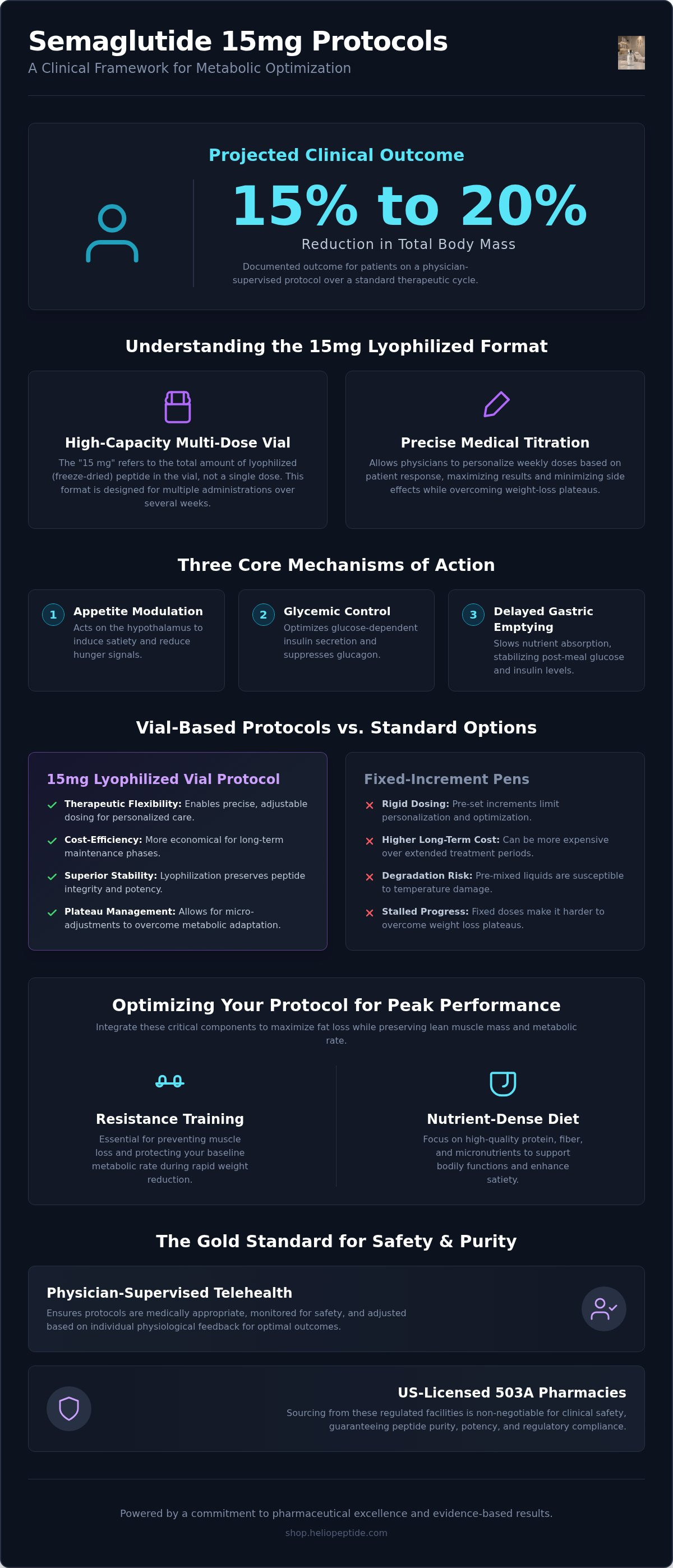
The 15 mg lyophilized format represents a specialized clinical tool within the landscape of modern peptide therapy. It is not a single-use dose but rather a high-capacity, multi-dose vial containing 15 mg of active peptide concentrated in a 3ml volume. This specific configuration allows for precise titration and personalized dosing schedules under medical supervision. In the context of 2026 clinical standards, this format is preferred for its stability and the flexibility it offers in achieving optimal semaglutide 15 mg results. Professional oversight is required to interpret the physiological feedback from this concentration, as individual metabolic responses vary based on baseline insulin sensitivity and body composition.
The Mechanism of Action: Beyond Weight Loss
Semaglutide functions as a potent GLP-1 receptor agonist, a class of medication that has revolutionized the management of metabolic disorders. For a comprehensive overview of semaglutide, one must look at how it interacts directly with the hypothalamus to modulate appetite signals and induce prolonged satiety. GLP-1 receptor agonism is the pharmacological activation of pathways that mimic natural incretin hormones to optimize glucose-dependent insulin secretion while simultaneously suppressing inappropriate glucagon release. Beyond its neurological impact, the peptide significantly reduces gastric emptying rates. This delay ensures a more gradual absorption of nutrients, which effectively stabilizes post-prandial glucose levels and prevents the insulin spikes often associated with systemic inflammation.
Lyophilization: Ensuring Peptide Integrity for Results
Lyophilization, or freeze-drying, is the gold standard for preserving the delicate primary and secondary structures of therapeutic peptides. This process involves removing water from the frozen product through sublimation, leaving behind a stable powder that retains its biological activity for extended periods. Unlike standard pre-filled liquid pens, which are susceptible to temperature fluctuations and rapid degradation, lyophilized formulations offer superior structural integrity. This stability is critical for maintaining the potency required to produce consistent semaglutide 15 mg results over a multi-week cycle.
Sourcing these compounds from US-licensed 503A pharmacies is a non-negotiable requirement for clinical safety. These facilities operate under rigorous regulatory standards that ensure every vial meets exact purity and potency benchmarks. When a protocol is facilitated through a 503A pharmacy, patients receive a product free from the contaminants or concentration variances often found in non-regulated research-grade alternatives. This commitment to pharmaceutical excellence provides the foundation for predictable metabolic shifts and long-term physiological optimization. It's the only way to ensure the safety of the manufacturing process.
Realistic Results: What to Expect from a 15 mg Protocol
Clinical data from the STEP trials indicates that patients adhering to a consistent protocol can expect an average weight reduction of approximately 15% over a 68-week period. These semaglutide 15 mg results are predicated on maintaining therapeutic levels through precise titration and long-term adherence. Unlike fixed-dose pens, the 15 mg multi-dose vial provides the volume necessary for several weeks of maintenance, allowing for granular adjustments if a weight loss plateau occurs. Clinicians often recommend reviewing the technical specifications of the 15 mg format to understand its role in sustained maintenance. This flexibility is essential for overcoming the metabolic adaptations that often stall progress in fixed-increment delivery systems.
Metabolic optimization extends beyond simple caloric restriction by improving systemic biomarkers and restoring hormonal balance. It represents a proactive shift in biological function rather than a passive state of deprivation. Reductions in systolic blood pressure and significant improvements in lipid profiles, specifically LDL and triglycerides, are frequently documented. The medical community recognizes these benefits as foundational to longevity, as evidenced by the FDA approval for cardiovascular risk reduction in specific adult populations. This transition from weight loss to systemic risk management marks a critical evolution in professional peptide therapy.
Month-by-Month Progress Milestones
Month 1 primarily involves metabolic recalibration. Patients often report reduced systemic inflammation and early shifts in glycemic stability before significant weight loss is recorded. By months 3 through 6, significant adipose tissue reduction becomes evident as the body shifts into a state of sustained lipolysis. Sustaining these semaglutide 15 mg results over 12 months or longer requires maintaining metabolic flexibility, which effectively prevents the compensatory hormonal mechanisms that often trigger weight regain.
Body Composition Changes: Fat vs. Muscle
Preserving lean muscle mass is a primary clinical objective during rapid weight loss cycles. Rapid reduction in total mass can inadvertently lead to sarcopenia if protein intake and resistance training are neglected. Physician-led programs incorporate specific protein optimization strategies to ensure that the weight lost is primarily adipose tissue. Monitoring visceral fat reduction remains the most reliable indicator of improved metabolic health; this specific fat deposit is highly correlated with insulin resistance and chronic systemic disease. Protecting muscle mass ensures that the basal metabolic rate remains high enough to support long-term weight maintenance.
Comparing 15 mg Lyophilized Protocols to Standard Options
Standard fixed-increment pens offer a generalized approach to weight management, but they often lack the granular control required for advanced metabolic optimization. The 15 mg lyophilized format provides a distinct alternative by allowing for micro-adjustments in dosing volume. This precision is essential for achieving consistent semaglutide 15 mg results, as it enables patients to navigate the titration process without the rigid constraints of pre-filled delivery systems. In a clinical setting, the ability to adjust the concentration based on real-time physiological feedback ensures that the therapeutic window is maintained with higher accuracy than retail options allow.
Peptide stability remains a critical factor in 2026 protocol standards. Lyophilized peptides are freeze-dried to preserve their primary molecular structure, making them significantly more resilient to environmental stressors than standard liquid formulations. While retail pens require strict cold-chain management from the point of manufacture to administration, lyophilized vials maintain biochemical integrity for longer durations. This structural stability directly correlates with the potency of the medication, ensuring that each administration delivers the exact peptide sequence required to trigger the desired metabolic shifts.
The 503A Pharmacy Standard
Patient safety and result consistency are inextricably linked to the regulatory environment of the manufacturing facility. Sourcing peptides from US-licensed 503A compounding pharmacies ensures compliance with rigorous USP <797> and <800> standards for sterile preparation. This oversight is a necessary safeguard against the heavy metal contamination and sequencing errors often associated with generic overseas sourcing. For those seeking a professional framework, The Best Online Semaglutide Program prioritizes these clinical-grade standards to guarantee pharmaceutical purity. This level of transparency is the only way to ensure that the biological response matches the clinical intent.
Dosing Precision and Titration
The role of physician guidance is paramount when escalating to maintenance levels. Individual metabolic response rates vary, and a generic dosing schedule may lead to unnecessary gastrointestinal distress or premature plateaus. Data from a Phase 2 clinical trial on high-dose semaglutide suggests that higher concentrations can be highly effective when introduced through a controlled, evidence-based titration schedule. By utilizing the 15 mg multi-dose format, clinicians can tailor the escalation process to the patient's specific tolerance levels. This methodical approach reduces the frequency of side effects and facilitates a smoother transition into long-term metabolic restoration, ultimately securing more sustainable semaglutide 15 mg results over the course of the treatment cycle.
Optimizing Your Protocol for Peak Performance
Maximizing the efficacy of a high-purity peptide depends on the synchronization of pharmacological intervention with specific lifestyle variables. While the medication modulates appetite and insulin response, the quality of the tissue lost and the sustainability of the metabolic rate are determined by the patient's physiological environment. Adhering to a nutrient-dense, high-protein dietary framework is essential. Consuming 1.2 to 1.5 grams of protein per kilogram of body weight ensures that the body has the necessary amino acids to preserve lean tissue during rapid lipolysis. This nutritional foundation directly influences the long-term semaglutide 15 mg results by preventing the metabolic slowdown often associated with aggressive weight reduction.
Resistance training serves as a critical metabolic safeguard. Engaging in hypertrophy-focused exercise twice or three times weekly provides the mechanical stimulus required to protect muscle mass. Without this stimulus, the body may enter a catabolic state that compromises the basal metabolic rate. Furthermore, GLP-1 therapy requires diligent hydration and electrolyte management. These peptides can subtly alter thirst cues, making it necessary to proactively consume water and essential minerals like magnesium, sodium, and potassium to maintain cellular function. Monitoring biomarkers such as fasting insulin, HbA1c, and lipid panels every 90 days allows for data-driven adjustments to the protocol. For patients seeking to initiate a high-purity protocol, acquiring clinical-grade Semaglutide 15 mg from a regulated source is the first step toward optimization.
The Reconstitution Process: Clinical Accuracy
Maintaining the integrity of the lyophilized peptide requires a sterile and precise reconstitution process. Patients must use bacteriostatic water to ensure the solution remains free from microbial growth over the multi-week administration period. The process involves gently introducing the diluent into the vial, allowing the powder to dissolve without vigorous shaking, which could denature the delicate peptide bonds. To achieve the standard clinical concentration for this protocol, 3ml of bacteriostatic water should be introduced to the 15 mg lyophilized vial to allow for precise volumetric measurement. Accuracy during this stage is the only way to guarantee that the intended dosage matches the biological delivery.
Managing Common Side Effects
Gastrointestinal distress and nausea are the most frequently reported side effects during the initial titration phase. These symptoms are often a direct result of dosage speed rather than the medication itself. Clinicians recommend a methodical escalation schedule, allowing the body to adapt to the increased GLP-1 receptor activity. If adverse reactions persist, it's necessary to consult your supervising physician to evaluate whether a temporary reduction in volume is required. Managing these responses effectively ensures that the patient can remain compliant with the protocol, which is the primary driver of successful semaglutide 15 mg results. Prioritizing smaller, more frequent meals can also alleviate the pressure on the digestive system as gastric emptying rates adjust.
The Helio Peptide Advantage: Physician-Supervised Excellence
Helio Peptide functions as a specialized medical facilitator, bridging the gap between isolated weight loss attempts and total metabolic restoration. The brand positions itself above the standard retail market by integrating pharmacological precision with comprehensive physician oversight. Achieving optimal semaglutide 15 mg results requires more than just access to a peptide; it demands a clinical environment where biological markers are monitored and protocols are adjusted in real time. This physician-led model ensures that every intervention is grounded in established safety standards and regulatory compliance, moving beyond the anecdotal hype often found in the fitness industry.
Telehealth in 2026 has evolved into a sophisticated medical platform where distance no longer compromises the quality of professional care. Patients gain direct access to US-licensed clinicians who specialize in the intersection of metabolic health and physical optimization. This level of supervision is critical for interpreting the complex physiological shifts that occur during a high-dose protocol. By utilizing a secure medical platform, individuals can transition from fragmented, self-directed efforts to a structured, evidence-based trajectory. Personalized wellness is not a vague aspiration here; it's the inevitable consequence of a rigorous scientific methodology and disciplined clinical protocol.
Holistic Health Synchronization
Weight loss often stalls when underlying hormonal imbalances are left unaddressed. Deficiencies in testosterone or irregularities in thyroid function can create biological resistance to GLP-1 therapy, making it difficult to reach peak performance. Helio Peptide solves this through a unified approach that synchronizes peptide administration with Physician-Supervised HRT. This integration allows for the simultaneous optimization of metabolic rate and hormonal balance, ensuring that the body is primed for adipose tissue reduction. Managing these variables on a single platform creates a synergistic effect that standard weight loss programs cannot replicate, leading to superior long-term outcomes.
Sourcing Transparency and Quality Assurance
The integrity of the medication is the primary determinant of both safety and clinical efficacy. Every 15 mg vial provided through the platform is sourced exclusively from FDA-regulated 503A compounding pharmacies. These partnerships guarantee that the lyophilized peptide meets rigorous clinical purity standards, remaining free from the contaminants or sequencing errors found in non-regulated markets. For a detailed analysis of these standards, patients should consult the Semaglutide 15 mg Lyophilized Pillar. This commitment to transparency ensures that the semaglutide 15 mg results documented in clinical literature are achievable through a safe, regulated, and professionally managed protocol. Trust is built through this emphasis on regulatory compliance and professional grade solutions.
Advancing Your Metabolic Restoration Strategy
The transition toward peak physical performance is defined by the rigorous application of clinical standards and the integration of specialized medical oversight. As established, the 15 mg lyophilized format provides the necessary structural stability and dosing flexibility to overcome traditional weight loss plateaus. By prioritizing pharmaceutical-grade sourcing from 503A pharmacies, patients ensure that their biological response is driven by high-purity peptides rather than substandard alternatives. Achieving optimal semaglutide 15 mg results ultimately depends on this synergy between advanced pharmacology and comprehensive hormonal synchronization.
Helio Peptide serves as the authoritative gatekeeper to this level of optimization, offering access to over 70 advanced peptide and hormone products. Every protocol is facilitated by US-licensed physicians who specialize in navigating the complexities of metabolic health. This disciplined approach eliminates the uncertainty of generic advice, providing a clear and evidence-based trajectory for those committed to long-term wellness. You have the opportunity to move beyond standard retail options toward a future defined by scientific precision and restored vitality. Begin your physician-supervised Semaglutide 15 mg program today and take the definitive step toward total physiological optimization.
Frequently Asked Questions
How much weight can I realistically lose with Semaglutide 15 mg?
Clinical trials demonstrate an average weight reduction of approximately 15% of baseline body weight over a 68-week period. These results are contingent upon consistent administration and the achievement of maintenance dosage levels under medical supervision. Individual outcomes vary based on baseline metabolic health, adherence to nutritional frameworks, and the integration of resistance training to protect lean mass.
What is the difference between 15 mg total vial content and my weekly dose?
The 15 mg designation indicates the cumulative mass of the peptide contained within the vial rather than the amount administered in a single injection. A weekly maintenance dose is typically a smaller fraction, such as 2.4 mg. Patients must follow the specific volumetric instructions provided by their clinician to ensure accurate dosing from the reconstituted 3ml solution.
Is lyophilized Semaglutide more effective than liquid versions?
Lyophilization is considered the gold standard for preserving the delicate biochemical structure of therapeutic peptides. By removing water through sublimation, the peptide remains structurally stable and resistant to the rapid degradation often seen in pre-filled liquid formulations. This structural integrity is essential for achieving predictable semaglutide 15 mg results throughout the entire duration of the treatment cycle.
How long does a 15 mg vial of Semaglutide last?
The longevity of a 15 mg vial is determined by the specific weekly dose prescribed by your supervising physician. For a patient on a standard 2.4 mg weekly maintenance protocol, a single vial provides approximately six weeks of treatment. During the initial titration phase where doses are significantly lower, the vial's capacity will extend over a longer period.
Can I take Semaglutide 15 mg if I am also on TRT or HRT?
Integrating peptide therapy with TRT or HRT is often recommended to achieve total metabolic optimization. While semaglutide addresses glycemic control and satiety, hormone replacement therapies protect lean muscle mass and maintain the basal metabolic rate. This holistic synchronization addresses the multi-faceted nature of weight management and hormonal balance through a unified clinical framework.
What happens if I miss a dose during my 15 mg protocol?
If a dose is missed, it should be administered as soon as it's remembered, provided the next scheduled dose is more than 48 hours away. If the next dose is less than two days away, the missed dose should be bypassed to maintain the established protocol and prevent over-concentration. Consistency is the primary driver of successful semaglutide 15 mg results, so patients should utilize tracking tools to prevent frequent omissions.
Are the results from Semaglutide 15 mg permanent?
Weight loss results are sustained through the development of metabolic flexibility and long-term adherence to a maintenance protocol. Clinical data suggests that many patients benefit from a lower maintenance dose to prevent the compensatory biological mechanisms that often trigger weight regain. The ultimate objective is a permanent shift in physiological function rather than a temporary reduction in total body mass.
Why is physician supervision required for a 15 mg Semaglutide program?
Professional oversight is necessary to navigate the complexities of high-dose peptide therapy and ensure regulatory compliance. A supervising physician monitors critical biomarkers, manages side effect profiles, and guarantees that the medication is sourced from a licensed 503A pharmacy. This clinical gatekeeping is the only way to ensure patient safety and pharmaceutical purity in a high-capacity program.
