
Retatrutide Side Effects: A Clinical Guide to Triple-Agonist Safety in 2026
While the weight loss potential of triple-agonist therapy is unprecedented, 18.2% of participants in recent Phase 3 trials discontinued treatment at the highest dosage due to tolerability issues. This statistic highlights the necessity of a rigorous clinical approach when evaluating retatrutide side effects and their impact on long-term adherence. As a GIP, GLP-1, and glucagon receptor agonist, this molecule introduces a more complex physiological profile than its predecessors. Understanding these reactions isn't merely a matter of patient comfort; it's a critical component of professional medical oversight and regulatory compliance.
You likely recognize that while the metabolic benefits of advanced peptide therapy are significant, the transition to a triple-agonist requires a more nuanced management strategy to prevent severe gastrointestinal distress or cardiovascular anxiety. This guide provides a professional medical overview of the safety profile associated with this investigational compound, offering physician-led mitigation strategies for common adverse reactions. We'll examine the specific data surrounding heart rate elevations, the unique neurological sensation known as dysesthesia, and the established protocols used to maintain patient safety during the titration process.
Key Takeaways
- Analyze the triple-receptor synergy of GLP-1, GIP, and glucagon to understand how this first-in-class molecule drives metabolic optimization.
- Identify the dose-dependent nature of retatrutide side effects, particularly the frequency of nausea and gastrointestinal transit alterations during the escalation phase.
- Differentiate between standard incretin responses and unique clinical markers such as transient heart rate increases and skin dysesthesia.
- Master the "Low and Slow" titration protocols and foundational hydration strategies designed to minimize physiological discomfort and maximize treatment adherence.
- Establish the necessity of physician-led supervision and 503A pharmacy sourcing to ensure pharmacological stability and the absence of unregulated contaminants.
Understanding Retatrutide: Mechanism and Clinical Safety Profile
Retatrutide is a first-in-class unimolecular peptide that represents the pharmacological evolution of incretin mimetics. By simultaneously targeting the glucagon-like peptide-1 (GLP-1), glucose-dependent insulinotropic polypeptide (GIP), and glucagon (GCG) receptors, it achieves a multi-pathway metabolic stimulus. While its efficacy in weight reduction is profound, the complexity of its mechanism necessitates a detailed analysis of retatrutide side effects to ensure patient safety and protocol adherence. Understanding Retatrutide: Mechanism and Clinical Safety Profile involves recognizing that while the safety profile mirrors many aspects of dual-agonist therapies, the addition of glucagon receptor activity introduces specific physiological variables that require clinical monitoring.
The Triple-Agonist Difference: GLP-1, GIP, and Glucagon
The metabolic impact of retatrutide is derived from the synergistic activation of three hormone pathways. GLP-1 and GIP receptors primarily regulate insulin secretion and delay gastric emptying, which contributes to the familiar gastrointestinal profile seen in earlier therapies. The integration of glucagon receptor agonism distinguishes this compound by increasing energy expenditure and metabolic rate through potential thermogenic effects. Triple-receptor agonism is the evolution of metabolic peptide therapy. This third pillar of activation is responsible for the accelerated weight loss observed in clinical trials, yet it also contributes to the distinct cardiovascular and neurological observations that clinicians must manage.
Phase 2 and Phase 3 Safety Data Overview
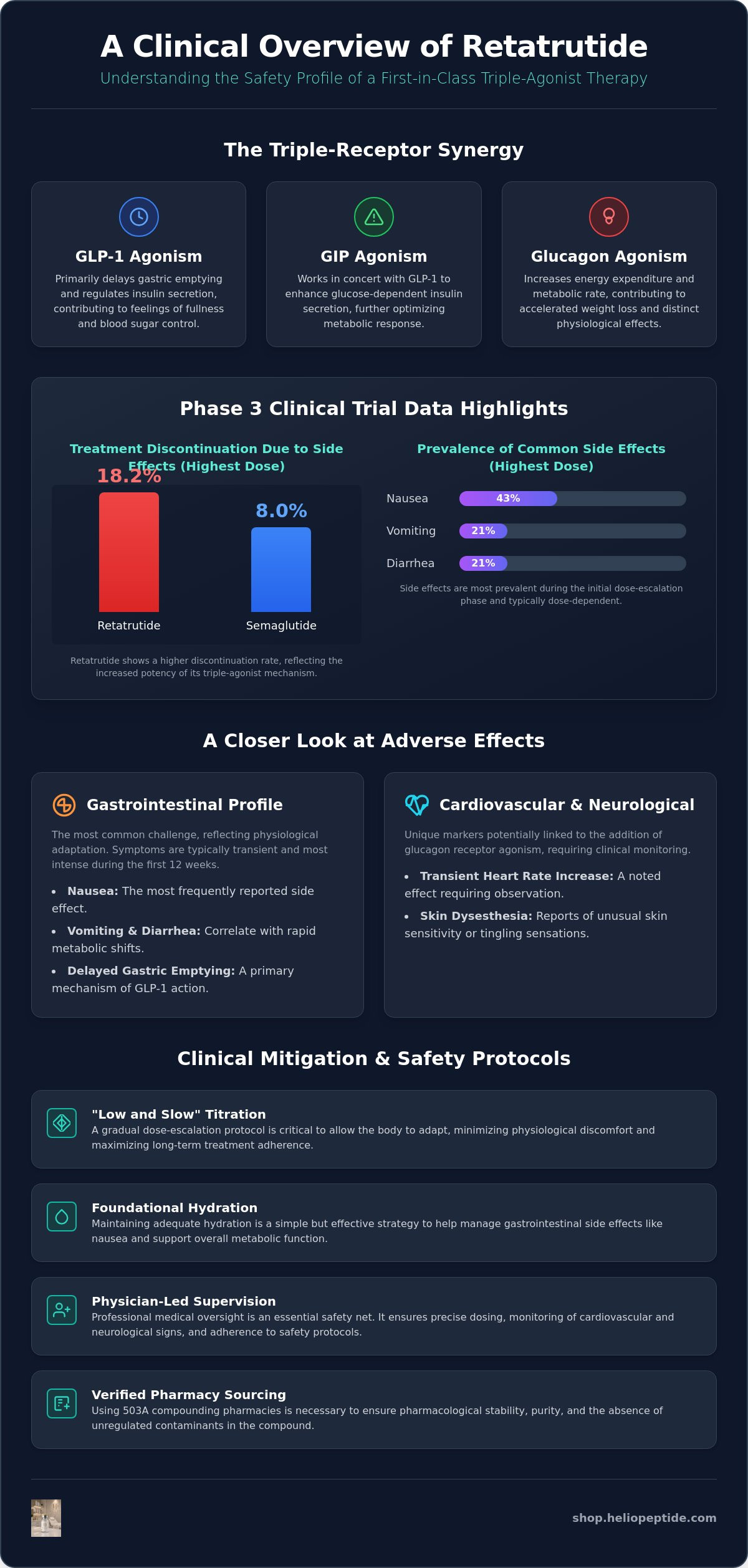
The clinical safety profile has been established through the TRIUMPH program, where adverse event frequency was found to be dose-dependent. Data from Phase 3 trials indicates that retatrutide side effects led to treatment discontinuation in approximately 11.3% to 18.2% of participants at the 12mg dose. These figures are higher than the 8.0% discontinuation rate typically associated with semaglutide, reflecting the increased potency of the triple-agonist mechanism. Clinical trials demonstrate that side effects are most prevalent during the initial dose-escalation phase, requiring patients to adapt to significant gastrointestinal and metabolic shifts. This relationship between weight loss velocity, which can exceed 28% of total body mass, and gastrointestinal adaptation is a primary focus of current safety research.
- Nausea was reported by up to 60% of subjects in Phase 2 trials and 43% in Phase 3 trials at the highest dosage tiers.
- Vomiting and diarrhea occurred in 21% to 33% of participants, often correlating with the rapid metabolic changes induced by triple-receptor activation.
- Transient increases in resting heart rate and reports of skin sensitivity suggest that glucagon receptor agonism adds metabolic complexity and specific cardiovascular considerations.
The relationship between the magnitude of weight loss and the intensity of gastrointestinal adaptation suggests that precise physician-led dosing is paramount for maintaining long-term tolerability. While the compound remains an investigational drug, the data gathered from controlled clinical environments provides the foundation for established safety protocols.
Common Gastrointestinal Side Effects and Dosage Correlation
Gastrointestinal disturbances represent the most prevalent clinical challenge during the administration of triple-receptor agonists. While the efficacy of the compound is established, retatrutide side effects are notably concentrated within the digestive system during the initial twelve weeks of therapy. These reactions aren't indicative of toxicity but rather reflect the physiological adaptation of the gut to increased GLP-1 and GIP receptor activity. Most symptoms are transient. They typically decrease in intensity once the body achieves a metabolic steady-state, provided that the titration schedule is followed with precision.
Dose-Dependent Nausea and Vomiting
The incidence of nausea and emesis shows a clear correlation with dosage thresholds. Clinical data indicates that nausea affects approximately 43% of participants at the 12mg dose, whereas lower tiers like 4mg and 8mg demonstrate significantly higher tolerability. Vomiting was reported in roughly 21% of subjects at the maximum dosage. These acute events often manifest within 24 to 48 hours post-administration. Rapid titration protocols significantly increase the risk of these distress signals. A controlled, physician-monitored approach is essential to mitigate these risks. Accessing clinical-grade retatrutide solutions ensures that the lyophilized peptide maintains the stability required for predictable dosing and improved tolerability.
Managing Gastric Emptying and Dyspepsia
The primary physiological cause of persistent fullness and bloating is the pharmacological delay in gastric motility. This slowing of the digestive process is a secondary mechanism for appetite suppression, but it can lead to dyspepsia if dietary habits aren't adjusted. Gastrointestinal transit changes are highly individualized. While some patients experience constipation due to delayed emptying, up to 33% of trial participants reported diarrhea at higher doses. These shifts require proactive management to maintain comfort and adherence. To alleviate pressure on the digestive system, clinicians recommend several strategies:
- Reduction of high-lipid and high-fiber meals during the first 48 hours post-injection.
- Consumption of smaller, nutrient-dense portions to accommodate reduced gastric volume.
- Prioritization of hydration to support transit and electrolyte balance.
Distinguishing between expected adaptation and severe gastrointestinal events is a critical skill for the patient. While mild nausea is an anticipated component of retatrutide side effects, persistent vomiting or intense abdominal pain requires immediate clinical consultation to rule out rare complications. Most patients find that symptoms peak during the first few days of a new dose tier and gradually subside as the endocrine system recalibrates to the triple-agonist stimulus.
Neurological and Cardiovascular Effects: Dysesthesia and Heart Rate
While gastrointestinal adaptation is common to all incretin mimetics, triple-agonist therapy introduces distinct neurological and cardiovascular markers that require clinical attention. These retatrutide side effects are primarily driven by the compound’s interaction with glucagon receptors, which are found in tissues beyond the digestive tract. Understanding these responses is vital for patients transitioning from dual-agonists to this more potent metabolic stimulus. Monitoring these systemic shifts ensures that the physiological optimization remains within safe clinical parameters throughout the duration of the protocol.
Understanding Dysesthesia and Skin Sensitivity
Dysesthesia is a unique sensory phenomenon reported in approximately 12.5% to 20.9% of participants receiving the highest dosage tiers in clinical trials. This condition often manifests as allodynia, where the skin becomes hypersensitive to stimuli that wouldn't typically cause discomfort, such as the touch of clothing or a light breeze. Patients frequently describe these sensations as tingling, burning, or a "pins and needles" feeling localized to specific regions. Typical locations for sensitivity include the back, chest, and extremities. Dysesthesia is generally mild and resolves without intervention. These neurological sensations are typically localized and do not indicate permanent nerve damage; they instead reflect a transient alteration in sensory processing as the body adapts to the triple-receptor stimulus.
Heart Rate Variability and Cardiovascular Impact
Cardiovascular monitoring is a standard component of physician-supervised retatrutide programs due to observed shifts in resting heart rate (RHR). Clinical data from Phase 2 trials showed a mean increase in RHR of approximately 6.7 beats per minute (bpm) at the 12mg dose, with some studies noting transient elevations between 5 and 10 bpm. This positive chronotropic effect is attributed to the presence of glucagon receptors within the myocardium and the sinoatrial node. While most instances are asymptomatic, irregular heartbeats were reported in 2% to 11% of trial participants, compared to 2% in placebo groups. These figures underscore the importance of professional oversight, particularly for individuals with pre-existing cardiovascular conditions.
- Baseline electrocardiograms (ECGs) are recommended prior to initiating therapy to establish a cardiovascular reference point.
- Regular monitoring of blood pressure and heart rate during the titration phase helps distinguish between expected physiological shifts and adverse events.
- Patients with underlying arrhythmias require a more conservative titration schedule to ensure cardiac stability.
The management of these effects relies on the "Low and Slow" titration philosophy mentioned in previous sections. By allowing the autonomic nervous system time to calibrate to the glucagon receptor stimulus, the intensity of heart rate elevations and sensory hypersensitivity can be significantly mitigated. This clinical precision is what separates professional peptide protocols from unregulated self-administration.
Clinical Mitigation: Strategies for Managing Adverse Effects
The management of retatrutide side effects requires a proactive clinical framework rather than a reactive one. The gold standard for maintaining patient safety is the "Low and Slow" titration protocol. By gradually introducing the compound to the endocrine system, the body's receptors can adjust to the triple-agonist stimulus without inducing acute distress. This methodical approach ensures that metabolic optimization is sustained over months. Clinical precision during this phase is the most effective tool for minimizing the discontinuation rates observed in Phase 3 trials.
Dose Titration and Escalation Protocols
A physician-supervised schedule is the primary defense against receptor overwhelm. Clinicians typically initiate therapy at sub-therapeutic levels to assess individual sensitivity. If a patient experiences manageable adaptation at a specific dosage, they may remain at that level rather than escalating to the maximum 12mg dose. Integrating retatrutide 10mg into a long-term wellness arc allows for a balanced progression toward metabolic goals. Physician oversight ensures that the titration pace aligns with the patient's physiological markers rather than arbitrary timelines. This tailored escalation is vital for long-term adherence and success.
Supportive Care and Lifestyle Adjustments
Hydration and electrolyte balance are foundational requirements for any GLP-1 or triple-agonist therapy. Because these peptides influence renal clearance and thirst perception, proactive fluid intake is necessary to prevent dehydration-induced fatigue. Nutritional interventions must prioritize protein consumption to mitigate the risk of muscle wasting during periods of rapid weight loss. Research suggests that a significant portion of weight lost on incretin mimetics can be lean tissue if protein intake and resistance training aren't maintained.
- Monitor for early indicators of gastric slowing, such as "sulfur burps" or persistent bloating, to adjust meal timing.
- Consume small, frequent, nutrient-dense meals to manage reduced gastric volume and prevent dyspepsia.
- Utilize pharmacological options like Vitamin B6 or prescription anti-emetics for acute nausea management under medical guidance.
The stability of the compound also plays a role in tolerability. Utilizing high-purity lyophilized peptides sourced from 503A pharmacies provides the pharmacological stability required for consistent dosing. This consistency is a critical factor in reducing the severity of retatrutide side effects, as it eliminates the variables associated with unregulated or impure sources. Maintaining this clinical-grade standard ensures that the body's response to the triple-agonist remains predictable and manageable.
Physician Supervision: The Essential Safety Net for Retatrutide
Self-administration of potent triple-agonists without medical oversight significantly increases the risk of adverse events. Interpreting the physiological shifts of a multi-receptor stimulus requires specific clinical expertise to distinguish between expected adaptation and pathological response. Helio Peptide’s 503A pharmacy sourcing ensures pharmacological integrity by providing peptides that are free from harmful contaminants or impurities often found in the unregulated research chemical market. Comprehensive peptide therapy for weight loss requires rigorous metabolic monitoring to maintain patient safety throughout the therapeutic window. Real-time access to physicians allows for immediate dosage adjustments based on individual patient tolerance, ensuring that the protocol remains both effective and safe.
The Risks of Research-Grade vs. Clinical-Grade Peptides
503A regulated pharmacies are non-negotiable for patient safety due to their strict adherence to sterile manufacturing standards and federal oversight. Unregulated products sold online as "research chemicals" often lack the necessary stability, which leads to rapid peptide degradation or the presence of bacterial endotoxins. These impurities can cause severe localized injection site reactions or systemic inflammatory responses that are entirely unrelated to the active molecule itself. Ensuring purity through US-licensed manufacturing and physician oversight is the only reliable method to guarantee that retatrutide side effects remain predictable and within clinical expectations. A stable, lyophilized product is essential for maintaining the exact bio-identity required for triple-receptor activation without the interference of harmful byproducts.
Telehealth Monitoring and Metabolic Optimization
Digital health platforms facilitate a safer GLP-1 and triple-agonist journey by bridging the gap between clinical data and patient experience. This connectivity allows for a more responsive titration schedule than traditional clinical settings, where adjustments might only occur every few months. The role of baseline and follow-up blood work is foundational in side effect prevention. By monitoring renal function, liver enzymes, and cardiovascular markers, clinicians can detect subtle systemic shifts before they manifest as acute symptoms. This data-driven approach ensures that the metabolic stimulus remains optimized without compromising the patient's long-term health profile.
- Baseline diagnostics provide a reference point for cardiovascular and metabolic health.
- Periodic follow-ups allow for the fine-tuning of the "Low and Slow" titration strategy.
- Physician-led guidance prevents the common pitfalls of self-titration, such as rapid dose escalation.
Operating within a highly regulated framework is the only way to achieve peak physical optimization safely. Professional oversight acts as a serious gatekeeper, ensuring that every phase of the protocol is defined by clinical clarity and regulatory compliance. Explore physician-supervised retatrutide programs at Helio Peptide to begin a metabolic journey supported by expert medical facilitators and clinical-grade sourcing standards.
Advancing Metabolic Health Through Clinical Precision
The transition to triple-agonist therapy represents a significant milestone in pharmacological weight management. While the efficacy of this compound is undeniable, managing retatrutide side effects through a structured, physician-led framework is the only way to ensure long-term success and physiological safety. By prioritizing clinical-grade sourcing and methodical titration, you can navigate the complexities of gastrointestinal adaptation and heart rate variability with confidence. This professional approach transforms a potent metabolic stimulus into a predictable and sustainable wellness protocol.
Helio Peptide provides the necessary medical infrastructure, combining certified physician oversight with clinical-grade lyophilized Retatrutide (10mg, 3mL) sourced exclusively from FDA-regulated 503A pharmacies. This commitment to regulatory compliance and pharmacological stability ensures that your journey toward metabolic optimization remains both safe and effective. It's time to elevate your wellness protocol through a program defined by scientific rigor and professional guidance. We invite you to Access Physician-Supervised Retatrutide Programs and begin your clinical-grade transformation today. You have the tools to achieve peak performance with the safety of a specialized medical facilitator.
Frequently Asked Questions
Is retatrutide safer than semaglutide or tirzepatide?
Retatrutide isn't necessarily safer; it is a more potent triple-agonist with a slightly higher discontinuation rate in clinical trials compared to single or dual-agonists. While it shares the gastrointestinal profile of semaglutide and tirzepatide, it introduces unique retatrutide side effects such as transient heart rate increases and skin dysesthesia. Safety is maintained through rigorous physician-led titration protocols rather than the compound being inherently less reactive.
What should I do if I experience severe nausea on retatrutide?
If severe nausea occurs, you should immediately consult your supervising physician to evaluate your current titration schedule and hydration status. Clinical protocols often include temporary dose stabilization or pharmacological interventions like Vitamin B6 and prescription anti-emetics to manage acute distress. It's essential to prioritize electrolyte balance and avoid high-lipid meals during the 48 hours following your administration.
Can retatrutide cause permanent heart damage?
There is currently no clinical evidence suggesting that retatrutide causes permanent structural damage to the heart. The observed increases in resting heart rate, typically 5 to 10 beats per minute, are transient physiological responses to glucagon and GLP-1 receptor activity. These cardiovascular shifts are monitored via baseline and follow-up diagnostics to ensure that the autonomic nervous system remains within safe parameters throughout the treatment arc.
How long do retatrutide side effects typically last?
Most retatrutide side effects are transient and typically peak during the first 24 to 72 hours after a dose escalation. As the body achieves metabolic steady-state, these symptoms generally subside within a few weeks of remaining at a consistent dosage tier. Adhering to a "Low and Slow" titration philosophy is the most effective way to minimize the duration and intensity of these adaptive responses.
What is dysesthesia, and is it a dangerous side effect?
Dysesthesia is a neurological sensation characterized by skin sensitivity, tingling, or a "pins and needles" feeling, often localized to the back or extremities. While it's a unique phenomenon reported in up to 20.9% of participants at higher doses, it isn't considered dangerous and typically resolves without medical intervention. It reflects a temporary alteration in sensory processing as the nervous system adapts to triple-receptor stimulation.
Does retatrutide cause more muscle loss than other GLP-1s?
Retatrutide doesn't inherently target muscle tissue, but the velocity of weight loss it facilitates can lead to lean tissue reduction if nutritional protocols aren't strictly followed. Research indicates that approximately one quarter of total weight lost on intensive peptide therapy can be muscle mass. To mitigate this, clinicians emphasize high protein intake and consistent resistance training as foundational components of the metabolic optimization program.
Can I take retatrutide if I have a history of gallbladder issues?
A history of gallbladder issues requires a comprehensive clinical evaluation before initiating triple-agonist therapy. Rapid weight loss is a known risk factor for cholelithiasis, or gallstone formation, which is a potential complication for all medications in this class. Your physician will monitor for symptoms of biliary distress and may adjust the titration speed to allow for a more gradual metabolic transition.
Why is physician supervision required for retatrutide therapy?
Physician supervision is essential to manage the physiological complexity of simultaneous GLP-1, GIP, and glucagon receptor activation. Professional oversight ensures that you are utilizing clinical-grade, lyophilized peptides sourced from regulated 503A pharmacies rather than unverified research chemicals. This gatekeeping role is necessary to interpret cardiovascular markers, manage neurological sensations, and adjust dosages based on your specific metabolic tolerance.
